
Loading, please wait...
LOT 0033
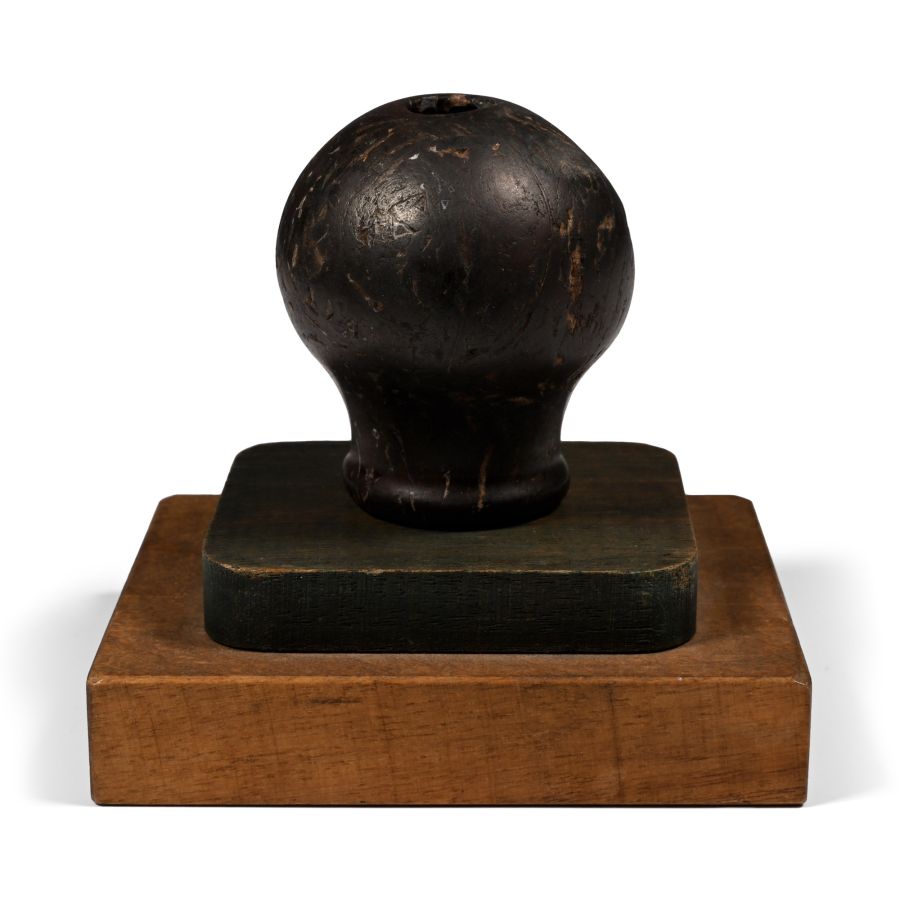
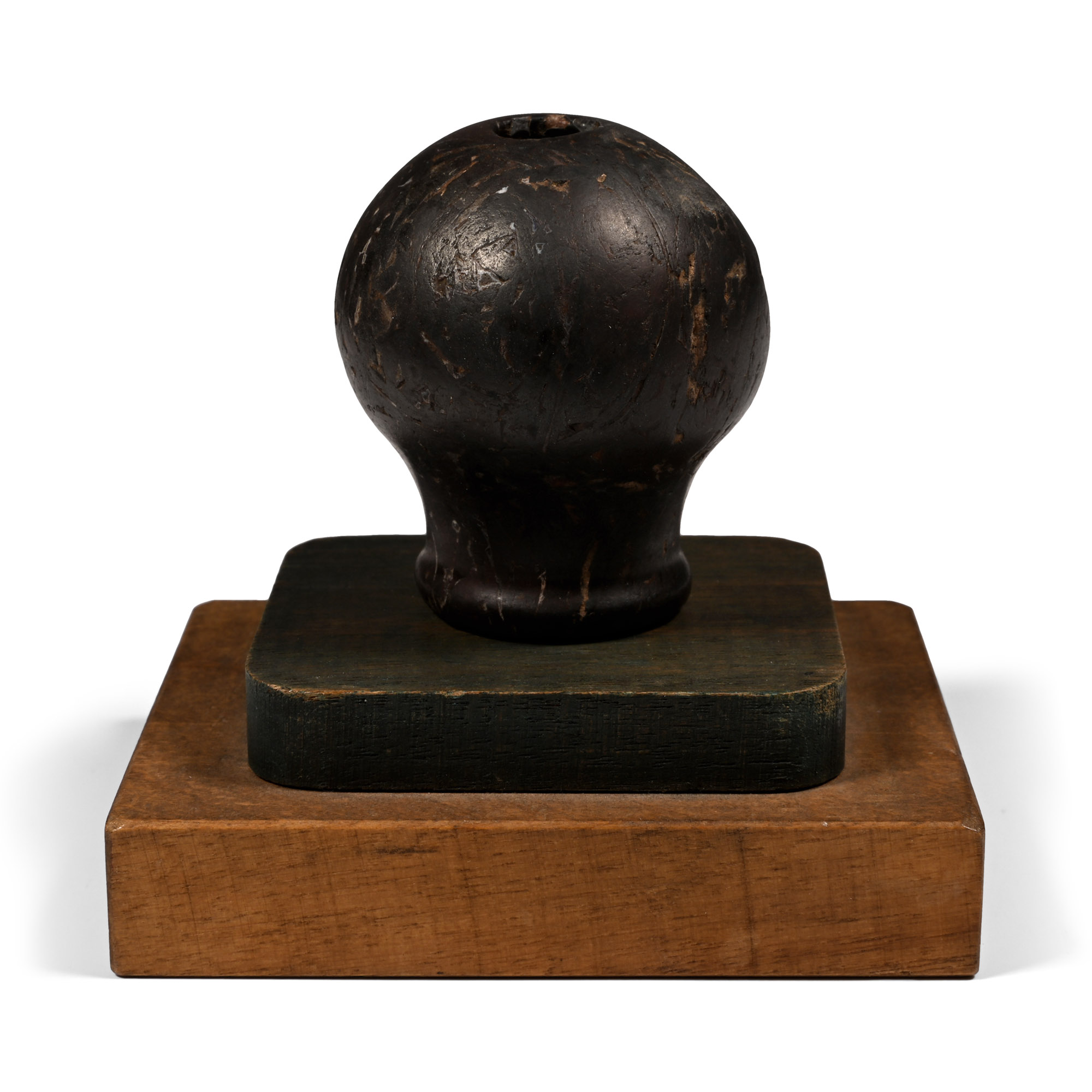
Egyptian Haematite Mace Head
4TH-3RD MILLENNIUM B.C.
2 3/5 in. (457 grams total, mace: 60 mm high).
Globular body with short socket and thickened rim; accompanied by a custom-made display stand.
ProvenanceEx Norman Fargo collection.
with Olympia Auctions, 26 June 2024, no.119.
This lot is accompanied by an illustrated lot declaration signed by the Head of the Antiquities Department, Dr Raffaele D'Amato.
Norman Fargo was born in Los Angeles, California in 1945, the son of Hungarian immigrant Frank and his wife, Rose. His lifelong passion for collecting began at the age of six with a simple interest in rocks. By the 1960s, Norman had become a dedicated student of antique arms and armour, developing a deep appreciation for both craftsmanship and historical context. He began collecting at a time when many items now considered rare were still relatively accessible. A friendship with renowned collector Howard Curtis—whose important collection was partially sold at Christie’s, London in 1984—opened doors to early and exceptional material. Norman also acquired outstanding pieces from respected figures such as Frank Bivens and others known today through museum and auction catalogue provenance. Alongside his core collection of arms and armour (c.1450-1700), Norman developed an eye for period furniture and accessories. He also built a growing collection of Pre-Columbian art with an emphasis on Southern Mexican cultures, particularly Veracruz, as well as fine examples of Japanese Satsuma ware and cloisonné.
CONDITIONTimeLine Auctions follows a vetting process to ensure the authenticity and legality of all items, reinforcing our commitment to integrity and responsible trading. Each antiquity, antique, and coin lot undergoes thorough examination by a vetting committee of at least ten external specialists, professional trade association members, scientists, and archaeologists: Our Vetting Process
AUCTIONS:
TimeLine is a leading auction house specialising in antiquities, ancient art, collectables, natural history, coins, medals, and books. Our auctions offer museums, collectors, historians, and enthusiasts the opportunity to acquire unique and historically significant pieces.
LOT 0033
Egyptian Haematite Mace Head
Estimate £600 - 800€700 - 930 (for guidance only)$810 - 1,080 (for guidance only)
-
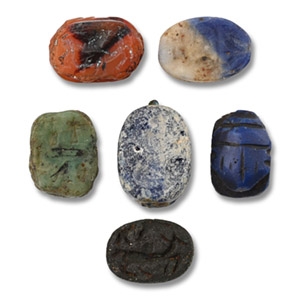
Egyptian Hardstone Scarab Group
Mainly Late Period, 664-332 B.C.Sold for (Inc. bp): £468
Most with an incuse design to the underside including cartouche of Thutmose III, lion attacking a deer, hieroglyphic text and others. 11.5 grams total, 14-18 mm
Acquired on the European art market in the early 2000s. with Galerie Rhéa, Zurich, Switzerland. This lot is accompanied by an illustrated lot declaration signed by the Head of the Antiquities Department, Dr Raffaele D'Amato. -
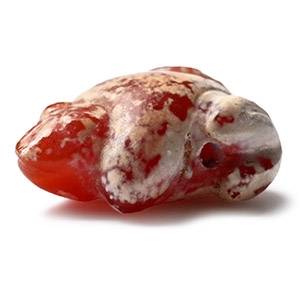
Egyptian Carnelian Frog Amulet
Late Period, 664-332 B.C.Sold for (Inc. bp): £572
Carved in the round, pierced through the body for suspension. 298 grams, 19 mm
UK private collection before 2000. Acquired on the UK art market. Private collection, London, UK. This lot is accompanied by an illustrated lot declaration signed by the Head of the Antiquities Department, Dr Raffaele D'Amato.
Frog amulets in ancient Egypt symbolised fertility, rebirth, and regeneration. Associated with the goddess Heqet, linked to childbirth and life-giving forces, these amulets were especially popular in contexts related to fertility and protection during pregnancy and childbirth. Their connection to the annual Nile flood, which brought new life to the land, further reinforced their symbolism of renewal and abundance. -
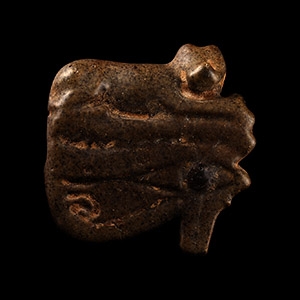
Egyptian Hardstone Eye of Horus with Recumbent Lion
Late Period, 664-332 B.C.Estimate: £300 - 400 (+bp*)
Opening Bid: £150
Wedjat-eye amulet with reclining lioness to the top, pierced for suspension. 6.79 grams, 29 mm
From an early 20th century collection. Ex London, UK, gallery. This lot is accompanied by an illustrated lot declaration signed by the Head of the Antiquities Department, Dr Raffaele D'Amato.
The wedjat-eye and lioness are potent, often intertwined symbols in ancient Egyptian mythology. The wedjat, representing Horus’s healed eye, signifies protection and healing, while the lioness—linked to the goddesses Sekhmet, Bastet, and Wadjet—embodies power and fierce defence as the “Eye of Ra”. Together in amulets, as in Egyptian art, they convey healing, protection, and strength. Sometimes the name of a specific goddess was inscribed on the back of the amulet, though here the recumbent lioness serves as the divine symbol.
