
Loading, please wait...
_900x900.jpg "Egyptian Greywacke Cosmetic Fish Spoon Section")
_200x200.jpg "Egyptian Greywacke Cosmetic Fish Spoon Section")
.jpg "Egyptian Greywacke Cosmetic Fish Spoon Section")
LOT 0481
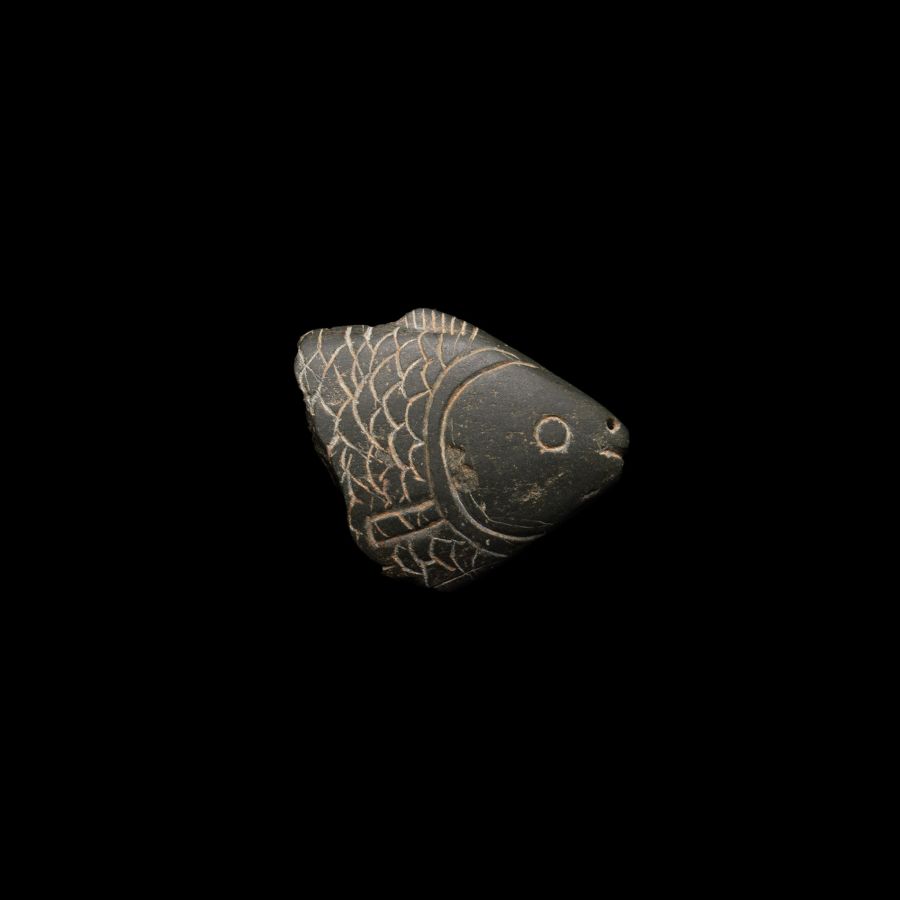
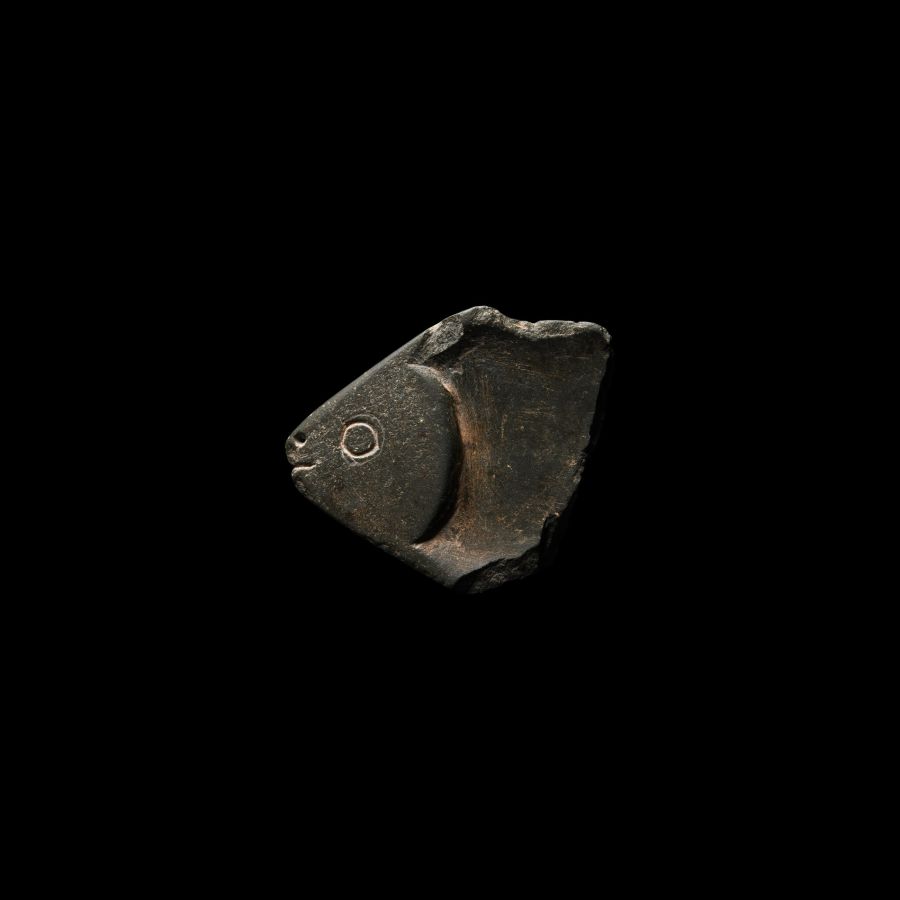
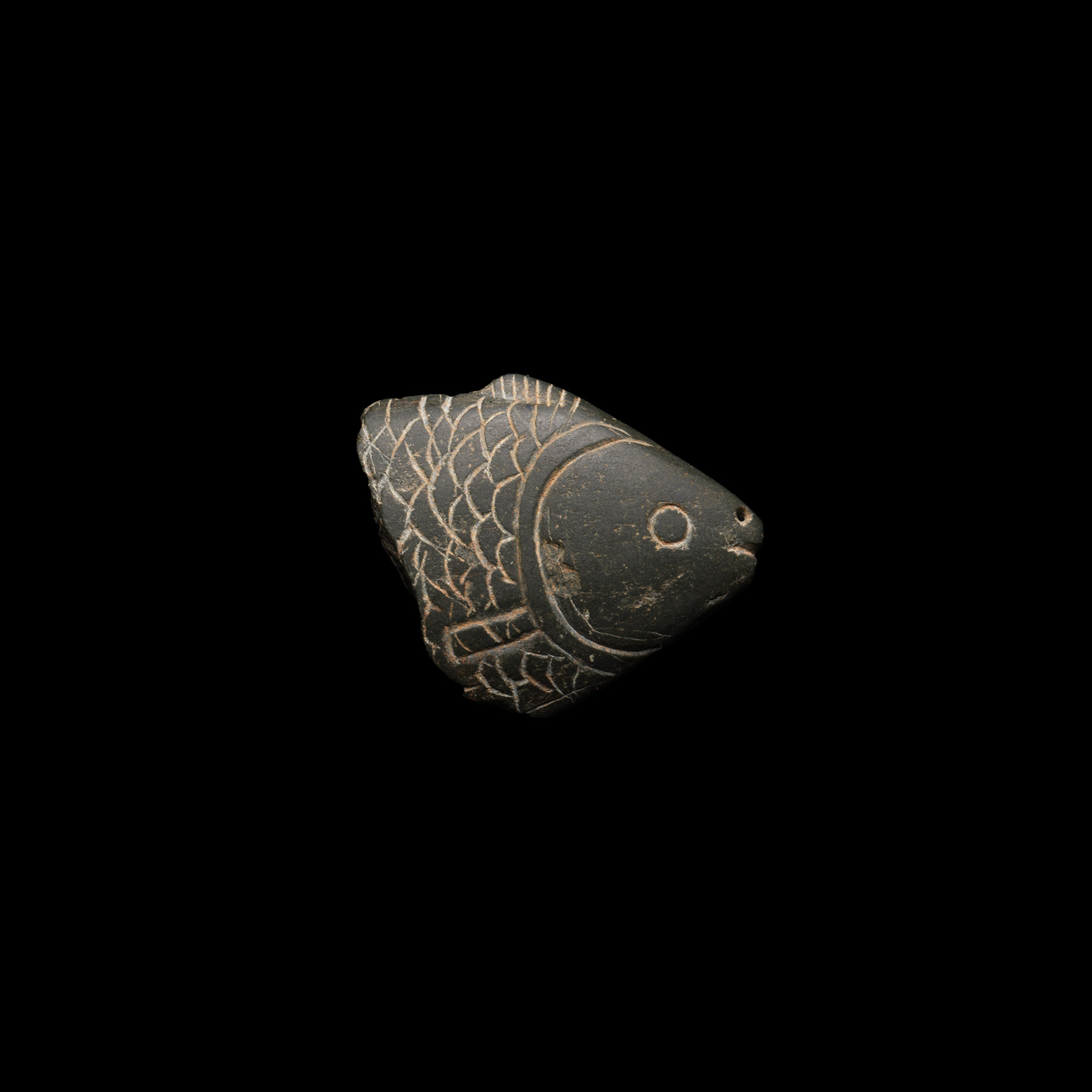
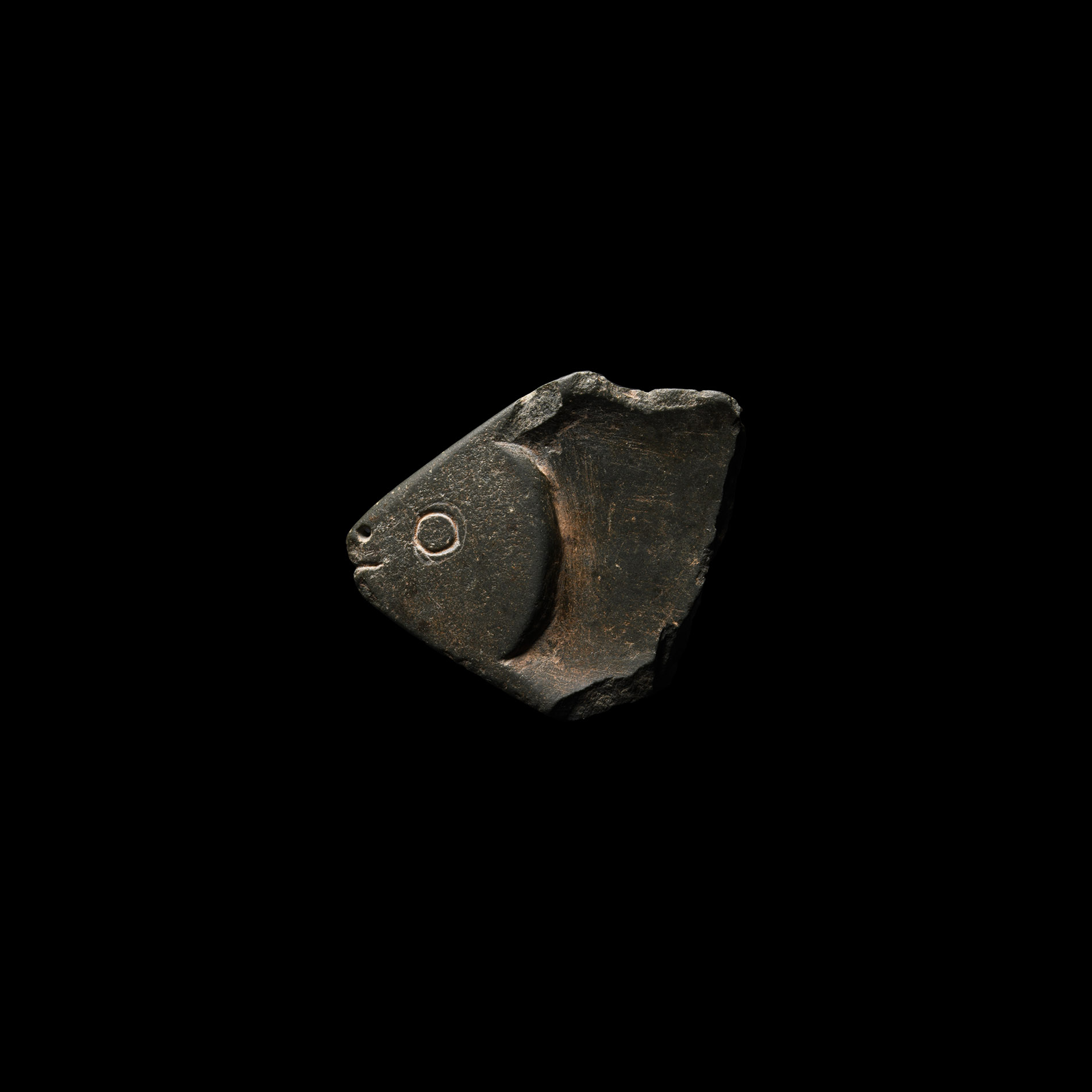
Egyptian Greywacke Cosmetic Fish Spoon Section
NEW KINGDOM, 1569-1081 B.C.
2 1/4 - 3 3/8 in. (27 grams, 58 mm wide (50 grams total, 85 mm high including stand)).
A fragment of a greywacke cosmetic spoon, shaped as a fish with finely worked features and incised eye, scales, gill, and fin detailing; the underside is recessed to create the spoon bowl; accompanied by a custom-made display stand.
ProvenanceAcquired in the 1980s.
From a French collection.
See Hodjash, S.I., Ancient Egyptian vessels in the State Pushkin Museum of Fine Art, Moscow, Oakville CT, 2005, p.86, nos.311 and 312, pl.29, for comparable examples.
CONDITIONTimeLine Auctions follows a vetting process to ensure the authenticity and legality of all items, reinforcing our commitment to integrity and responsible trading. Each antiquity, antique, and coin lot undergoes thorough examination by a vetting committee of at least ten external specialists, professional trade association members, scientists, and archaeologists: Our Vetting Process
AUCTIONS:
TimeLine is a leading auction house specialising in antiquities, ancient art, collectables, natural history, coins, medals, and books. Our auctions offer museums, collectors, historians, and enthusiasts the opportunity to acquire unique and historically significant pieces.
LOT 0481
Egyptian Greywacke Cosmetic Fish Spoon Section
Estimate £300 - 400€350 - 460 (for guidance only)$410 - 540 (for guidance only)
-
Egyptian Head of a Noblewoman from a Banquet Scene
New Kingdom, late 18th-9th Dynasty, circa 1410-1201 B.C.Sold for (Inc. bp): £1,170
A limestone frieze section which once part of a banquet scene, the fragment carved with the head and upper body of a noblewoman facing right, wearing a broad collar and an elaborate wig of long, tightly curled locks with a fringe of twisted strands, decorative headband with a lotus flower to the front; remains of pigmentation. 138 grams, 84 mm
From an old UK collection. From the private collection of Alf Baxendale (1941-2016) part 2, keen Egyptologist, member of the Egyptology Society, trustee of the Amarna Trust; thence by descent. Accompanied by an identification display card. Accompanied by a copy of his obituary published in Horizon, The Amarna Project and Amarna Trust newsletter, Issue 18, 2017, p.21, by Barry John Kemp, CBE, FBA, Professor Emeritus of Egyptology at the University of Cambridge and directing excavations at Amarna in Egypt. Accompanied by an academic report by Egyptologist Paul Whelan. -
Egyptian Amethyst Scarab Group
Graeco-Roman Period, 332 B.C.-323 A.D.Sold for (Inc. bp): £338
A group of two amethyst scarabs pierced for suspension, each with simple detailing to the wings, head and legs. 1.12 grams total, 8-9 mm
Acquired 1980s. Private collection of L.H., Staffordshire, UK. Property of a Sussex, UK, teacher. -
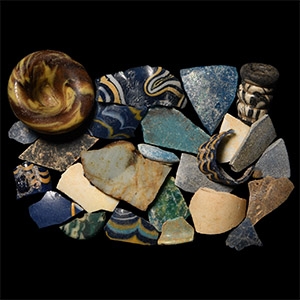
Egyptian and Other Glass Collection
3rd century B.C.-4th century A.D.Sold for (Inc. bp): £182
A mixed group of glass fragments. 66 grams total, 13-38 mm
From a UK private collection, 1975-1978.
