
Loading, please wait...
LOT 0658
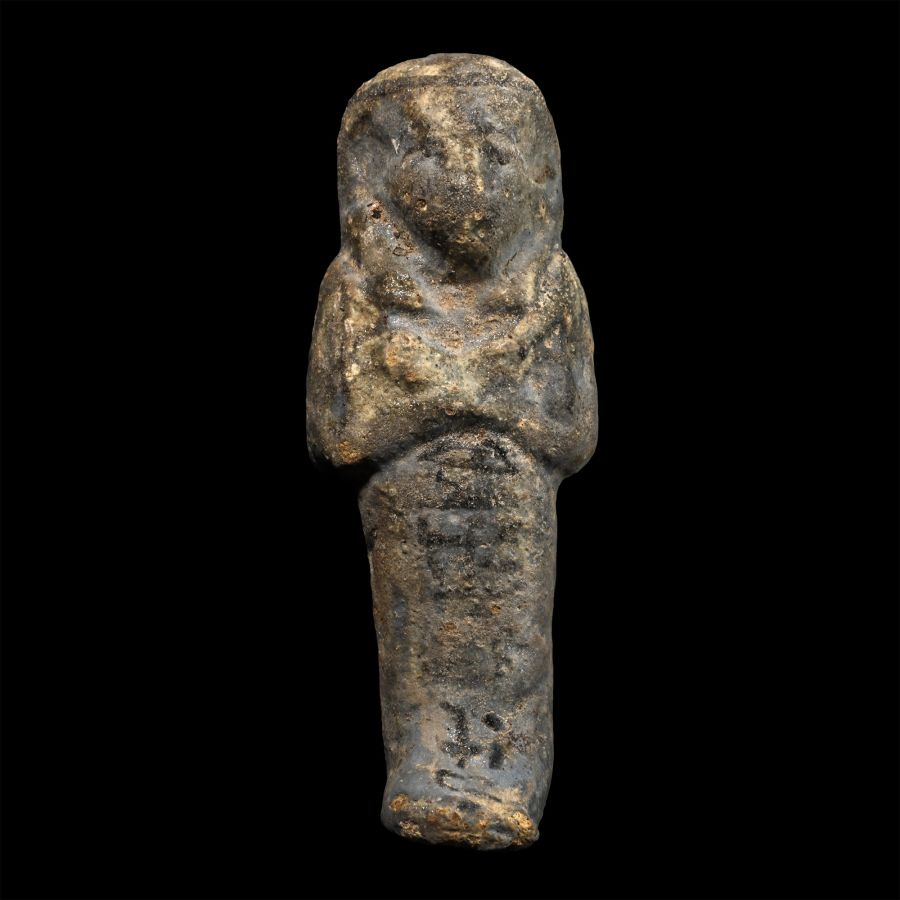
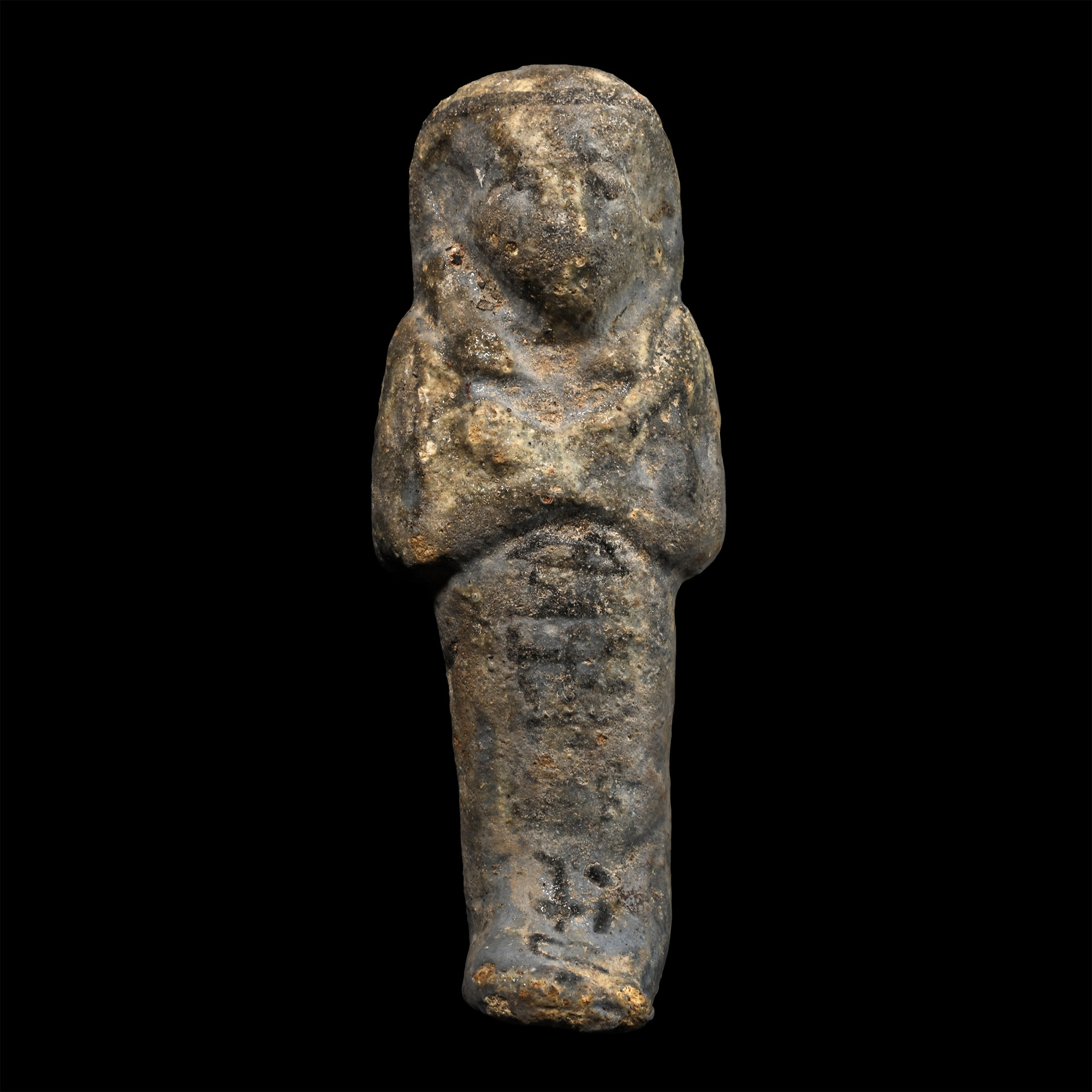
Egyptian Grey-Blue Faience Shabti for a Songstress of Amun
THIRD INTERMEDIATE PERIOD, 22ND DYNASTY, CIRCA 945-715 B.C.
3 1/2 in. (52.8 grams, 90 mm).
Mummiform figure modelled with a heavy lappet wig, encircled at the top by a sash band; low-relief crossed arms, with painted implements, a seed bag on the back, and a column of hieroglyphs on the front dedicated to: 'The Osiris, songstress of Amun Sedjet(?), true of voice'.
ProvenanceFrom the collection of a London gentleman, 2000s.
CONDITIONTimeLine Auctions follows a vetting process to ensure the authenticity and legality of all items, reinforcing our commitment to integrity and responsible trading. Each antiquity, antique, and coin lot undergoes thorough examination by a vetting committee of at least ten external specialists, professional trade association members, scientists, and archaeologists: Our Vetting Process
AUCTIONS:
TimeLine is a leading auction house specialising in antiquities, ancient art, collectables, natural history, coins, medals, and books. Our auctions offer museums, collectors, historians, and enthusiasts the opportunity to acquire unique and historically significant pieces.
LOT 0658
Egyptian Grey-Blue Faience Shabti for a Songstress of Amun
Estimate £150 - 200€170 - 230 (for guidance only)$200 - 270 (for guidance only)
Opening Bid
£50 (EUR 58; USD 68) +BP*
-
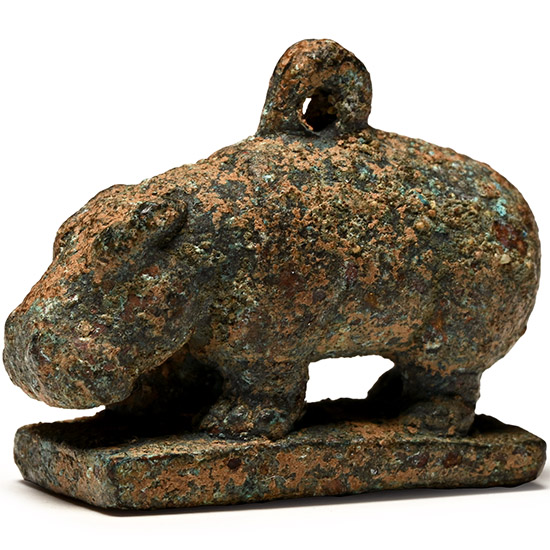
Egyptian Bronze Hippopotamus Amulet
Late Period, 664-332 B.C. or laterEstimate: £600 - 800 (+bp*)
Opening Bid: £300
Modelled in the round on a rectangular base with a dorsal loop. 20.5 grams, 26 mm
Ex mid 19th century London, UK, collection.
Metal hippopotamus amulets are comparatively rare compared with faience and stone examples. A gold hippopotamus amulet of similar size was discovered in Tomb W 643 at Meroe, Sudan, and is now in the Museum of Fine Arts, Boston (inv. no. 23.380). Egyptian art depicted the Nile hippopotamus in Old, Middle, and New Kingdom limestone reliefs, as well as in faience, stone, and metal statuettes. Egyptians both admired and feared them: powerful and unpredictable, hippos attack when threatened. Their fearsome reputation made them potent apotropaic amulets, giving the wearer power over evil and chaotic forces. -
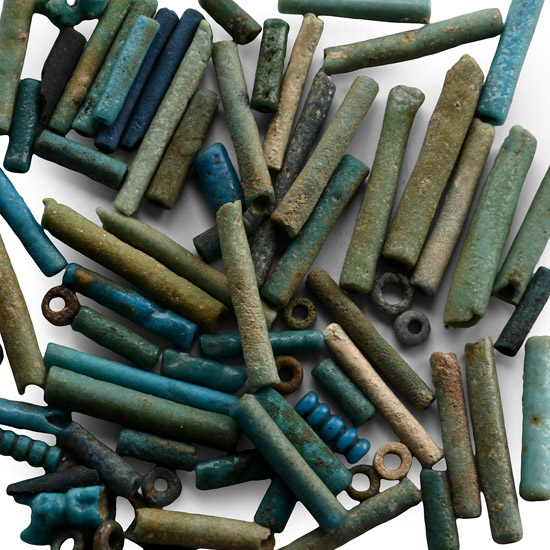
Egyptian Faience Mummy Beads and Cat Amulet
Late Period-Ptolemaic Period, circa 664-30 B.C.Estimate: £80 - 100 (+bp*)
Opening Bid: £5
Comprising tubular, ribbed and annular beads, offered with the top part of a cat amulet. 8.4 grams total, 3-24 mm
From a mid 20th century London, UK, collection. -
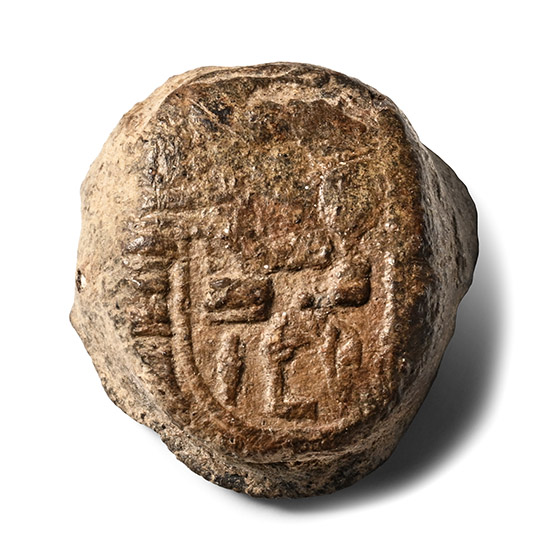
Egyptian Terracotta Bulla with Royal Cartouche
New Kingdom, circa 1400-1292 B.C.Estimate: £60 - 80 (+bp*)
Opening Bid: £5
Discoid seal impression with one face preserving a partial impressed cartouche, the other side bearing the impression of a cord and linen. 1.92 grams, 17 mm
London, UK, art market, 1980s. Private collection, London, UK.
Clay seals were used to secure doors and containers holding valuable commodities and goods. The impression on the underside of this example indicates that it once sealed a linen bag or a linen lid cover.
