
Loading, please wait...
LOT 0047
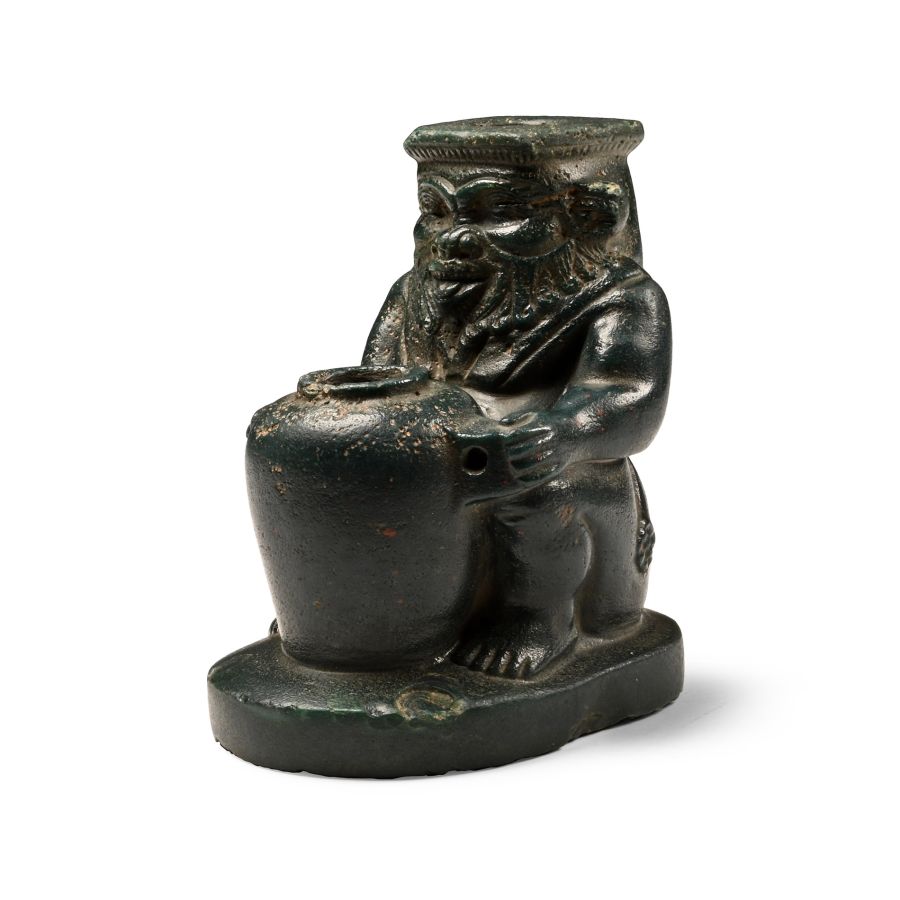
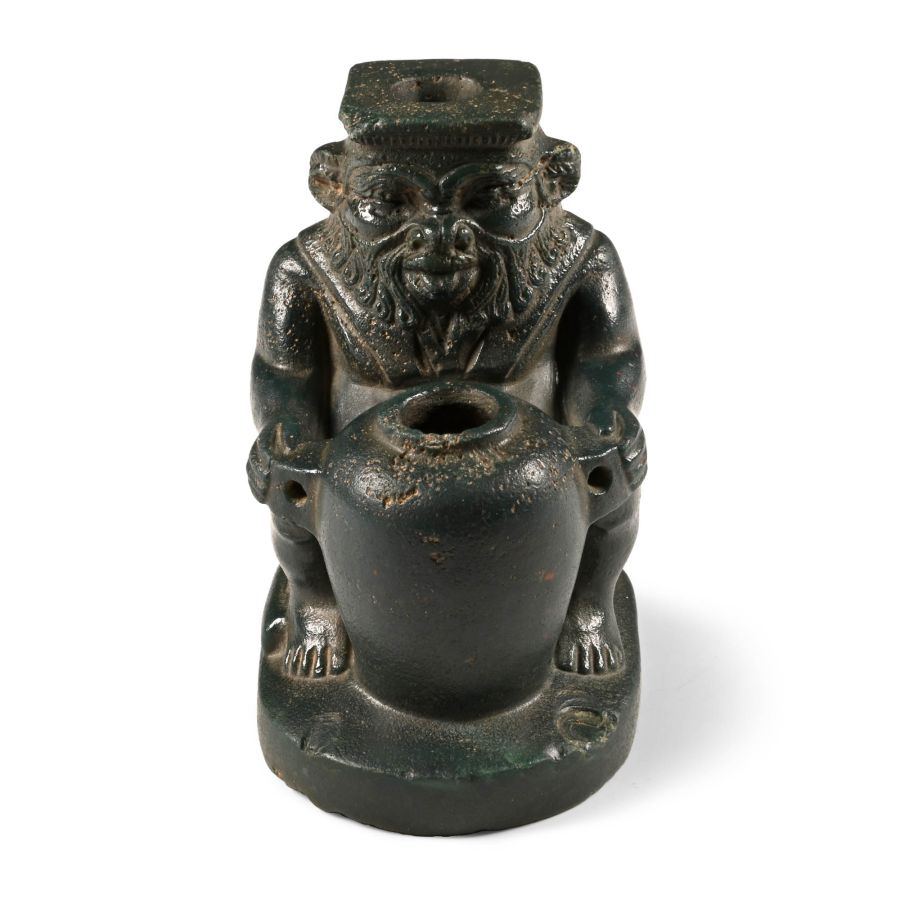
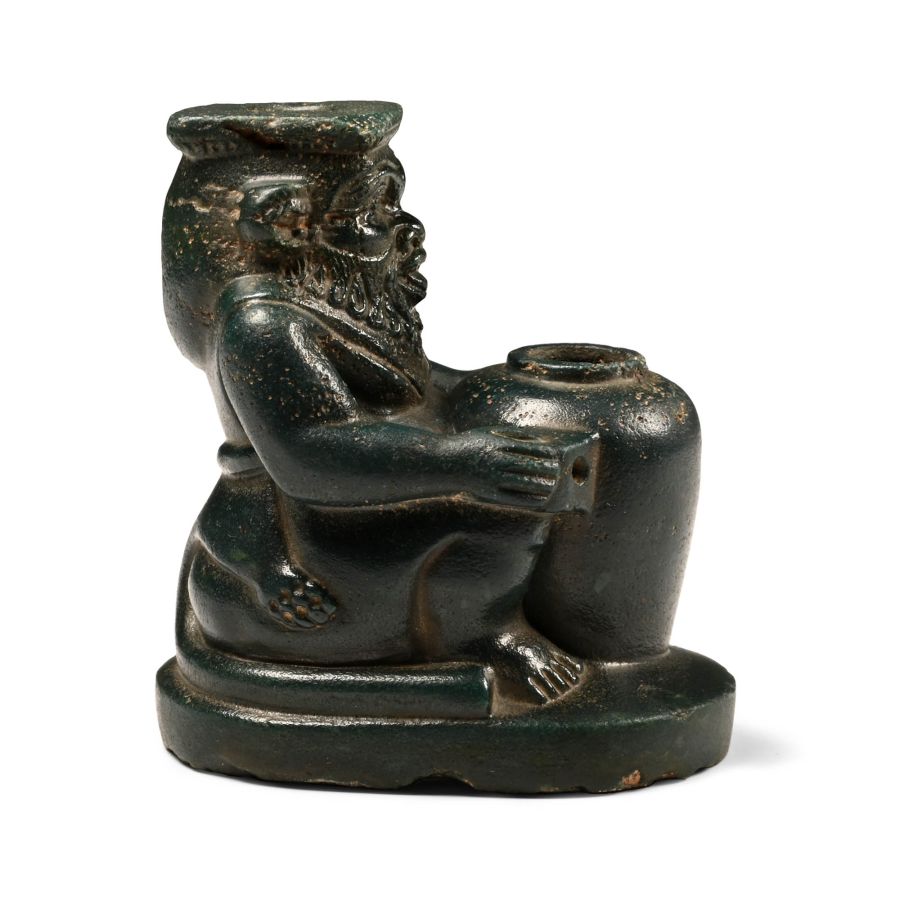
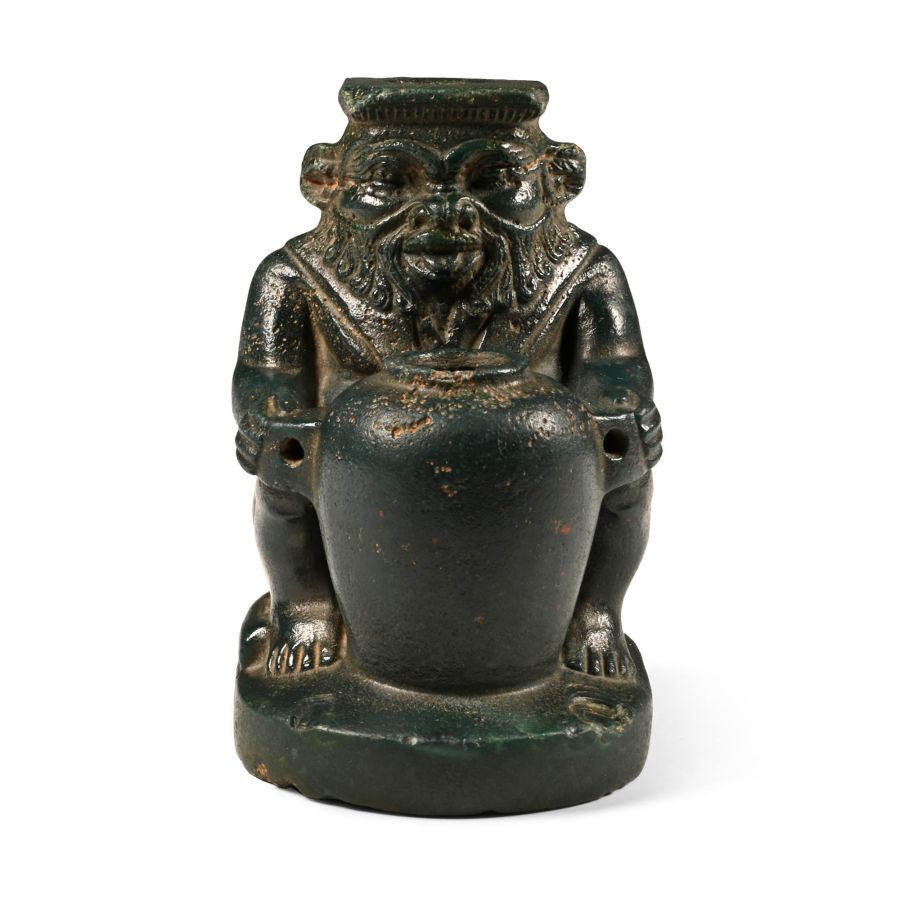
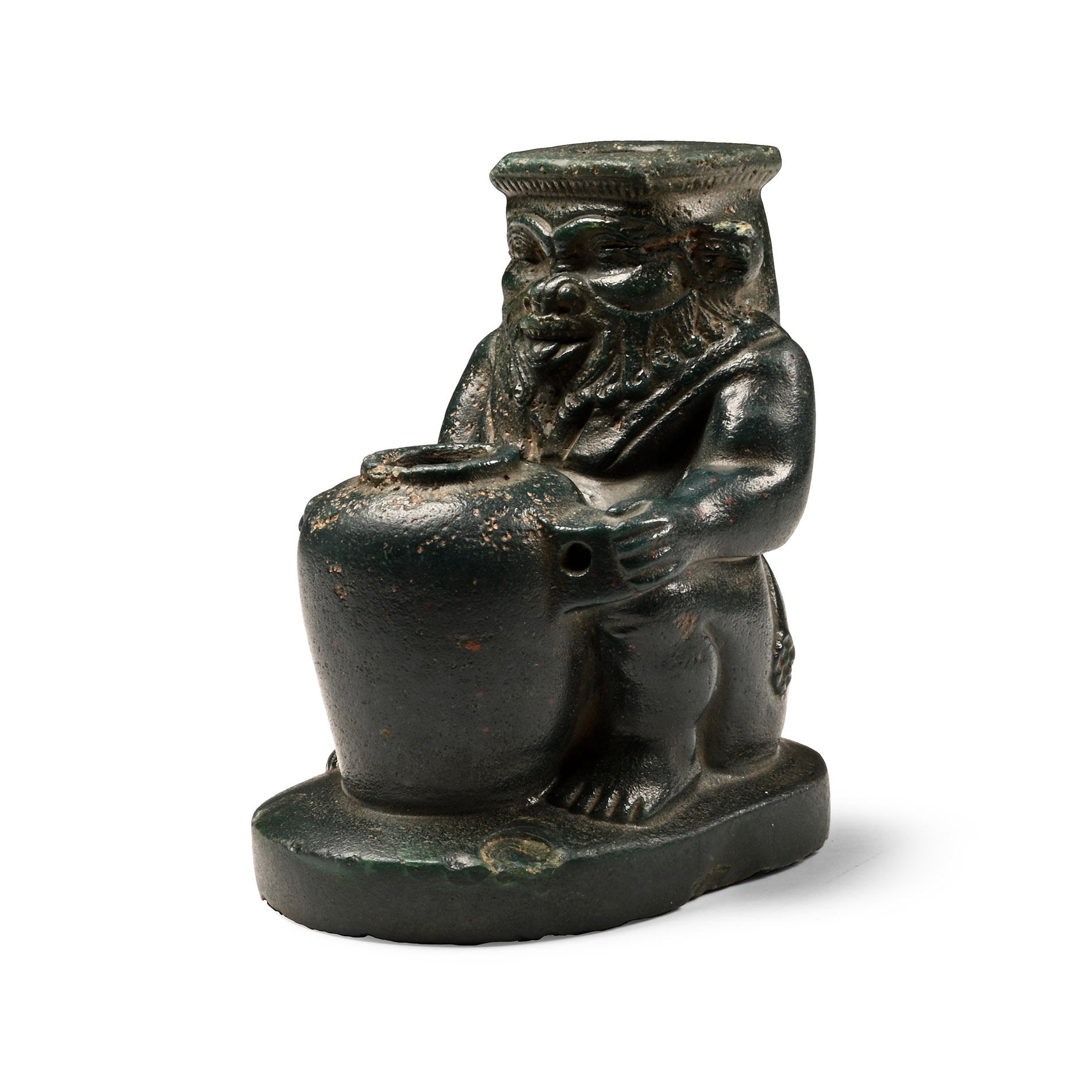
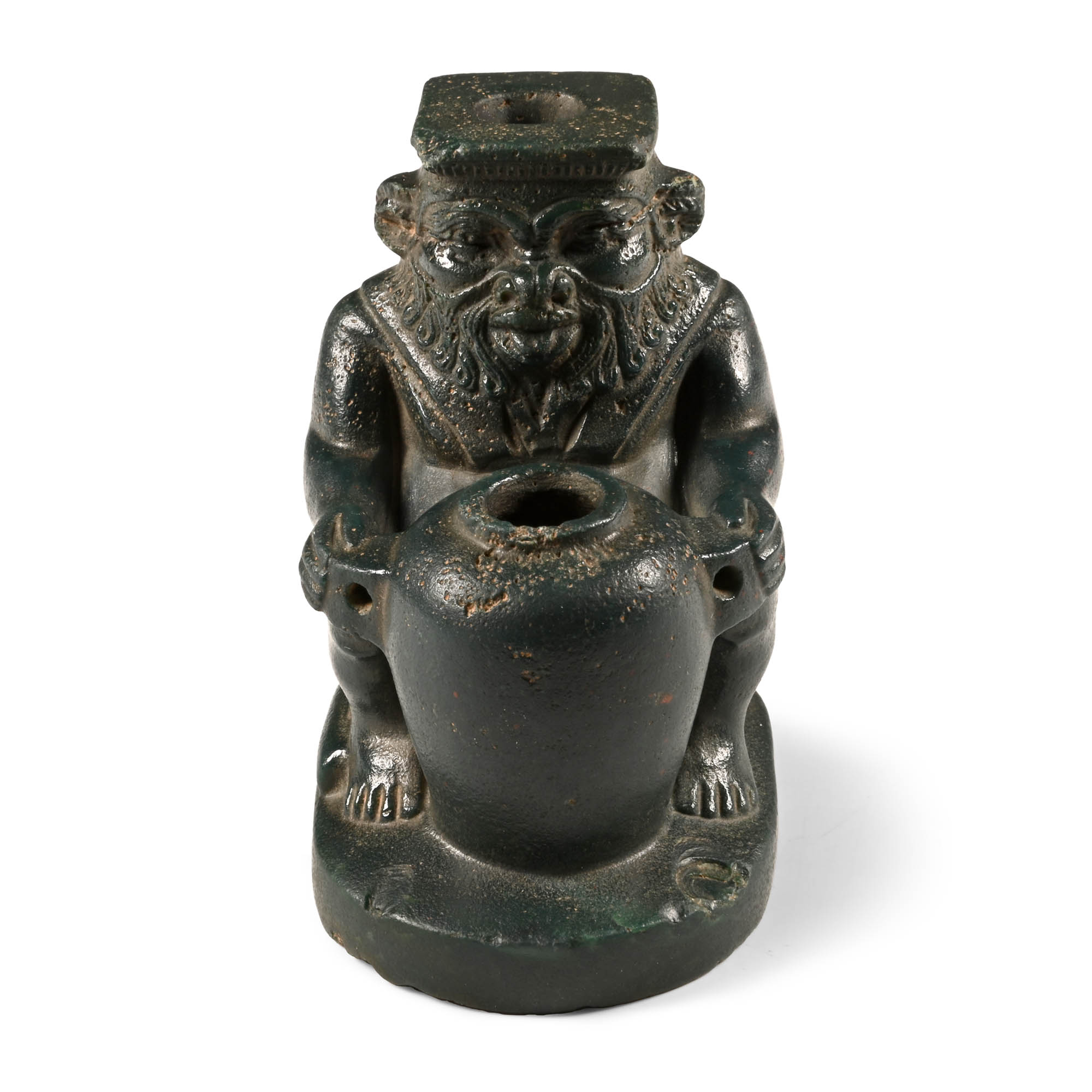
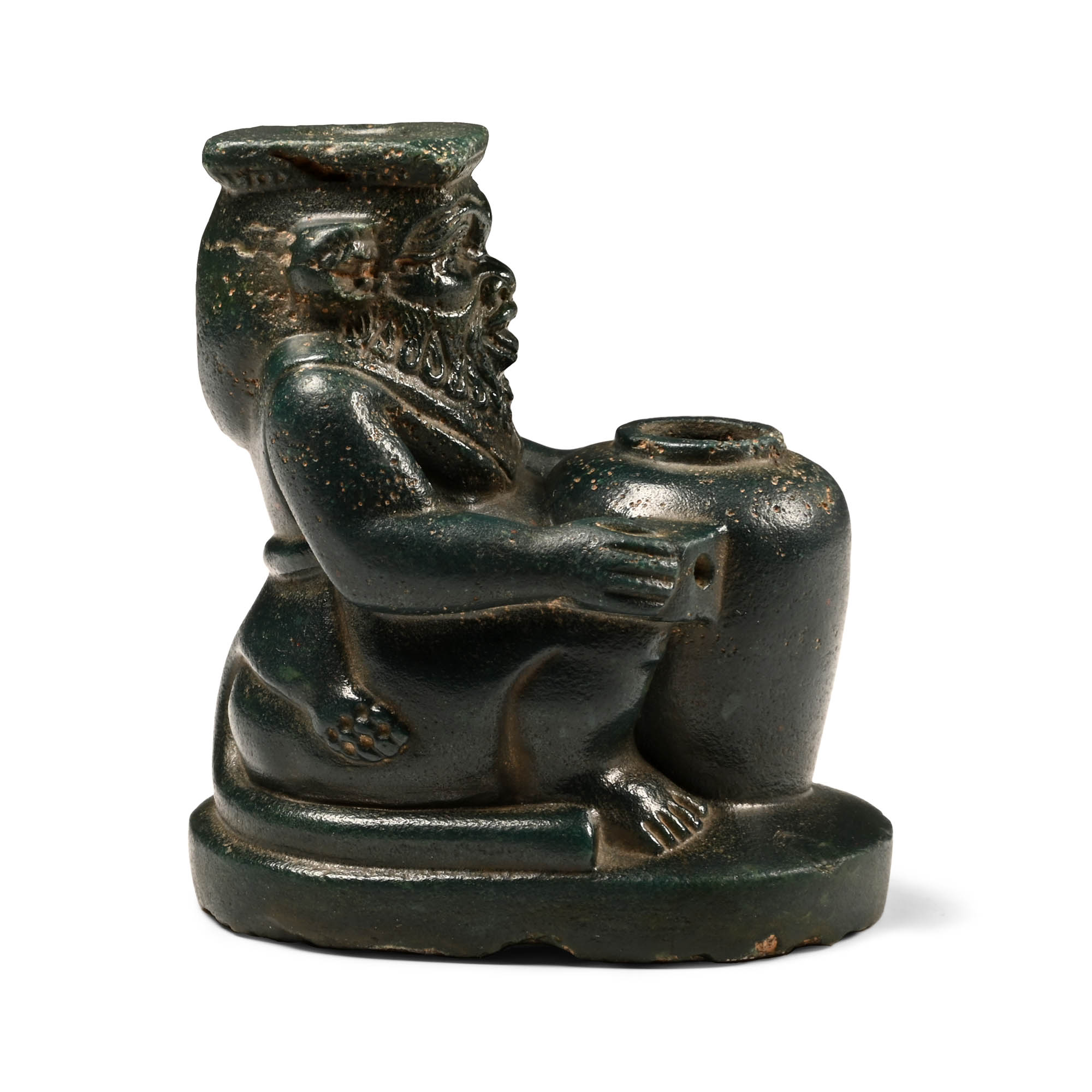
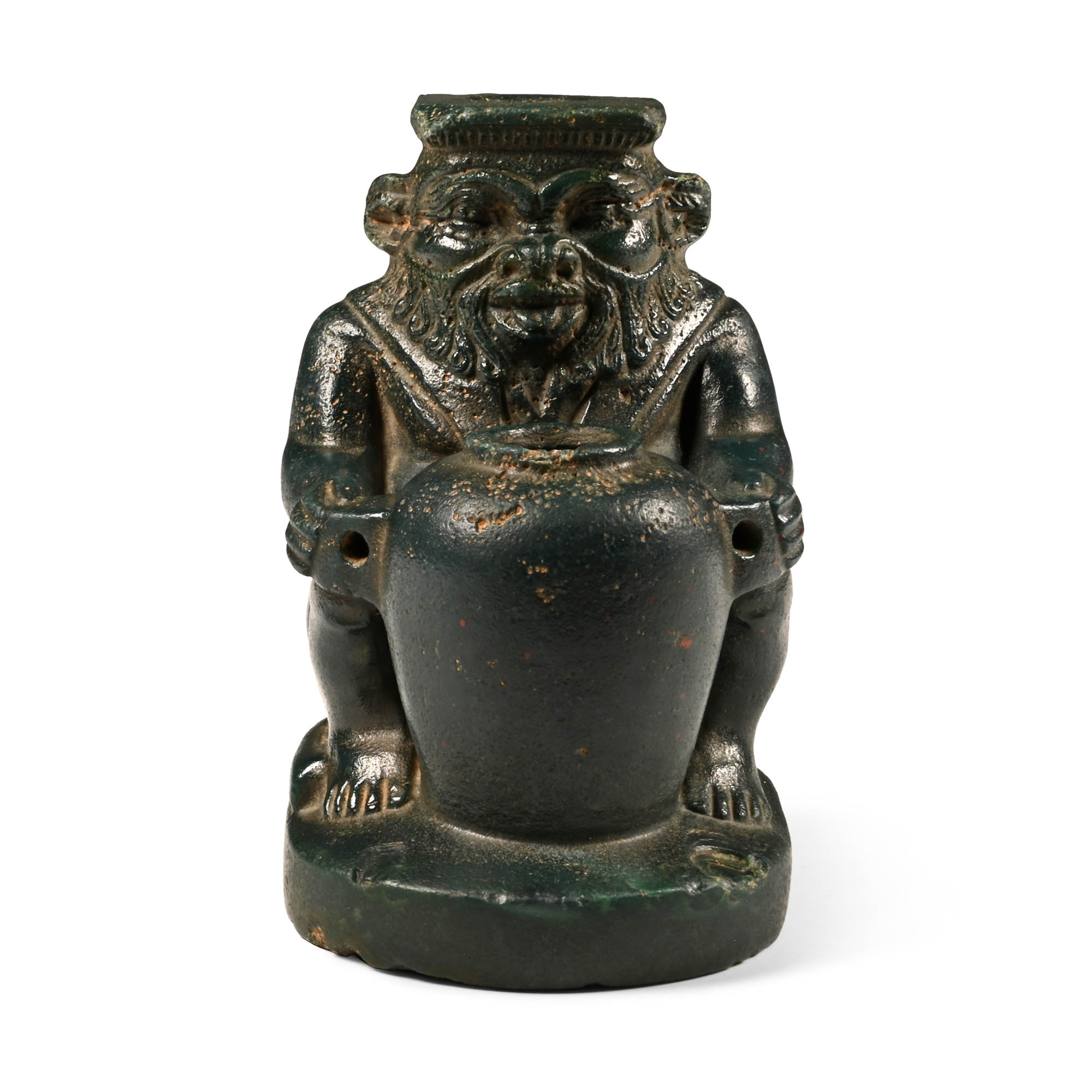
Egyptian Green Jasper Bes Cosmetic Pot
LATE PERIOD-PTOLEMAIC PERIOD, 6TH-2ND CENTURY B.C.
2 5/8 in. (188 grams, 66 mm).
Carved in the round figure of Bes sitting on an ellipsoid base; the god in crouching pose wearing a lionskin girdle, his forearms on his thighs and hands holding the pierced lug handles of a storage jar; the jar and Bes's head topped by a low square modius with a round opening to the top.
ProvenanceEarly 20th century South East England, UK, collection.
Formerly in North American collection, 1990s.
From the collection of a London, UK, gentleman.
Accompanied by an academic report by Egyptologist Paul Whelan.
This lot has been checked against the Interpol Database of stolen works of art and is accompanied by a search certificate number no.12376-225408.
Cf. Andrews, C., Amulets of Ancient Egypt, London, 1994, item 96(e) for a less elaborate vessel in the shape of Bes; Staatliches Museum Ägyptischer Kunst, Munich (inv. no. ÄS 4868), for a similarly themed Bes-form cosmetic vessel from the New Kingdom.
FootnotesThis vessel's style continues that of New Kingdom and Third Intermediate Period kohl (eye paint) or unguent Bes-shaped containers, suggesting that it served as a household object rather than an item of funerary equipment.
CONDITIONTimeLine Auctions follows a vetting process to ensure the authenticity and legality of all items, reinforcing our commitment to integrity and responsible trading. Each antiquity, antique, and coin lot undergoes thorough examination by a vetting committee of at least ten external specialists, professional trade association members, scientists, and archaeologists: Our Vetting Process
AUCTIONS:
TimeLine is a leading auction house specialising in antiquities, ancient art, collectables, natural history, coins, medals, and books. Our auctions offer museums, collectors, historians, and enthusiasts the opportunity to acquire unique and historically significant pieces.
-
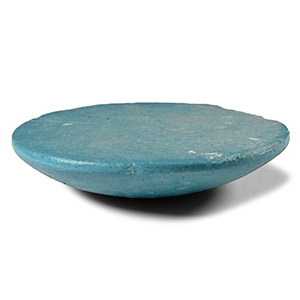
Egyptian Blue Faience Funerary Dish for Modelled Food
Middle Kingdom, 12th Dynasty, 1991–1802 B.C.Sold for (Inc. bp): £1,170
Shaped as a shallow circular dish. 252 grams, 11.1 cm
Acquired on the German art market, 1989-1995. with The Museum Gallery, 19 Bury Place, London, WC1, UK, 1998-2003. Property of a London based academic, 2003-present.
Faience food and dish simulacra replaced the wooden food preparation models of the earlier Middle Kingdom. -
.jpg)
Egyptian Limestone False Door Relief Panel
Middle Kingdom, circa 1900-1750 B.C.Sold for (Inc. bp): £1,105
Rectangular panel from a false door stela carved in sunk relief with raised vertical borders framing a scene with a male figure wearing a knee-length kilt, collar and short wig, seated on a stool with lion-claw feet, holding a bolt of cloth in his left hand; before him, a pedestal table with splayed feet, the top laden with vertical loaves; traces of pigment to the collar, kilt and table; rear face dressed but plain. 4.12 kg, 28.7 cm
Acquired in the mid 1980s-1990s. Private collection, Switzerland, thence by descent. Private collection, since the late 1990s.
The ancient Egyptians believed the soul of the departed could move in and out of the tomb using a ‘false door.’ This door was identified by a recessed surface with a symbolic entrance at its centre. In the Middle Kingdom, the false door design was combined with other elements or represented by a raised border and cornice above on rectangular stelae. -
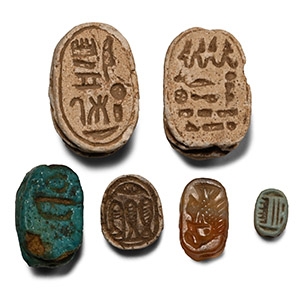
Egyptian Steatite and Faience Scarab Group
Late Period, 664-332 B.C.Sold for (Inc. bp): £208
Their bases decorated with hieroglyphs and figures, including one with the motto 'Amun lord of the Two Lands', another with the motto 'lord Ramesses beloved of Amun', and one with a detailed representation of a Nile tilapia fish. 8.68 grams total, 7-21 mm
From an early 20th century collection.
