
Loading, please wait...


LOT 0411
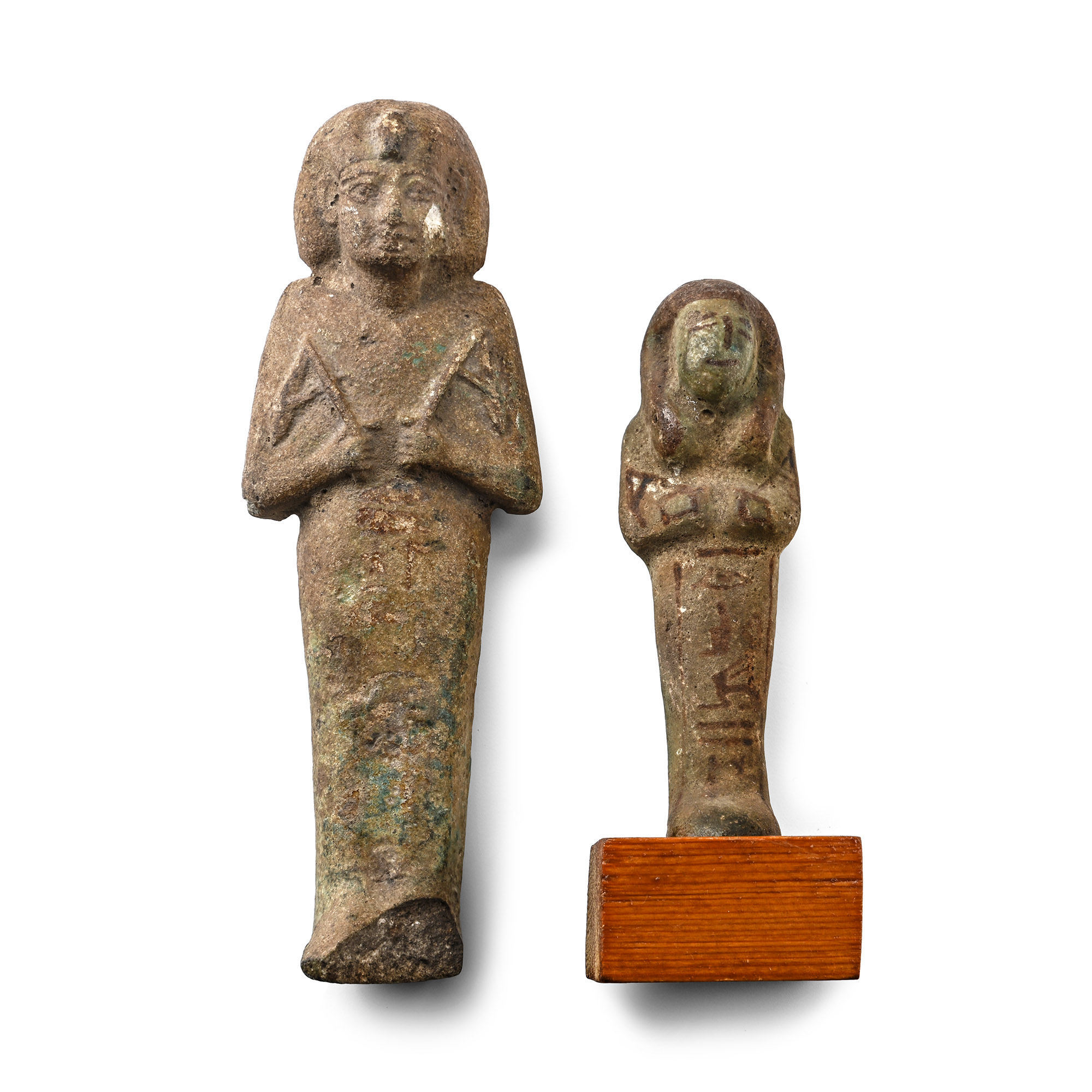
Egyptian Green Glazed Faience Ushabti of Karomama Meritmut
THIRD INTERMEDIATE PERIOD, 22ND DYNASTY, CIRCA 900 B.C.
4 1/4 - 2 3/8 in. (167 grams total, 10.9-13.7 cm).
Characteristic mummiform figure for the Divine Adoratrice Karomama Meritmut G, wearing a bag-like khat headcloth fronted by a uraeus, and a trailing flap at the back, with opposed hands each holding a hoe; faint traces of an inscription on the lower front are illegible; and another small blue-olive-green mummiform shabti of late New Kingdom date wearing a lappet wig with opposed (not crossed) hands holding agricultural implements, details in black; a partially preserved column of hieroglyphic text on the lower body, reading: 'The Osiris, Wenis...'; on a wooden display stand. [2, No Reserve]
ProvenanceThe smaller one acquired Caledonian Market, 16th March 1962 for 5 shillings.
From the private collection of Peter Clayton, FCILIP, Dip, Arch, FSA, FRNS, Hemel Hempstead, Hertfordshire, UK; formed since the late 1950s.
Accompanied by an old handwritten information card by Peter Clayton, collection no.94.
Cf. Moje, J., ‘A New Ushebti of the Divine Adoratrice Karomama Meritmut G, Identified in the Musée de la Princerie in Verdun (Département Meuse/France)', Journal of Egyptian Archaeology, p. 256, fig. 1, for an almost identical ushabti of Karomama.
FootnotesThe tomb of Karomama Meritmut G was discovered in the 19th century within the mortuary temple complex of Ramesses II, known as the Ramesseum, at Thebes. She was buried with kilted overseer ushabtis and mummiform worker figurines such as this one. Although its inscription is illegible, other preserved examples (such as British Museum EA74324) suggest it almost certainly read: 'The Osiris, the Divine Adoratrice of Amun, Karomama, beloved of Mut'.
CONDITIONTimeLine Auctions follows a vetting process to ensure the authenticity and legality of all items, reinforcing our commitment to integrity and responsible trading. Each antiquity, antique, and coin lot undergoes thorough examination by a vetting committee of at least ten external specialists, professional trade association members, scientists, and archaeologists: Our Vetting Process
AUCTIONS:
TimeLine is a leading auction house specialising in antiquities, ancient art, collectables, natural history, coins, medals, and books. Our auctions offer museums, collectors, historians, and enthusiasts the opportunity to acquire unique and historically significant pieces.
LOT 0411
Egyptian Green Glazed Faience Ushabti of Karomama Meritmut
Estimate £500 - 700€580 - 810 (for guidance only)$680 - 950 (for guidance only)
-
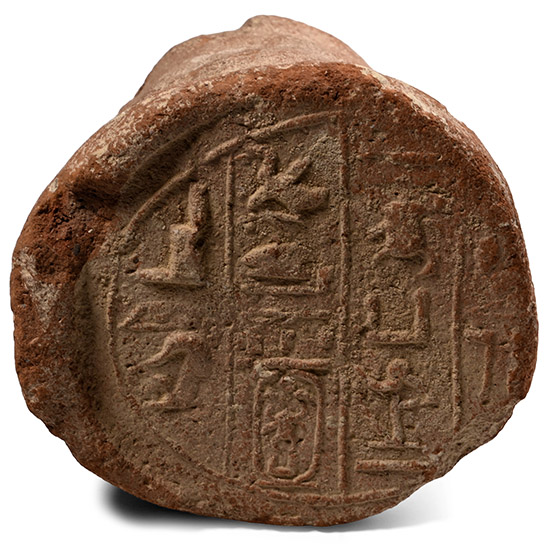
Egyptian Terracotta Funerary Cone of Aakheperka
New Kingdom, 18th Dynasty, circa 1400 B.C.Estimate: £500 - 700 (+bp*)
Bids: 7 | Current Bid: £185
The front portion of a tapering funerary cone with the flat circular end impressed with three complete and one partial column of hieroglyphic text, reading: 'The Osiris, weapons bearer of Thutmose I, Aakheperka, true of voice [before the great] god'. 413 grams, 93 mm
Acquired from Abdoul Rassoul on the West Bank at Luxor, 1974-1980, when a guest lecturer. From the private collection of Peter Clayton, FCILIP, Dip, Arch, FSA, FRNS, Hemel Hempstead, Hertfordshire, UK; formed since the late 1950s.
Aakheperka's tomb remains unknown. -
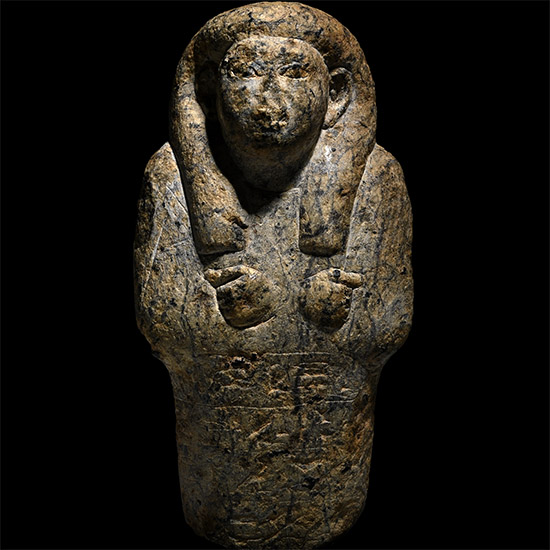
Egyptian Yellow and Black Serpentine Hieroglyphic Shabti
25th-26th Dynasty, circa 650-525 B.C.Estimate: £1,500 - 2,000 (+bp*)
Bids: 10 | Current Bid: £376
Fragment of a mummiform shabti wearing a heavy tripartite wig, with crossed hands on the chest holding faintly incised agricultural implements; four lightly incised horizontal lines of hieroglyphic text on the lower body; mounted on a custom-made stand. 455 grams total, 13.3 cm including stand
From the private collection of Peter Clayton, FCILIP, Dip, Arch, FSA, FRNS, Hemel Hempstead, Hertfordshire, UK; formed since the late 1950s.
Hardstone shabtis appear in the burials of certain high officials in the late 25th and early 26th Dynasties, after which faience became the predominant material for all shabti statuettes. -
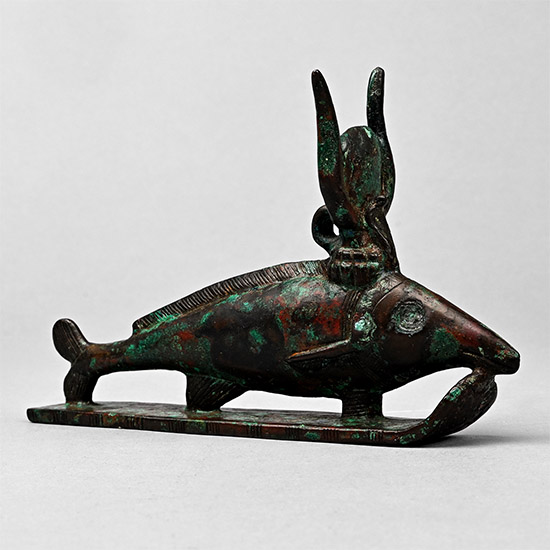
Large Egyptian Bronze Oxyrhynchus Fish of Per-Medjed with Hieroglyphic Inscription
Late Period-Ptolemaic Period, 664-30 B.C.Estimate: £4,000 - 6,000 (‡+bp*)
Opening Bid: £2,100
Modelled in the round on a sledge attached by ventral and pectoral fins, a forked tail, a dorsal ridge, and a tapering nose, featuring recessed circular eyes filled with enamel, a horned sun disc headdress fronted by a uraeus, and a suspension loop behind; a few hieroglyphs of a dedication remain visible on the underside of the sledge, which may be interpreted as part of a name ‘….Ta-ir-di-ankhet…’ (…tꜢ di͗ Ꜥnḫ t….). 585 grams, 17 cm
Acquired from Gallery Reiner, Paris, France, 1981. Private collection, Europe. Accompanied by a copy of French passport no.150583 dated 29 November 2013. This lot has been checked against the Interpol Database of stolen works of art and is accompanied by a search certificate no.12375-226676.
The Medjed, a type of elephant-snout fish (Mormyrus kannume), was revered in ancient Egyptian religion, particularly in Per-Medjed, better known by its Greek name, Oxyrhynchus Polis. This version of the name, meaning "city of the sharp-nosed," reflects the fish's distinctive appearance as depicted in Egyptian art. These fish were believed to have consumed the penis of Osiris, the god who was dismembered and scattered by his brother Seth. As sacred creatures, figurines of the Medjed were often adorned with a horned sun-disc headdress worn by the goddesses Hathor and Isis, suggesting a close association with both. Some figurines, like this example, featured suspension loops, allowing them to be worn as pendant amulets.
