
Loading, please wait...


LOT 0591
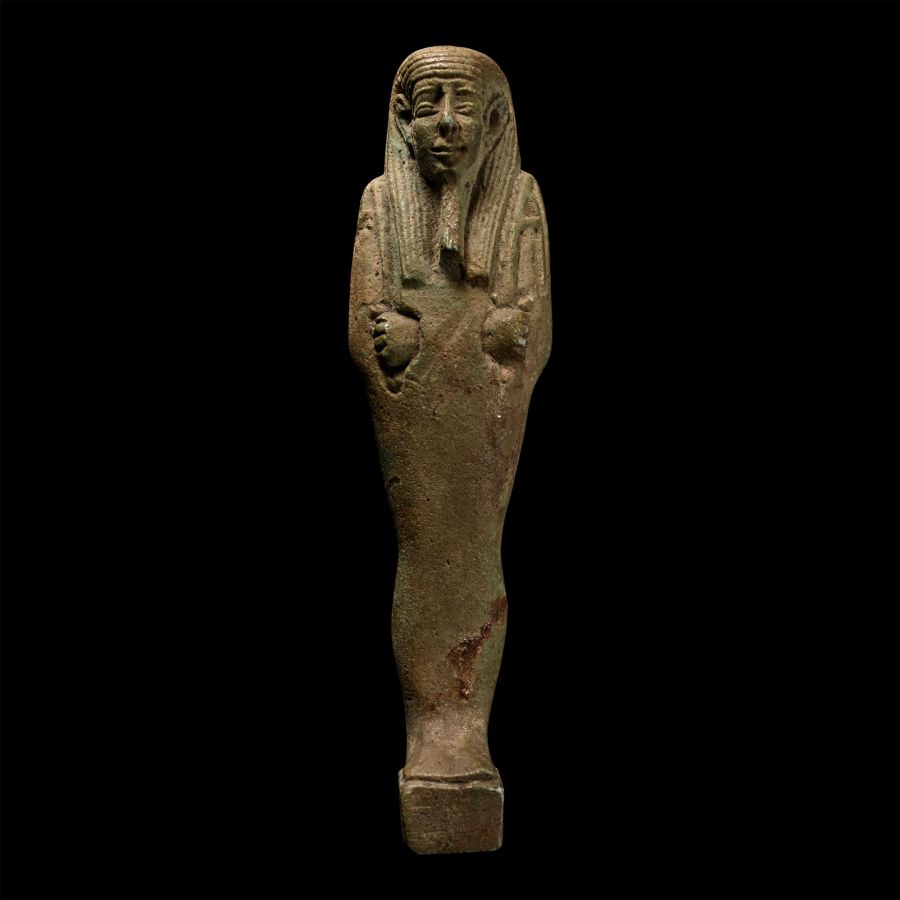
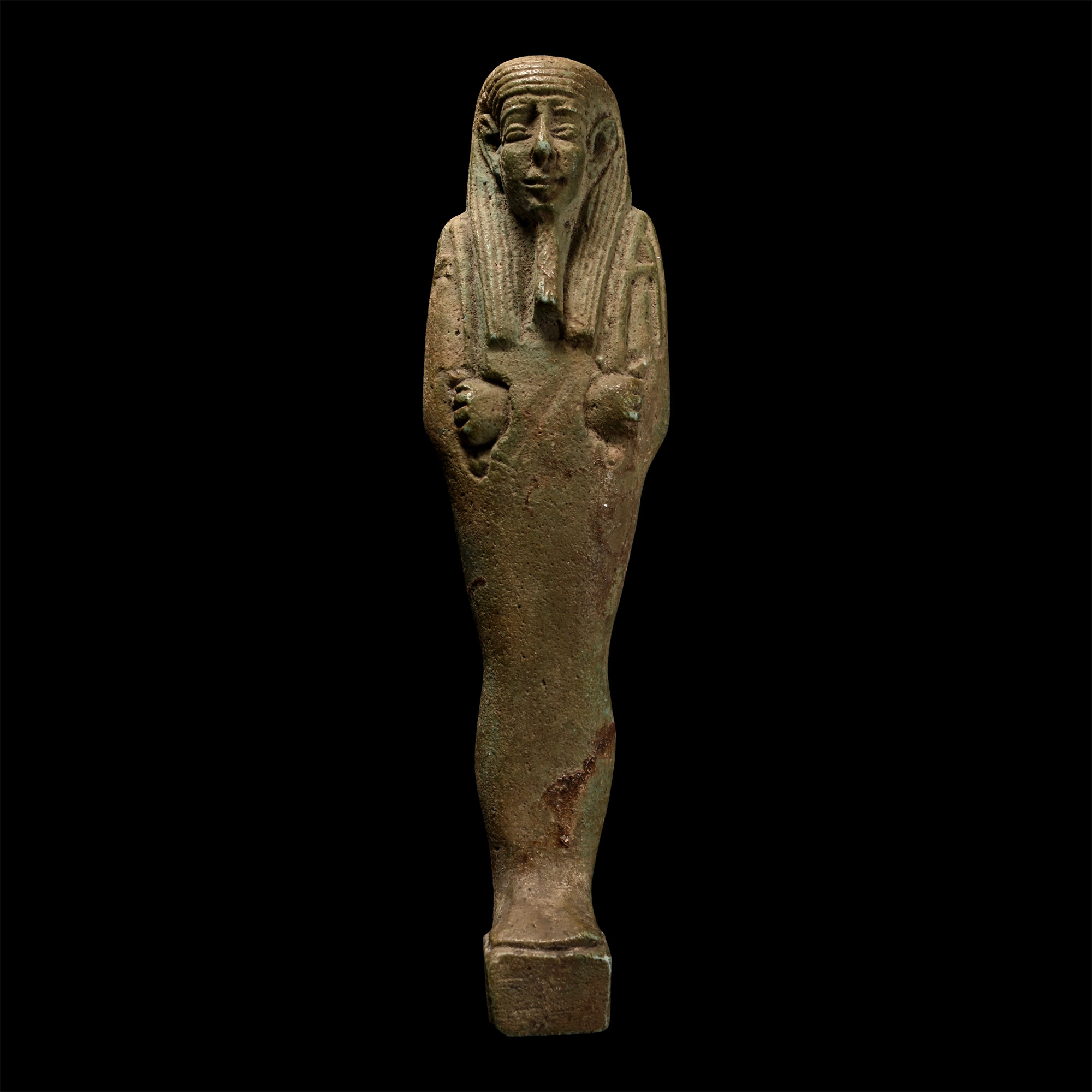
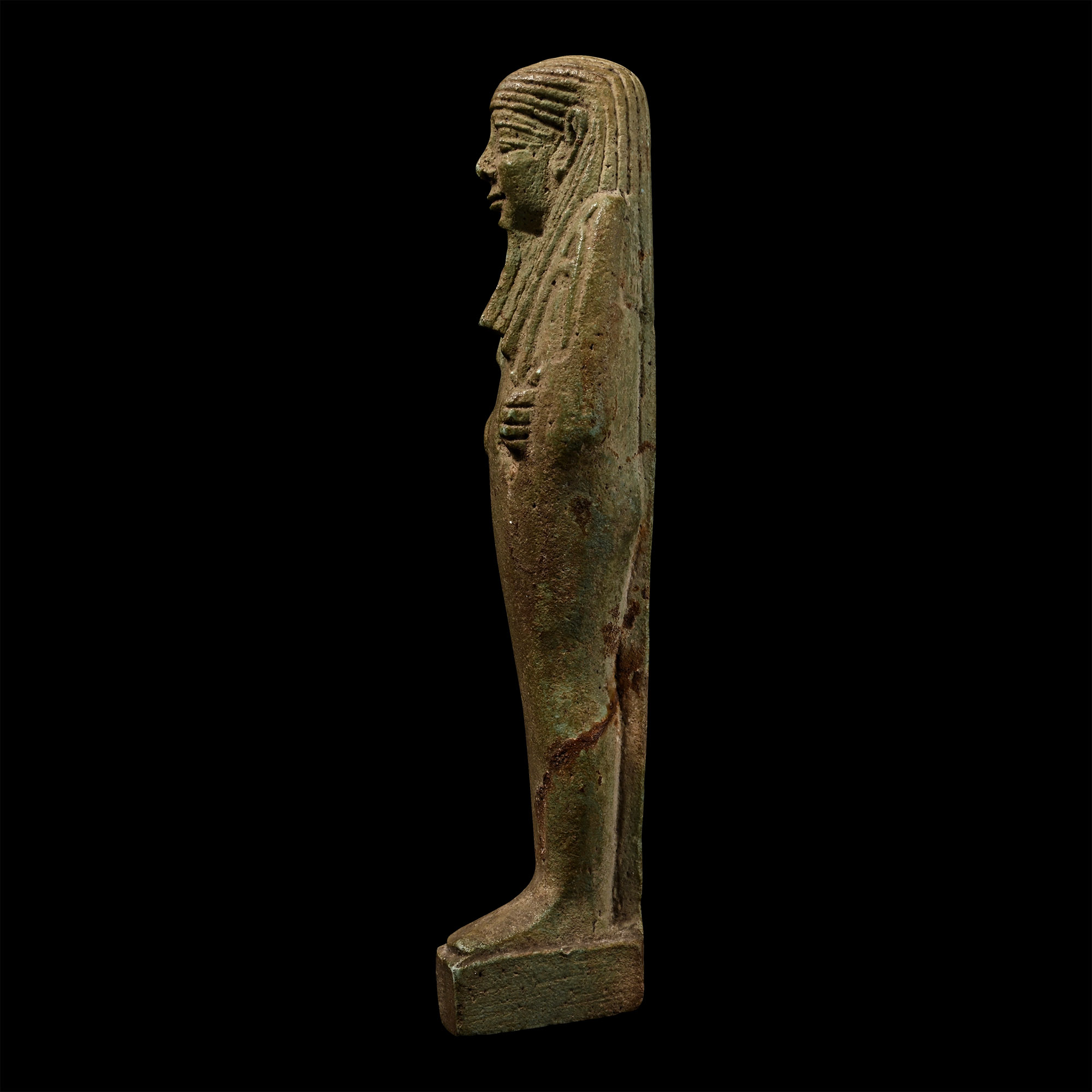
Egyptian Green Glazed Faience Shabti
LATE PERIOD, 664-332 B.C.
5 1/2 in. (102 grams, 14 cm).
Modelled with a slender mummiform body on a small rectangular base; the long face framed by a striated tripartite wig and false beard; the hands of the imperceptibly crossed arms hold a hoe and a pick; the right hand also holds a cord from which a seed bag hangs over the figure's back; a dorsal pillar on the reverse; uninscribed.
ProvenanceEx Ms.E.C.(1923-2014), Israel.
Inherited by his son D.L., Switzerland.
Although uninscribed, the distinctive long face, manner of hand styling and long striated wig lappets suggest that it may come from the same mould as another shabti in the World Museum, Liverpool (Janes, G., The Shabti Collections 6: A Selection from the World Museum, Liverpool, Lymm, 2016, p. 501, no. 264b).
CONDITIONTimeLine Auctions follows a vetting process to ensure the authenticity and legality of all items, reinforcing our commitment to integrity and responsible trading. Each antiquity, antique, and coin lot undergoes thorough examination by a vetting committee of at least ten external specialists, professional trade association members, scientists, and archaeologists: Our Vetting Process
AUCTIONS:
TimeLine is a leading auction house specialising in antiquities, ancient art, collectables, natural history, coins, medals, and books. Our auctions offer museums, collectors, historians, and enthusiasts the opportunity to acquire unique and historically significant pieces.
LOT 0591
Egyptian Green Glazed Faience Shabti
Estimate £1,000 - 1,400€1,160 - 1,620 (for guidance only)$1,350 - 1,890 (for guidance only)
Opening Bid
£550 (EUR 638; USD 743) ‡+BP*
-
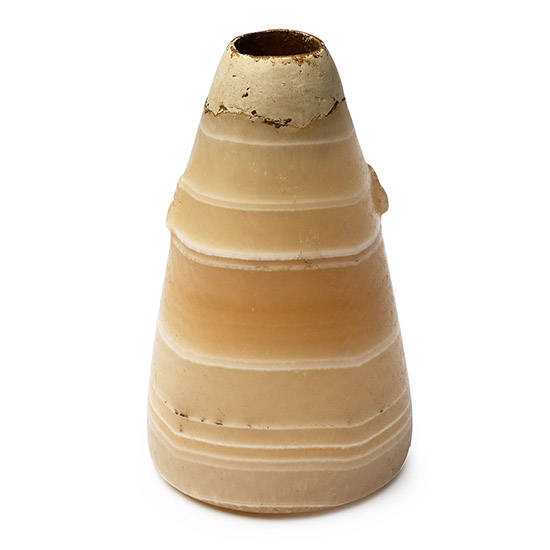
Egyptian Banded Agate Kohl Pot
Late Period, 664-332 B.C.Estimate: £400 - 600 (+bp*)
Opening Bid: £5
Cone-shaped body with traces of lug handles on the upper third; narrow opening at the top with a thin, flattened rim. 94 grams, 75 mm
UK private collection before 2000. Acquired on the UK art market. Private collection, London, UK.
This vessel's unusual triangular shape is thought to be limited to the Late Period; other comparable examples are known (e.g. Barbotin, C., Collection égyptienne: Musée Granet - Aix-en-Provence, Aix-en-Provence, 1995, p. 166, no. 97). -
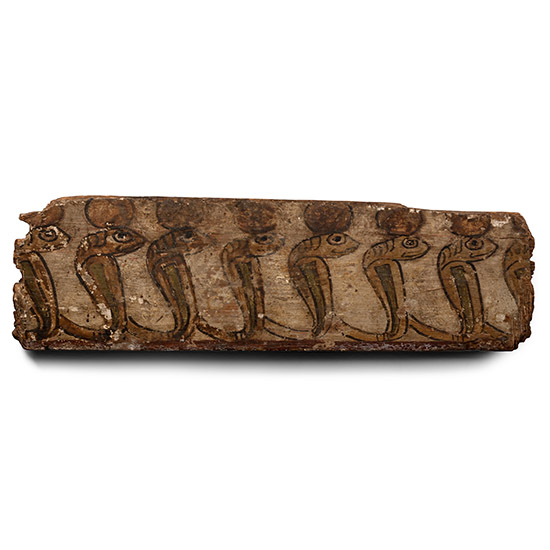
Egyptian Canopic Chest Fragment with Cobras
Late Period-Ptolemaic Period, 664-30 B.C.Estimate: £400 - 600 (+bp*)
Bids: 2 | Current Bid: £25
Rectangular panel bearing a frieze depicting a series of rearing cobras wearing sun-disc headdresses. 176 grams, 27 cm
Ex E.B.W. Chappelow collection, January 1958. From the private collection of Peter Clayton, FCILIP, Dip, Arch, FSA, FRNS, Hemel Hempstead, Hertfordshire, UK; formed since the late 1950s. Accompanied by an old handwritten information card by Peter Clayton, collection no.10.
Friezes of rearing cobras at the top of canopic chests served as guardian figures, protecting the visceral containers within. Arguably, the most famous canopic chest, decorated with a frieze of rearing cobras, is the gilded one of Pharaoh Tutankhamun. -
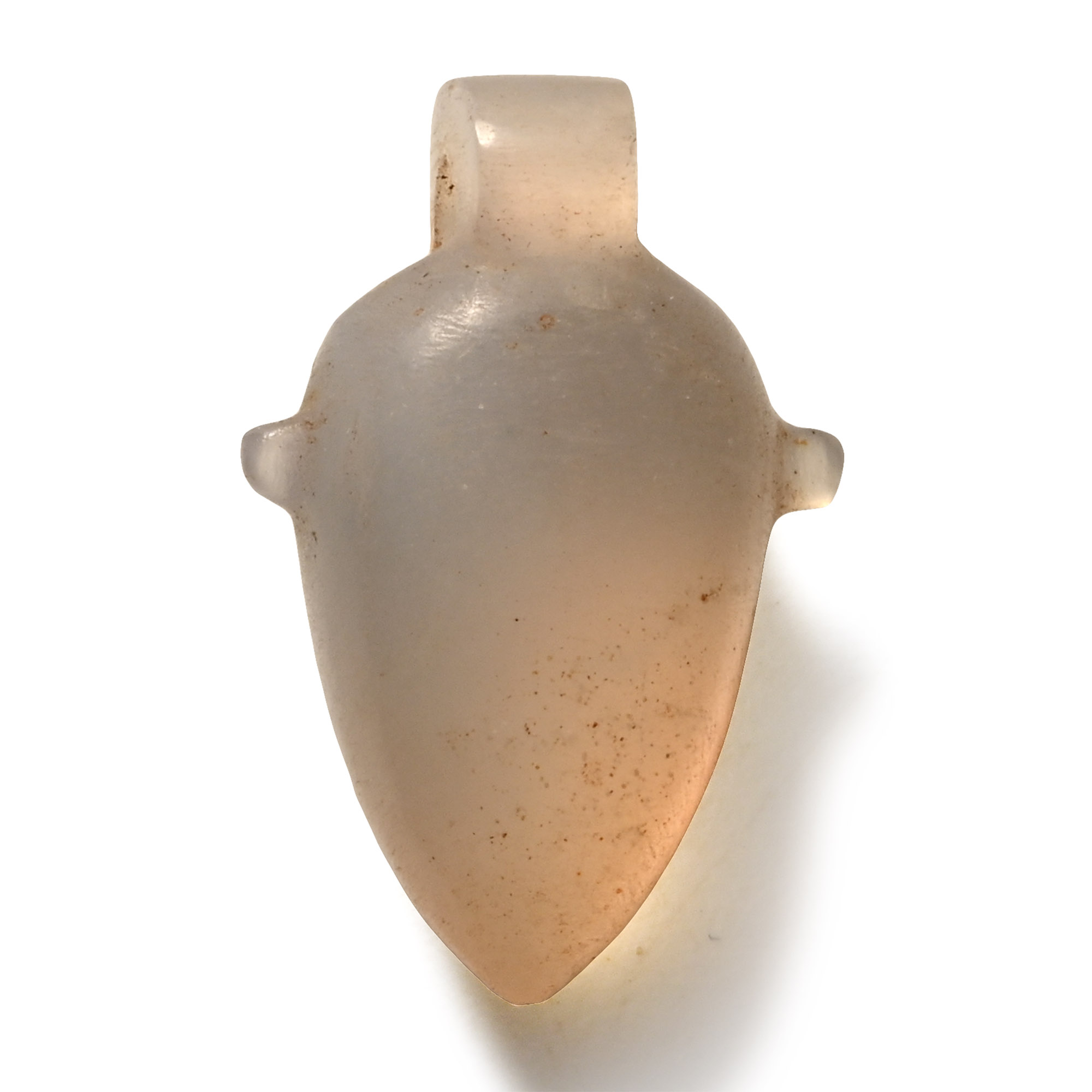
Egyptian Chalcedony Heart Amulet
Late Period, 664-332 B.C.Estimate: £100 - 140 (+bp*)
Opening Bid: £50
Carved with lateral lugs and surmounted by a suspension loop. 0.85 grams, 15 mm
Ex London collection, 1990s.
Ancient Egyptians viewed the heart (ib) as the seat of intelligence, emotions, behaviour, and memory. During the ‘Weighing of the Heart’ ceremony, it spoke for the deceased before Osiris and accounted for their actions. For this reason, Egyptians placed heart amulets on mummies to protect the organ and secure a favourable judgment.
