
Loading, please wait...
LOT 0024
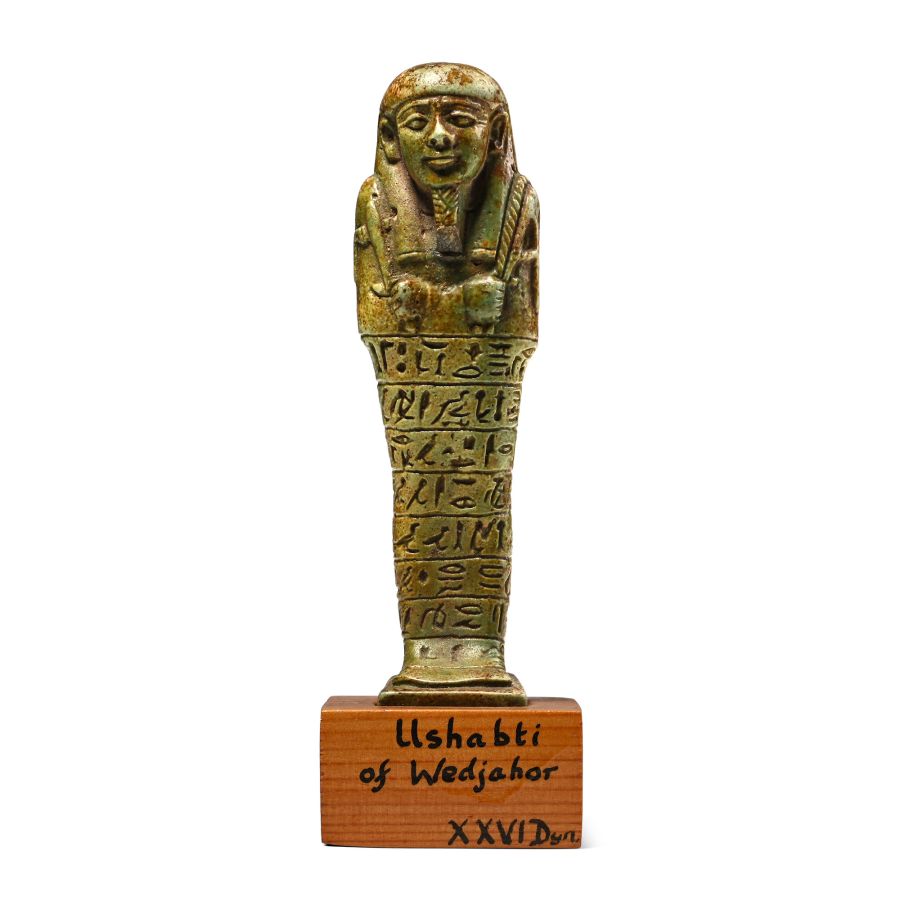
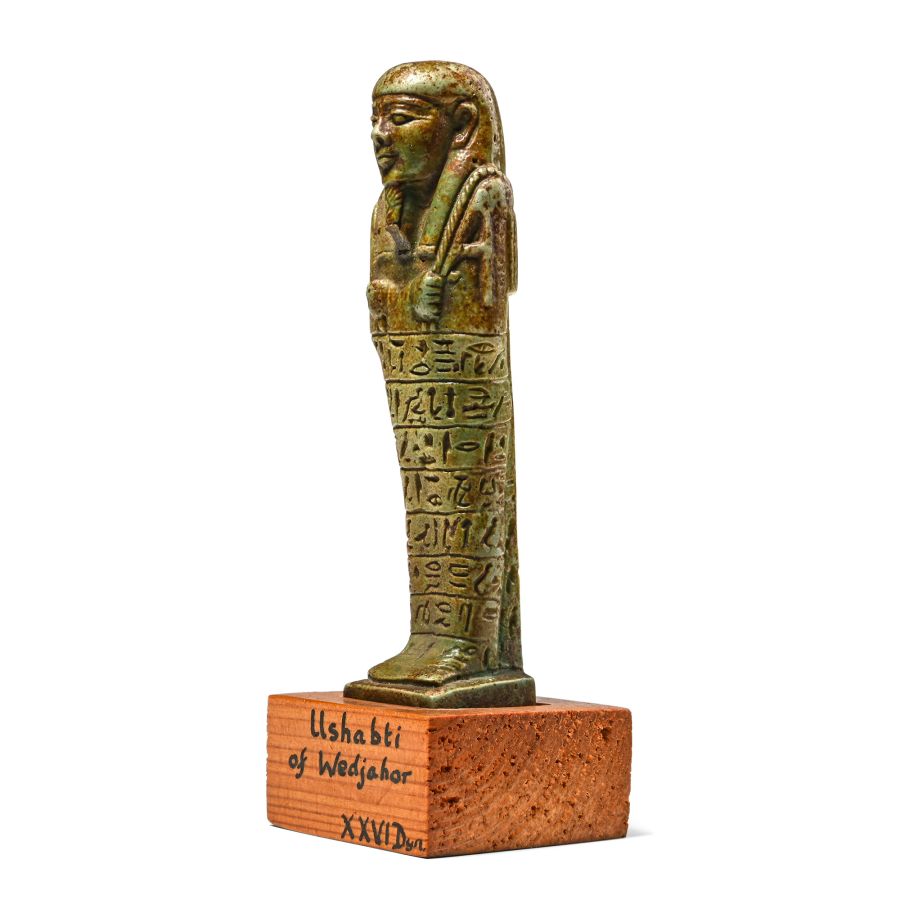
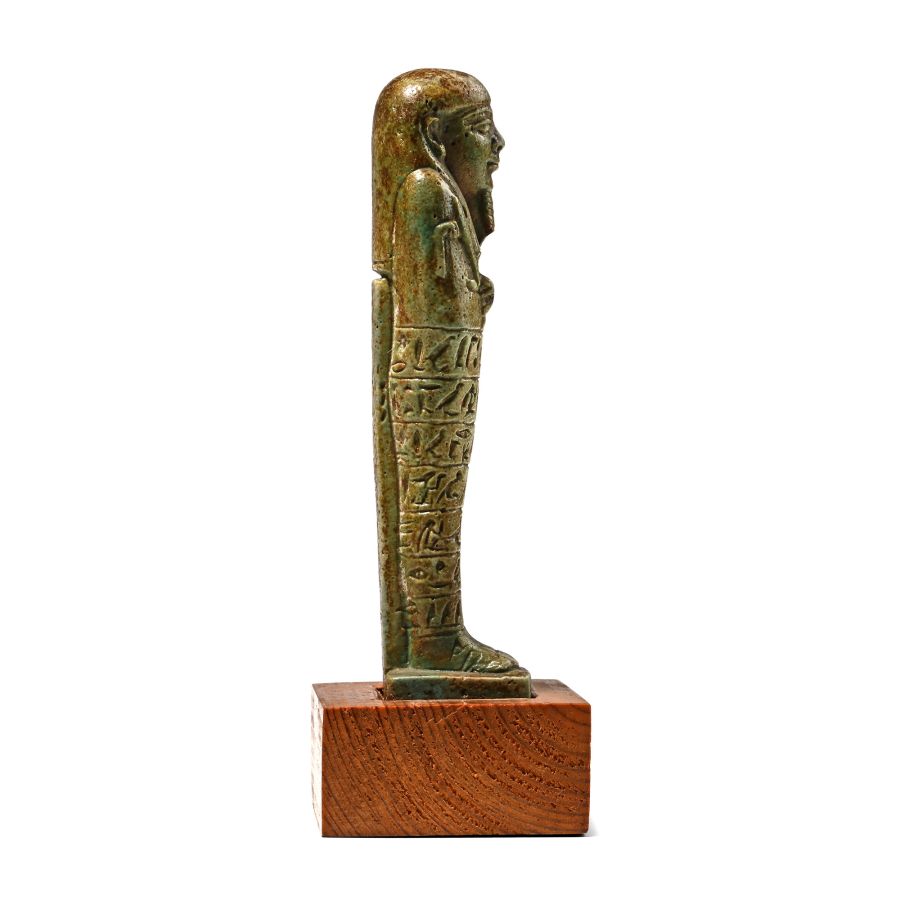
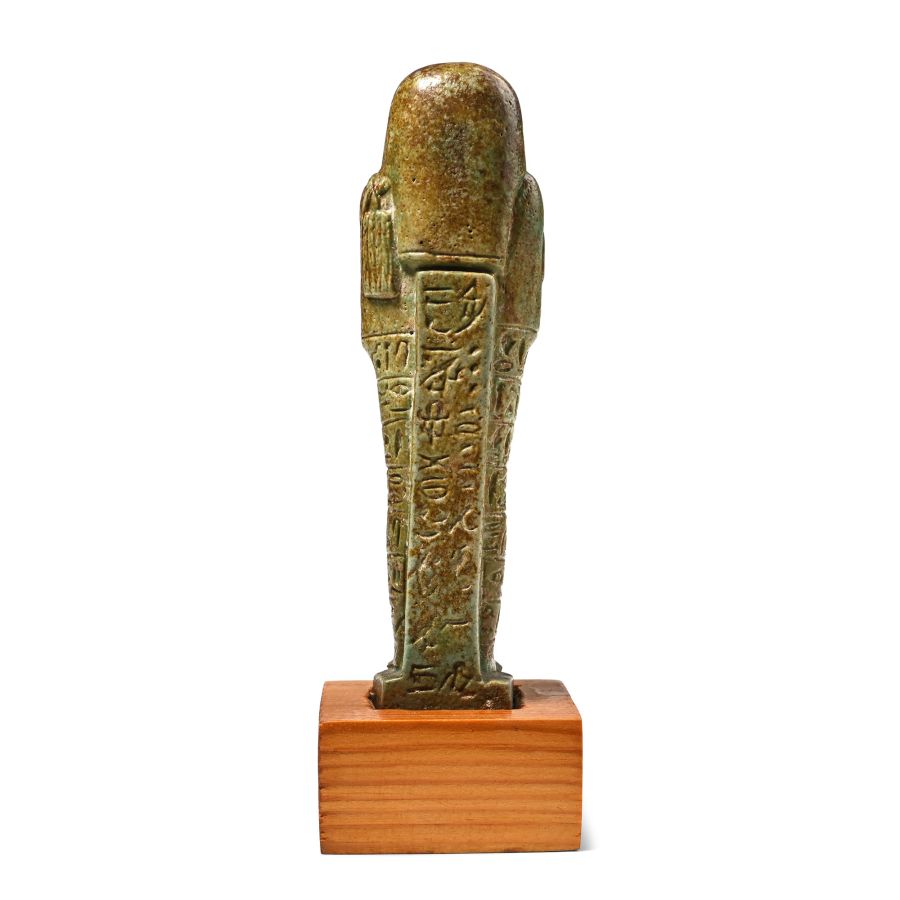
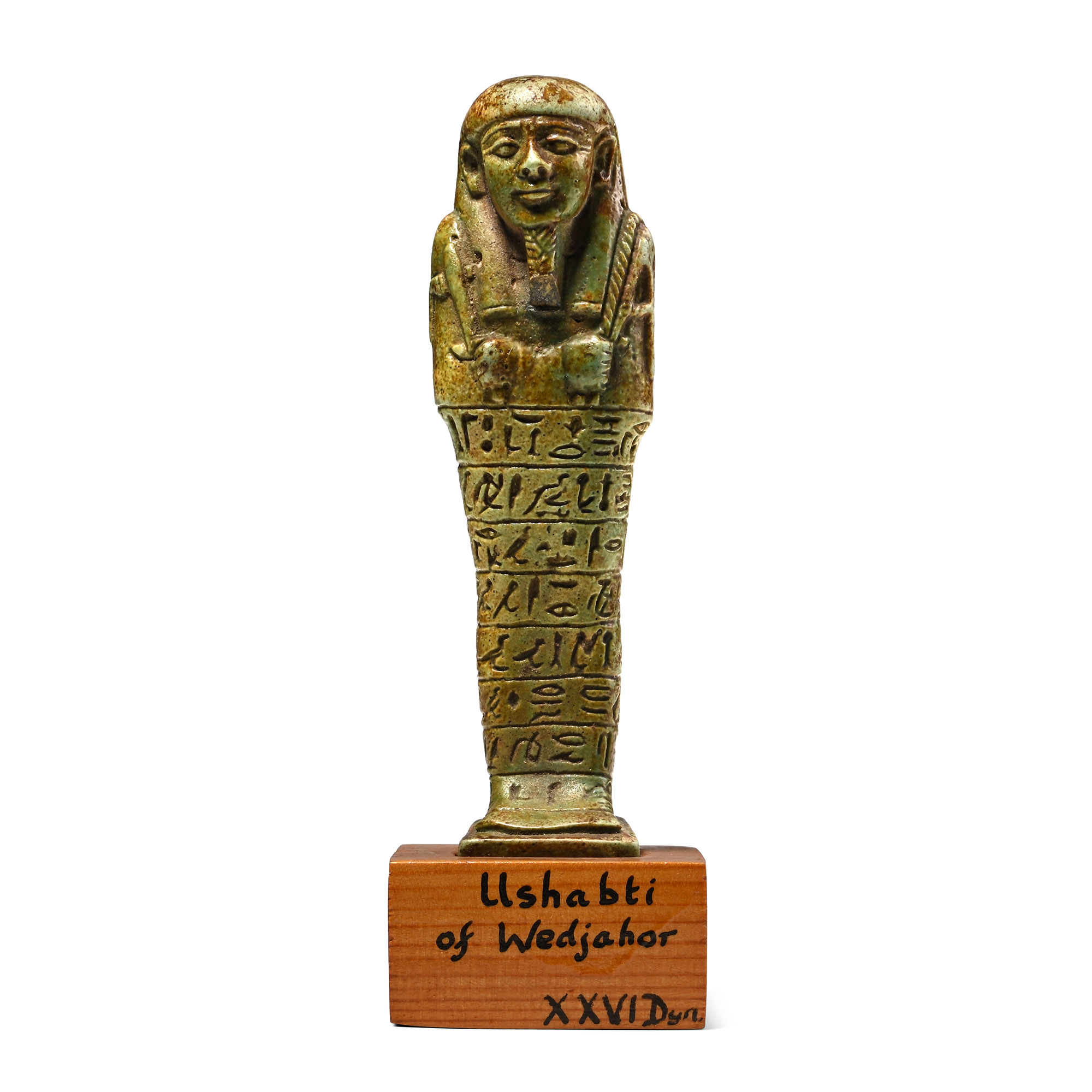
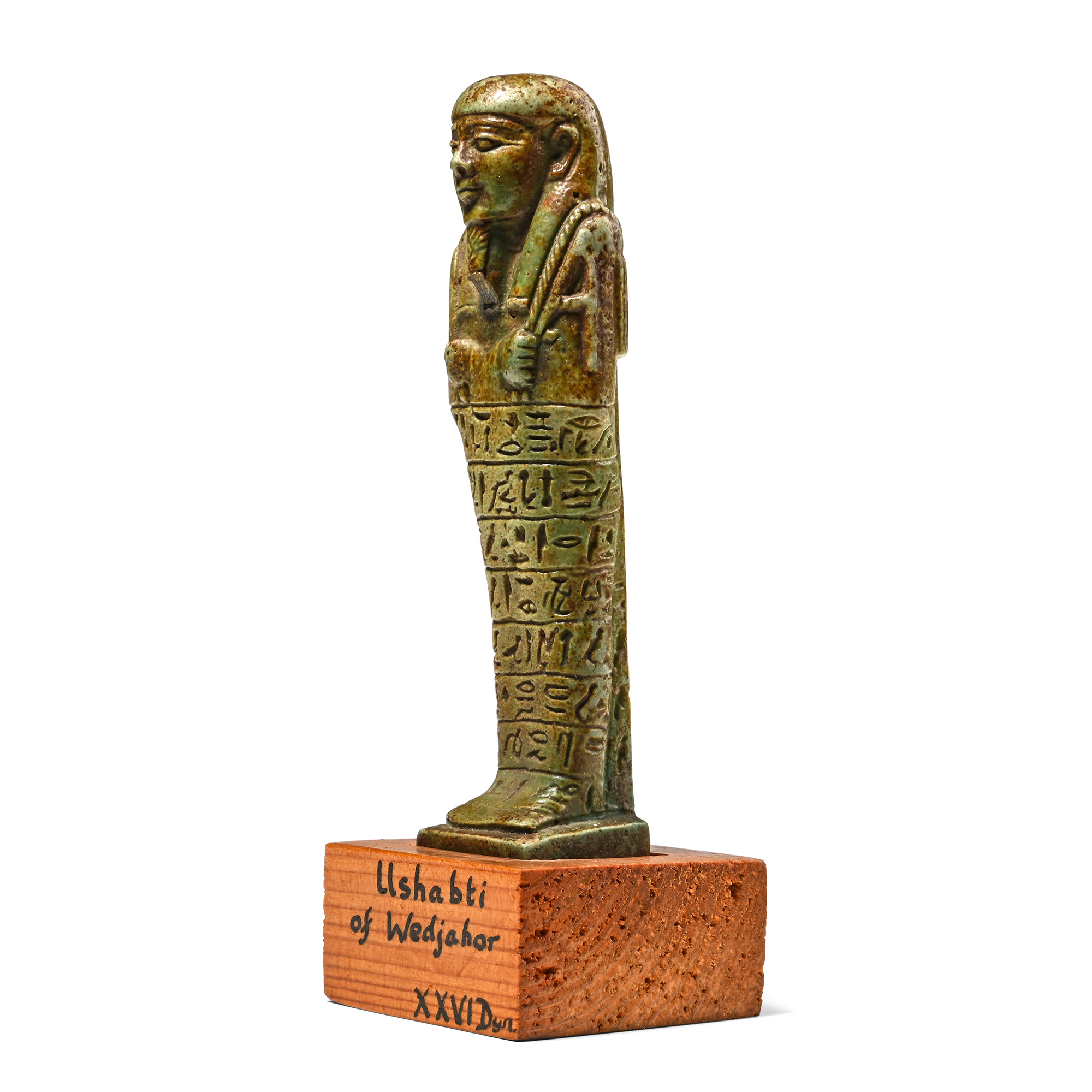
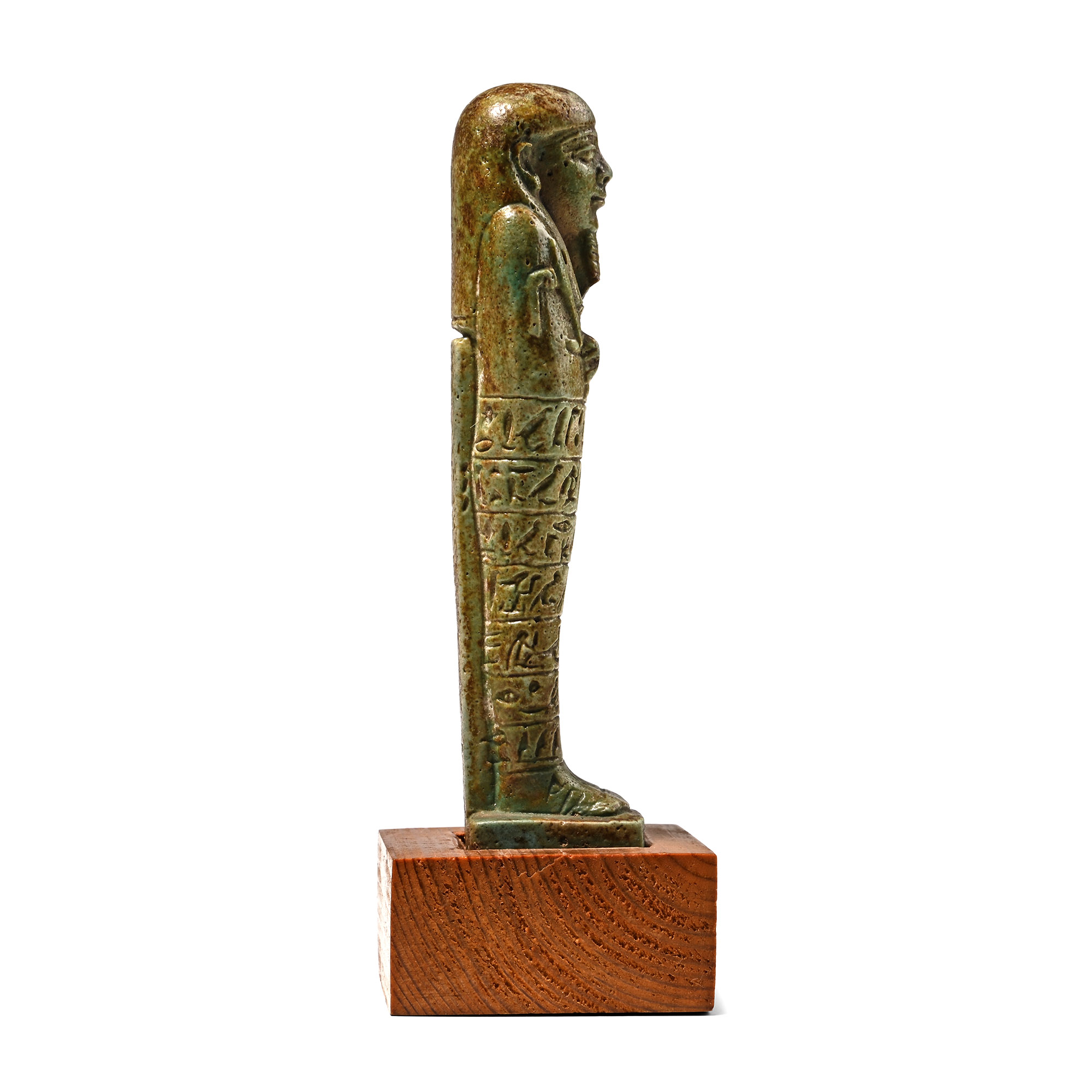
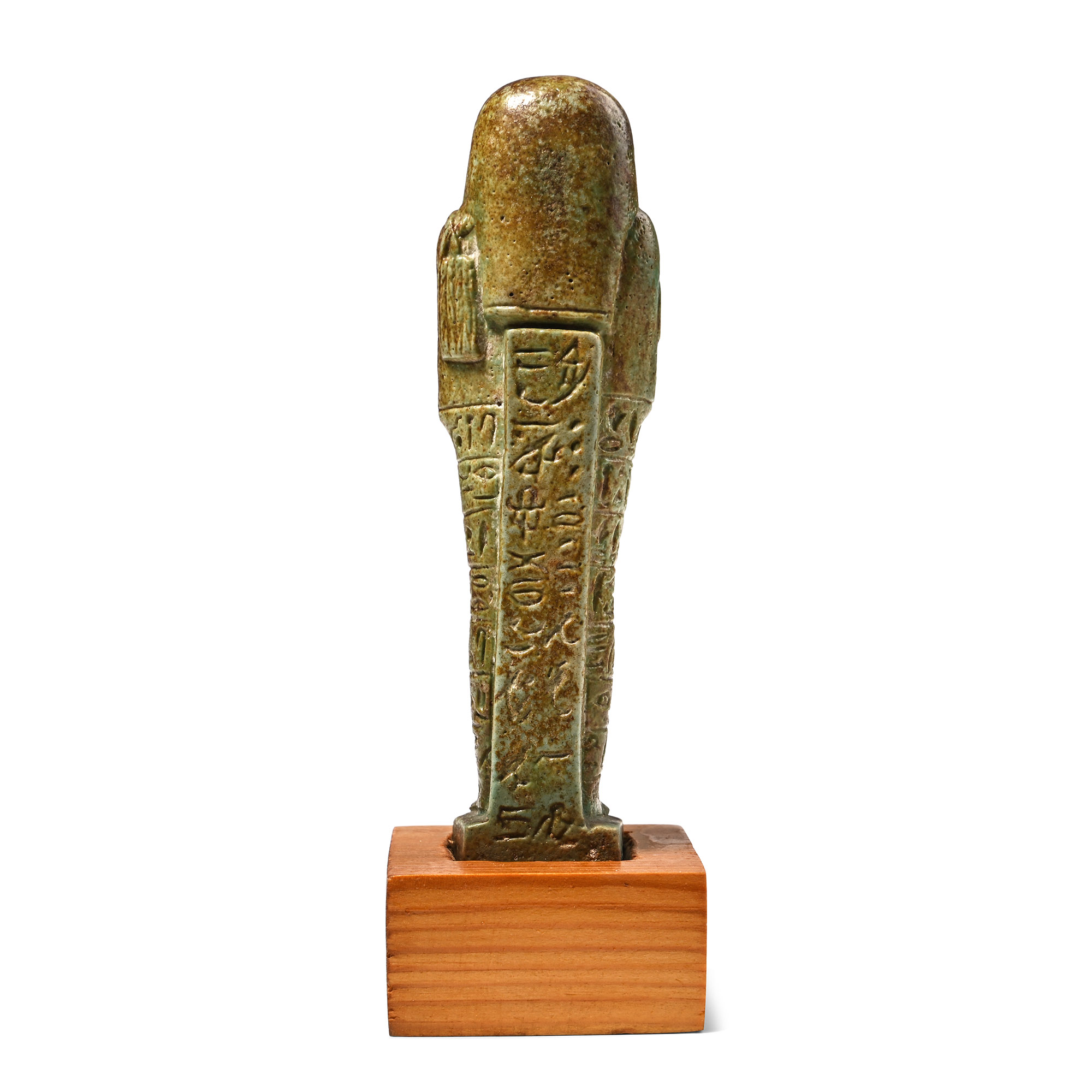
Egyptian Green Glazed Faience Shabti of Wedjahor
LATE PERIOD, 26TH DYNASTY, 664-525 B.C.
4 1/4 in. (5 in.) (63.9 grams, 10.9 cm (81.2 grams total, 12.6 cm including stand)).
Mummiform figure wearing a plain tripartite wig with horizontal line detailing at the lappet ends, a braided false beard, a finely modelled face, arms crossed with the left hand holding a pick and the right a hoe, and a tightly twisted cord of a long rectangular seed bag, which hangs over the left shoulder; seven horizontal bands of hieroglyphs on the body, with an eighth on the foot, and more entirely filling the dorsal pillar, giving Chapter 6 of the Book of the Dead; with a display stand bearing the legend 'Ushabti of Wedjahor XXVI Dyn'. [No Reserve]
ProvenanceAcquired at Michael's, Crawford Street, 6th January 1960, £3:5:0 for two.
From the private collection of Peter Clayton, FCILIP, Dip, Arch, FSA, FRNS, Hemel Hempstead, Hertfordshire, UK; formed since the late 1950s.
Accompanied by an old handwritten information card by Peter Clayton, collection no.69A.
TimeLine Auctions follows a vetting process to ensure the authenticity and legality of all items, reinforcing our commitment to integrity and responsible trading. Each antiquity, antique, and coin lot undergoes thorough examination by a vetting committee of at least ten external specialists, professional trade association members, scientists, and archaeologists: Our Vetting Process
AUCTIONS:
TimeLine is a leading auction house specialising in antiquities, ancient art, collectables, natural history, coins, medals, and books. Our auctions offer museums, collectors, historians, and enthusiasts the opportunity to acquire unique and historically significant pieces.
LOT 0024
Egyptian Green Glazed Faience Shabti of Wedjahor
Estimate £800 - 1,000€930 - 1,160 (for guidance only)$1,080 - 1,350 (for guidance only)
-
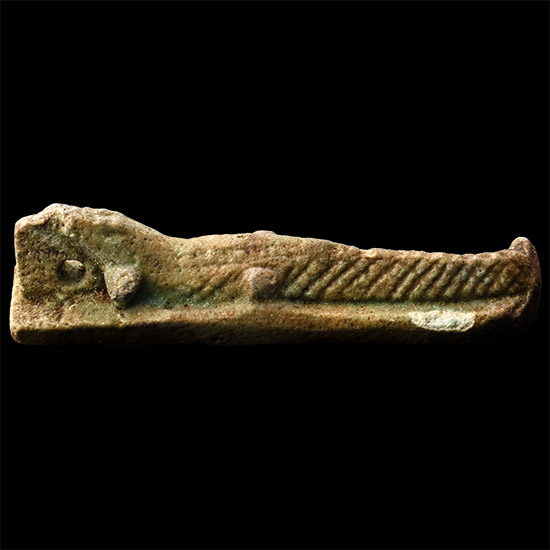
Egyptian Green Glazed Faience Crocodile God Amulet
Late-Ptolemaic Period, 664-30 B.C.Estimate: £80 - 100 (+bp*)
Bids: 1 | Current Bid: £5
An amulet featuring a crocodile with its tail curled, resting on a long, rectangular plinth; the reptile's scales are finely rendered, with an integral suspension hole beneath its chin. 3.07 grams, 41 mm
From the private collection of Peter Clayton, FCILIP, Dip, Arch, FSA, FRNS, Hemel Hempstead, Hertfordshire, UK; formed since the late 1950s.
Although crocodiles were fearsome creatures, the Egyptian crocodile god Sobek was a benevolent god of water, fertility and rebirth in the afterlife. -
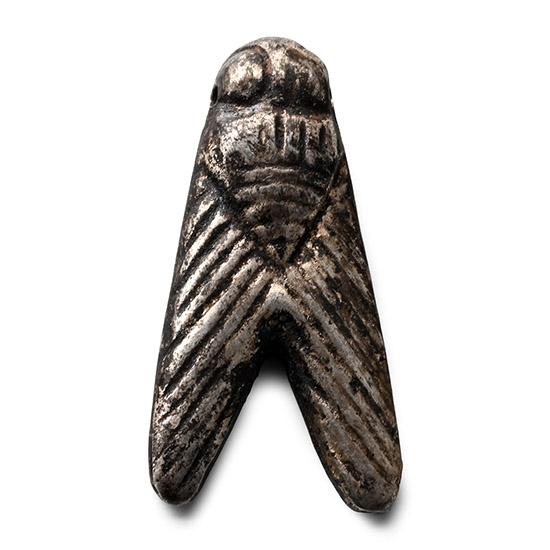
Egyptian Silver Fly Amulet
Late Period, 664-332 B.C.Estimate: £80 - 100 (+bp*)
Bids: 1 | Current Bid: £5
With detailing to the body and head, ribbed suspension loop above the head. 1.09 grams, 17 mm
London, UK, gentleman, 1990s.
Fly amulets were believed to protect against insect bites and to ward off troublesome flying creatures through apotropaic magic. Some believe they may have even symbolised the fly’s fecundity. Additionally, pharaohs bestowed gold fly-shaped pendants as military awards to honour soldiers' bravery and persistence in battle. -
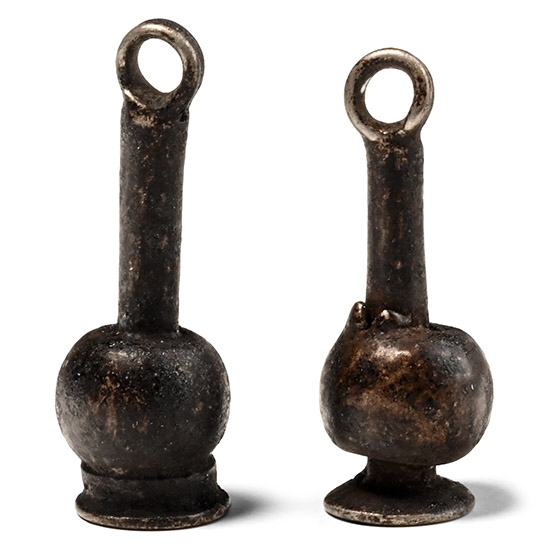
Egyptian Silver Poppy Amulet Pair
Late Period, 664-332 B.C.Estimate: £80 - 100 (+bp*)
Bids: 1 | Current Bid: £5
Each a bulbous poppy-head with a loop at the apex. 2.04 grams total, 17-18 mm
Ex mid 19th century collection.
