
Loading, please wait...

LOT 0417
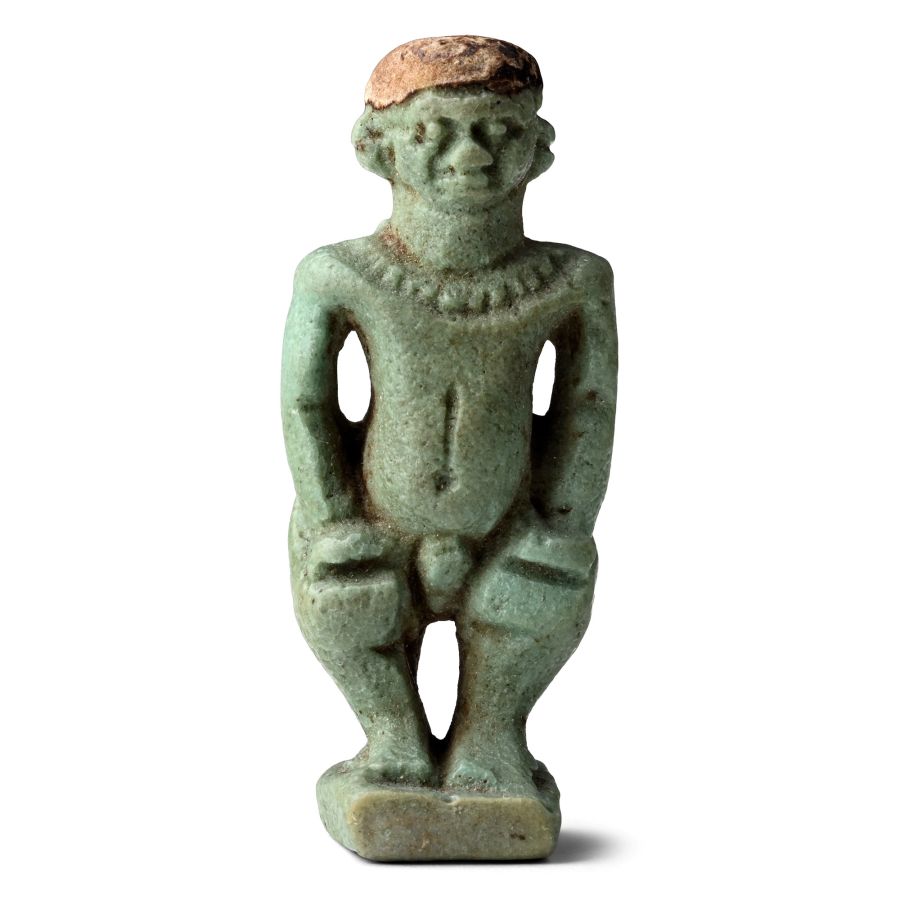
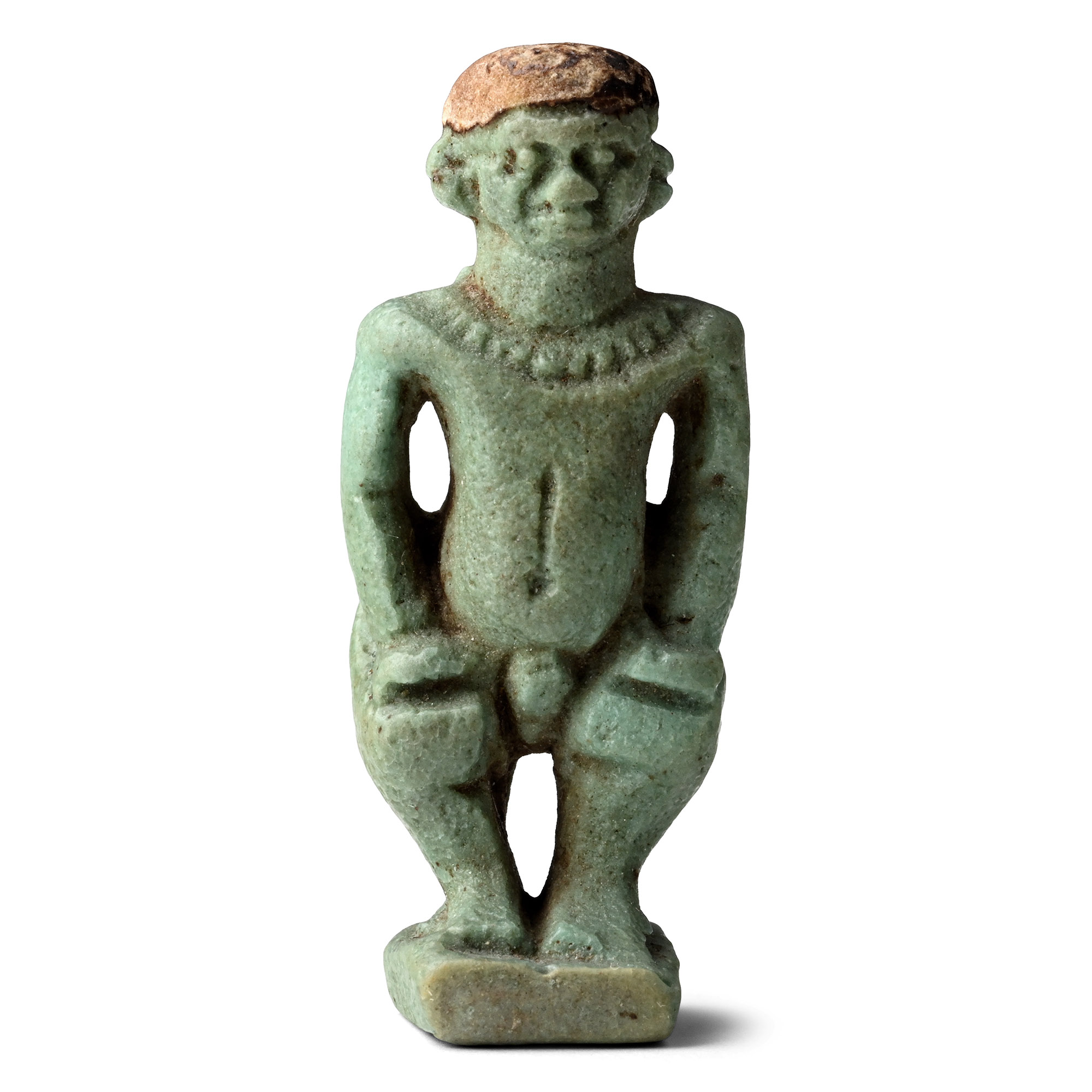
Egyptian Green Glazed Faience Pataikos Amulet
LATE PERIOD-PTOLEMAIC PERIOD, 664-30 B.C.
1 1/2 in. (5.7 grams, 39 mm).
Typical nude, bandy-legged figure wearing a beaded collar, with a suspension loop at the back of the head. [No Reserve]
ProvenanceFrom the private collection of Peter Clayton, FCILIP, Dip, Arch, FSA, FRNS, Hemel Hempstead, Hertfordshire, UK; formed since the late 1950s.
CONDITIONTimeLine Auctions follows a vetting process to ensure the authenticity and legality of all items, reinforcing our commitment to integrity and responsible trading. Each antiquity, antique, and coin lot undergoes thorough examination by a vetting committee of at least ten external specialists, professional trade association members, scientists, and archaeologists: Our Vetting Process
AUCTIONS:
TimeLine is a leading auction house specialising in antiquities, ancient art, collectables, natural history, coins, medals, and books. Our auctions offer museums, collectors, historians, and enthusiasts the opportunity to acquire unique and historically significant pieces.
LOT 0417
Egyptian Green Glazed Faience Pataikos Amulet
Estimate £100 - 140€120 - 160 (for guidance only)$140 - 190 (for guidance only)
-
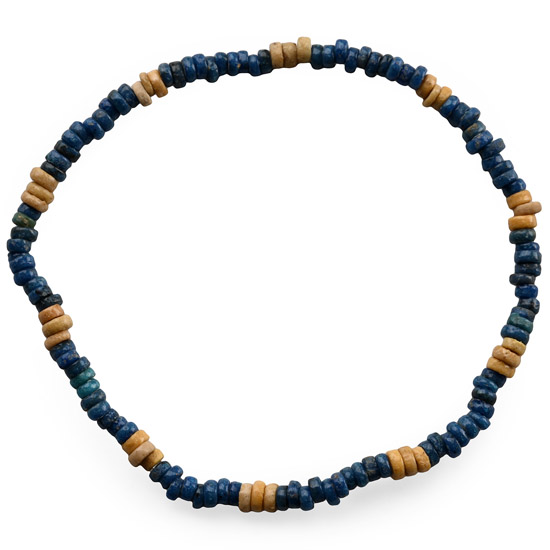
Egyptian Faience Mummy Bead Bracelet
Late Period, 664-332 B.C.Estimate: £60 - 80 (+bp*)
Opening Bid: £5
Composed of alternating blue and cream annular beads, restrung with an elasticated string. 2.09 grams, 17 cm
Ex Ancient Art Shop, Windsor, UK, 1990s. Ex private collection. -
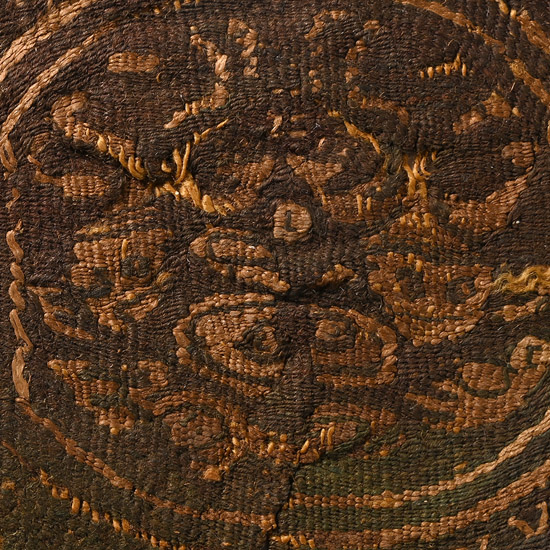
Egyptian Coptic Tunic Textile Fragment of an Orbiculus with Facing Military Horsemen
Circa 7th century A.D.Estimate: £70 - 90 (+bp*)
Bids: 1 | Current Bid: £5
Featuring a large central floral motif, divided into sections containing rhomboid patterns and bordered by meander designs, executed in a tapestry weave using raw wool in reddish-purple, yellow, and dark brown, with an S-twist. 4.15 grams, 10.7 cm
Acquired 1970s-1996. Property of a North American collector. London collection, 2016.
In the Late Roman Period, round orbiculi decorated the shoulders and the lower part of tunics and inner tunics. These fabrics were of great decorative finesse, displaying an unusual and extremely well-preserved colour palette. When the tunic came to the end of its life, these embroideries could be recycled and patched onto another garment. The motif of the opposed horsemen could be related to a military tunic. -
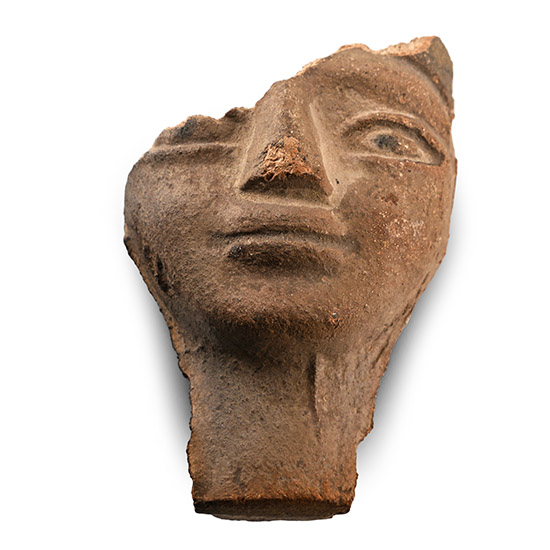
Graeco-Egyptian Terracotta Head of a Lady
Hellenistic Period, circa 2nd century B.C.Estimate: £100 - 140 (+bp*)
Bids: 1 | Current Bid: £5
Moulded in the half-round with fine facial detailing. 35.4 grams, 62 mm
Acquired 21st March 1965. From the private collection of Peter Clayton, FCILIP, Dip, Arch, FSA, FRNS, Hemel Hempstead, Hertfordshire, UK; formed since the late 1950s. Accompanied by an old handwritten information card by Peter Clayton, collection no.109.
