
Loading, please wait...


LOT 0427
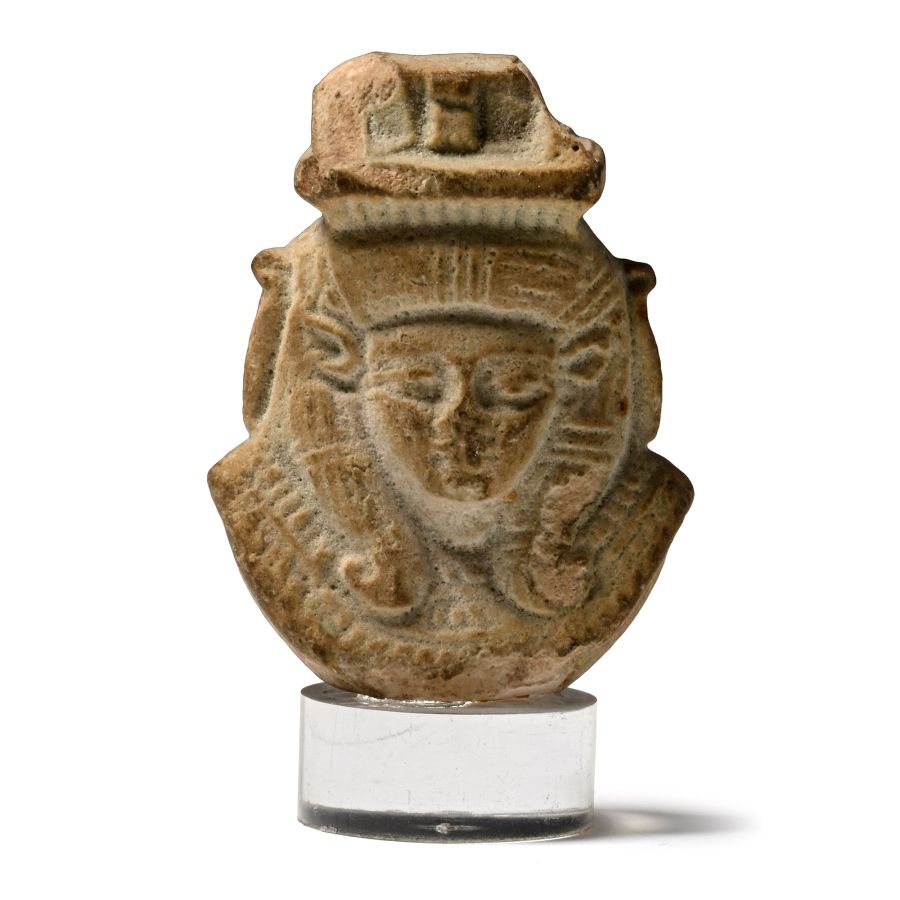
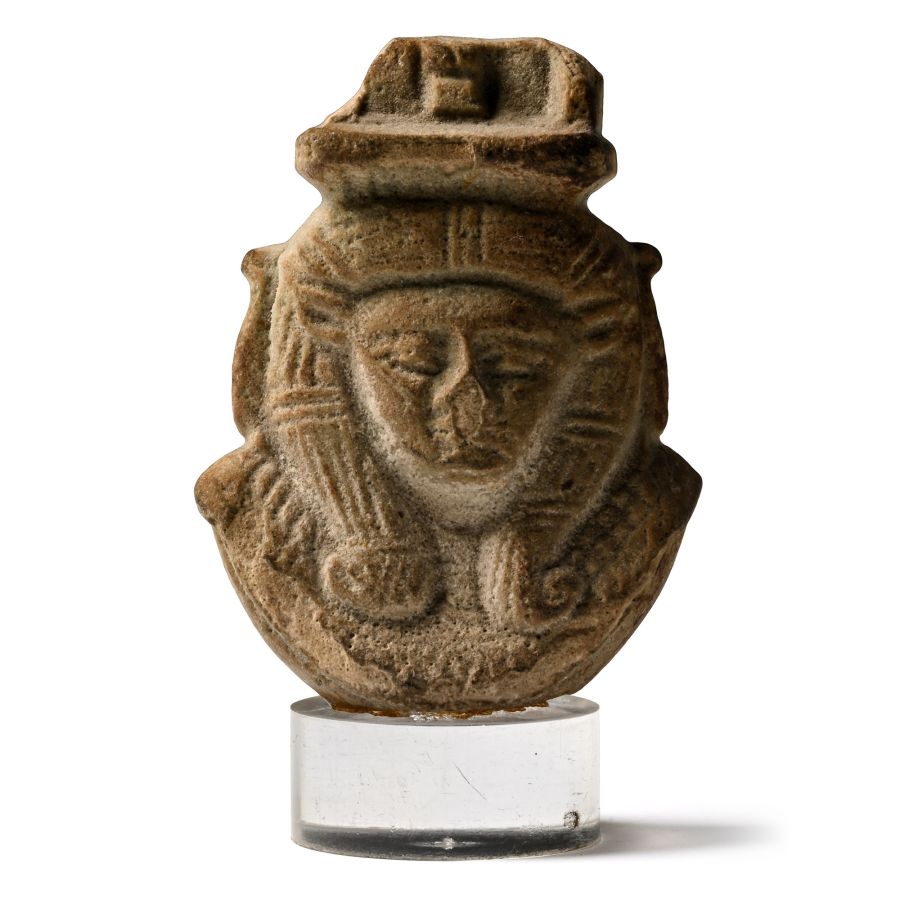
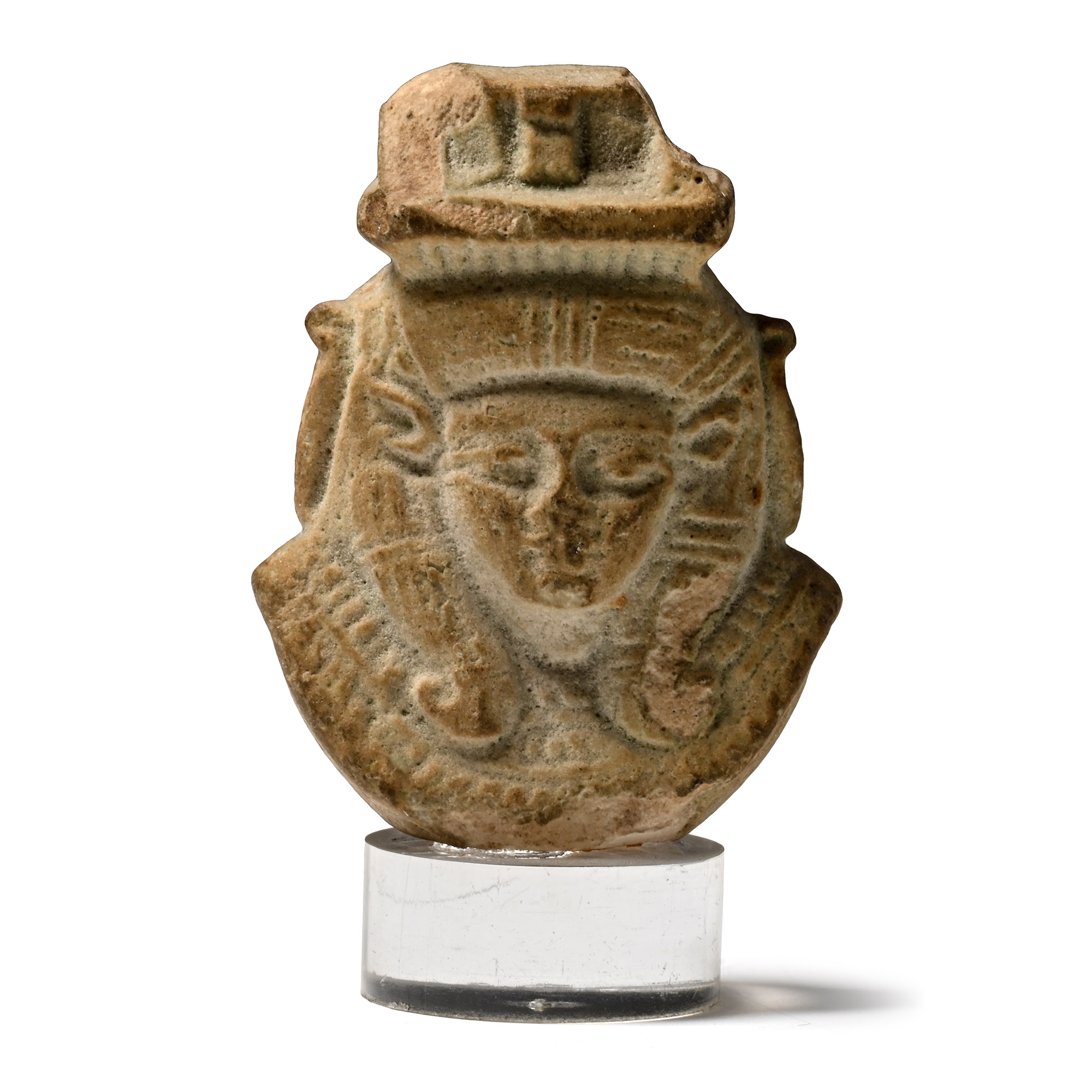
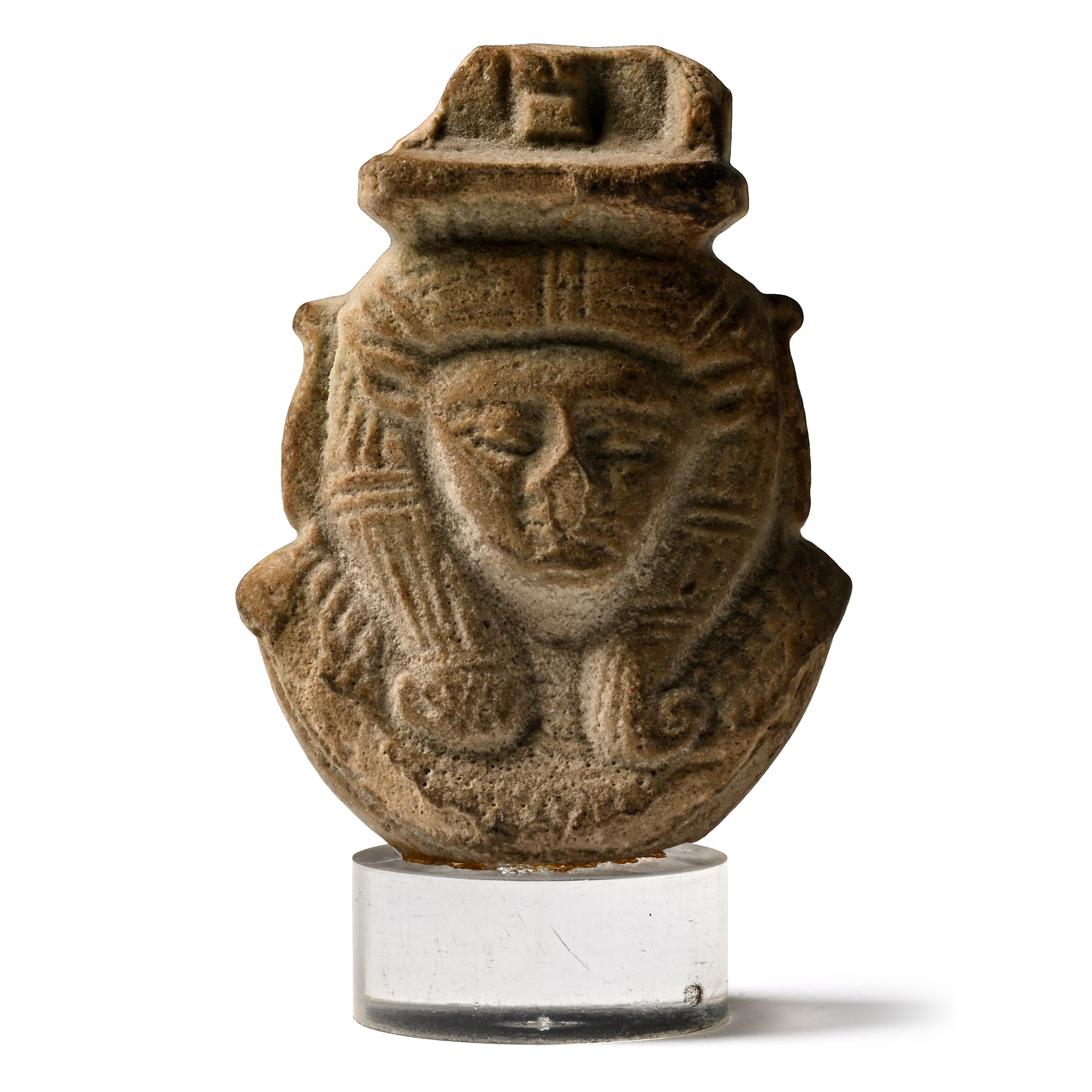
Egyptian Green Glazed Faience Head of the Goddess Hathor from a Sistrum
LATE PERIOD, 26TH DYNASTY, CIRCA 600-700 B.C.
2 in. (18.7 grams total, 49 mm including stand).
Bifacial bust of Hathor, depicted as a woman's head with cow ears, wearing a heavy wig with curled lappet ends and uraei on either side, mounted on a custom-made stand. [No Reserve]
ProvenanceAcquired from Caledonian market, 16th March 1962, for 5 shillings.
From the private collection of Peter Clayton, FCILIP, Dip, Arch, FSA, FRNS, Hemel Hempstead, Hertfordshire, UK; formed since the late 1950s.
Accompanied by an old handwritten information card by Peter Clayton, collection no.92.
TimeLine Auctions follows a vetting process to ensure the authenticity and legality of all items, reinforcing our commitment to integrity and responsible trading. Each antiquity, antique, and coin lot undergoes thorough examination by a vetting committee of at least ten external specialists, professional trade association members, scientists, and archaeologists: Our Vetting Process
AUCTIONS:
TimeLine is a leading auction house specialising in antiquities, ancient art, collectables, natural history, coins, medals, and books. Our auctions offer museums, collectors, historians, and enthusiasts the opportunity to acquire unique and historically significant pieces.
LOT 0427
Egyptian Green Glazed Faience Head of the Goddess Hathor from a Sistrum
Estimate £300 - 400€350 - 460 (for guidance only)$410 - 540 (for guidance only)
Opening Bid
£5 (EUR 6; USD 7) +BP*
-
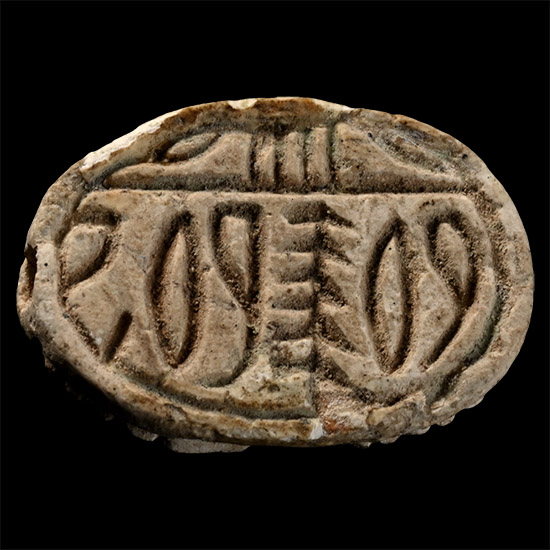
Egyptian Steatite Scarab with Hieroglyphs
Second Intermediate Period, circa 1782-1550 B.C.Estimate: £40 - 60 (+bp*)
Opening Bid: £5
With incised anatomical detailing on the body, the underside bears the hieroglyphs rꜤ-n-rꜤ. 2.04 grams, 17 mm
Acquired from various London-based, UK, antiquity dealers. From a Derbyshire gentleman's private museum formed from the late 1970s-early 1980s. -
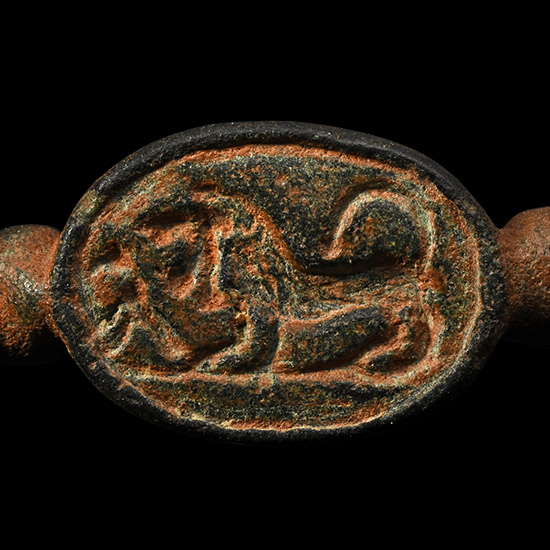
Phoenician Bronze Oval Seal Pendant with Lion
Late 1st millennium B.C.Estimate: £500 - 700 (+bp*)
Opening Bid: £250
Ellipsoid plaque with folded lateral arms and ribbed suspension loop above; the underside decorated with a depiction of a lion attacking a man or animal. 22 grams, 36 mm
London gentleman's collection, 1970-1990s, by descent. -
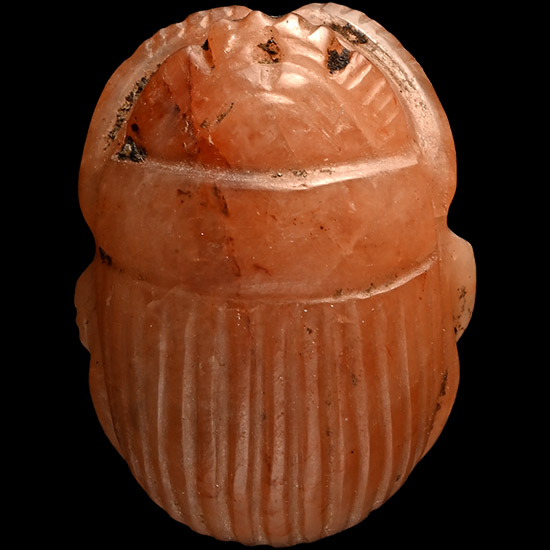
Egyptian Carnelian Heart Scarab
Late Period, 664-332 B.C.Estimate: £800 - 1,000 (+bp*)
Opening Bid: £400
With fine anatomical detailing on the body and striated wingcase, legs folded beneath the body and flanked by a ribbed suspension loop. 7.35 grams, 24 mm
From a mid 20th century collection.
The scarab amulet was one of ancient Egypt’s most widespread symbols, signifying rebirth, transformation, and protection. Modelled on the dung beetle associated with the sun god Khepri—believed to roll the sun across the sky—it symbolised the cycle of life and renewal. Used widely from the early Middle Kingdom onward, scarabs served as funerary amulets, personal charms, and seals, often inscribed with prayers or names. They reflect both spiritual beliefs and daily life in ancient Egypt.
