
Loading, please wait...


LOT 0487
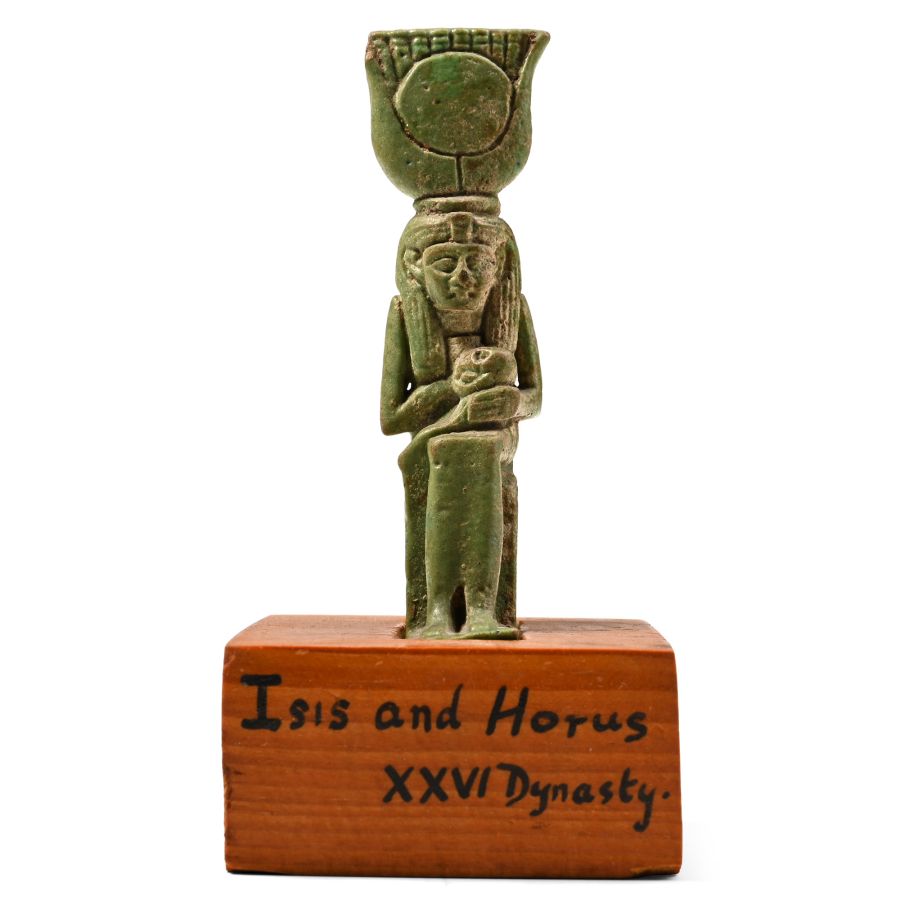
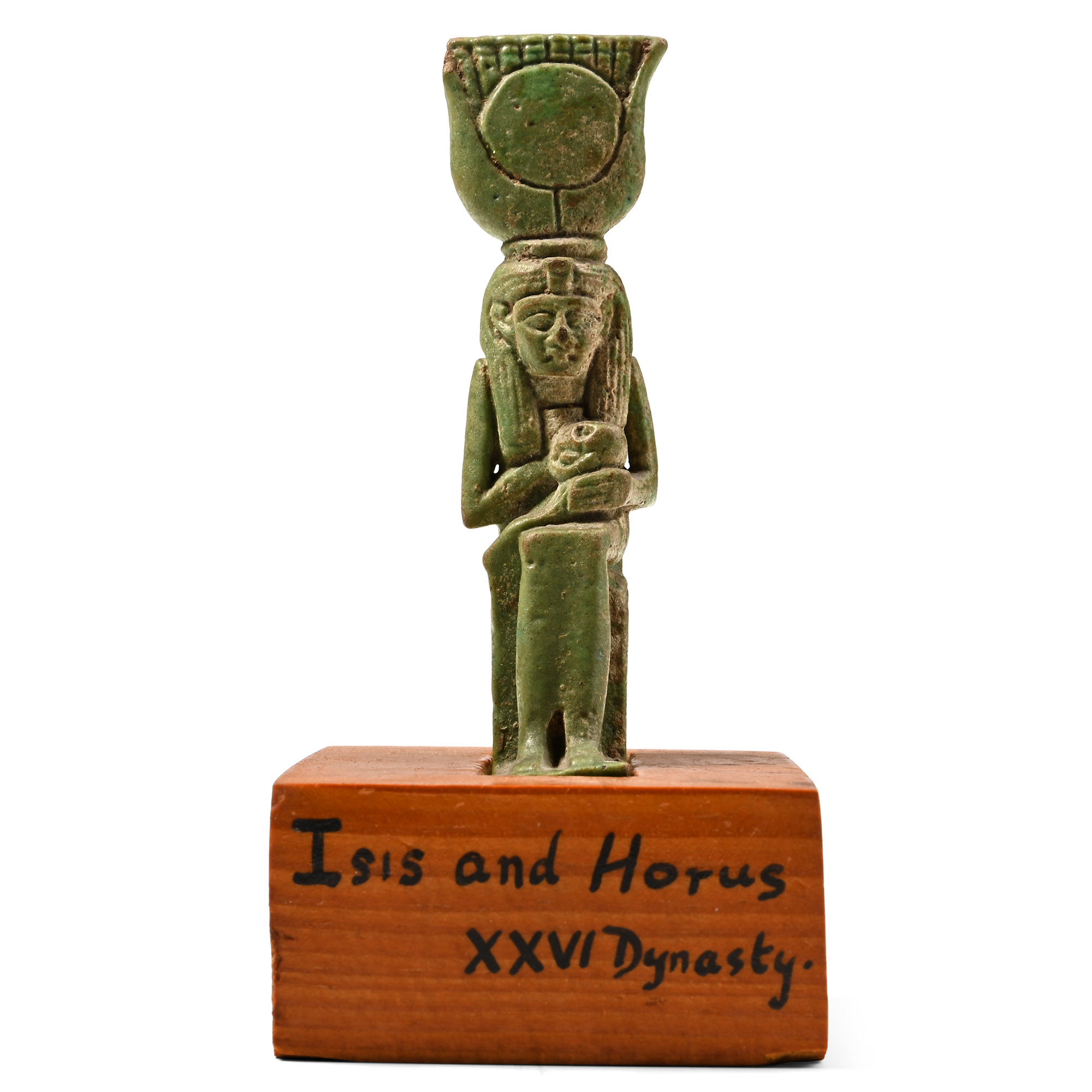
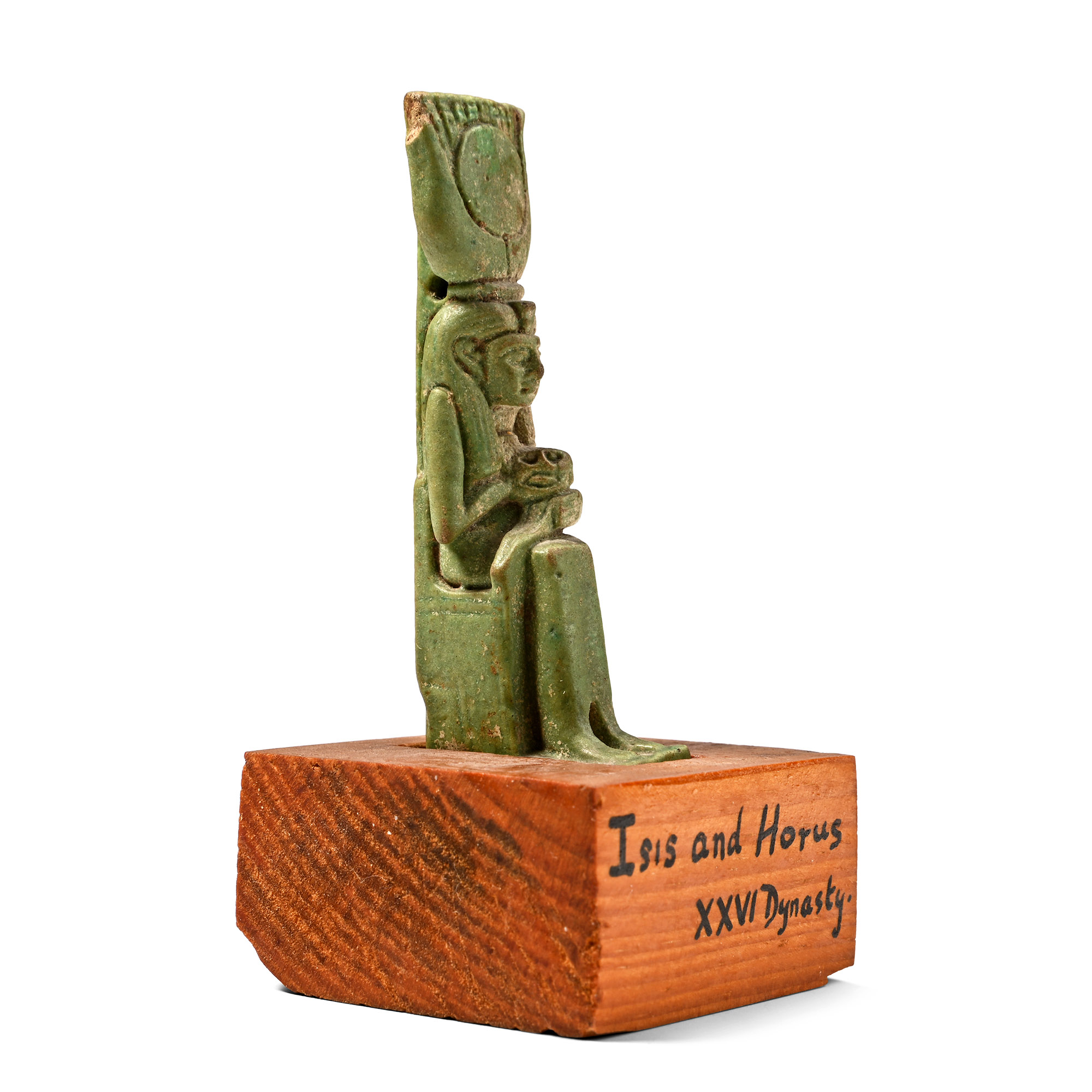
Egyptian Green Glazed Faience Amulet of the Goddess Isis with Horus
LATE PERIOD, 26TH DYNASTY, CIRCA 600-700 B.C.
3 1/8 in. (36.12 grams total, 80 mm including stand).
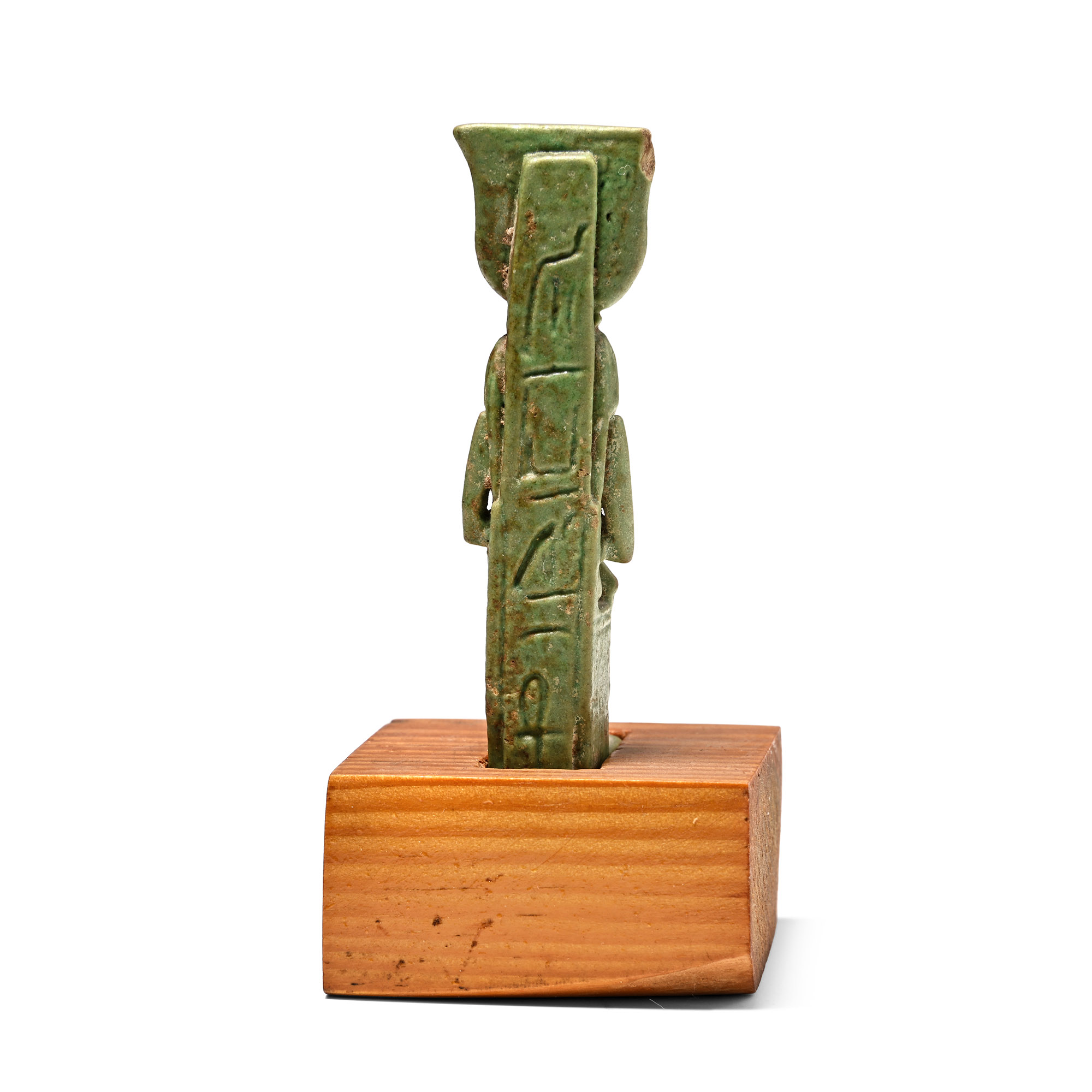
Figurine of Isis nursing Horus, seated with a sun disc and a horned headdress; dorsal pillar with hieroglyphic text; suspension hole pierced through the back of the headdress; on a display stand with the legend 'Isis and Horus XXVI Dynasty'. [No Reserve]
ProvenanceAcquired Herne Bay High Street, circa June 1957, for £1.00.
From the private collection of Peter Clayton, FCILIP, Dip, Arch, FSA, FRNS, Hemel Hempstead, Hertfordshire, UK; formed since the late 1950s.
Accompanied by an old handwritten information card by Peter Clayton, collection no.3.
Isis, one of the principal goddesses of the Egyptian pantheon, was revered as the divine mother, protector of kingship, and mistress of magic. As Osiris's wife and Horus's mother, she embodied maternal care, resurrection, and cosmic order, playing a central role in mythological narratives of death and renewal. Isis lactans statuettes, in particular, emphasise intimate maternal interaction, embodying the protective and regenerative aspects of the Isis-Horus myth. Such bronzes were widely dedicated in temple contexts and domestic shrines, where they served as votive objects invoking divine protection, healing, and royal legitimacy.
CONDITIONTimeLine Auctions follows a vetting process to ensure the authenticity and legality of all items, reinforcing our commitment to integrity and responsible trading. Each antiquity, antique, and coin lot undergoes thorough examination by a vetting committee of at least ten external specialists, professional trade association members, scientists, and archaeologists: Our Vetting Process
AUCTIONS:
TimeLine is a leading auction house specialising in antiquities, ancient art, collectables, natural history, coins, medals, and books. Our auctions offer museums, collectors, historians, and enthusiasts the opportunity to acquire unique and historically significant pieces.
LOT 0487
Egyptian Green Glazed Faience Amulet of the Goddess Isis with Horus
Estimate £400 - 600€460 - 700 (for guidance only)$540 - 810 (for guidance only)
-
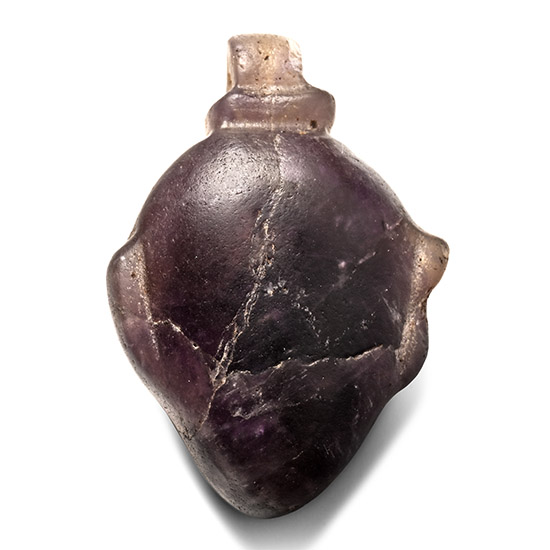
Egyptian Amethyst Heart Amulet
Late Period, circa 664-332 B.C.Estimate: £100 - 140 (+bp*)
Opening Bid: £50
Lentoid in section with two side lugs and a suspension loop on the top. 4.7 grams, 25 mm
London gentleman's collection, 1970-1990s, by descent.
Ancient Egyptians regarded the heart (ib) as the seat of intelligence, emotions, behaviour, and memory. During the ‘Weighing of the Heart’ ceremony, the heart spoke for the deceased before Osiris and accounted for their actions. For this reason, Egyptians placed heart amulets on mummies to protect the organ and secure a favourable judgement. -
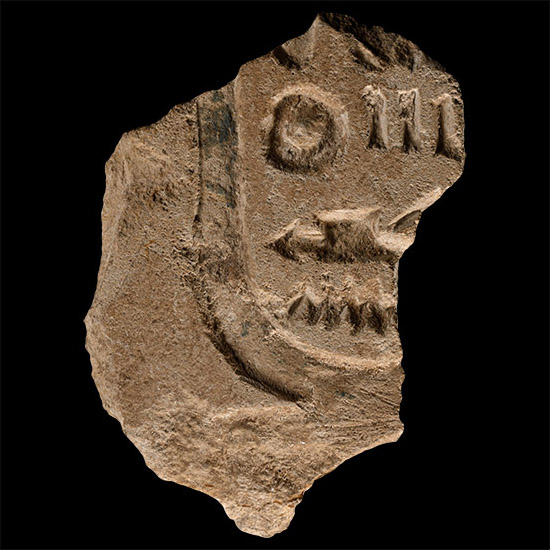
Egyptian Limestone Fragment with Cartouche of Pharaoh Akhenaten
New Kingdom, 18th Dynasty, Amarna Period, 1353-1332 B.C.Estimate: £800 - 1,000 (+bp*)
Bids: 3 | Current Bid: £65
Irregular fragment with a partial cartouche in sunk relief, containing the final part of Akhenaten's throne name, Nefer-kheperu-Re (meaning 'Beautiful are the Manifestations of Re'), with traces of blue and white pigment. 157 grams, 10.5 cm
Acquired in March 1977. From the private collection of Peter Clayton, FCILIP, Dip, Arch, FSA, FRNS, Hemel Hempstead, Hertfordshire, UK; formed since the late 1950s. Accompanied by an old handwritten information card by Peter Clayton, collection no.128.
Due to the destruction of Akhenaten's royal city, Akhetaten, most monuments and statuary were recovered in fragmentary condition (for example, Peet, T.E., Woolley, C.L., The City of Akhenaten, Part I, Excavations of 1921 and 1922 at el-'Amarneh, London, 1923, pls. XXXII-XXXIV, for several fragmentary architectural elements bearing Akhenaten's cartouches). -
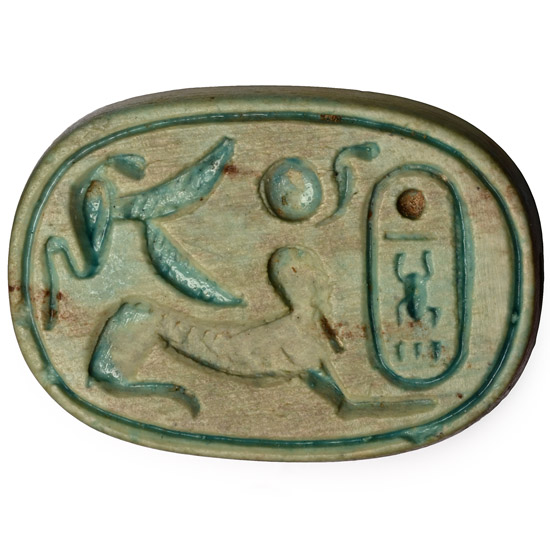
Egyptian Glazed Steatite Plaque with Thutmosis IV Cartouche and Hieroglyphs
New Kingdom, 18th Dynasty, circa 1419-1386 B.C.Estimate: £80 - 100 (+bp*)
Bids: 2 | Current Bid: £25
Bifacial amuletic bead with designs: Side A: cartouche of Thutmosis IV (Menkkheperure), recumbent sphinx, winged uraeus, and sun disc with uraeus; Side B: falcon with neb, nefer, and nwb signs, among others. 6.01 grams, 26 mm
From the private collection of a European gentleman (1942-2024), formed since the 1970s.
