
Loading, please wait...
LOT 0035
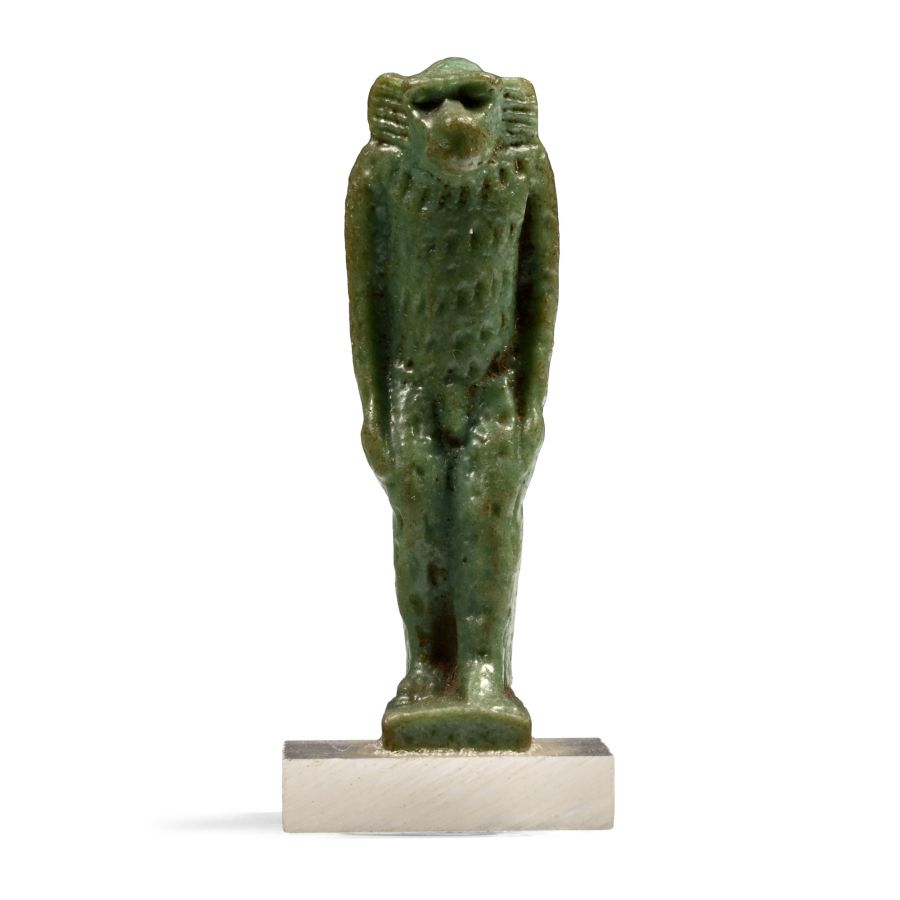
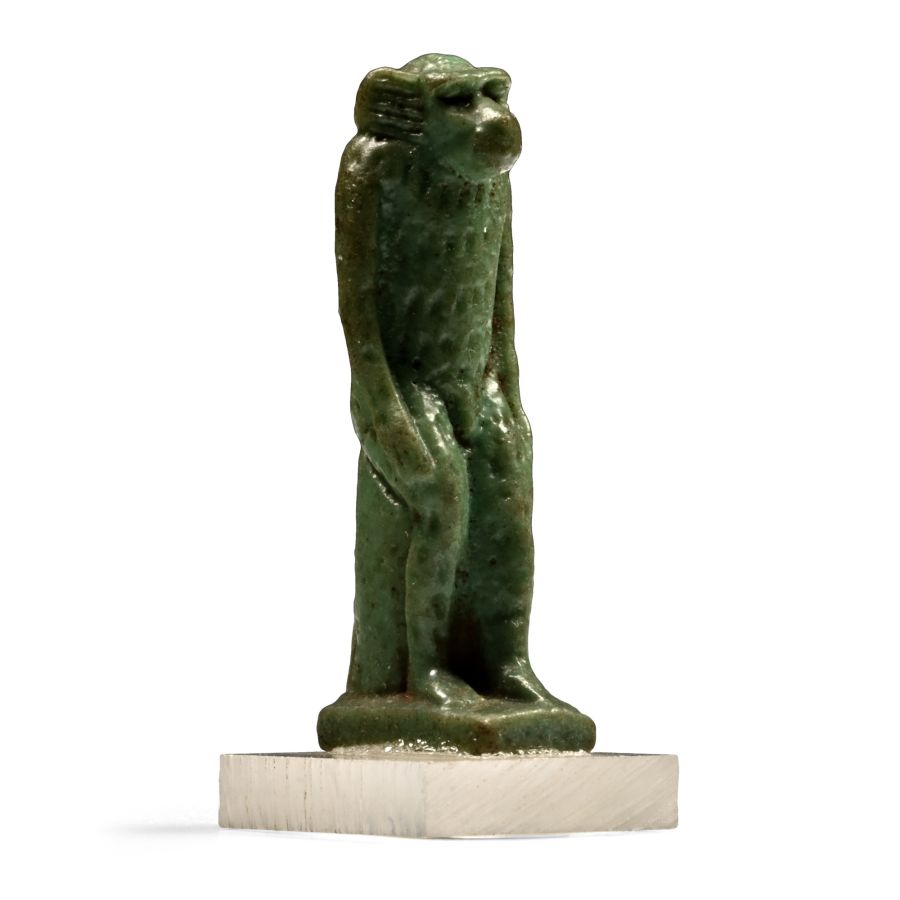
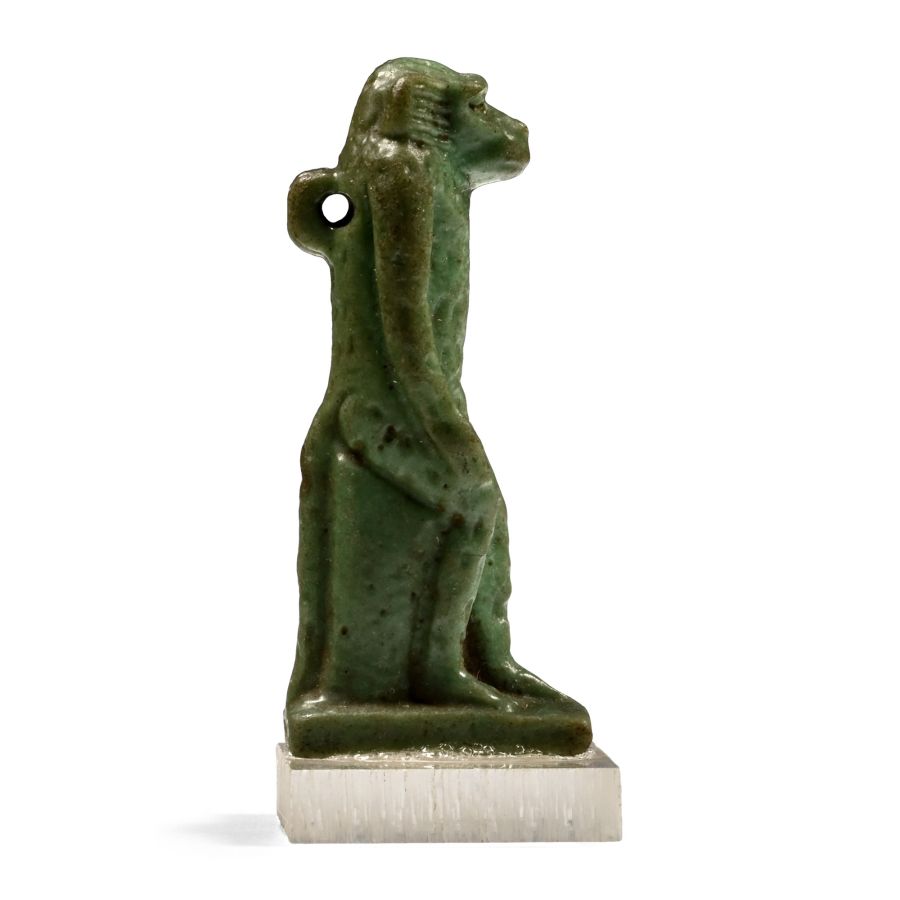
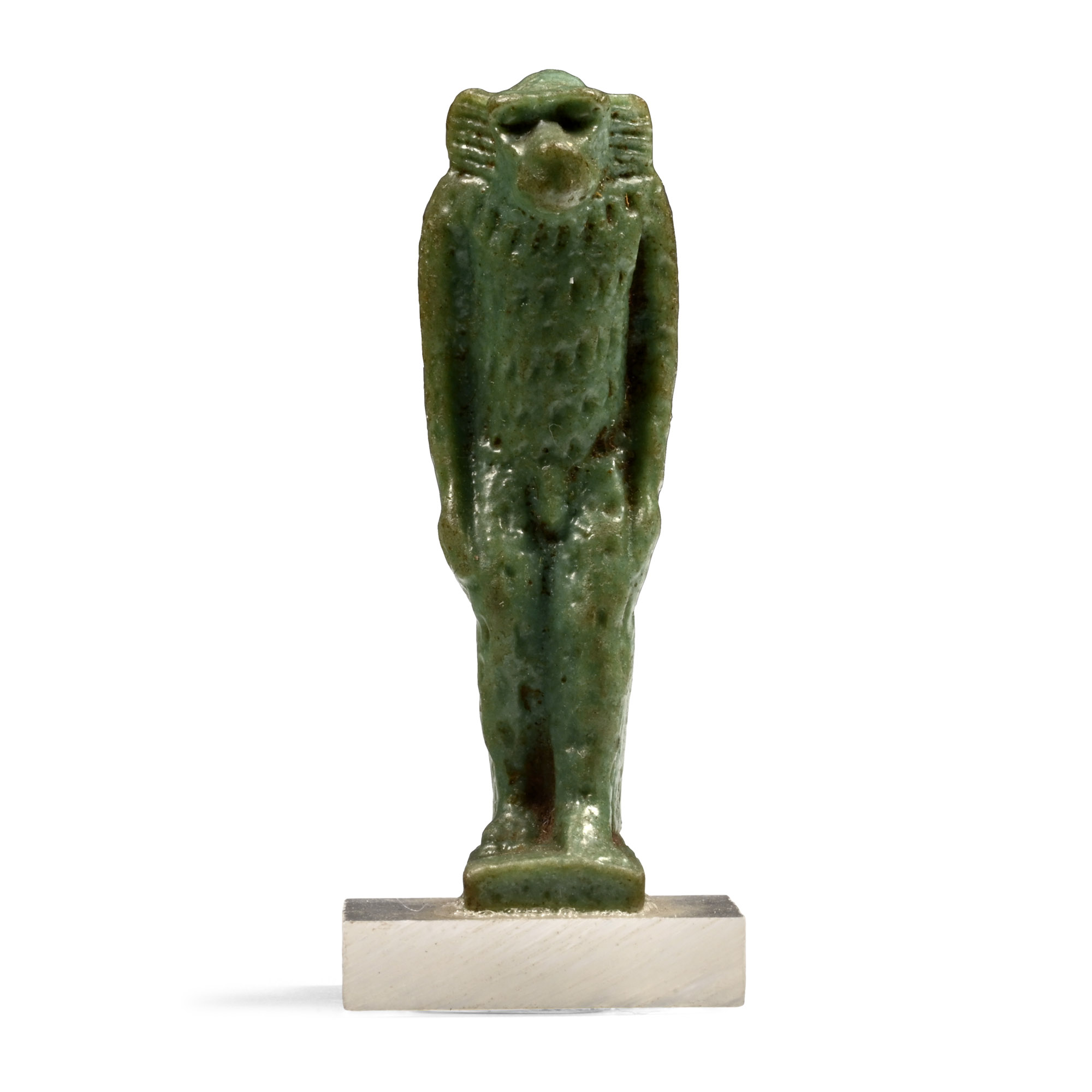
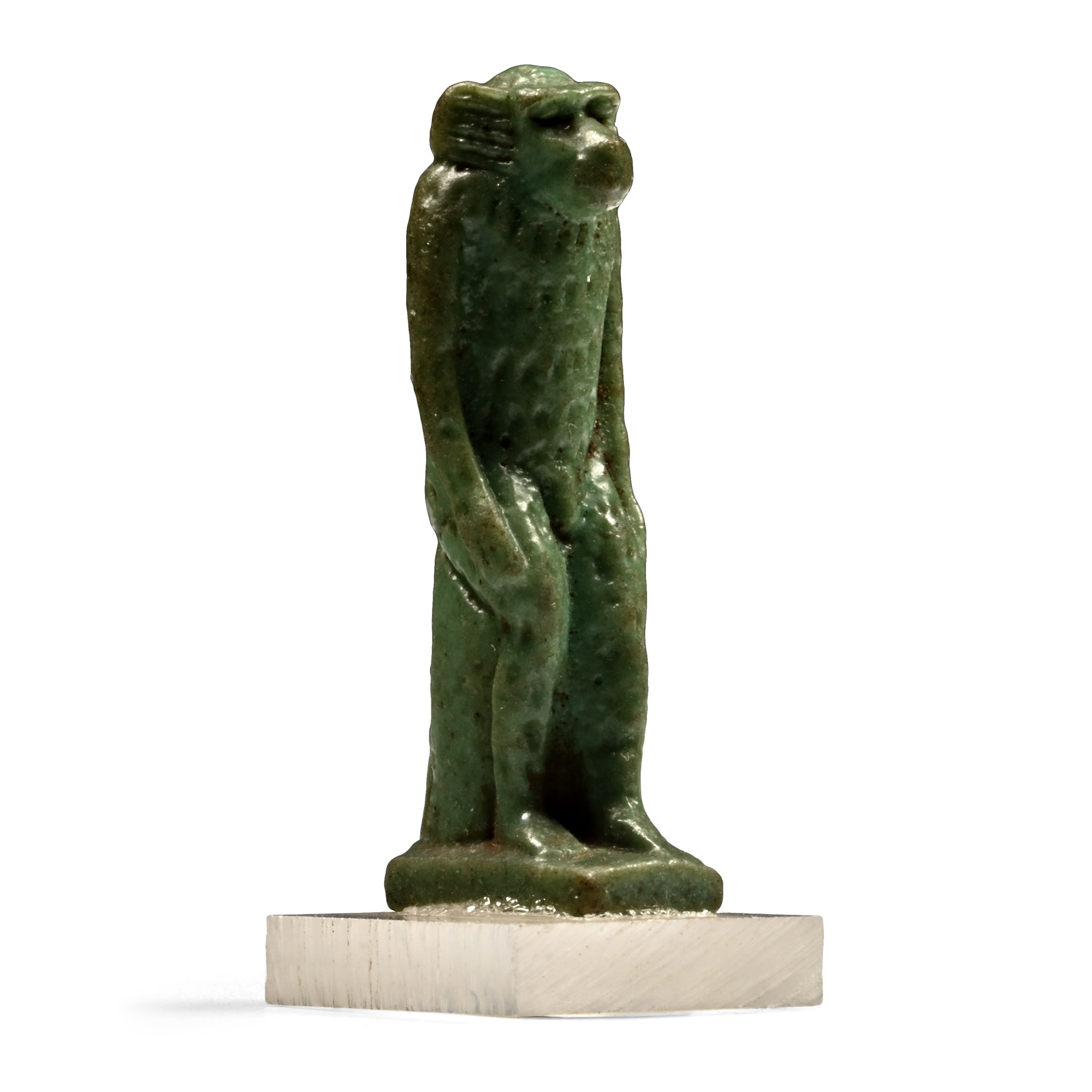
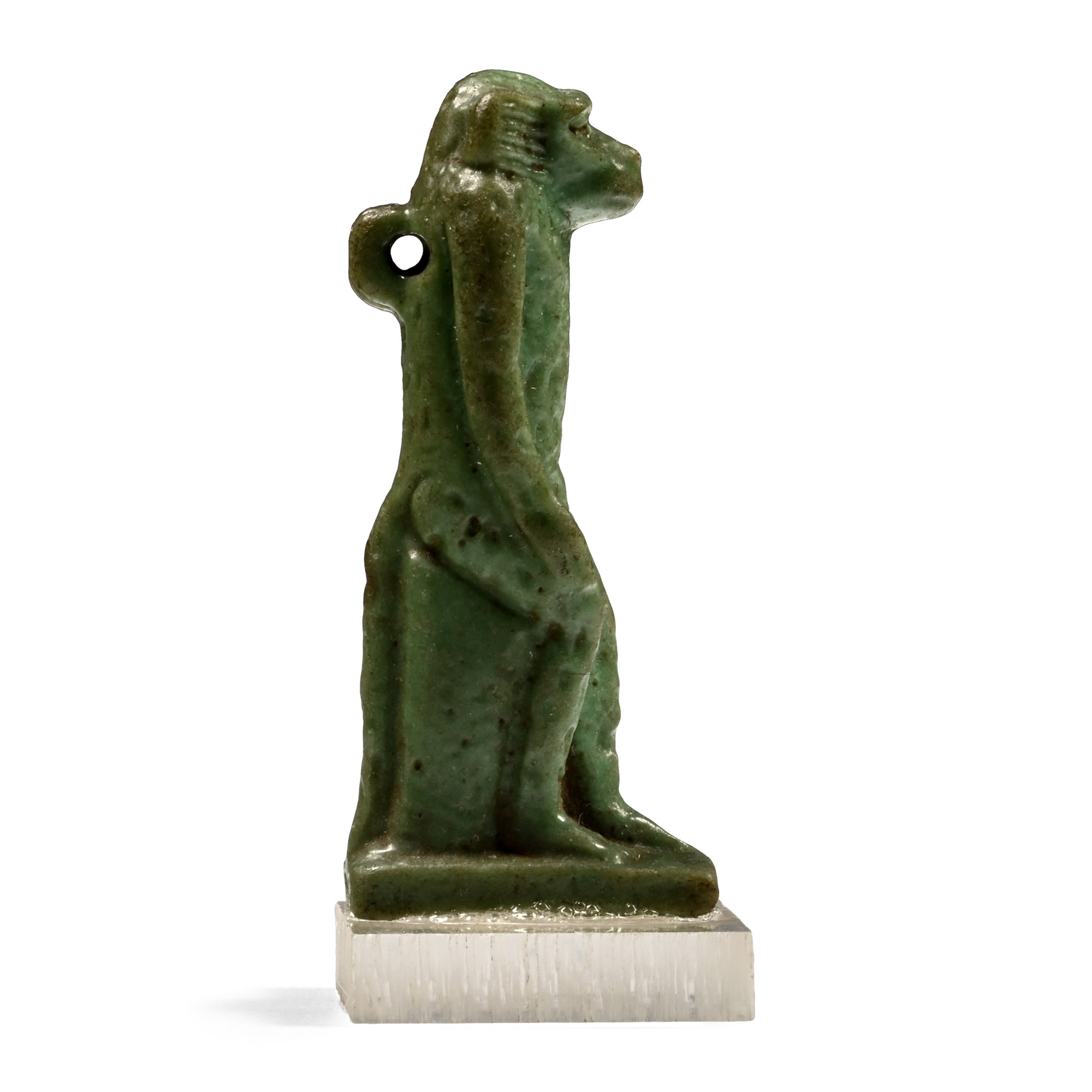
Egyptian Green Glazed Faience Amulet of a Monkey
THIRD INTERMEDIATE PERIOD, CIRCA 1069-735 B.C.
1 5/8 in. (6.1 grams total, 43 mm including stand).
Modelled in the round with dorsal pillar and loop, small base.
ProvenanceCollection of Monsieur M.; Etude Tajan, Paris, 26 February 1996, no.101.
Private collection, London, UK, acquired from the above sale.
Accompanied by a copy of a French cultural passport, dated 21 March 1996.
This lot is accompanied by an illustrated lot declaration signed by the Head of the Antiquities Department, Dr Raffaele D'Amato.
Cf. Andrews, C., Amulets of Ancient Egypt, London, p.66, fig.71c.
FootnotesThe vervet monkey was a symbol of love and sexual fulfilment.
CONDITIONTimeLine Auctions follows a vetting process to ensure the authenticity and legality of all items, reinforcing our commitment to integrity and responsible trading. Each antiquity, antique, and coin lot undergoes thorough examination by a vetting committee of at least ten external specialists, professional trade association members, scientists, and archaeologists: Our Vetting Process
AUCTIONS:
TimeLine is a leading auction house specialising in antiquities, ancient art, collectables, natural history, coins, medals, and books. Our auctions offer museums, collectors, historians, and enthusiasts the opportunity to acquire unique and historically significant pieces.
-
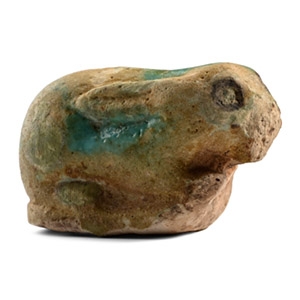
Egyptian Faience Hare Statuette
Ptolemaic Period, 332-30 B.C.Sold for (Inc. bp): £130
Modelled in the round in crouching position with its ears pulled back and resting along the body, black detailing to the eyes. 25 grams, 44 mm
Private collection of Mr K.A., acquired in the 1990s-early 2000s. This lot is accompanied by an illustrated lot declaration signed by the Head of the Antiquities Department, Dr Raffaele D'Amato.
The desert hare was one of the most common wild animals in Egypt. The female hare was sacred to Wenut, goddess of the 15th Upper Egyptian nome, though no specific hare cults are known. The purpose of hare figurines remains uncertain. According to Plutarch, Egyptians regarded the hare’s speed and keen senses—reflected in its open eyes—as divine. -
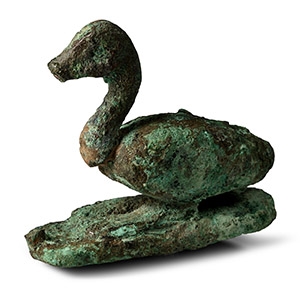
Egyptian Bronze Ibis Attachment
Late Period, 664-332 B.C. or laterEstimate: £150 - 200 (+bp*)
Opening Bid: £75
Modelled in the round squatting on an ellipsoid base, lug to the underside, repaired. 114 grams, 60 mm
From the collection of a gentleman, acquired on the London art market in the 1990s. This lot is accompanied by an illustrated lot declaration signed by the Head of the Antiquities Department, Dr Raffaele D'Amato.
The ibis, particularly the sacred species known as the Egyptian ibis (Threskiornis aethiopicus), held a prominent place in ancient Egyptian religion and culture as a manifestation of the god Thoth. Revered as the deity of wisdom, writing, and knowledge, Thoth was often depicted in human form with the head of an ibis. During the Late Period onwards, the practice of mummifying ibises became widespread, leading to the creation of vast necropolises dedicated to these sacred birds. In places like Saqqara and Hermopolis, thousands of ibis mummies have been discovered in specially constructed catacombs. The mummification of these birds was not merely a ritual act; it was seen as a sacred offering to Thoth, meant to honour the god and seek his favour. Egyptians believed that by preserving the ibis through mummification, they could ensure its safe passage to the afterlife, establishing a direct connection between the earthly realm and the divine. These mummies were often accompanied by votive offerings, like this bronze figurine, further emphasising the relationship between the ibises and Thoth. -
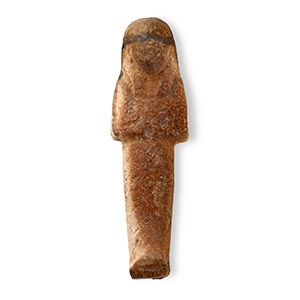
Egyptian Brown Faience Shabti
Third Intermediate Period, 1069-860 B.C.Sold for (Inc. bp): £156
Mummiform figure with agricultural implements held in crossed arms, wearing a tripartite wig with a painted hair tie. 7.53 grams, 59 mm
Ex London, UK, collection, 1990s. This lot is accompanied by an illustrated lot declaration signed by the Head of the Antiquities Department, Dr Raffaele D'Amato.
