
Loading, please wait...
LOT 0019
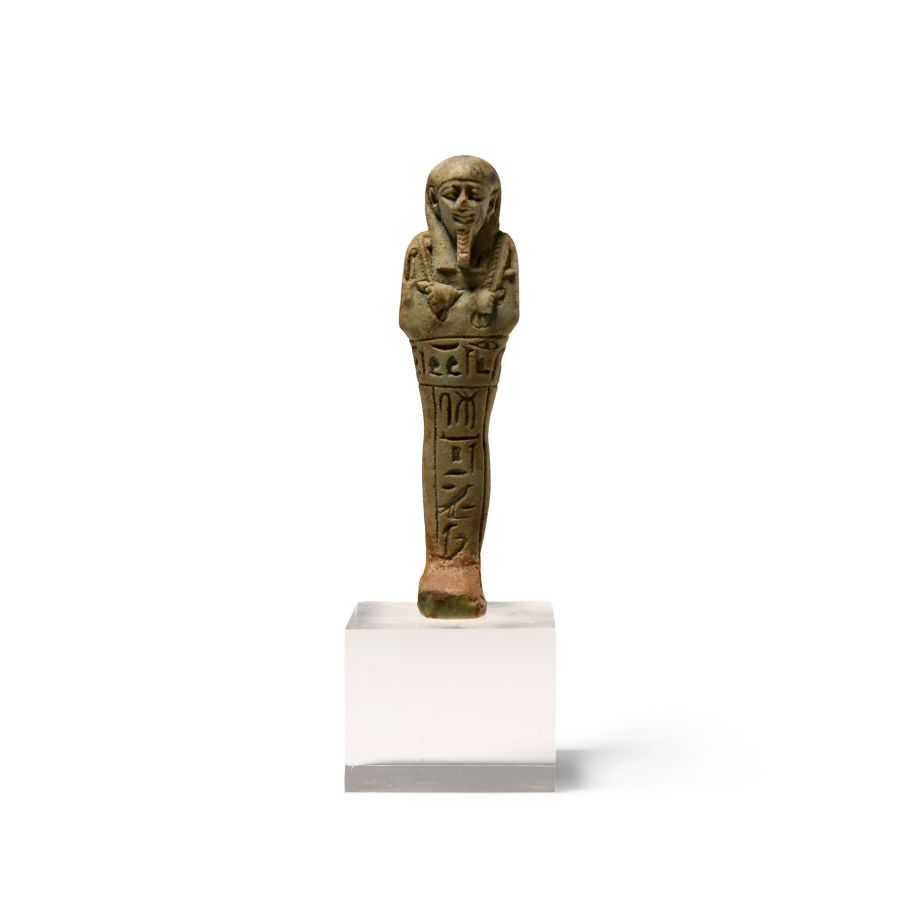
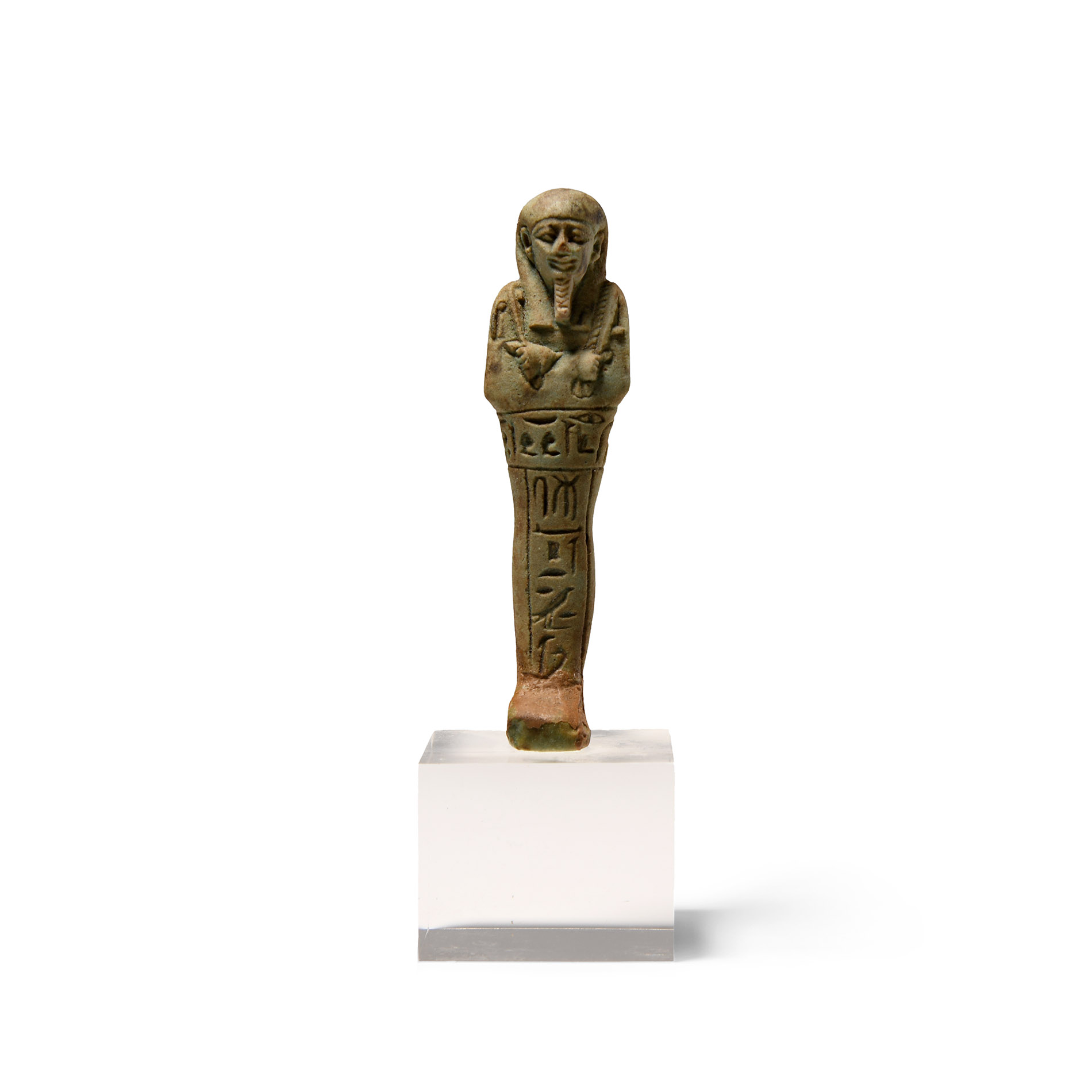
Egyptian Green Faience Shabti with Hieroglyphic Inscription
LATE PERIOD, 664-332 B.C.
5 7/8 in. (169 grams total, 15 cm high including stand).
Olive-green glazed composition with detailed facial features, hands, tools, seed bag, dorsal pillar; T-shaped hieroglyphic text: 'sḥḏ wsir nb pḥ.ty ..ns(?) mꜢʾ ḫrw ms n ipt-wrt(?)' ‘The illuminated, the Osiris, Lord of Strength ..ns(?), true of voice’ born to Ipet-weret(?)’; mounted on a custom-made stand.
ProvenancePart of an old collection dating back to the 19th century.
Ex property of a gentleman, acquired before the 1980s.
Private collection of Mr T.H., Norfolk, UK.
Cf. similar in the collection of the British Museum under accession no.EA55512.
CONDITIONTimeLine Auctions follows a vetting process to ensure the authenticity and legality of all items, reinforcing our commitment to integrity and responsible trading. Each antiquity, antique, and coin lot undergoes thorough examination by a vetting committee of at least ten external specialists, professional trade association members, scientists, and archaeologists: Our Vetting Process
AUCTIONS:
TimeLine is a leading auction house specialising in antiquities, ancient art, collectables, natural history, coins, medals, and books. Our auctions offer museums, collectors, historians, and enthusiasts the opportunity to acquire unique and historically significant pieces.
LOT 0019
Egyptian Green Faience Shabti with Hieroglyphic Inscription
Sold for (Inc. bp): £650
-
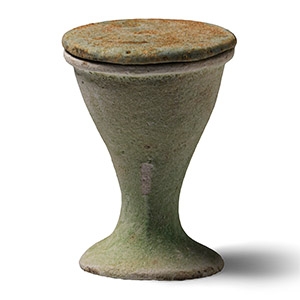
Egyptian Faience Offering Cup with Lid
Ptolemaic Period, 332-30 B.C.Sold for (Inc. bp): £195
Glazed composition cup with stemmed foot and thick rim, separate discoid lid with panel to the underside, possibly not belonging. 18.8 grams, 43 mm
Ex Den of Antiquity, Cambridgeshire, UK. Private collection of Mr T.H., Norfolk, UK. Accompanied by a previous dealer's certificate of authenticity. -
.jpg)
Egyptian Memphis Triad Amulet
Late Period, 664-332 B.C.Estimate: £600 - 800 (+bp*)
Opening Bid: £300
Rectangular plaque with ledge to the lower edge, ribbed loop above, the half-round figures of the goddesses Nephthys and Isis wearing their characteristic headdresses flank the figure of the young Horus wearing the sidelock of youth. 9.1 grams, 37 mm high
From an early Home Counties, UK, collection, 1930-1940. Ex London, UK, collection.
The deities of this triad are the protagonists associated with the myth of Osiris. -
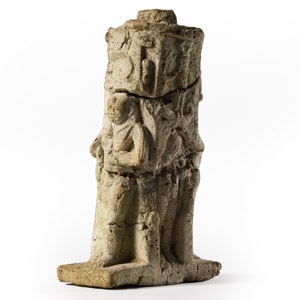
Egyptian Faience Amulet with Figures
Late Period-Ptolemaic Period, 664-30 B.C.Sold for (Inc. bp): £221
The large architectural amulet, rectangular in section with base and scarab finial; the narrow sides each with a high-relief standing figure, both holding a flail, wearing a royal nemes headdress and solar disc; the wider sides each with a facing male figure within a naos surmounted by a smaller facing figure, one Harpocrates holding a snake, the other Bes(?) with a high-plumed headress; repaired. 100 grams, 95 mm
Ex property of a London gentleman; acquired in the 1970s. Private collection of Mr T.H., Norfolk, UK.
The presence of Harpocrates holding a snake and possibly Bes, suggests that this functioned as a cippus amulet offering protection and with curative properties.
