
Loading, please wait...
LOT 0048
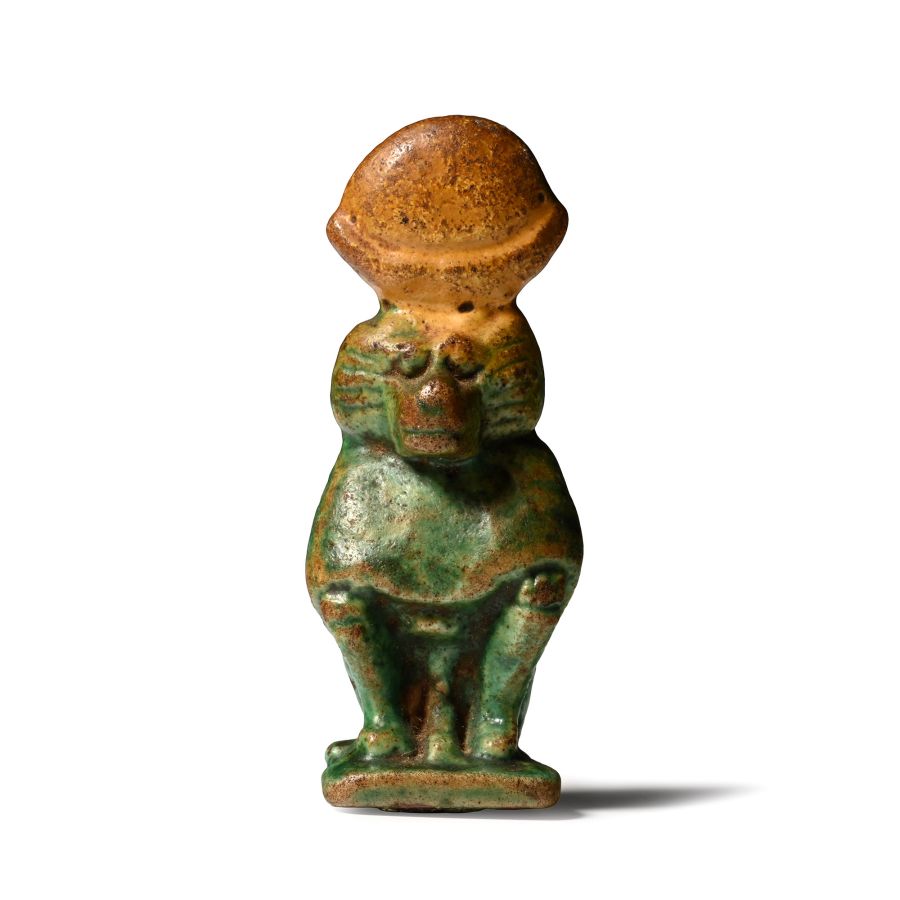
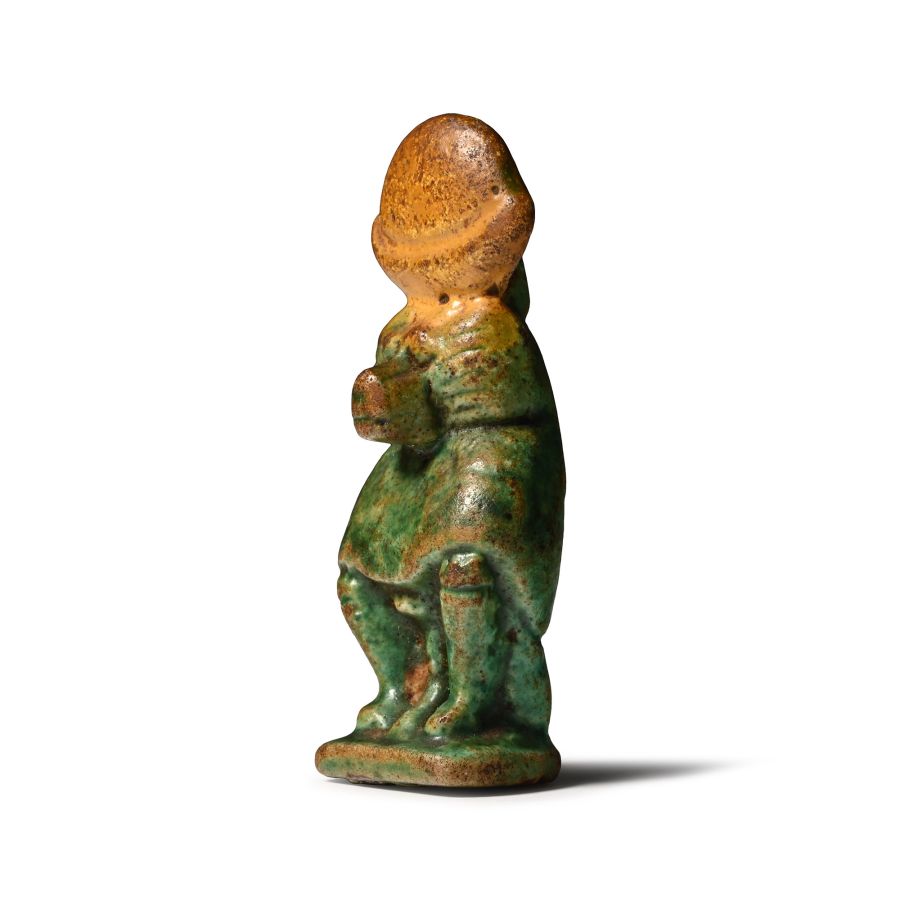
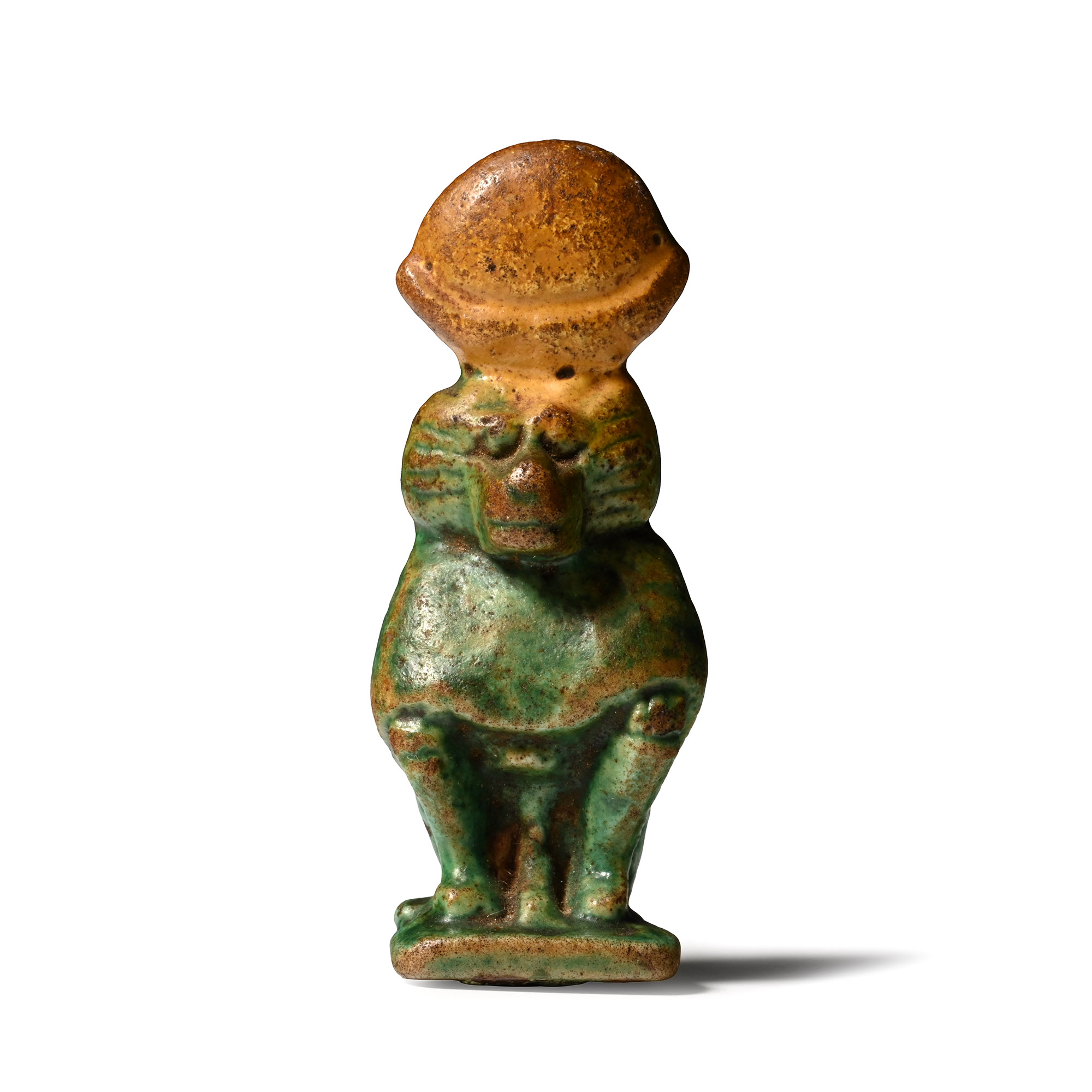
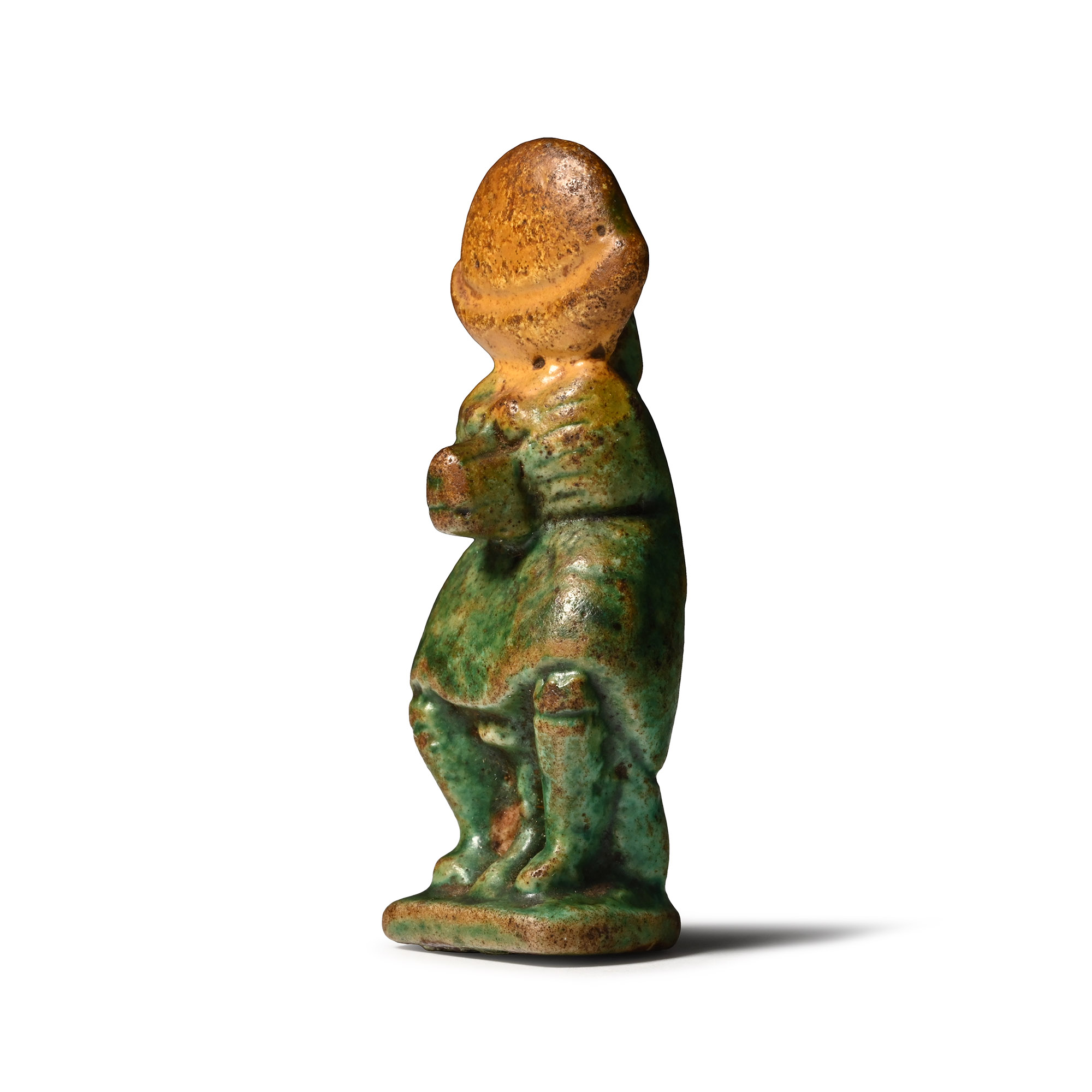
Egyptian Green and Yellow Glazed Baboon Amulet
CIRCA 2ND-1ST CENTURY B.C.
2 in. (14.2 grams, 52 mm).
Green-glazed baboon modelled in the round on a D-shaped base, wearing a lunar crescent-and-disc headdress in contrasting yellow glaze.
ProvenancePrivate collection of Kal Noselson, New York, acquired between 1976 and the late 1990s; thence by descent.
Accompanied by a copy of a typed invoice, 28 June 1979.
Cf. similar figure in the Metropolitan Museum of Art, New York, under accession no.26.7.874.
CONDITIONTimeLine Auctions follows a vetting process to ensure the authenticity and legality of all items, reinforcing our commitment to integrity and responsible trading. Each antiquity, antique, and coin lot undergoes thorough examination by a vetting committee of at least ten external specialists, professional trade association members, scientists, and archaeologists: Our Vetting Process
AUCTIONS:
TimeLine is a leading auction house specialising in antiquities, ancient art, collectables, natural history, coins, medals, and books. Our auctions offer museums, collectors, historians, and enthusiasts the opportunity to acquire unique and historically significant pieces.
LOT 0048
Egyptian Green and Yellow Glazed Baboon Amulet
Estimate £500 - 700€580 - 810 (for guidance only)$680 - 950 (for guidance only)
-
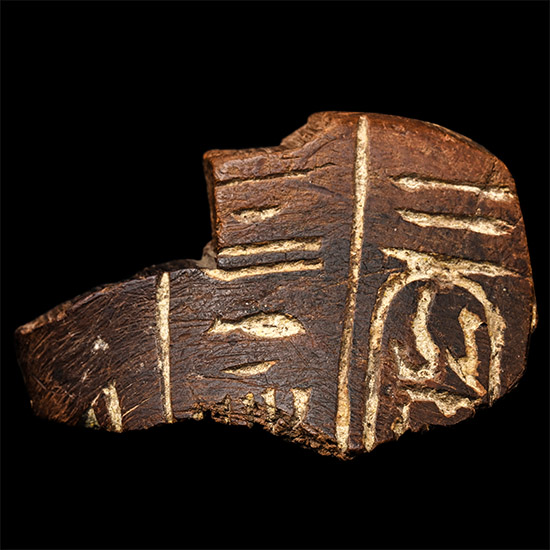
Egyptian Fragment from a Wooden Shabti of Pharaoh Amenhotep III
New Kingdom, 18th Dynasty, 1386-1349 B.C.Estimate: £100 - 140 (+bp*)
Bids: 1 | Current Bid: £5
Fragment of chocolate-coloured wood with incised hieroglyphs inlaid with white paste, preserving the lower part of a cartouche containing Amenhotep III's birth name, with the epithet "Ruler of Thebes" still legible, and two fragmentary columns of hieroglyphs to the right, belonging to a version of the shabti spell. 8.41 grams, 42 mm
From the private collection of Peter Clayton, FCILIP, Dip, Arch, FSA, FRNS, Hemel Hempstead, Hertfordshire, UK; formed since the late 1950s.
Amenhotep III was buried at Thebes in the Valley of the Kings (tomb KV22). His funerary equipment included shabtis in various hardstones and wood. The preserved text, ...ḫnt sḏm.t[n]... ('...forefront; and when you hear...'), belongs to a less common variant of the shabti spell found on other examples of Amenhotep III's shabtis. -
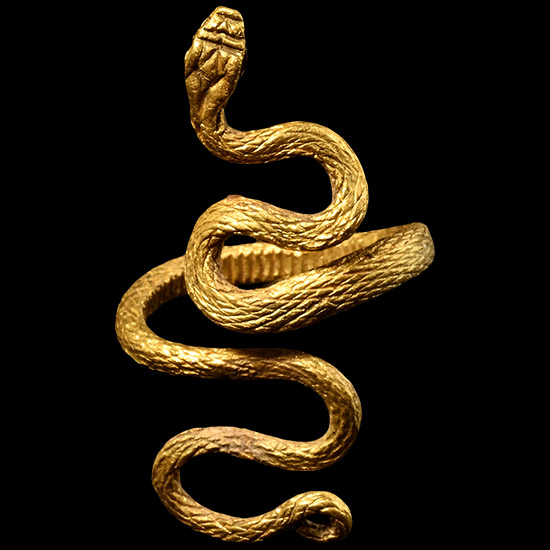
Egyptian Gold Snake Ring
Roman Period, 30 B.C.-323 A.D.Estimate: £2,000 - 3,000 (+bp*)
Opening Bid: £1,000
Formed as a slender-bodied coiled snake, featuring eye, head, and scale detailing on the body. 6.96 grams, 23.75 mm overall, 18.72 mm internal diameter (approximate size British M 1/2, USA 6 1/4, Europe 13.09, Japan 12)
Ex German art market, 2000s. Acquired from an EU collector living in London. From the collection of a Surrey, UK, gentleman. This lot has been checked against the Interpol Database of stolen works of art and is accompanied by search certificate no.13541-261559. -
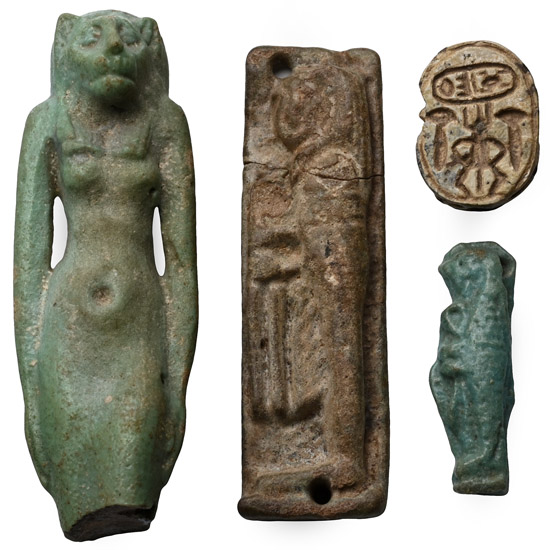
Egyptian Artefact Collection
Late Period-Ptolemaic Period, 664-30 B.C.Estimate: £60 - 80 (+bp*)
Bids: 3 | Current Bid: £33
Comprising a standing figure of Sekhmet, featuring a plain dorsal pillar with an integral suspension hole, lower legs missing; two hawk-headed Qebehsenuef, Sons of Horus amulets; steatite scarab with base decorated with a cartouche of Thutmose III and a Bes figure flanked by wadj signs 18.01 grams total, 16-53 mm
From the private collection of Peter Clayton, FCILIP, Dip, Arch, FSA, FRNS, Hemel Hempstead, Hertfordshire, UK; formed since the late 1950s.
