
Loading, please wait...
LOT 0056
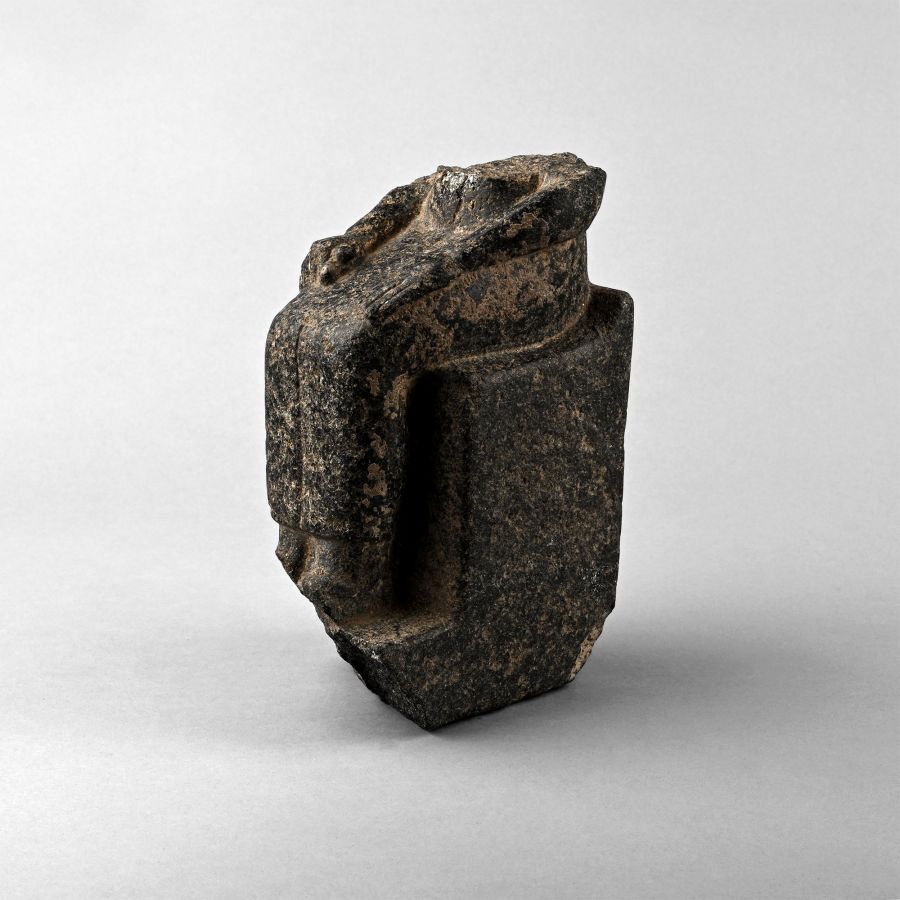
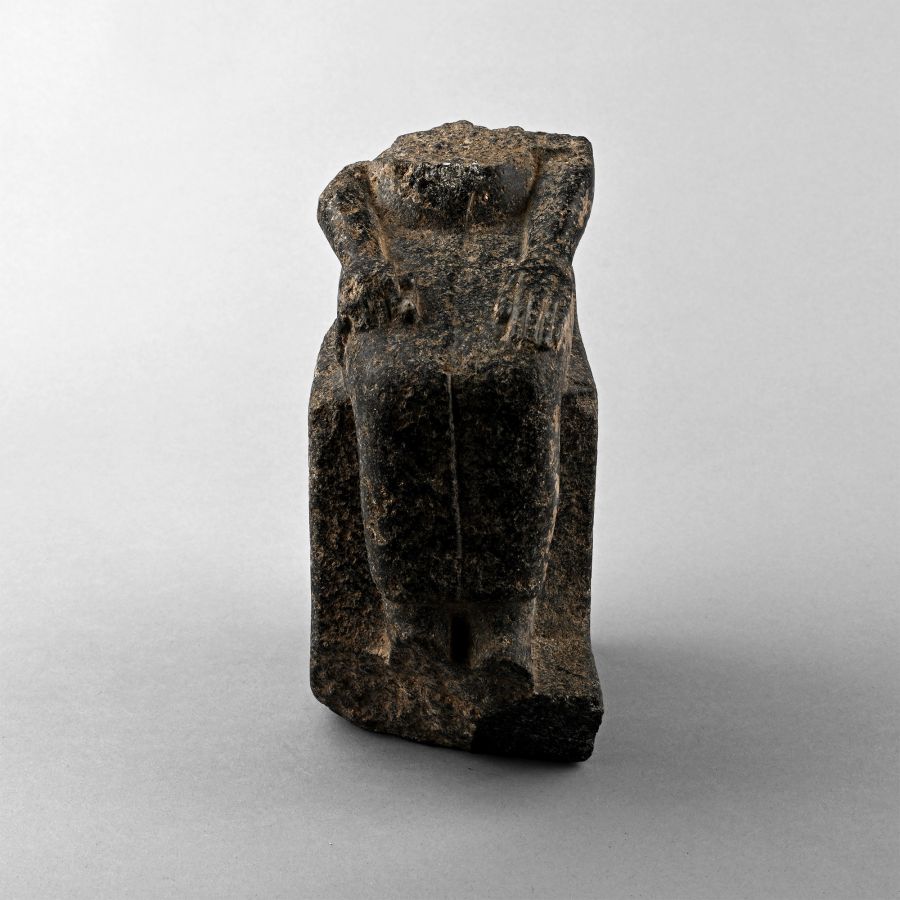
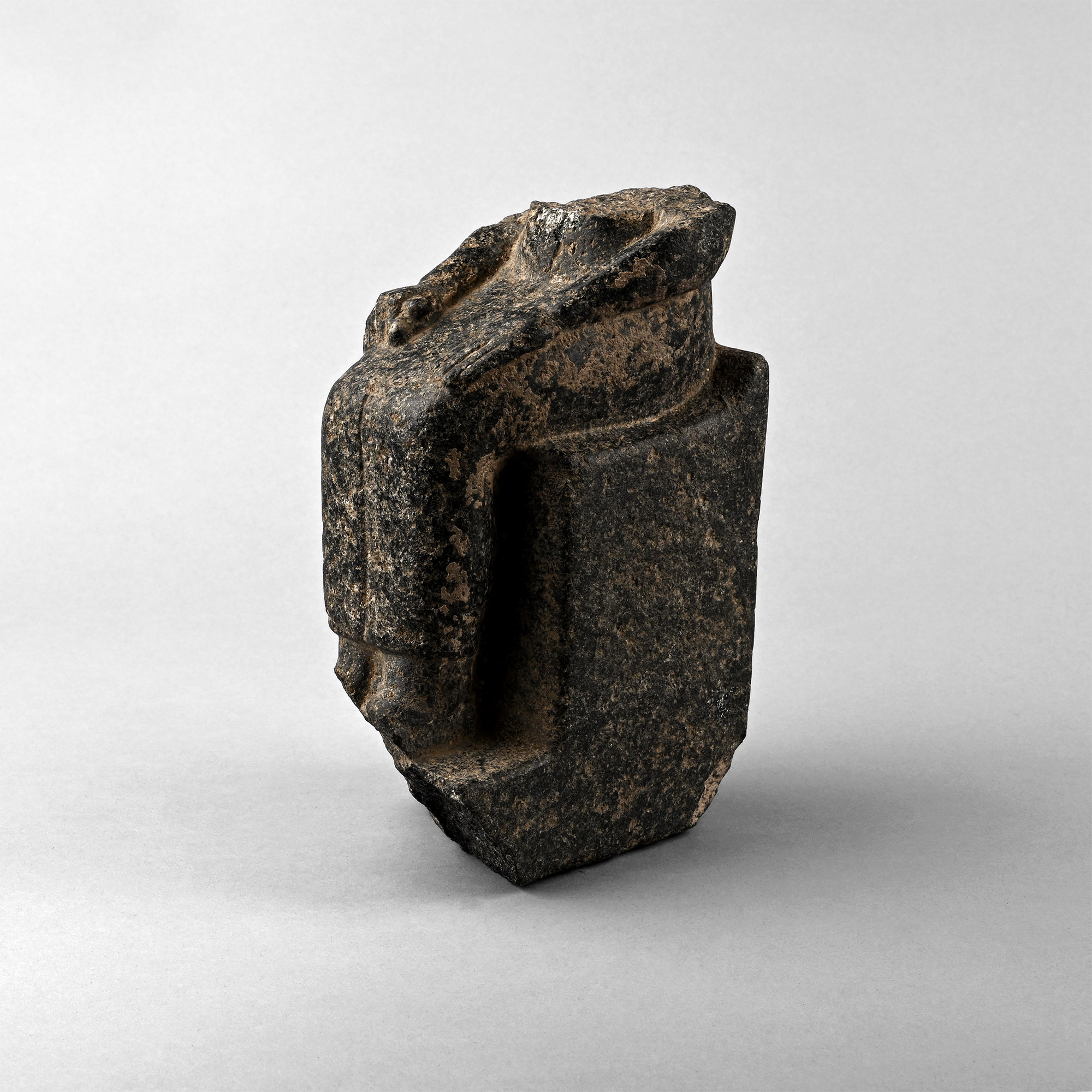
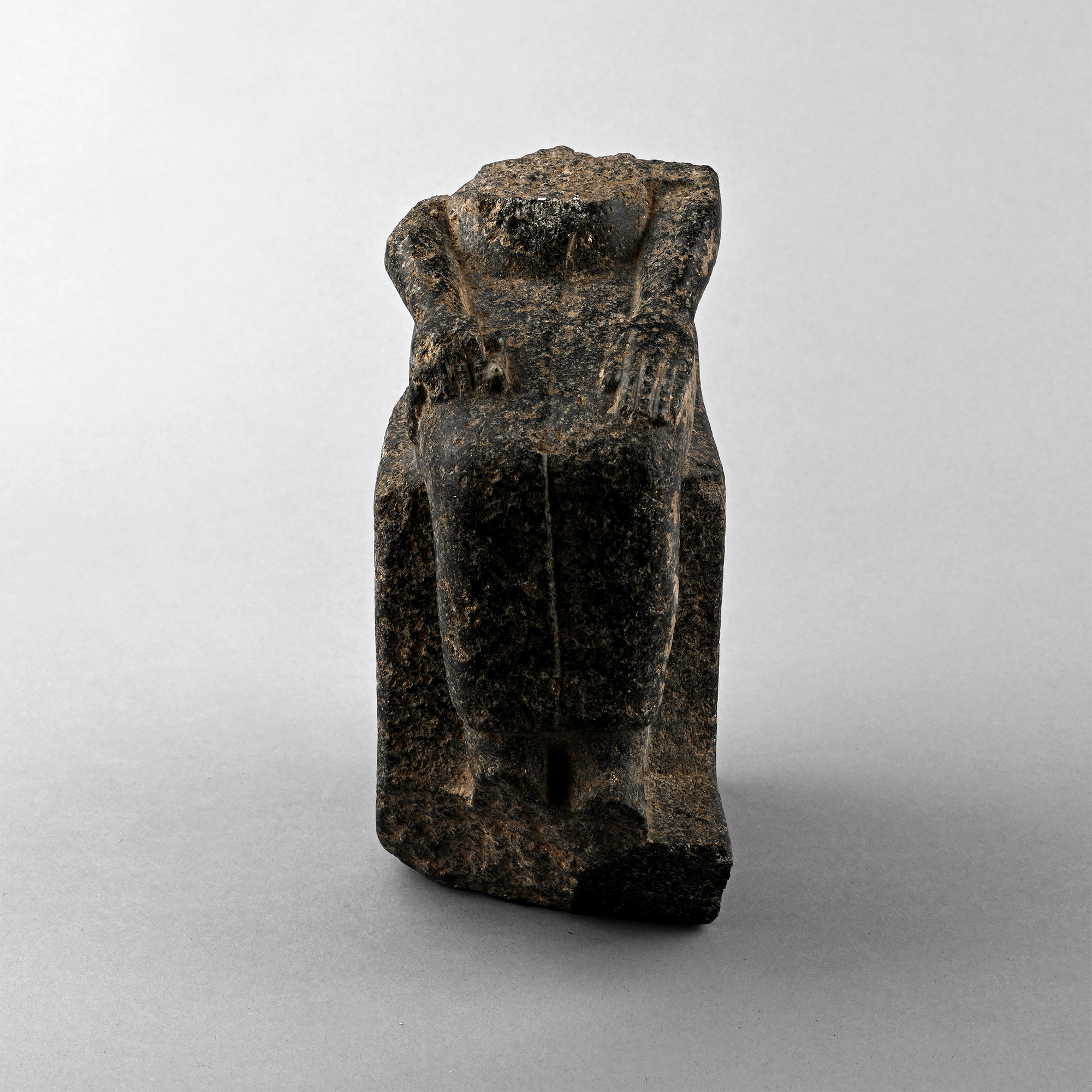
Egyptian Granite Seated Figure
LATE PERIOD, 664-332 B.C.
7 3/8 in. (4.1 kg, 18.7 cm).
Fragment of a statue of an official, comprising the torso and legs clad in an ankle-length robe and seated on a rectangular-section seat with stepped base and short, curved backrest and rear dorsal pillar; the left hand carved with the palm resting along the thigh; the right hand similarly placed but with the hand gripping a folded piece of cloth of which the ends are draped over the lower thigh above the knee; traces of an old label to reverse.
ProvenancePrivate collection, Europe.
with Bonhams & Brooks, 8th November 2001, no.265.
Private collection, Europe.
Accompanied by copies of the relevant Bonhams & Brooks catalogue pages.
This lot has been checked against the Interpol Database of stolen works of art and is accompanied by a search certificate number no.12584-232097.
Cf. Habachi, L., Elephantine IV: The Sanctuary of Heqaib II, pls. 39-41, for a complete statue from the time of Amenemhat II- Senwosret II with similar treatment of the lower portion of the garment; Oppenheim, A., et al (eds.), Ancient Egypt Transformed: The Middle Kingdom, pp.128-130, cat. 63, for an official from the reign of Senwosret III wearing a longer cloak-like garment and seated on a similarly shaped seat.
FootnotesThe official would have been shown wearing a longer cloak-like garment rather than a waist-height kilt, as the line of the folded edge is visible above where a waistband would typically be.
CONDITIONTimeLine Auctions follows a vetting process to ensure the authenticity and legality of all items, reinforcing our commitment to integrity and responsible trading. Each antiquity, antique, and coin lot undergoes thorough examination by a vetting committee of at least ten external specialists, professional trade association members, scientists, and archaeologists: Our Vetting Process
AUCTIONS:
TimeLine is a leading auction house specialising in antiquities, ancient art, collectables, natural history, coins, medals, and books. Our auctions offer museums, collectors, historians, and enthusiasts the opportunity to acquire unique and historically significant pieces.
LOT 0056
Egyptian Granite Seated Figure
Estimate £3,000 - 4,000€3,480 - 4,640 (for guidance only)$4,050 - 5,400 (for guidance only)
-
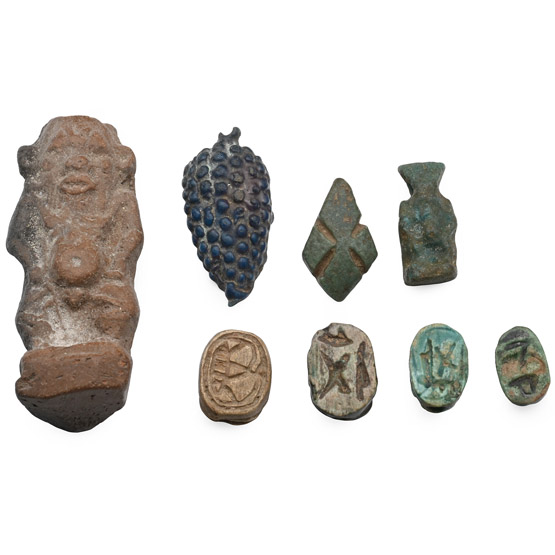
Egyptian Faience Amulet Group
New Kingdom-Ptolemaic Period, 1550-30 B.C.Sold for (Inc. bp): £156
Comprising a large standing Bes statuette on a rectangular base and a smaller Bes pierced for suspension; four scarabs with detailing to the upper face and incised signs and motifs on the underside; a tear-shaped bunch of grapes with a broken suspension loop; a lozenge-shaped pierced for suspension. 11 grams total, 9-38 mm
From the Walter Thomas Gaze Cooper (1895-1980) collection; thence by descent. -
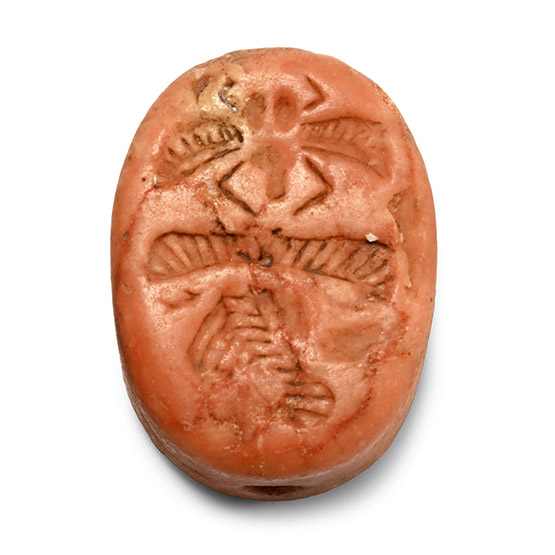
Phoenicio-Egyptian Orange Stone Scaraboid
1st millennium B.C.Estimate: £350 - 450 (+bp*)
Opening Bid: £194
Ellipsoid in plan with frieze comprising a large Maat feather, a winged sun disc, and a winged Khepri beetle. 13 grams, 27 mm
Ex collection of the late Mr S. M., London, UK, 1970-1990s. -
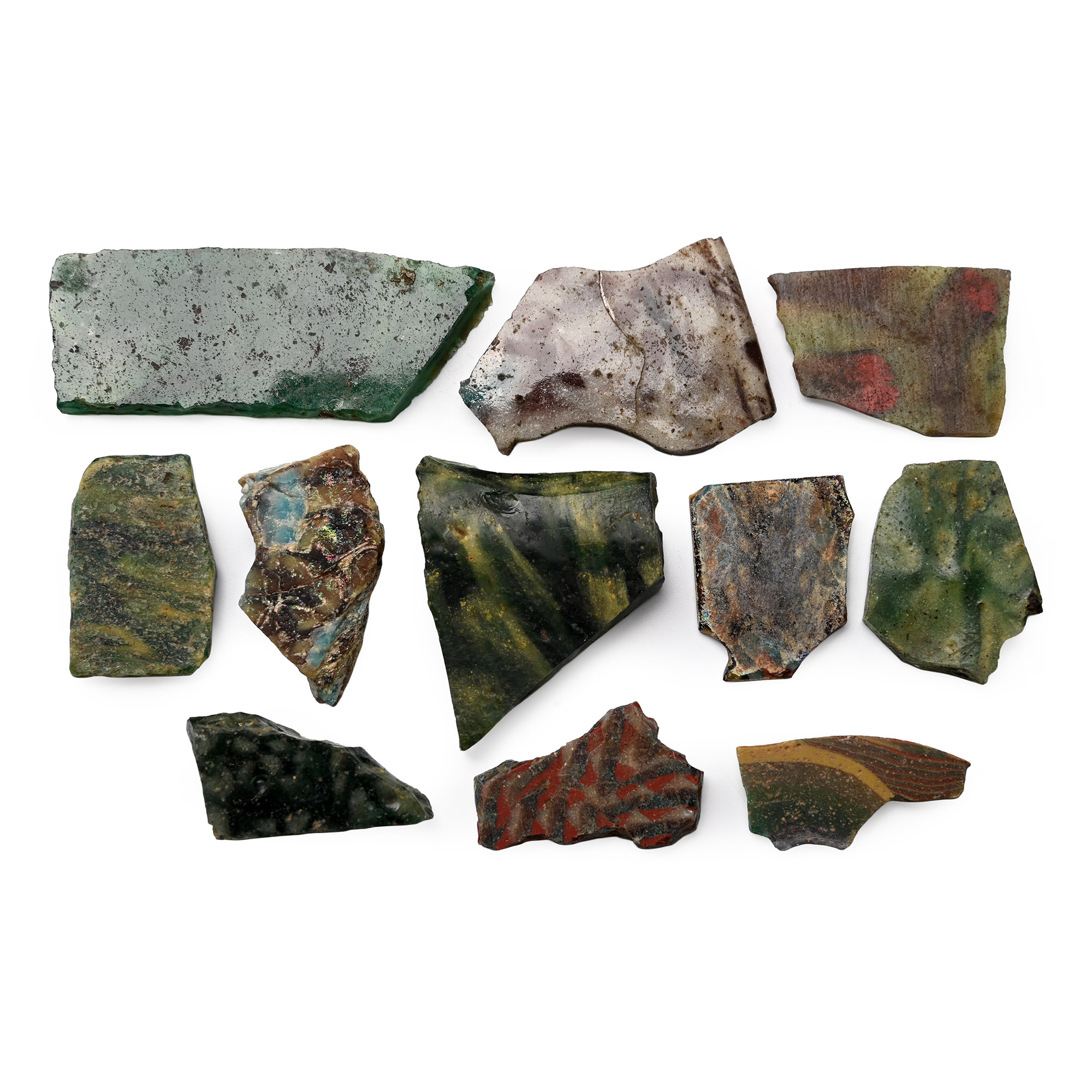
Romano-Egyptian Mosaic Glass Fragment Group
Roman Period, 30 B.C.-323 A.D.Sold for (Inc. bp): £117
Irregular plate fragments with banded, rosette and other designs. 34.6 grams total, 21-48 mm
Ex Gallery Mikazaki, prior to 1994. From the collection of a London, UK, gentleman.
