
Loading, please wait...
LOT 0009
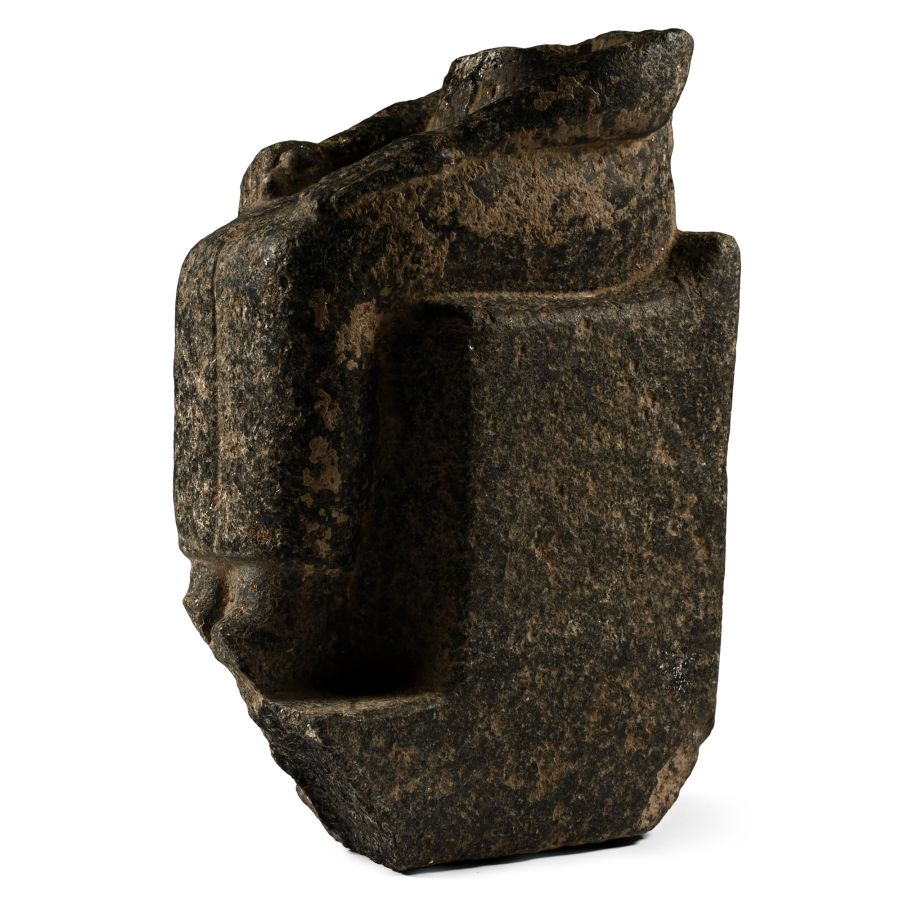
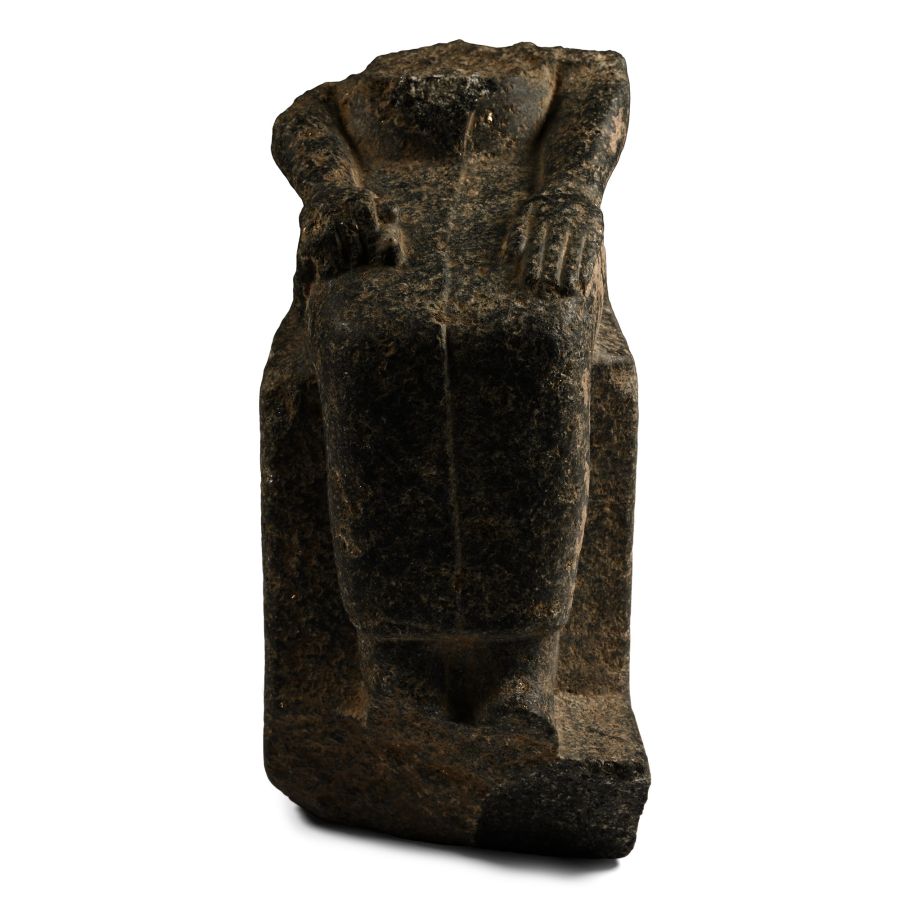
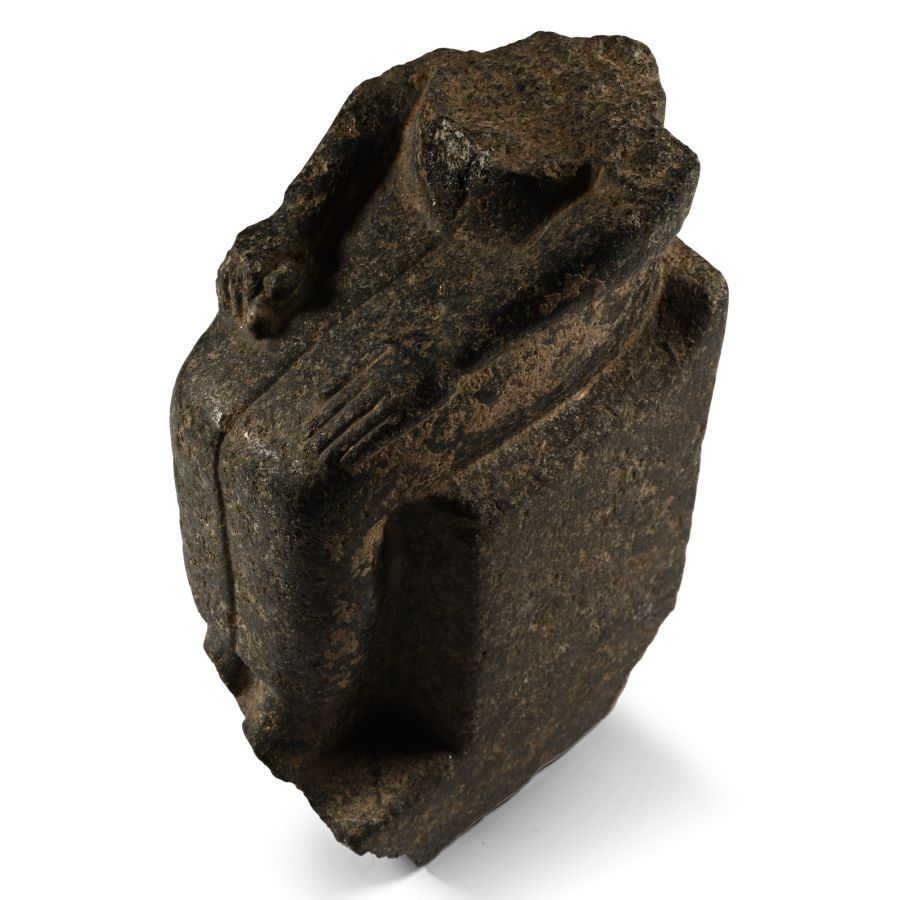
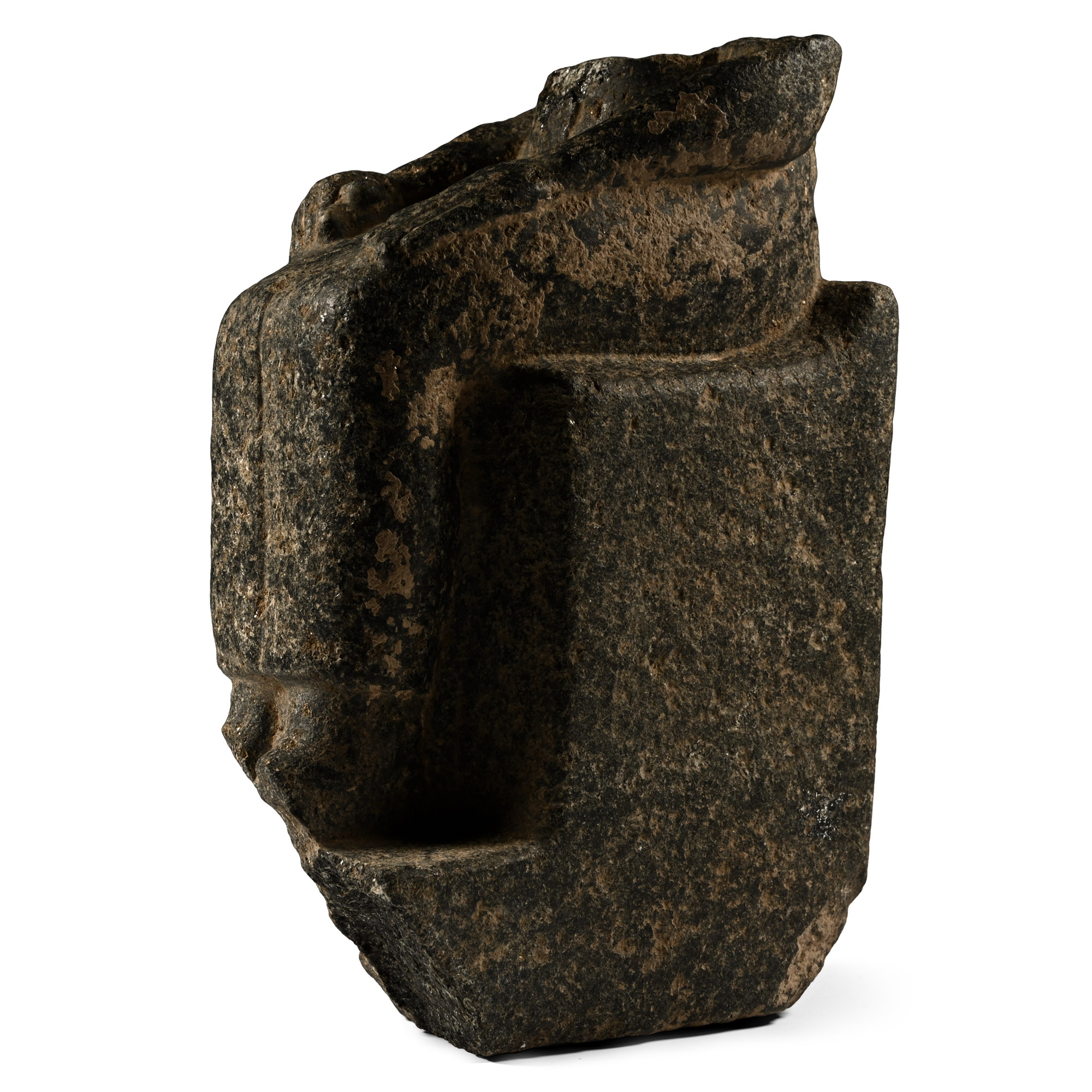
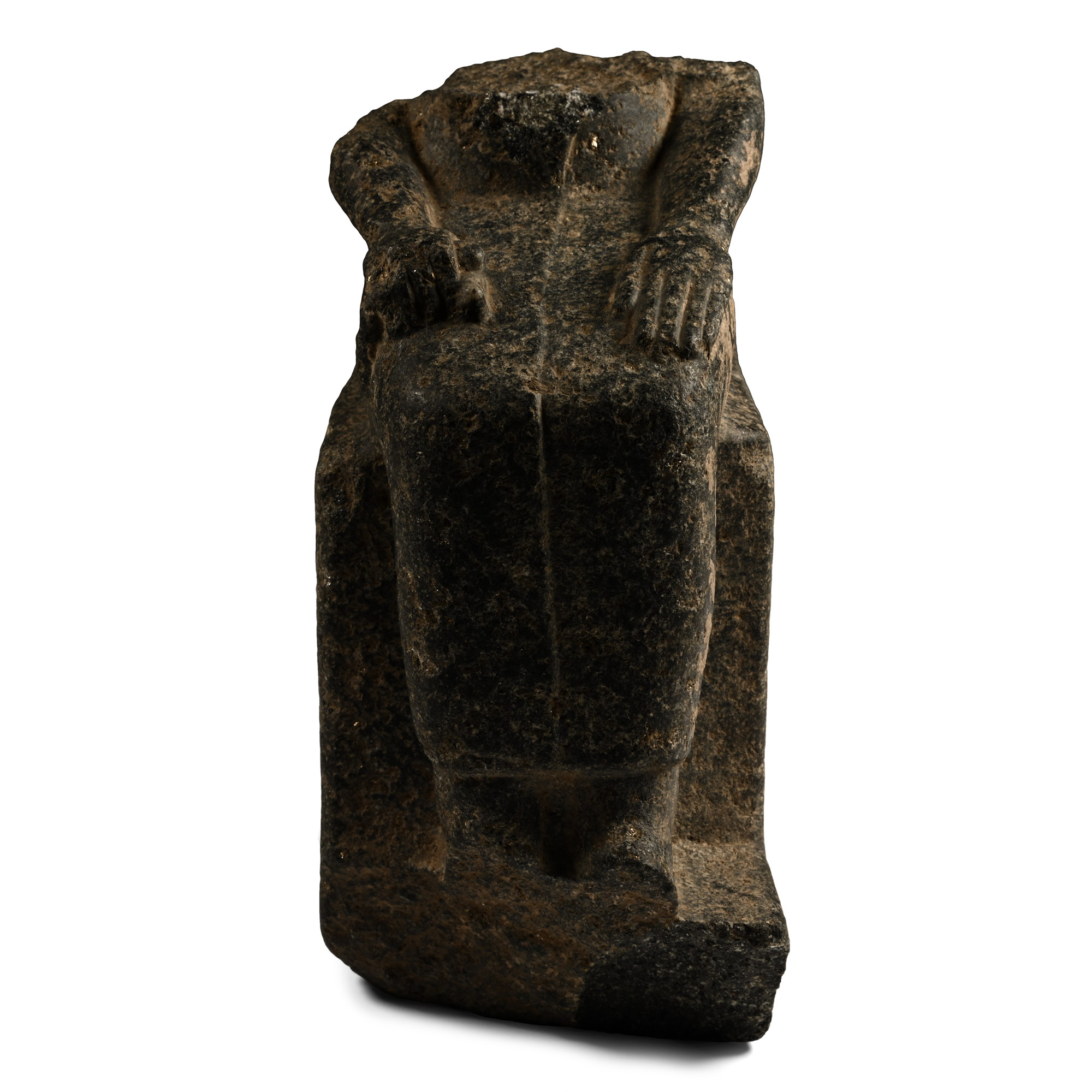
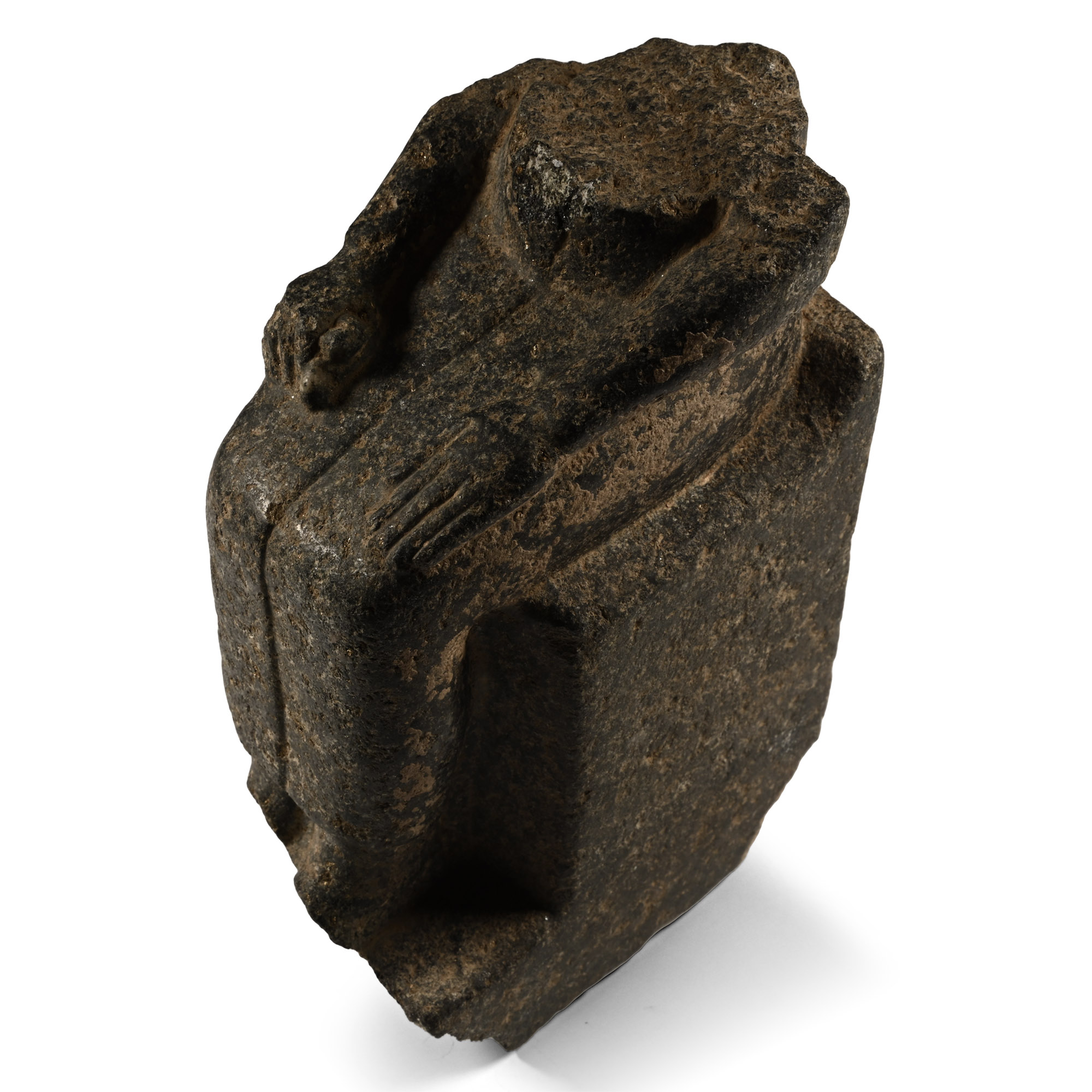
Egyptian Granite Seated Figure Representing Osiris
MIDDLE KINGDOM, CIRCA 1800 B.C.
7 3/8 in. (4.1 kg, 18.7 cm).
Fragment of a statue of an official, comprising the torso and legs clad in an ankle-length robe and seated on a rectangular-section seat with stepped base and short, curved backrest and rear dorsal pillar; the left hand carved with the hand palm-downwards placed flat along the thigh; the right hand similarly placed but with the hand gripping a folded piece of cloth of which the ends are draped over the lower thigh above the knee; traces of an old label to reverse.
ProvenancePrivate collection, Europe.
with Bonham's & Brooks, 8th November 2001, no.265.
Private collection, Europe.
Accompanied by copies of the relevant Bonham's & Brooks catalogue pages.
This lot has been checked against the Interpol Database of stolen works of art and is accompanied by a search certificate number no.12584-232097.
This lot has been cleared against the Art Loss Register database, and is accompanied by an illustrated lot declaration signed by the Head of the Antiquities Department, Dr Raffaele D’Amato.
Cf. Habachi, L., Elephantine IV: The Sanctuary of Heqaib II, pls. 39-41, for a complete statue from the time of Amenemhat II- Senwosret II with similar treatment of the lower portion of the garment; Oppenheim, A., et al (eds.), Ancient Egypt Transformed: The Middle Kingdom, pp.128-130, cat. 63, for an official from the reign of Senwosret III wearing a longer cloak-like garment and seated on a similarly shaped seat.
FootnotesThe official would have been shown wearing a longer cloak-like garment rather than a waist-height kilt, as the line of the folded edge is visible above where a waistband would typically be.
CONDITIONTimeLine Auctions follows a vetting process to ensure the authenticity and legality of all items, reinforcing our commitment to integrity and responsible trading. Each antiquity, antique, and coin lot undergoes thorough examination by a vetting committee of at least ten external specialists, professional trade association members, scientists, and archaeologists: Our Vetting Process
AUCTIONS:
TimeLine is a leading auction house specialising in antiquities, ancient art, collectables, natural history, coins, medals, and books. Our auctions offer museums, collectors, historians, and enthusiasts the opportunity to acquire unique and historically significant pieces.
LOT 0009
Egyptian Granite Seated Figure Representing Osiris
Estimate £4,000 - 6,000€4,640 - 6,960 (for guidance only)$5,400 - 8,100 (for guidance only)
-
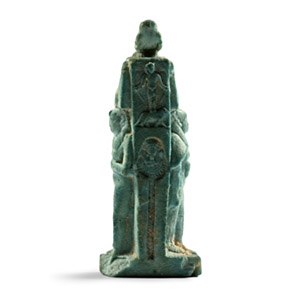
Egyptian Four-Sided Amulet
Late Period, 664-332 B.C.Sold for (Inc. bp): £1,690
An elaborate amulet in bright blue faience, modelled on four sides: Side 1: a diminutive figure of Harpokrates holding a snake in each hand and standing on the back of a lion, below which is a stylised mummiform (?) figure with a nemes headdress and a broad ornamental collar; Side 2: a baboon seated upon a nebyt collar, below which is a standing naked female figure wearing a Hathoric wig; Side 3: a standing naked female figure with right arm hanging by her side and left arm bent at the elbow and forearm positioned beneath her breasts, wearing a composite wig with striated lappets and uraeus to the front, surmounted by two tall ostrich feathers fronted by a sun disc; Side 4: a standing naked female figure with right arm hanging by her side and left arm bent at the elbow and forearm positioned beneath her breasts, wearing a lappet wig and uraeus to the front, surmounted by a tall two-plumed headdress fronted by a sun disc; the figure of a falcon tops the composition, which stands on an integral plinth. 21 grams, 60 mm
Mr F.D. collection, acquired on the European art market, 1975 to present. This lot is accompanied by an illustrated lot declaration signed by the Head of the Antiquities Department, Dr Raffaele D’Amato.
This highly unusual amulet contains elements associated with Horus cippi. On such objects, Horus is depicted as a naked child, usually holding snakes and standing on crocodiles, though other dangerous animals, such as lions, are also represented with him. The goddesses Isis and Nephthys are typically found on cippi, and two of the three female figures on this amulet may represent these goddesses. However, their headdresses are untypical of either deity, while the third female figure sports the Hathor wig. -
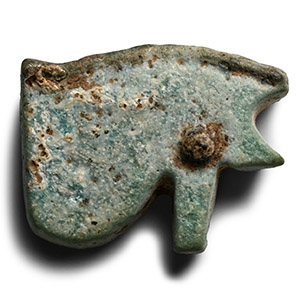
Egyptian Glazed Faience Horus Eye Amulet
Ptolemaic Period, 332-30 B.C.Sold for (Inc. bp): £59
Wedjat bead or amulet with applied black detailing to the pupil and brow. 1.18 grams, 17 mm
Mr F.D. collection, acquired on the European art market, 1975 to present. This lot is accompanied by an illustrated lot declaration signed by the Head of the Antiquities Department, Dr Raffaele D’Amato.
The wedjat-eye amulet is a representation of the healed eye of the god Horus, featuring both human and falcon elements. The name wedjat in ancient Egyptian means ‘the one that is sound.’ According to Egyptian mythology, Horus' eye was wounded or taken by the god Seth and restored by Thoth. The wedjat-eye amulet was thought to protect its wearer and bestow the power of recovery and regeneration onto them. It was very popular and used by both the living and the dead. -
.jpg)
Egyptian Wooden Cow Giving Birth Diorama with Two Figures
Middle Kingdom, 11th-12th Dynasty, 2023-1862 B.C.Sold for (Inc. bp): £3,380
Comprising three figures to represent a calving scene: a standing cow or other quadruped giving birth to its young, its head, neck and forelegs emerging from the mother's rear, both with a black and white speckled coat; a standing male figure with articulated arms and pierced hands, wearing a kilt and cropped wig and with stylised facial detailing; a kneeling figure also with articulated arms, open-palm hands, wearing a kilt and cropped wig, stylised facial features; extensive remains of polychrome pigment. 113 grams total, 9.5-16 cm
From an early 20th century Home Counties collection. This lot has been checked against the Interpol Database of stolen works of art and is accompanied by search certificate no.11597-199209. This lot has been cleared against the Art Loss Register database, and is accompanied by an illustrated lot declaration signed by the Head of the Antiquities Department, Dr Raffaele D’Amato.
Such models would have been deposited in tombs; the purpose of such a scene was probably to evoke the season of spring, when calves were born, and the floodplain where farmers lived and raised their livestock.
