
Loading, please wait...

LOT 0520
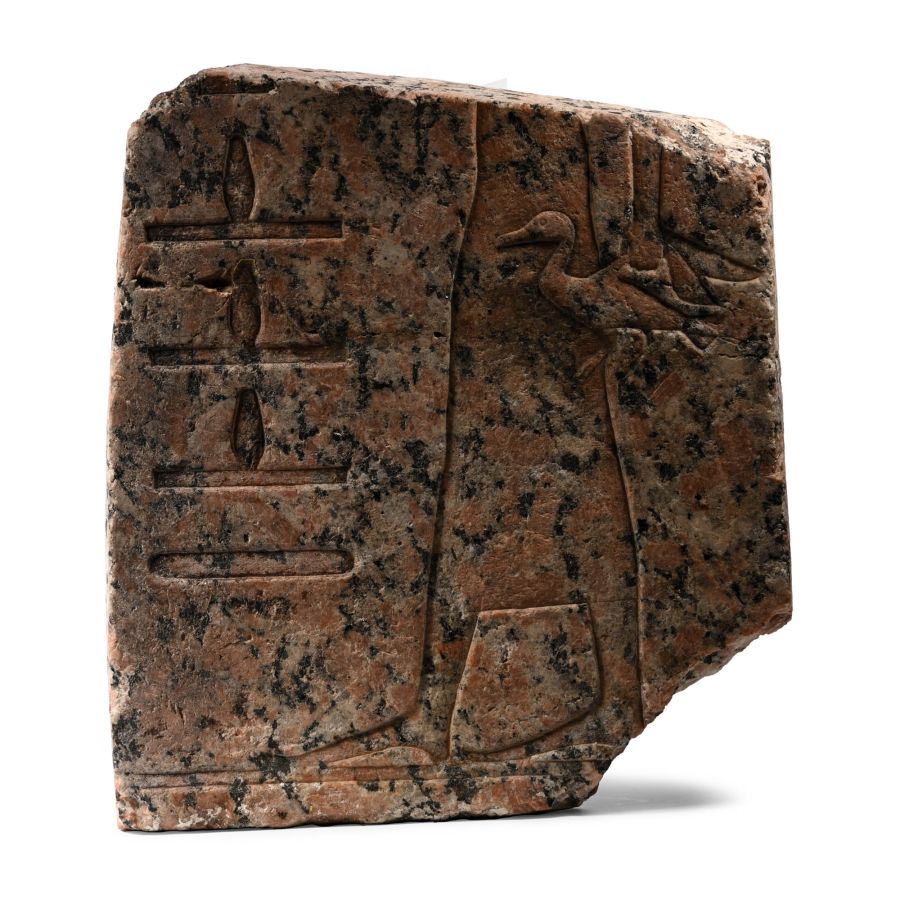
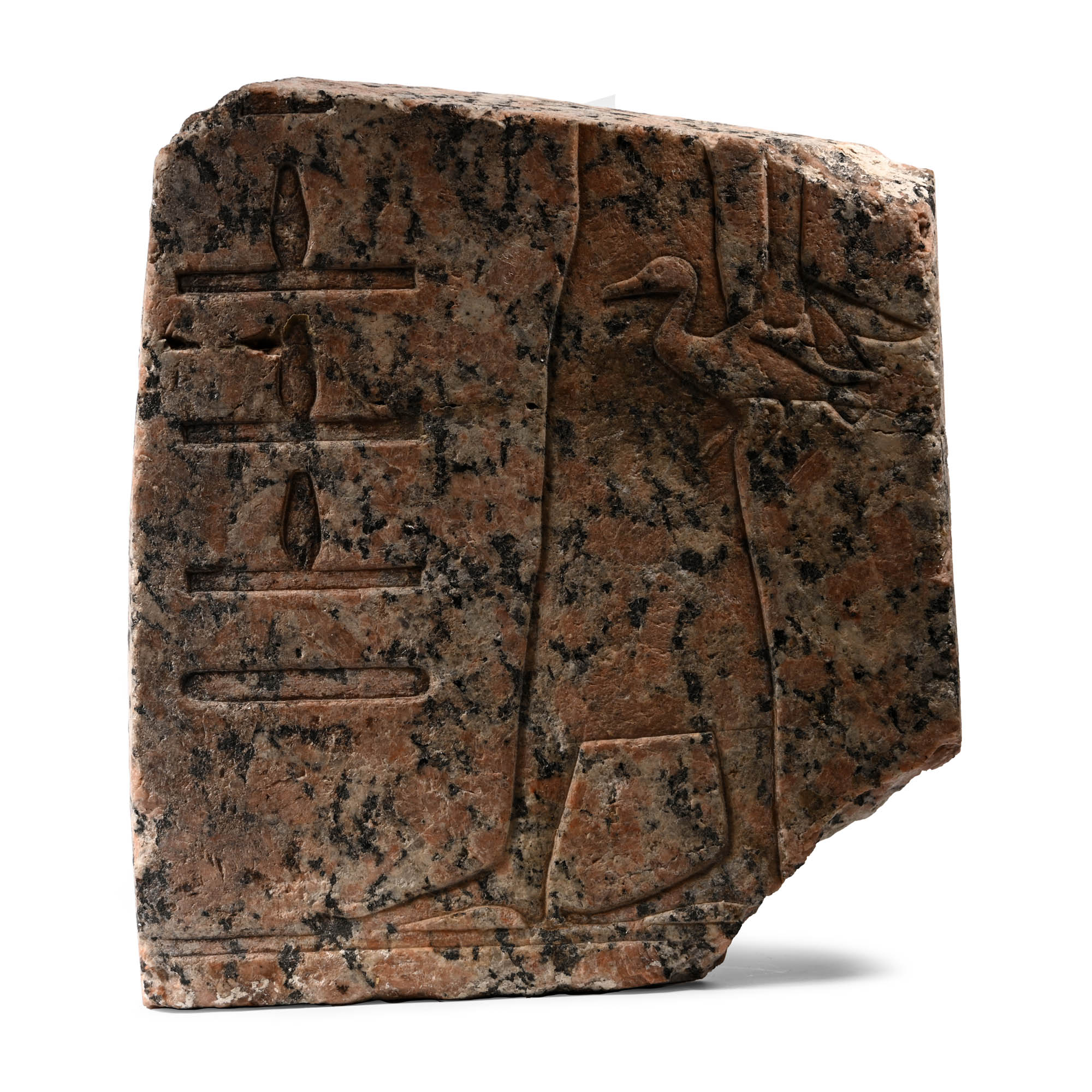
Egyptian Granite Relief
NEW KINGDOM, 1550-1292 B.C.
7 3/8 in. (3.57 kg, 18.7 cm).
Relief fragment with dressed face and three edges; the feet and lower body of a human figure in profile wearing a tight-fitting calf-length garment on a baseline; the left forearm behind with hand holding a goose by its pinions; to the left a series of ḥtp hieroglyphs.
ProvenanceAcquired in the mid 1980s-1990s.
Private collection, Switzerland, thence by descent.
Private collection, since the late 1990s.
This lot has been checked against the Interpol Database of stolen works of art and is accompanied by search certificate number no.12366-226937.
See similar offering scenes in Stupko-Lubczynska, A., Offering scenes in the chapel of Hatshepsut, Warsaw, 2016, figs.5, 30,34, 37, 105-106.
FootnotesThis likely represents part of an offering scene, showing the individual bringing a goose and the hieroglyphs writing ḥtpt, probably part of a phrase referring to 'offerings'.
CONDITIONTimeLine Auctions follows a vetting process to ensure the authenticity and legality of all items, reinforcing our commitment to integrity and responsible trading. Each antiquity, antique, and coin lot undergoes thorough examination by a vetting committee of at least ten external specialists, professional trade association members, scientists, and archaeologists: Our Vetting Process
AUCTIONS:
TimeLine is a leading auction house specialising in antiquities, ancient art, collectables, natural history, coins, medals, and books. Our auctions offer museums, collectors, historians, and enthusiasts the opportunity to acquire unique and historically significant pieces.
-
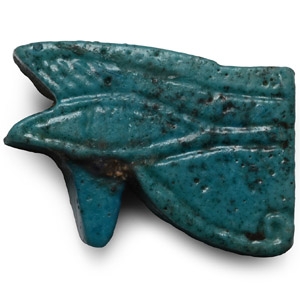
Egyptian Blue Glazed Faience Eye of Horus Amulet
Late Period, 664-332 B.C.Estimate: £200 - 300 (+bp*)
Opening Bid: £100
Large wedjat-eye amulet with incised human and falcon elements. 11.7 grams, 38 mm
From the private collection of the late Mrs Belinda Ellison, a long time member of the Egyptian Exploration Society, c.1940-2020.
The wedjat-eye amulet is a representation of the healed eye of the god Horus, featuring both human and falcon elements. The name wedjat in ancient Egyptian means ‘the one that is sound.’ According to Egyptian mythology, Horus' eye was wounded or taken by the god Seth and restored by Thoth. The wedjat-eye amulet was thought to protect its wearer and bestow the power of recovery and regeneration onto them. It was very popular and used by both the living and the dead. -
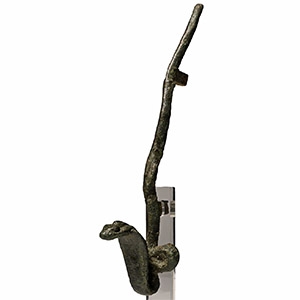
Egyptian Bronze Cobra Mount
Late Period, 6th century B.C.Estimate: £1,000 - 1,400 (‡+bp*)
Opening Bid: £500
Cobra-shaped mount with head raised and hood expanded, two mounting studs to the reverse; mounted on a custom-made stand. 182 grams, 22 cm
Private Israeli collection. Ex Archaeological Center, Tel Aviv, Israel, 2015. Private European collection.
The mount most likely adorned the Atef crown of a statue of Osiris. -
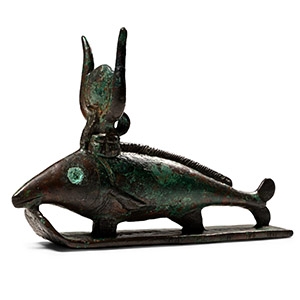
Large Egyptian Bronze Oxyrhynchus Fish of Per-Medjed
Late Period-Ptolemaic Period, 664-30 B.C.Estimate: £6,000 - 8,000 (‡+bp*)
Opening Bid: £3,000
Modelled in the round on a sledge attached by ventral and pectoral fins, forked tail, dorsal ridge, tapering nose; recessed circular eyes with enamel fill; horned sun disc headdress fronted by a uraeus and a suspension loop behind. 585 grams, 17 cm
Acquired from Gallery Reiner, Paris, 1981. Private collection, Europe. Accompanied by a copy of French passport no.150583 dated 29 November 2013. This lot has been checked against the Interpol Database of stolen works of art and is accompanied by a search certificate number no.12375-226676.
The Medjed, a type of elephant-snout fish (Mormyrus kannume), was revered in ancient Egyptian religion, particularly in Per-Medjed, better known by its Greek name, Oxyrhynchus Polis. This version of the name, meaning "city of the sharp-nosed," reflects the fish's distinctive appearance as depicted in Egyptian art. These fish were believed to have consumed the penis of Osiris, the god who was dismembered and scattered by his brother Seth. As sacred creatures, figurines of the Medjed were often adorned with a horned sun-disc headdress worn by the goddesses Hathor and Isis, suggesting a close association with both. Some figurines, like this example, featured suspension loops, allowing them to be worn as pendant amulets.
