
Loading, please wait...
_900x900.jpg "Egyptian Gold Uraeus Amulet")
_200x200.jpg "Egyptian Gold Uraeus Amulet")
.jpg "Egyptian Gold Uraeus Amulet")
LOT 0490
Egyptian Gold Uraeus Amulet
LATE NEW KINGDOM, 1070-900 B.C.
3/8 in. (0.38 grams, 11 mm).
Depicting a rearing cobra sporting a sun disc with its coiled body below resting on the hieroglyphic neb sign.
ProvenanceFrom an early 20th century French collection.
LiteratureCf. Charron, A., Barbotin, C., Khâemouaset, le prince archéologue, savoir et pouvoir à l’époque de Ramsès II, Gand, 2016, p.111, nos.36-37, for two similarly styled examples.
CONDITIONTimeLine Auctions follows a vetting process to ensure the authenticity and legality of all items, reinforcing our commitment to integrity and responsible trading. Each antiquity, antique, and coin lot undergoes thorough examination by a vetting committee of at least ten external specialists, professional trade association members, scientists, and archaeologists: Our Vetting Process
AUCTIONS:
TimeLine is a leading auction house specialising in antiquities, ancient art, collectables, natural history, coins, medals, and books. Our auctions offer museums, collectors, historians, and enthusiasts the opportunity to acquire unique and historically significant pieces.
LOT 0490
Egyptian Gold Uraeus Amulet
Estimate £250 - 350€290 - 410 (for guidance only)$340 - 470 (for guidance only)
-
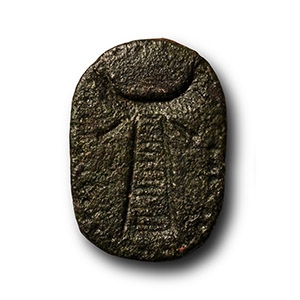
Phoenicio-Egyptian Dark Green Stone Scarab
Circa 6th-4th century B.C.Estimate: £250 - 350 (+bp*)
Opening Bid: £139
With textured carapace, bull-horned column to the reverse. 3.94 grams, 15 mm
From the property of the late Mr SM, London, UK, 1969-1999.
The widespread adoption of the scarab, both as a symbol linked to the concept of rebirth, and in its function as a seal, exemplifies the extent of Egyptian influence on Phoenician culture, from its origins in the Levant to its spread across the Mediterranean. -
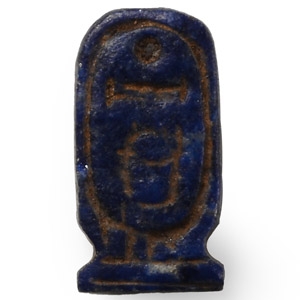
Egyptian Lapis Lazuli Amulet with Cartouche
New Kingdom, 1539-1075 B.C.Sold for (Inc. bp): £143
Rectangular in section with longitudinal piercing, hieroglyphic text. 1.38 grams, 16 mm
Acquired on the UK art market before 2000. Property of an Essex, UK, gentleman. -
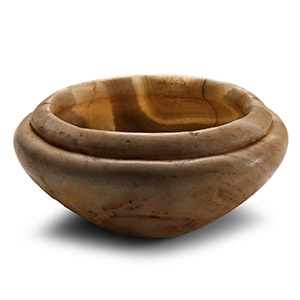
Egyptian Alabaster Bowl
1st Dynasty, circa 3000 B.C.Estimate: £1,500 - 2,000 (‡+bp*)
Opening Bid: £750
Of conical profile with flattened base, carinated shoulder and stepped rounded rim, possibly for accepting a lid. 380 grams, 11.6 cm wide
Property from an American deceased estate, acquired between 19770-1989. with Bonhams, London, 28 October 2009, no.16 (Part). Private European collection. Accompanied by copies of the relevant Bonhams catalogue pages. This lot has been checked against the Interpol Database of stolen works of art and is accompanied by a search certificate number no.12071-215259.
