
Loading, please wait...
LOT 0079
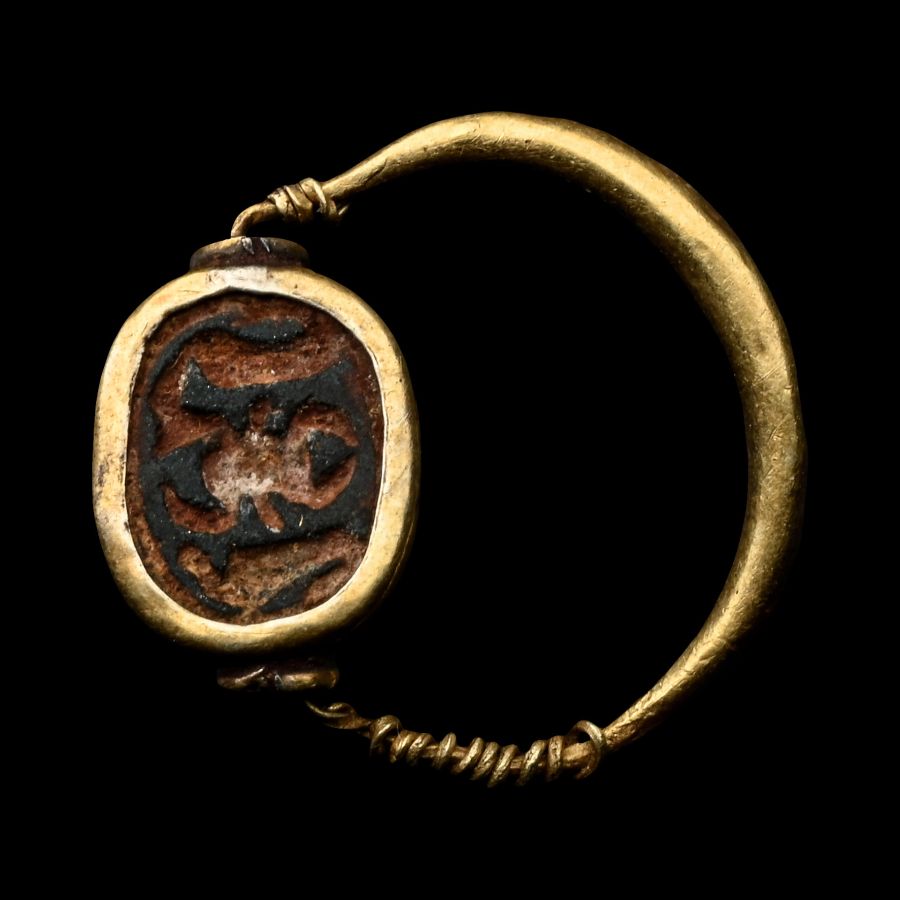
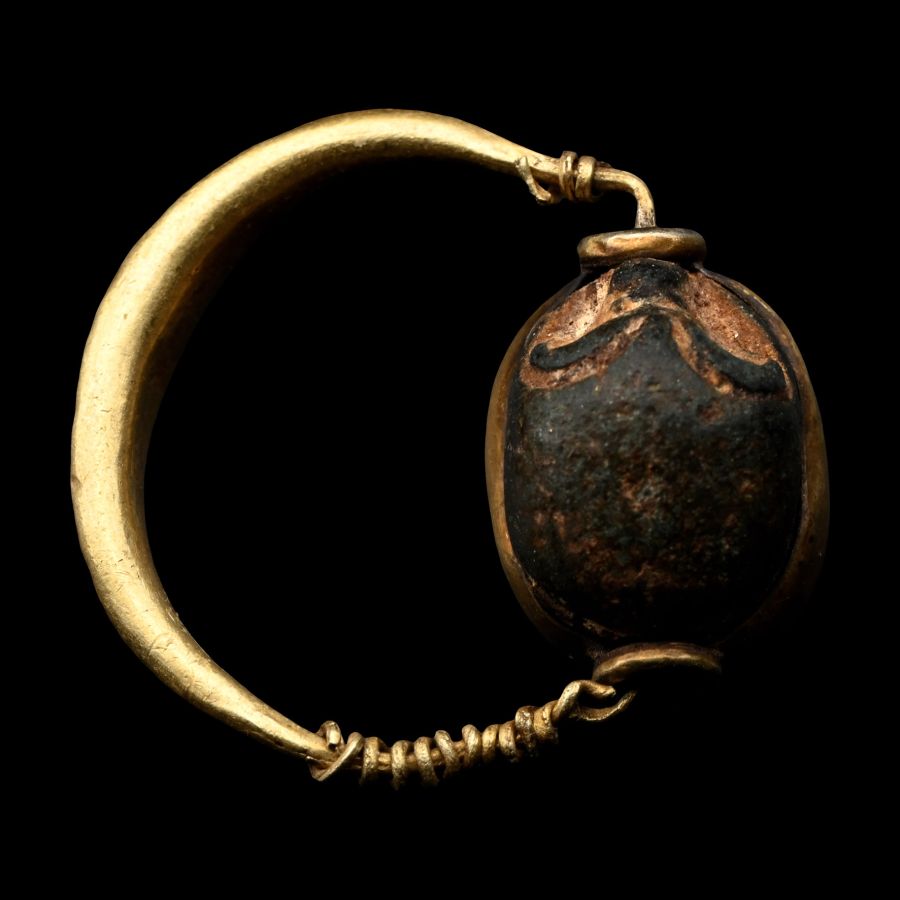
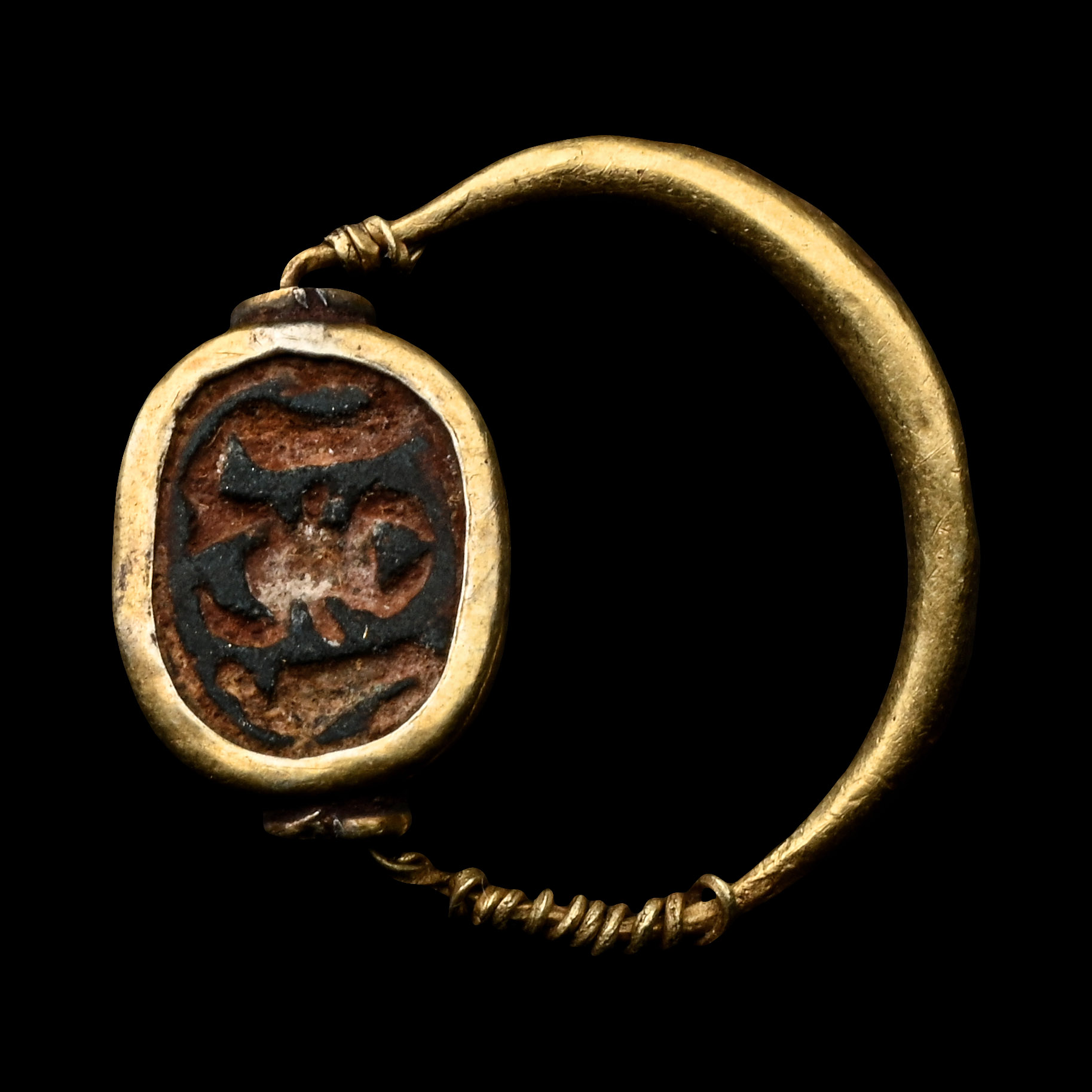
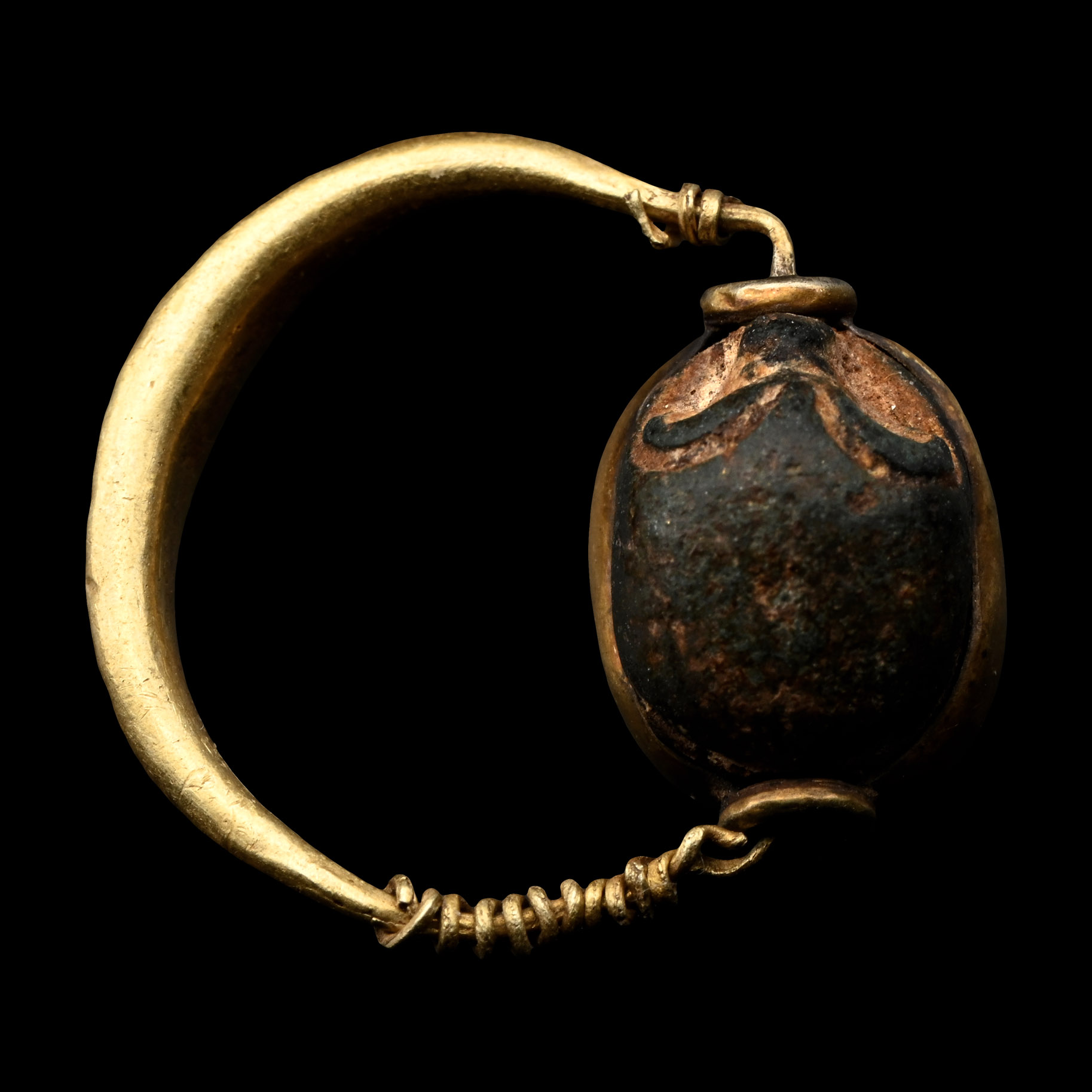
Egyptian Gold Swivel Ring with Green Jasper Hedgehog Scaraboid Engraved with a Scarab Flanked by Two Cobras
NEW KINGDOM, 1570-1070 B.C.
3/4 in. (1.67 grams, 19.01 mm overall, 16.18 mm internal diameter (approximate size British D 1/2, USA 2, Europe 1.78, Japan 1)).
Penannular hoop with swivel mount and frame; inset stylised hedgehog scaraboid featuring large, round ears and a protruding snout, with the underside bearing an incuse scarab flanked by rearing snakes.
ProvenanceUK private collection before 2000.
Acquired on the UK art market.
Private collection, London, UK.
Cf. Chadour, A.B., Rings. The Alice and Louis Koch Collection, volume I, Leeds, 1994, item 2; a hedgehog scaraboid with similarly styled ears and face is in The Museum of Fine Arts, Budapest (acc. no. 51.2603).
CONDITIONTimeLine Auctions follows a vetting process to ensure the authenticity and legality of all items, reinforcing our commitment to integrity and responsible trading. Each antiquity, antique, and coin lot undergoes thorough examination by a vetting committee of at least ten external specialists, professional trade association members, scientists, and archaeologists: Our Vetting Process
AUCTIONS:
TimeLine is a leading auction house specialising in antiquities, ancient art, collectables, natural history, coins, medals, and books. Our auctions offer museums, collectors, historians, and enthusiasts the opportunity to acquire unique and historically significant pieces.
LOT 0079
Egyptian Gold Swivel Ring with Green Jasper Hedgehog Scaraboid Engraved with a Scarab Flanked by Two Cobras
Sold for (Inc. bp): £585
-
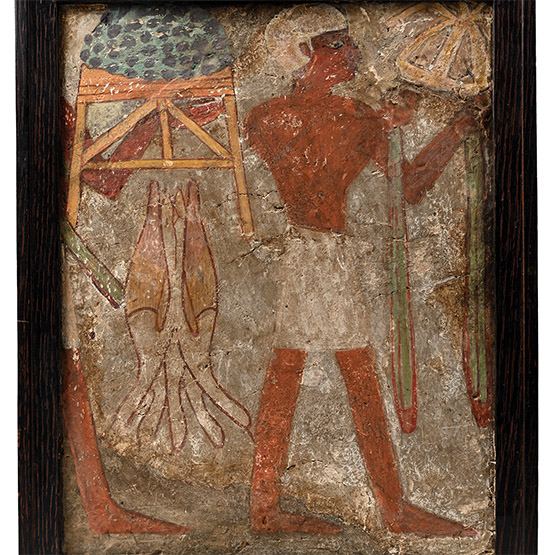
Egyptian Limestone Fresco with Servant Carrying Geese
New Kingdom, 1580-1077 B.C.Sold for (Inc. bp): £9,100
Rectangular frieze fragment with advancing figure in profile wearing a shendyt kilt holding up two poles in his raised hands; to his rear, part of a second figure with an openwork wooden frame (footstool) and other items; mounted in sturdy wooden frame with suspension rings to the reverse; surface has been extensively cleaned, restored, and repainted. 6.8 kg, 40.5 x 32.2 cm
Mounted in an early 20th-century wooden frame bearing a stamped inscription reading “Exposition Paris …” From the collection of L.V. (1950-1960), Paris, France. Collection of Monsieur X. (1931-2017), dispersed for the benefit of the Monaco Red Cross. Private collection, Europe. This lot has been checked against the Interpol Database of stolen works of art and is accompanied by a search certificate number no.13224-249307.
The servant is carrying geese, like in many other representations of the New Kingdom. Many portrayals of ducks and geese in ancient Egyptian art show the importance of the birds as food. Servants plucking geese are visible in the tomb of Nakht, in Luxor (1567-1320 B.C.), and in the famous tomb of Nebamun, at the British Museum, a fresco fragment shows workers standing in front of a gaggle of geese. -
.jpg)
Egyptian Brown Quartzite Figure of the Baboon God Thoth
New Kingdom, circa 1550-1070 B.C.Estimate: £4,000 - 6,000 (‡+bp*)
Opening Bid: £2,222
Carved in a typical pose, sitting on its haunches with its tail curving around the right side, its front paws resting on its knees and protruding beneath its thick furry pelt, with incised detailing, its feet either side of the phallus, the head with bulbous, striated hair on either side, chipped, snout restored; seated on a high shrine-shaped plinth with squared front and rounded back, featuring a cavetto cornice and roll detailing on the upper part. 1.15 kg, 15 cm
From a deceased American estate, 1970-1989. with Bonhams, London, 28 October 2009, no.35. Accompanied by copies of the relevant Bonhams catalogue pages. This lot has been checked against the Interpol Database of stolen works of art and is accompanied by a search certificate number no.12368-226706.
The baboon was an animal manifestation of the god Thoth, the patron deity of Hermopolis Magna, who was revered for his association with knowledge, writing, and healing. -
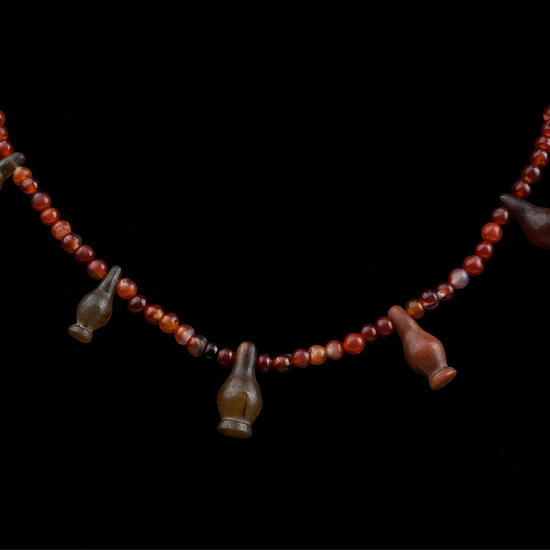
Egyptian Carnelian Bead and Poppy Amulet Necklace
Late Period, 664-332 B.C. and laterSold for (Inc. bp): £208
Poppy-head amulet necklace restrung with later seed beads. 21.9 grams, 45 cm long
From the collection of a gentleman, acquired on the London art market in the 1990s.
