
Loading, please wait...
LOT 0460
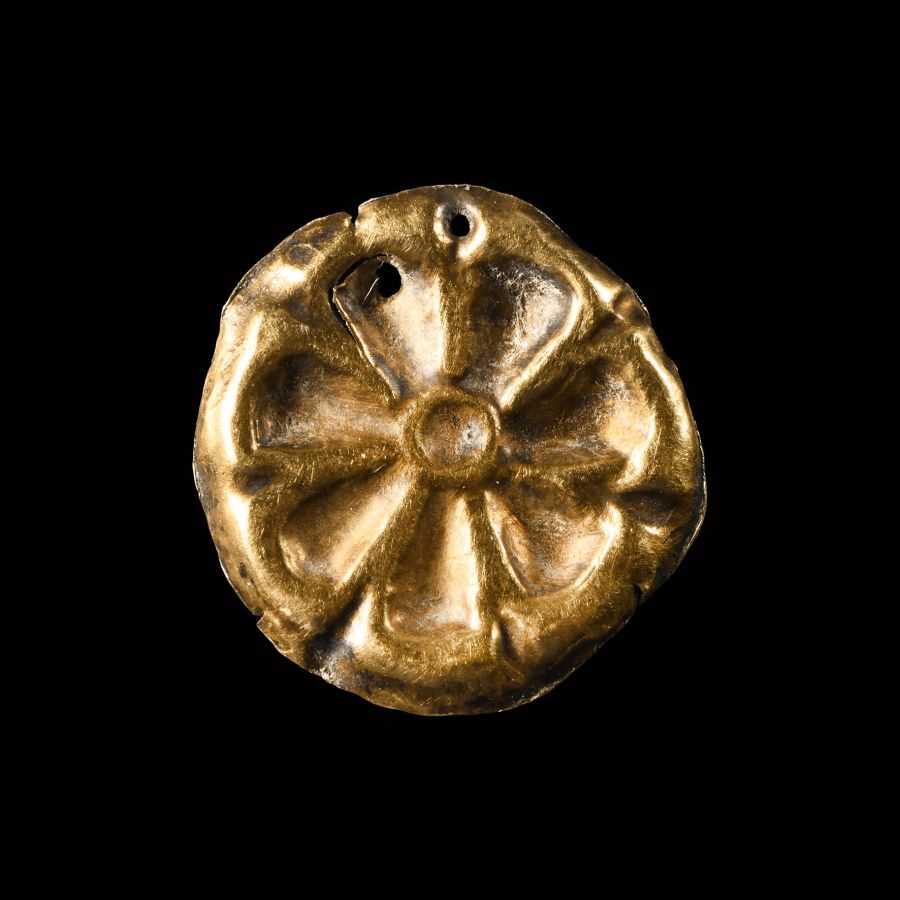
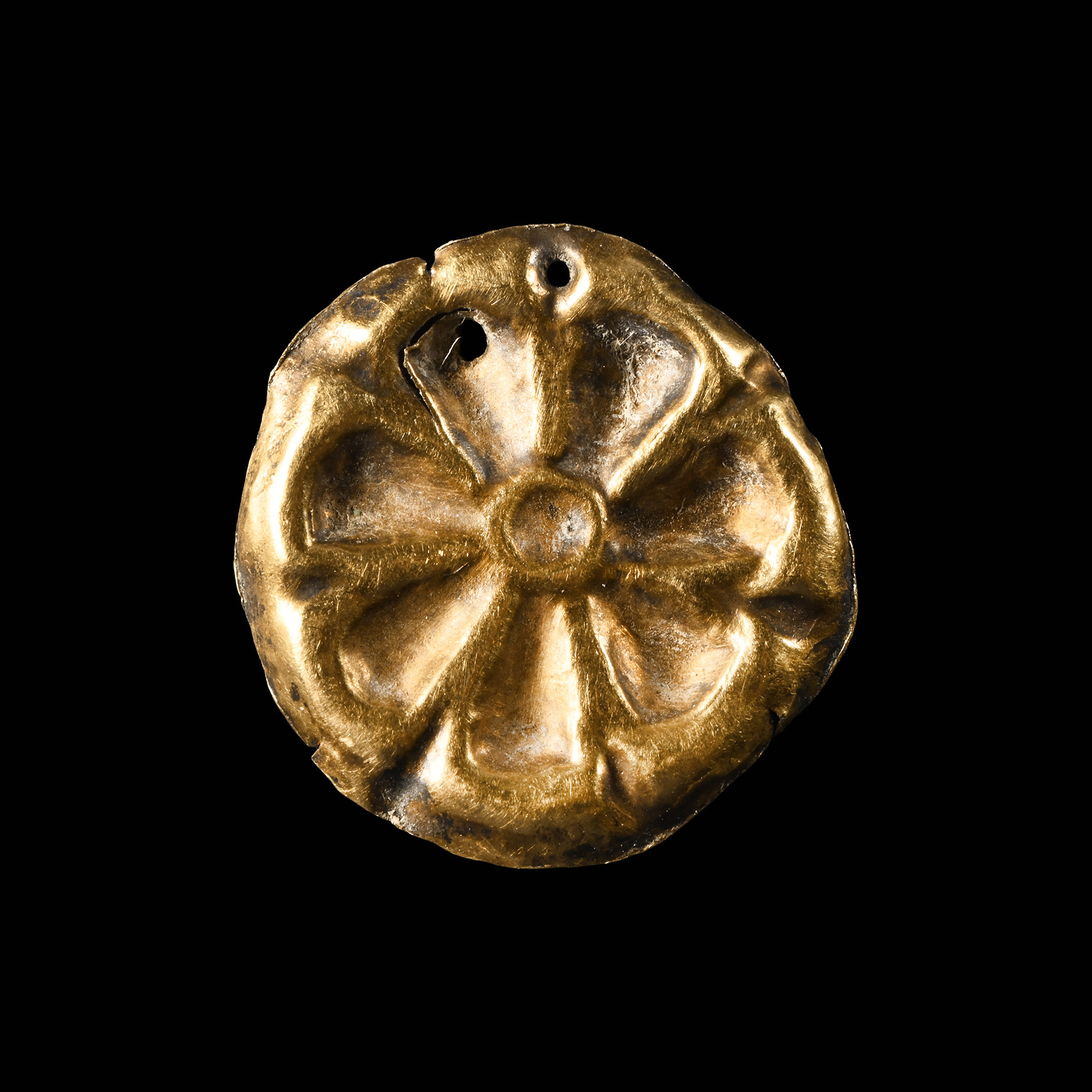
Egyptian Gold Rosette Mount
LATE PERIOD, 664-323 B.C.
5/8 in. (0.48 grams, 15 mm).
Made of a round gold sheet composing distinctive seven-petalled flower.
ProvenanceAcquired 1980-2015.
Ex Abelita family collection.
Cf. Kantor, H.J., Plant Ornament in the Ancient Near East, pp.127ff., fig.IV.10.
FootnotesRosettes, such as this lovely example, have a long history in Egyptian decorative art and were popular at most sites. This small decoration could be the central nail of a daisy pattern provided for architectural purposes, or could be an applique of furniture or dress.
CONDITIONTimeLine Auctions follows a vetting process to ensure the authenticity and legality of all items, reinforcing our commitment to integrity and responsible trading. Each antiquity, antique, and coin lot undergoes thorough examination by a vetting committee of at least ten external specialists, professional trade association members, scientists, and archaeologists: Our Vetting Process
AUCTIONS:
TimeLine is a leading auction house specialising in antiquities, ancient art, collectables, natural history, coins, medals, and books. Our auctions offer museums, collectors, historians, and enthusiasts the opportunity to acquire unique and historically significant pieces.
-
.jpg)
Large Egyptian Bronze Osiris with Silver-Inlaid Eyes
Late Period, 26th-30th Dynasty, 664-332 B.C.Sold for (Inc. bp): £6,500
Modelled mummiform with arms crossed at the chest, holding crook and flail with highlighted features, wearing a plaited false beard and Atef crown mounted on two curved ram's horns, flanked by detailed ostrich feathers and frontal uraeus; natural facial detailing with silver inlaid eyes and large protruding ears; accompanied by a custom-made display stand. 1.15 kg total, 31 cm high including stand
Norman Blankman collection, New York, 1960s. P.G. collection, New York, USA. with Art for Eternity, New York. with Bonhams, London, 6 July 2023, lot 360. This lot has been checked against the Interpol Database of stolen works of art and is accompanied by search certificate no.11945-210564.
Osiris was the foremost of ancient Egyptian funerary deities and lord of the underworld. Many statuettes of the god were offered in temples dedicated in his name, and have also been discovered in other contexts including animal necropoleis and temples dedicated to other gods. -
Egyptian Faience Amulet with Figures
Late Period-Ptolemaic Period, 664-30 B.C.Sold for (Inc. bp): £221
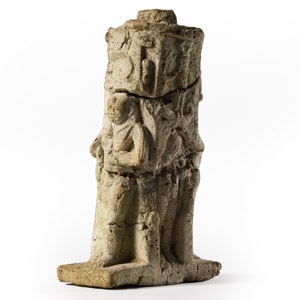
The large architectural amulet, rectangular in section with base and scarab finial; the narrow sides each with a high-relief standing figure, both holding a flail, wearing a royal nemes headdress and solar disc; the wider sides each with a facing male figure within a naos surmounted by a smaller facing figure, one Harpocrates holding a snake, the other Bes(?) with a high-plumed headress; repaired. 100 grams, 95 mm
Ex property of a London gentleman; acquired in the 1970s. Private collection of Mr T.H., Norfolk, UK.
The presence of Harpocrates holding a snake and possibly Bes, suggests that this functioned as a cippus amulet offering protection and with curative properties. -
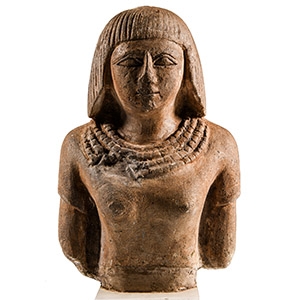
Egyptian Limestone Bust of a Male Dignitary
New Kingdom, 13th-12th century B.C.Sold for (Inc. bp): £2,340
Carved male bust with a short-sleeved robe and tiered shebyu jewelled collar, striated wig; mounted on a custom-made plinth. 855 grams total, 21 cm high including stand
From an old UK collection. With Coincraft since the 1990s. Property of an Essex, UK, gentleman. Accompanied by an academic report by Dr Alberto Maria Pollastrini. Accompanied by a master copy of the Coincraft catalogue BCF 76, where this object is offered for £2,950.00. This lot has been checked against the Interpol Database of stolen works of art and is accompanied by search certificate no.11946-209473.
