
Loading, please wait...
LOT 0042
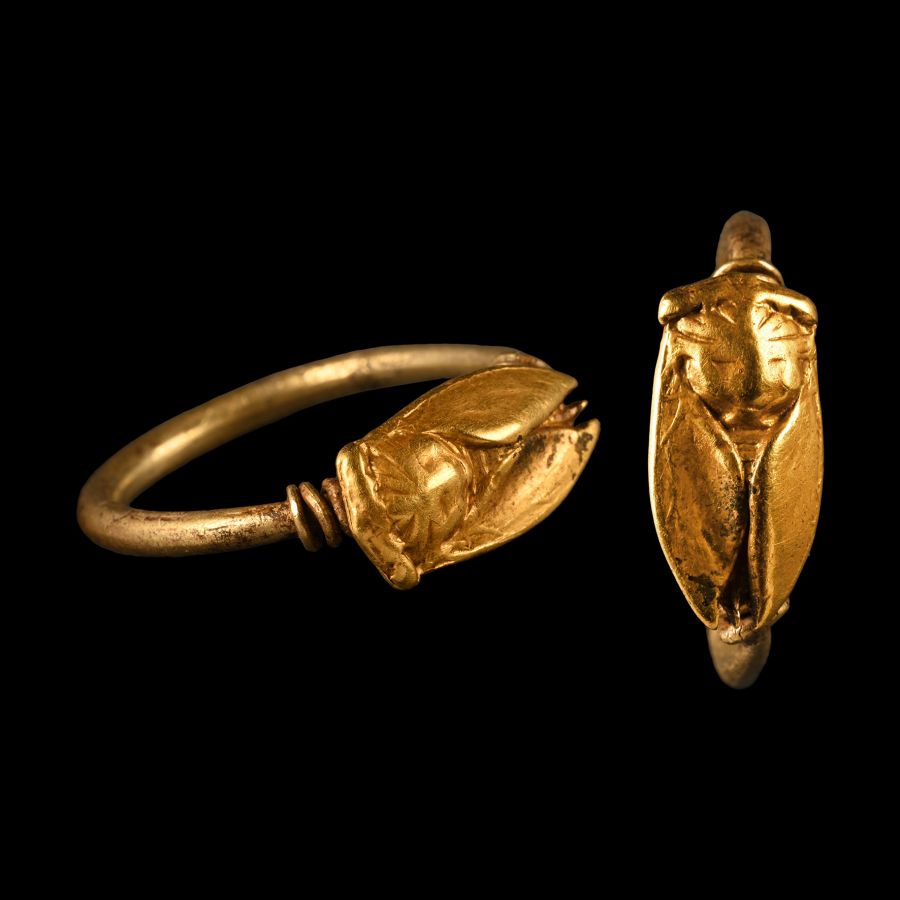
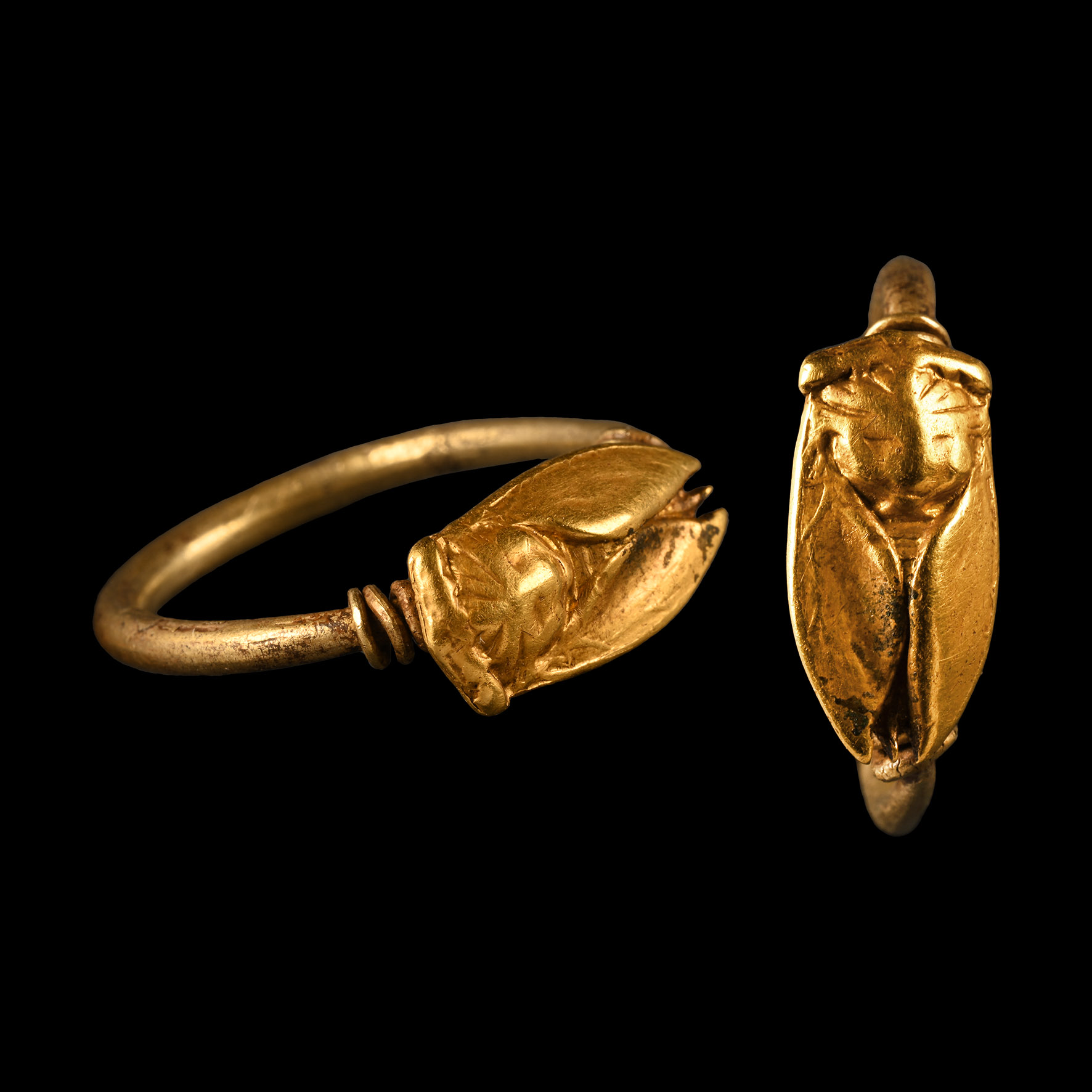
Egyptian Gold Ring with Fly
LATE PERIOD, 664-332 B.C.
1 in. (5.28 grams, 27.27 mm overall, 19.10 mm internal diameter (approximate size British S 1/2, USA 9 1/4, Europe 20.63, Japan 19)).
The round-section hoop tapering towards the bezel where the arms overlap and form coil sleeves around the opposite shoulder, gold fly attached to the bezel with two mounting loops, with simple detailing to the upper body, possibly incorporating a human face; possibly a marriage.
ProvenanceAcquired in the late 1980s-early 1990s.
This lot has been checked against the Interpol Database of stolen works of art and is accompanied by search certificate number no.11847-204562.
The gold fly was an emblem of valour.
CONDITIONTimeLine Auctions follows a vetting process to ensure the authenticity and legality of all items, reinforcing our commitment to integrity and responsible trading. Each antiquity, antique, and coin lot undergoes thorough examination by a vetting committee of at least ten external specialists, professional trade association members, scientists, and archaeologists: Our Vetting Process
AUCTIONS:
TimeLine is a leading auction house specialising in antiquities, ancient art, collectables, natural history, coins, medals, and books. Our auctions offer museums, collectors, historians, and enthusiasts the opportunity to acquire unique and historically significant pieces.
-
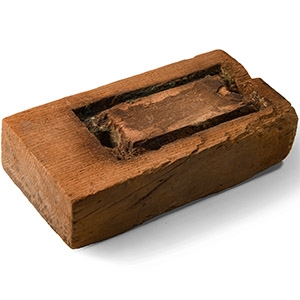
Egyptian Wooden Statue Base
Late New Kingdom-Ptolemaic Period, 1250-30 B.C.Sold for (Inc. bp): £78
Cuboid with a rectangular channel to one side and two oval mounting sockets. 179 grams, 13.5 cm
Acquired on the UK art market, 1982-1989.
The channel bears traces of oxidisation indicating that it belonged with a copper-alloy statuette. -
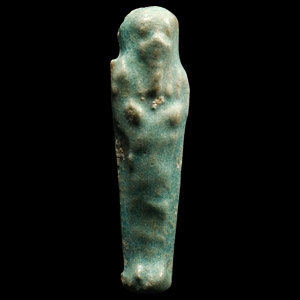
Egyptian Blue Faience Ushabti
Ptolemaic Period, 332-30 B.C.Estimate: £100 - 140 (‡+bp*)
Opening Bid: £50
Decorated with a blue glaze and displaying remains of facial, wig, beard and crossed arm detailing to the mummiform figure. 17.9 grams, 70 mm
Acquired in Europe before 1990. -
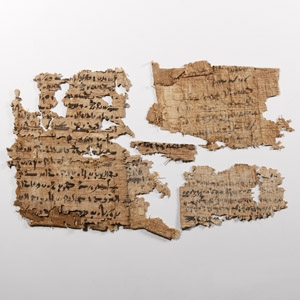
Egyptian Papyrus Fragment Group
Circa 100 B.C.Sold for (Inc. bp): £715
Fragments of a papyrus manuscript with text in Demotic script, remains of a painted grid or decorative figure. 35 grams, 26 x 14.5 cm
Acquired 1970s-1996. Property of a North American collector. London collection, 2016.
