
Loading, please wait...
LOT 0049
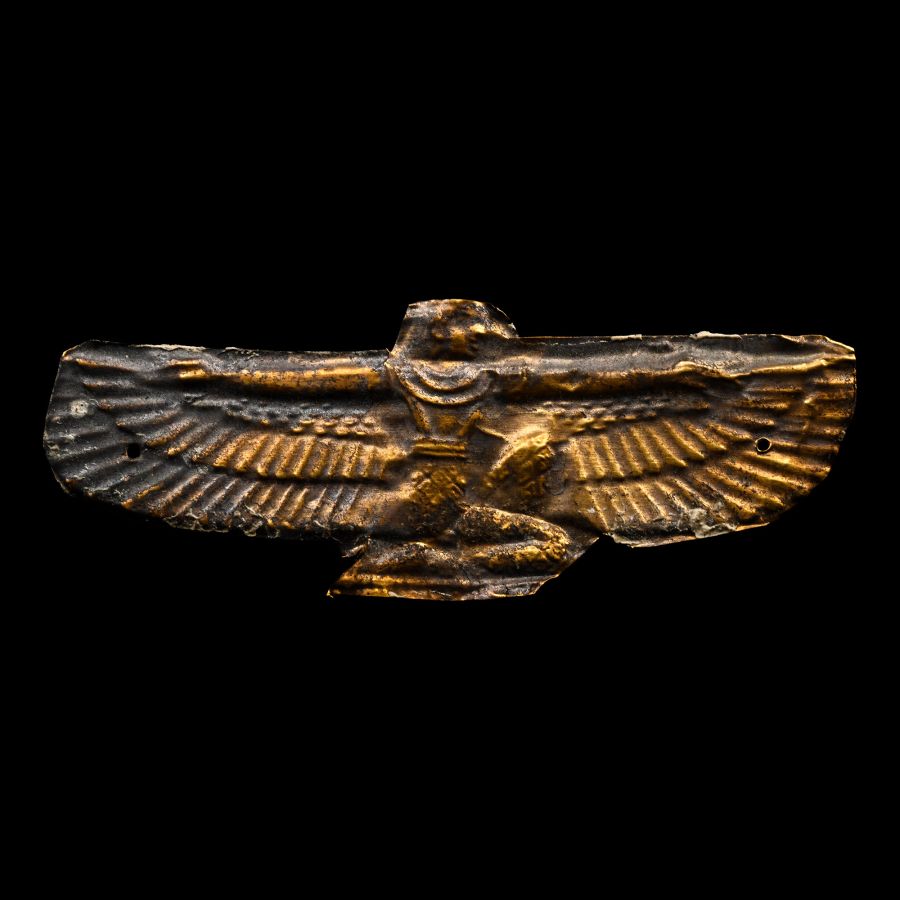
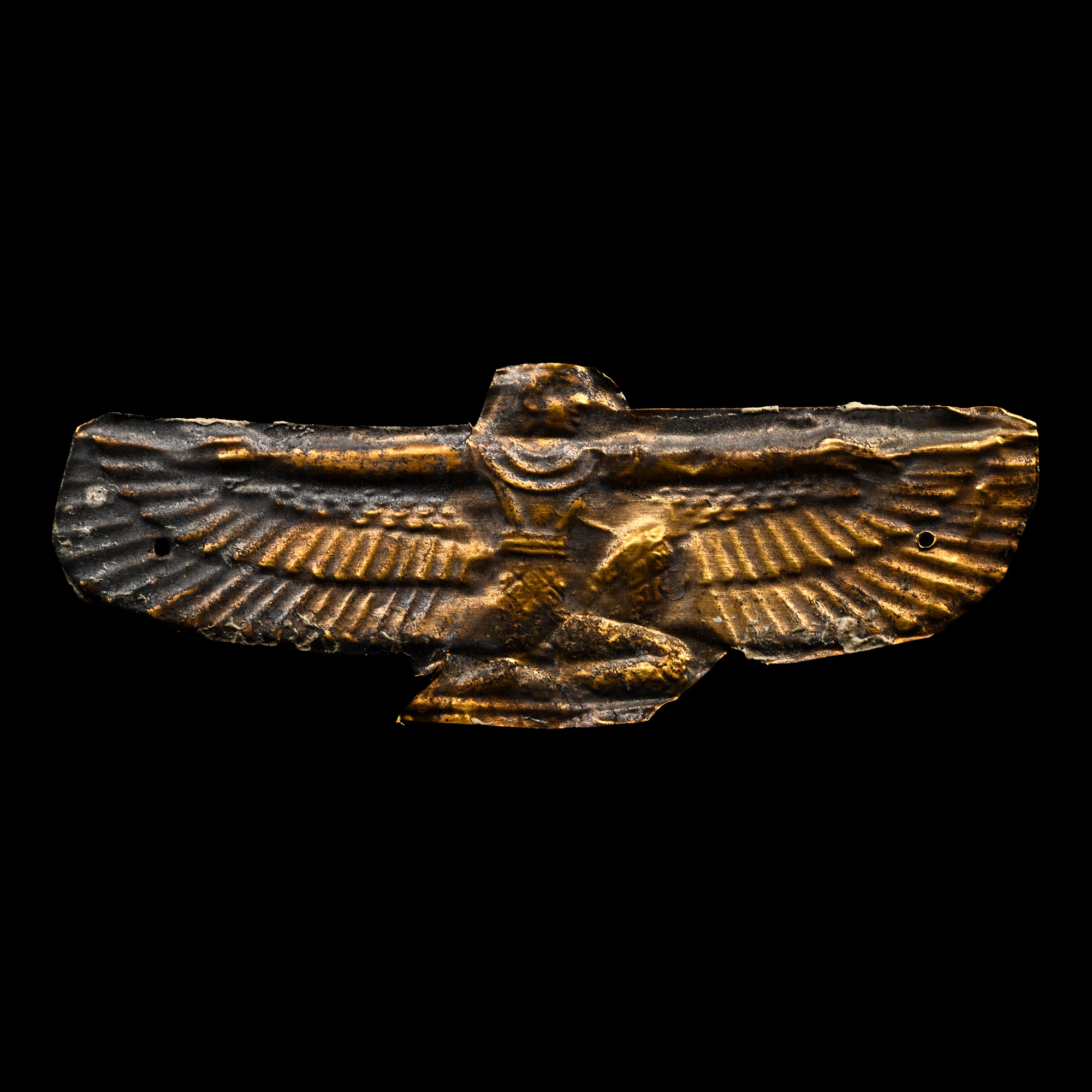
Egyptian Gold Plaque with Winged Goddess
1ST MILLENNIUM B.C.
2 1/2 in. (1.57 grams, 62 mm).
Foil figure of a kneeling goddess with outstretched wings; wearing a tripartite wig with a headband, a multi-strand collar, and a tight robe with diamond detailing; mounted in a display frame.
ProvenanceUK private collection before 2000.
Acquired on the UK art market.
Private collection, London, UK.
See Corteggiani, J.-P., L'Égypte ancienne et ses dieux, Fayard, Paris, 2007.
FootnotesSeveral winged goddesses appear in Egyptian iconography. Without a headdress, the deity's identity here remains uncertain, but Isis, Nephthys, or Nut are likely candidates. All three are often shown in avian form as protectresses of the dead.
CONDITIONTimeLine Auctions follows a vetting process to ensure the authenticity and legality of all items, reinforcing our commitment to integrity and responsible trading. Each antiquity, antique, and coin lot undergoes thorough examination by a vetting committee of at least ten external specialists, professional trade association members, scientists, and archaeologists: Our Vetting Process
AUCTIONS:
TimeLine is a leading auction house specialising in antiquities, ancient art, collectables, natural history, coins, medals, and books. Our auctions offer museums, collectors, historians, and enthusiasts the opportunity to acquire unique and historically significant pieces.
-
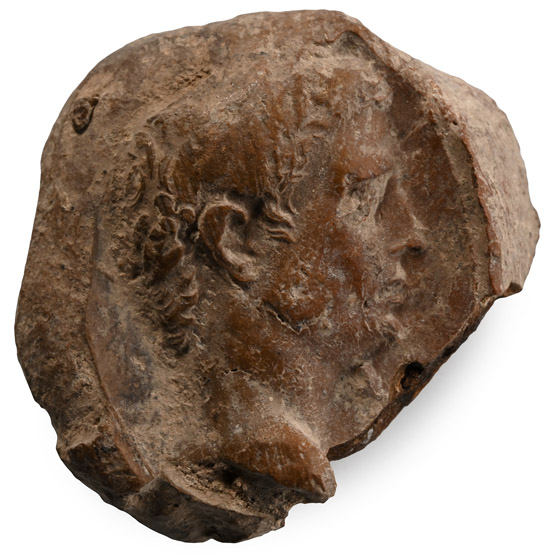
Egyptian Clay Papyrus Document Sealing with Bust of Tiberius
Roman Period, early 1st century A.D.Sold for (Inc. bp): £208
Discoid in plan with impressed seal, profile bust of Tiberius (14-37 A.D.) placed to one side. 3.78 grams, 25 mm
Ex German art market, 2000s. Acquired from an EU collector living in London. From the collection of a Surrey, UK, gentleman. -
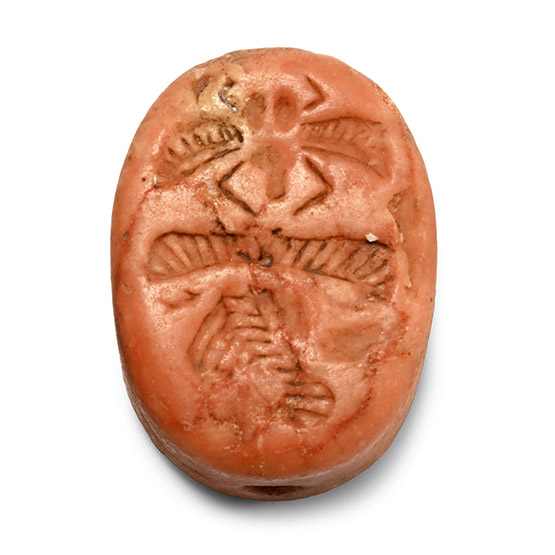
Phoenicio-Egyptian Orange Stone Scaraboid
1st millennium B.C.Estimate: £350 - 450 (+bp*)
Opening Bid: £194
Ellipsoid in plan with frieze comprising a large Maat feather, a winged sun disc, and a winged Khepri beetle. 13 grams, 27 mm
Ex collection of the late Mr S. M., London, UK, 1970-1990s. -
.jpg)
Egyptian Faience Amulet of Tawaret
664-332 B.C.Estimate: £350 - 450 (‡+bp*)
Opening Bid: £175
Modelled in the round, with a dorsal pillar and a loop at the shoulder, the goddess is in hippopotamus form, with a human torso and arms and a crocodile tail. 7.9 grams, 50 mm
Private collection, Carouge, Switzerland, assembled in the 1980s-1990s. Thence by descent to the collection of Mr S.P., since 2020.
