
Loading, please wait...
LOT 0599
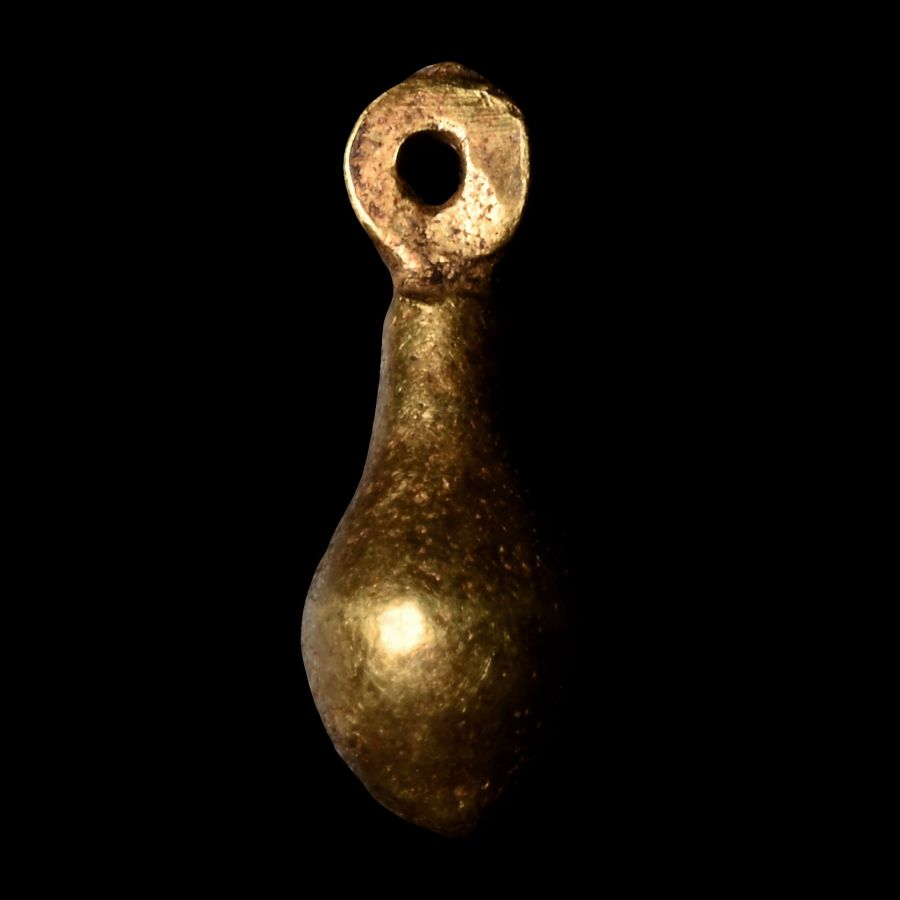
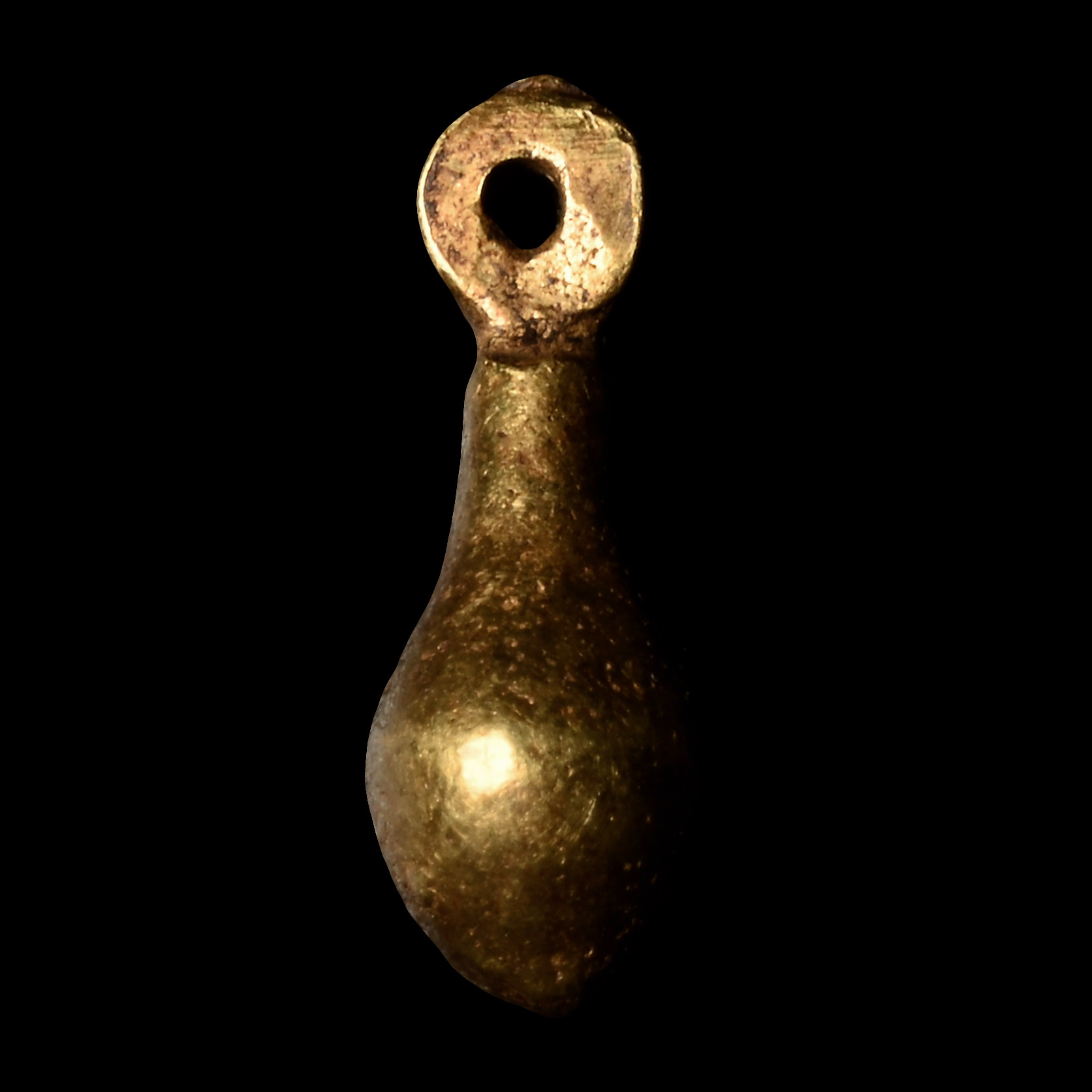
Egyptian Gold Pendant Amulet
LATE NEW KINGDOM-THIRD INTERMEDIATE PERIOD, CIRCA 1069-900 B.C.
3/8 in. (0.56 grams, 9 mm).
Formed as a bulbous seed with a tapering stalk, a ribbed suspension loop above.
ProvenanceEx early 20th century French collection.
CONDITIONTimeLine Auctions follows a vetting process to ensure the authenticity and legality of all items, reinforcing our commitment to integrity and responsible trading. Each antiquity, antique, and coin lot undergoes thorough examination by a vetting committee of at least ten external specialists, professional trade association members, scientists, and archaeologists: Our Vetting Process
AUCTIONS:
TimeLine is a leading auction house specialising in antiquities, ancient art, collectables, natural history, coins, medals, and books. Our auctions offer museums, collectors, historians, and enthusiasts the opportunity to acquire unique and historically significant pieces.
LOT 0599
Egyptian Gold Pendant Amulet
Estimate £100 - 140€120 - 160 (for guidance only)$140 - 190 (for guidance only)
Opening Bid
£50 (EUR 58; USD 68) +BP*
-
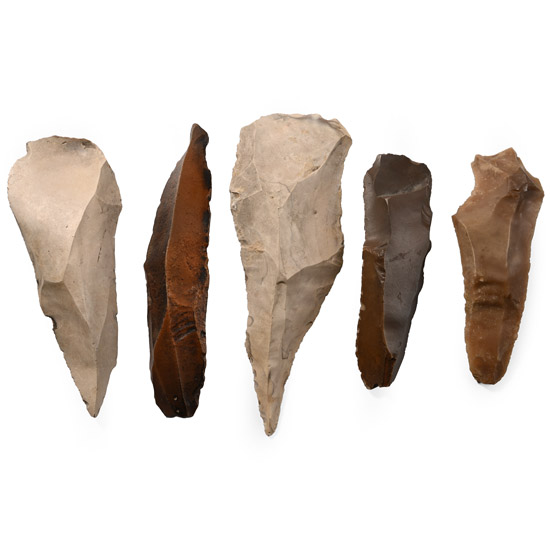
Egyptian Stone Age Knapped Knife Blades from Thebes
Neolithic Period, 11,000-5,200 B.P.Estimate: £300 - 400 (+bp*)
Bids: 1 | Current Bid: £5
Each of curved profile with broad cutting edge; old inked findspots 'Desert W. of Thebes 1912' (2 examples), 'W. of Thebes 1912' (2 examples), 'W. Thebes 1912'. 279 grams total, 10.6-14.3 cm
Found in the desert west of Thebes, Egypt, 1912. From the private collection of Peter Clayton, FCILIP, Dip, Arch, FSA, FRNS, Hemel Hempstead, Hertfordshire, UK; formed since the late 1950s. -
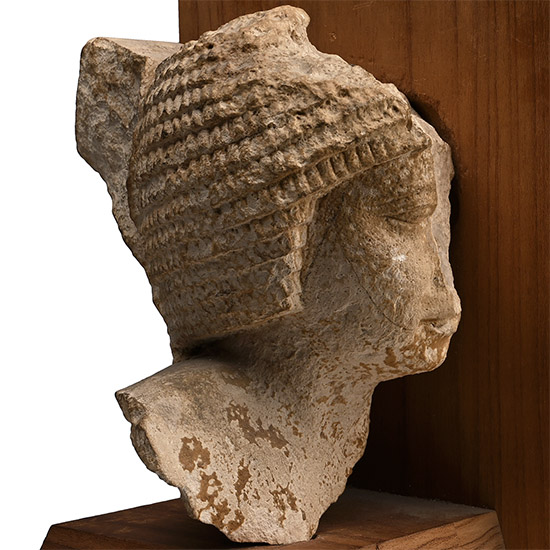
Egyptian Limestone Head of a Noble Wearing a Curled Wig
Old Kingdom, 5th-6th Dynasty, circa 2498-2181 B.C.Estimate: £2,000 - 3,000 (+bp*)
Bids: 11 | Current Bid: £220
Fragmentary limestone head of an elite official carved in the round, wearing a characteristic short wig composed of rows of small, tight concentric curls that completely cover the ears and terminate evenly at the brow; the rounded right side of the face preserves a carefully rendered almond-shaped eye, a raised relief eyebrow, and small yet prominent lips, with a custom wooden mount. 2.91 kg total, 25.4 cm high including stand
From the private collection of Norman Davis, Seattle, U.S.A. Received as a gift from Norman Davis in 1973. From the private collection of Peter Clayton, FCILIP, Dip, Arch, FSA, FRNS, Hemel Hempstead, Hertfordshire, UK; formed since the late 1950s. This lot has been checked against the Interpol Database of stolen works of art and is accompanied by search certificate no.13519-262983. -
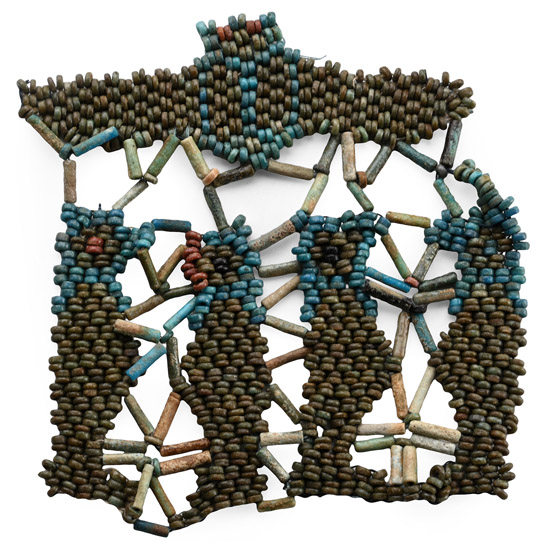
Egyptian Mummy Bead Winged Scarab and Four Sons of Horus
Late Period-Ptolemaic Period, circa 664-30 B.C.Estimate: £100 - 140 (+bp*)
Opening Bid: £50
Comprising a beaded winged scarab with the Four Sons of Horus beneath. 24.2 grams, 10.5 cm
Ex Art Shop Windsor, 1990s. From a private UK collection.
Winged scarabs were often used as funerary amulets and were believed to symbolise the deceased's rebirth and regeneration. The Four Sons of Horus were deities who safeguarded the deceased's internal organs. The human-headed Imsety protected the liver, the baboon-headed Hapy the lungs, the jackal-headed Duamutef the stomach, and the falcon-headed Qebehsenuef the intestines.
