
Loading, please wait...
LOT 0514
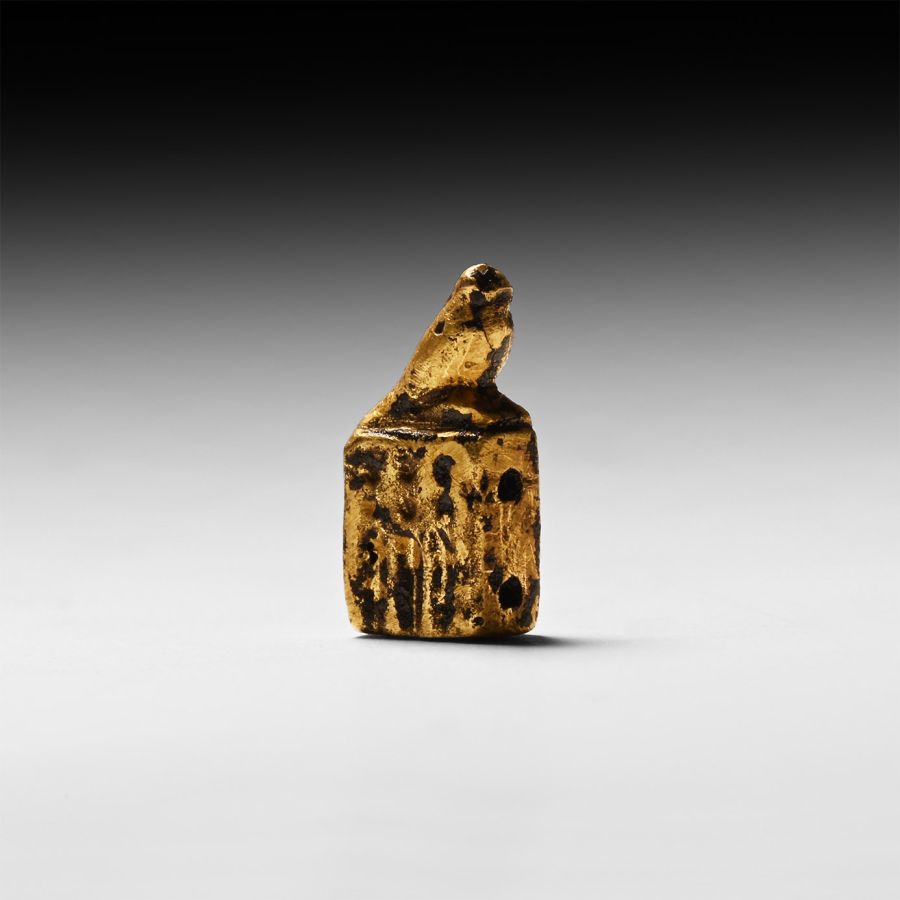
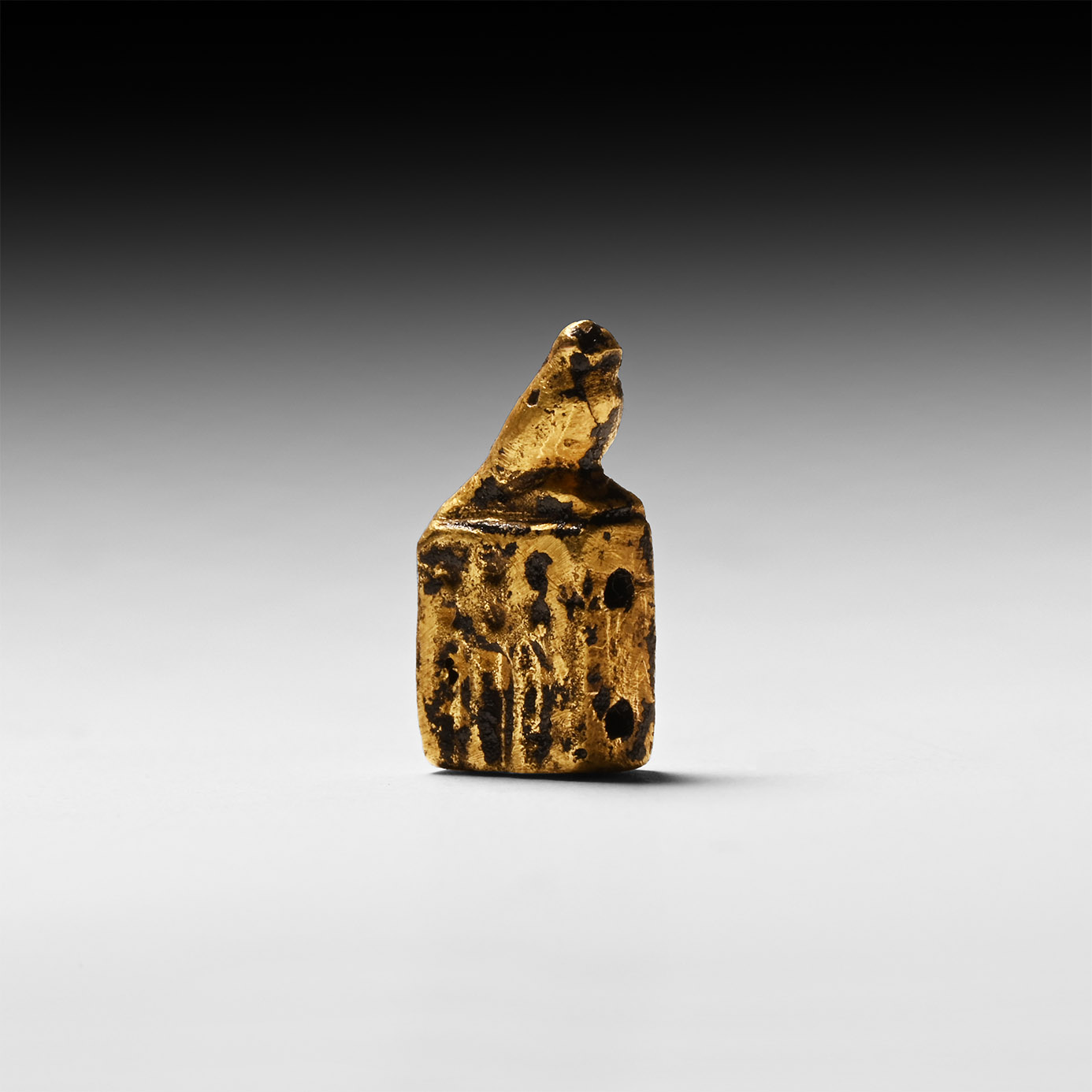
Egyptian Gold Horus Amulet
LATE DYNASTIC PERIOD, 664-343 B.C. OR EARLIER
3/8 in. (1.13 grams, 9 mm).
A gold amulet depicting the god Horus represented here as a falcon, surmounting the rectangular serekh, in turn considered to represent the façade of a royal palace; a pair of piercings through the base for suspension; remains of bitumen.
ProvenanceEarly 20th century French collection.
LiteratureSee Aldred, C., Jewels of the Pharaohs, London, 1971, p.21, no.1, for the gold elements from the bracelet of King Djer of the First Dynasty provide very close parallels.
CONDITIONTimeLine Auctions follows a vetting process to ensure the authenticity and legality of all items, reinforcing our commitment to integrity and responsible trading. Each antiquity, antique, and coin lot undergoes thorough examination by a vetting committee of at least ten external specialists, professional trade association members, scientists, and archaeologists: Our Vetting Process
AUCTIONS:
TimeLine is a leading auction house specialising in antiquities, ancient art, collectables, natural history, coins, medals, and books. Our auctions offer museums, collectors, historians, and enthusiasts the opportunity to acquire unique and historically significant pieces.
LOT 0514
Egyptian Gold Horus Amulet
Estimate £350 - 450€410 - 520 (for guidance only)$470 - 610 (for guidance only)
-
.jpg)
Egyptian Greywacke Cosmetic Fish Spoon Section
New Kingdom, 1569-1081 B.C.Estimate: £300 - 400 (+bp*)
Opening Bid: £167
A fragment of a greywacke cosmetic spoon, shaped as a fish with finely worked features and incised eye, scales, gill, and fin detailing; the underside is recessed to create the spoon bowl; accompanied by a custom-made display stand. 27 grams, 58 mm wide (50 grams total, 85 mm high including stand)
Fine condition.
Acquired in the 1980s. From a French collection. -
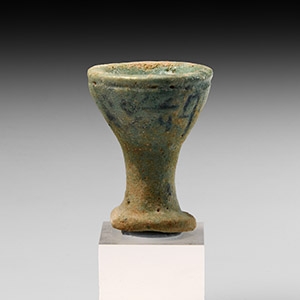
Egyptian Blue glazed Faience Cup with Hieroglyphs
Late Period-Ptolemaic Period, circa 664-30 B.C.Sold for (Inc. bp): £286
A blue glazed composition chalice, with enigmatic hieroglyphs on the body in darker blue; mounted on an acrylic base. 36 grams total, 65 mm high including stand
From an old UK collection. From the private collection of Alf Baxendale (1941-2016) part 2, keen Egyptologist, member of the Egyptology Society, trustee of the Amarna Trust; thence by descent. Accompanied by an identification display card. Accompanied by a copy of his obituary published in Horizon, The Amarna Project and Amarna Trust newsletter, Issue 18, 2017, p.21, by Barry John Kemp, CBE, FBA, Professor Emeritus of Egyptology at the University of Cambridge and directing excavations at Amarna in Egypt.
Probably a foundation deposit. -
.jpg)
Egyptian Black Hardstone Sphinx
Late Period-Ptolemaic Period, circa 500-31 B.C.Sold for (Inc. bp): £260
An Egyptian or Graeco-Roman hardstone female sphinx modelled in the round, sitting on a sub-rectangular base, her hair tied in a bun on the top of her head, circular socket to the top face behind the head; mounted on a custom-made antique wooden display base. 74 grams total, 50 mm long including base
Fine condition.
From Saqqara in the late 1960s. With John Cummings, Lincolnshire, UK, 1990s. Acquired 20 May 1997. Property of a South Oxfordshire private collector. Accompanied by an original invoice no.6469 dated 20 May 1997. Accompanied by a scholarly note by Egyptologist Paul Whelan.
This type of sphinx amulet is quite rare in Egypt, for instance, the vast output and variety of amulets identified from the Late Period industrial-scale workshops at Naukratis does not include three-dimensional winged sphinxes, only their image impressed in scarabs, suggesting that this example may have been an import and/or once the possession of a Greek person in Egypt.
