
Loading, please wait...

LOT 0461
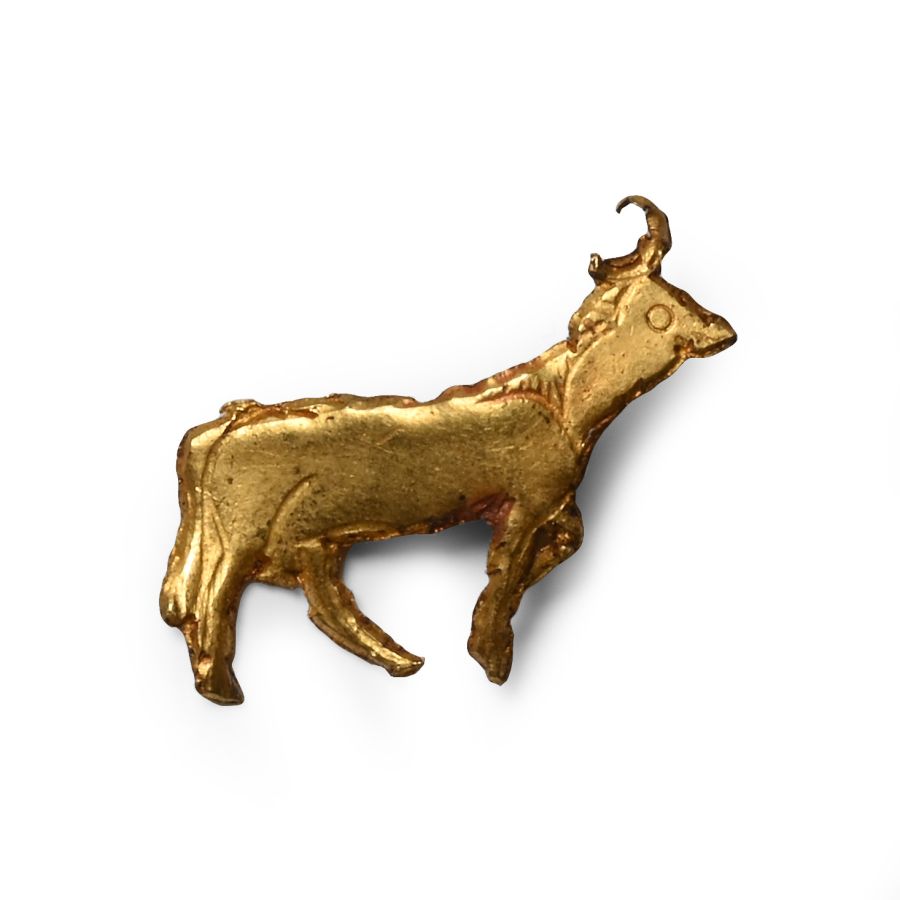
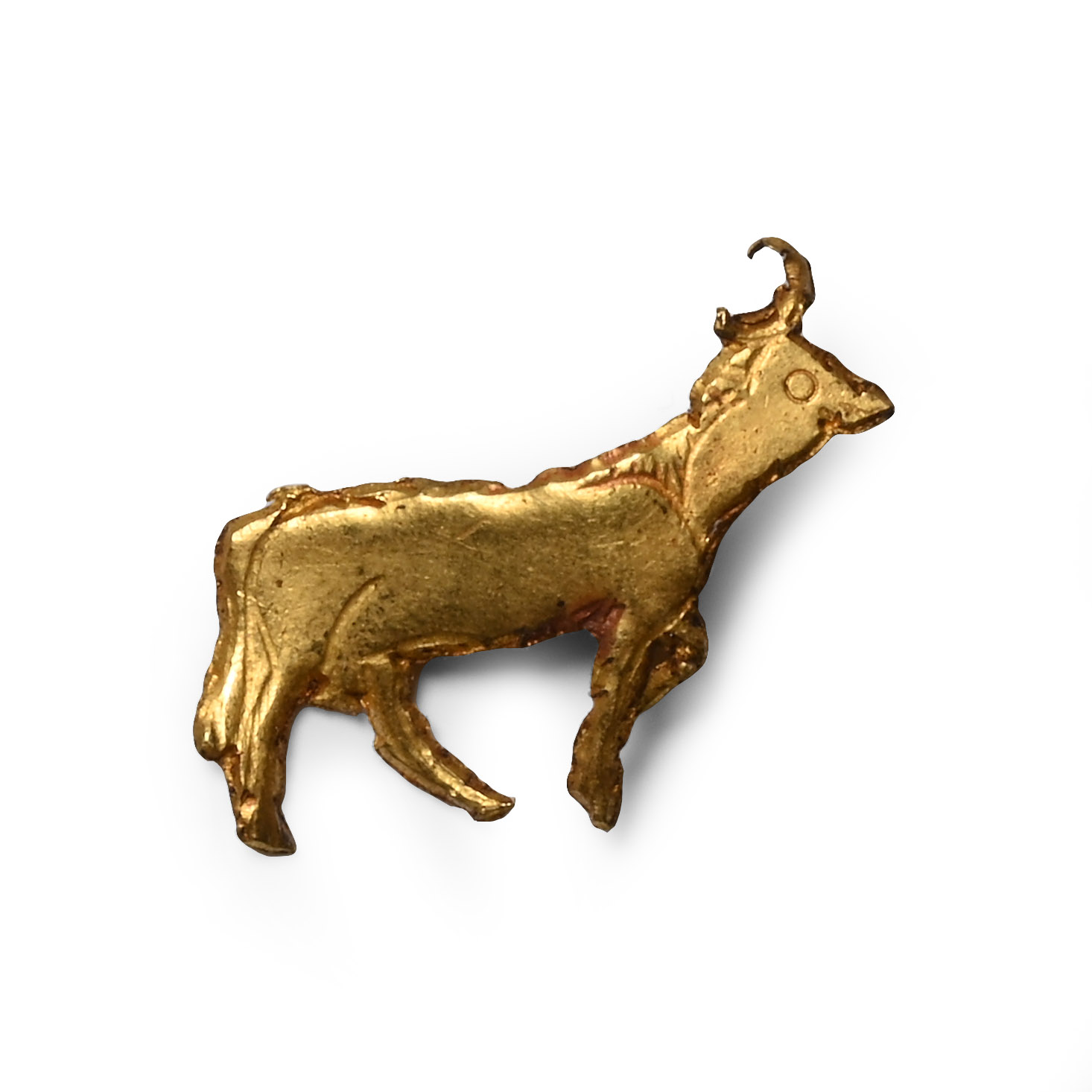
Egyptian Gold Bull Amulet
LATE PERIOD, 664-332 B.C.
1/2 in. (0.19 grams, 11 mm).
Depicting a striding bull with a suspension loop on the back.
ProvenanceFrom the private collection of the late Mrs Belinda Ellison, a long time member of the Egyptian Exploration Society, c.1940-2020.
CONDITIONTimeLine Auctions follows a vetting process to ensure the authenticity and legality of all items, reinforcing our commitment to integrity and responsible trading. Each antiquity, antique, and coin lot undergoes thorough examination by a vetting committee of at least ten external specialists, professional trade association members, scientists, and archaeologists: Our Vetting Process
AUCTIONS:
TimeLine is a leading auction house specialising in antiquities, ancient art, collectables, natural history, coins, medals, and books. Our auctions offer museums, collectors, historians, and enthusiasts the opportunity to acquire unique and historically significant pieces.
-
.jpg)
Egyptian Gold Uraeus Amulet
Late New Kingdom, 1070-900 B.C.Estimate: £250 - 350 (+bp*)
Opening Bid: £125
Depicting a rearing cobra sporting a sun disc with its coiled body below resting on the hieroglyphic neb sign. 0.38 grams, 11 mm
From an early 20th century French collection. -
Very Large Egyptian Faience Shabti for Hor-Aset
Late Period, 664-322 B.C.Sold for (Inc. bp): £2,860
The upper part of a large mummiform shabti wearing a striated tripartite wig and long plaited divine beard, holding a pick in the left hand, the right hand holding a hoe and the cord of a seed bag hanging over his left shoulder; the face expertly modelled with carefully rendered cosmetic lines around the eyes, slightly smiling lips giving it a serene expression; plain back pillar terminating at the base of the wig; five horizontal rows of hieroglyphic inscription giving the dedication sḥḏ wsı͗r ḥr (-pn-n-) Ꜣst, ‘The illuminated one, the Osiris Hor (pen-en) Aset’ followed by a version of Chapter 6 from the Book of the Dead; mounted on a custom-made display stand. 509 grams total, 20 cm including stand
Ex Y.F. collection. Acquired in the US, 2011. with Medusa Ancient Art, Quebec. Private collection, Europe. This lot has been checked against the Interpol Database of stolen works of art and is accompanied by a search certificate number no.12374-226922. -
Egyptian Faience Bead Necklace with Petal Beads
New Kingdom, Amarna Period, 1550-1070 B.C.Sold for (Inc. bp): £572
Restrung using turquoise tubular beads interspersed with annular beads of various colours and graduated polychrome petal-shaped beads, some with a loop at each end. 9.19 grams, 52 cm long
From an early 20th century UK collection. Accompanied by a previous typed cataloguing card.
