
Loading, please wait...
LOT 0532
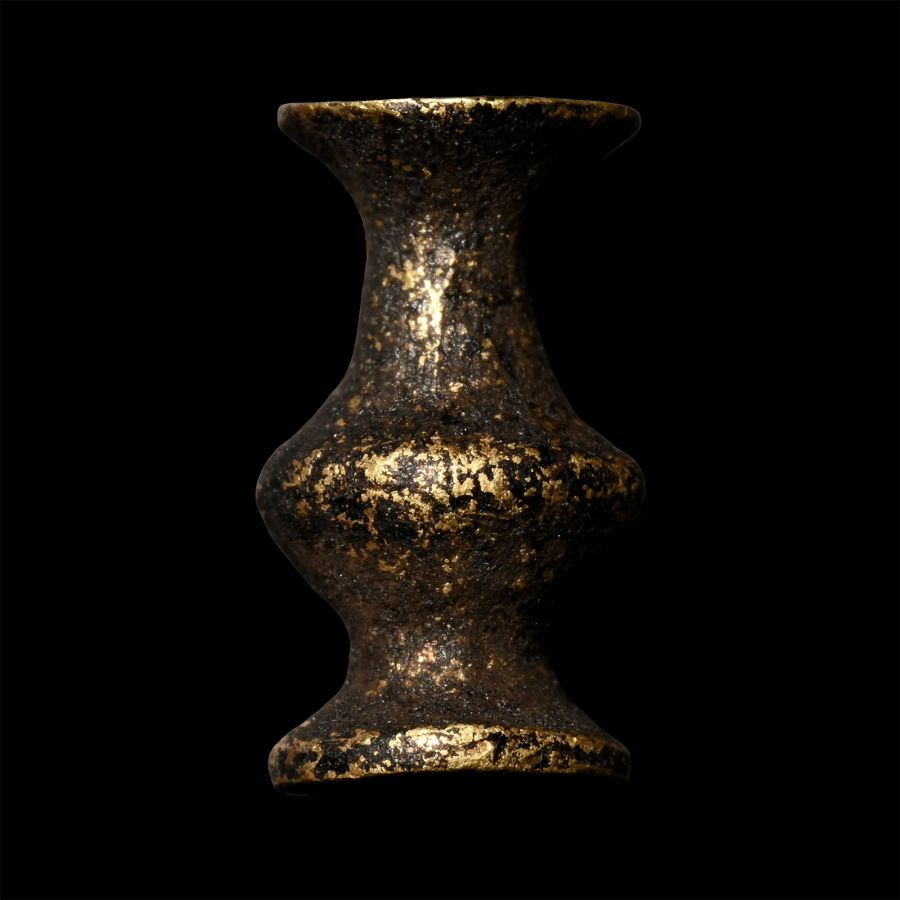
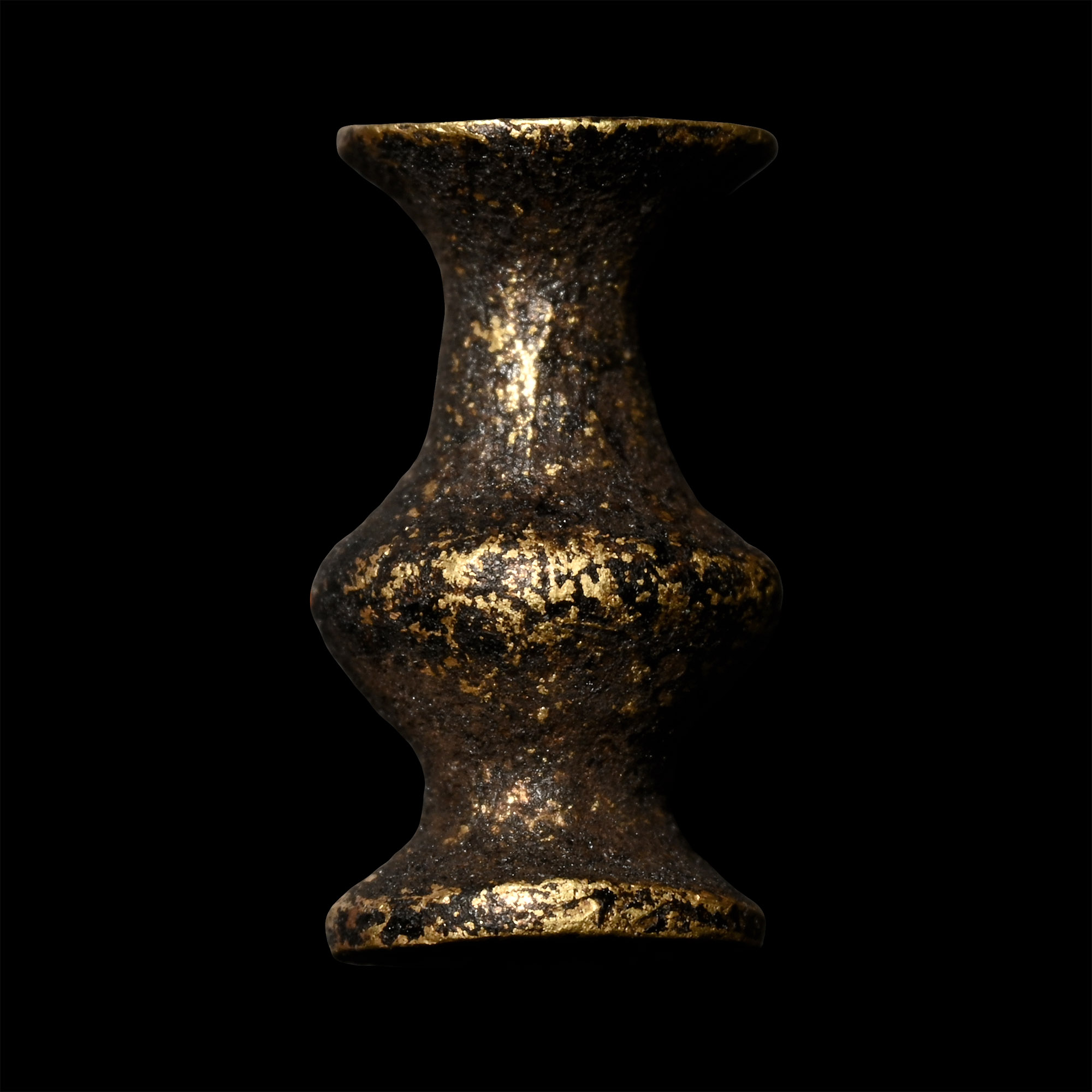
Egyptian Gold Bead Amulet
LATE NEW KINGDOM-THIRD INTERMEDIATE PERIOD, CIRCA 1069-900 B.C.
3/8 in. (0.95 grams, 9 mm).
Formed as a poppy seed with flaring terminals.
ProvenanceEx early 20th century French collection.
CONDITIONTimeLine Auctions follows a vetting process to ensure the authenticity and legality of all items, reinforcing our commitment to integrity and responsible trading. Each antiquity, antique, and coin lot undergoes thorough examination by a vetting committee of at least ten external specialists, professional trade association members, scientists, and archaeologists: Our Vetting Process
AUCTIONS:
TimeLine is a leading auction house specialising in antiquities, ancient art, collectables, natural history, coins, medals, and books. Our auctions offer museums, collectors, historians, and enthusiasts the opportunity to acquire unique and historically significant pieces.
LOT 0532
Egyptian Gold Bead Amulet
Estimate £100 - 140€120 - 160 (for guidance only)$140 - 190 (for guidance only)
Opening Bid
£50 (EUR 58; USD 68) +BP*
-
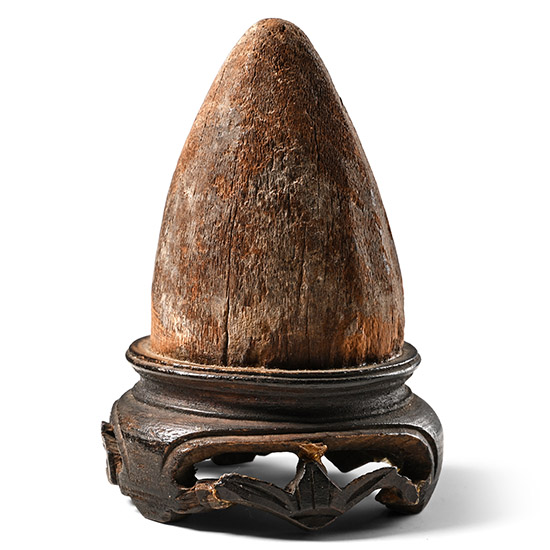
Egyptian Wooden Bread Model on 19th Century Base
Late-Ptolemaic Period, circa 664-30 B.C.Estimate: £180 - 240 (+bp*)
Opening Bid: £100
Carved model of a conical loaf; mounted on a later Chinese-style stand. 55 grams, 80 mm high including stand
with a privately curated collection, 1980s-early 2000s. From the private collection and estate of Christine Simons (1943-2025), West Midlands, UK. -
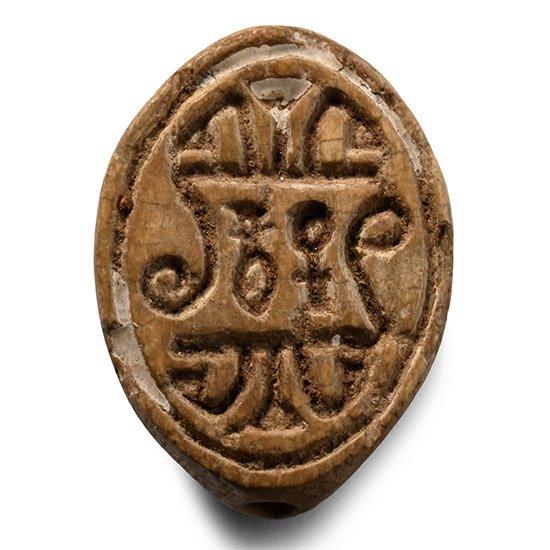
Egyptian Steatite Scaraboid Amulet with Hieroglyphs
Hyksos Period-early New Kingdom, circa 1782-1500 B.C.Estimate: £40 - 60 (+bp*)
Bids: 1 | Current Bid: £5
Plano-convex in section, underside with nfr and ankh hieroglyphs meaning 'good life', with a stylised lotus plant motif above and below. 2.36 grams, 20 mm
Excavated from Egypt in 1914. From the private collection of Mr David Sams and his wife, Elizabeth Kate Sams, gentry and amateur archaeologists who travelled to Egypt in 1914 with their daughter, Ethel. Mr Sams and his wife led digging expeditions from which these items come, from the family estate of Mr and Mrs Sams, by direct descent to their granddaughter. -
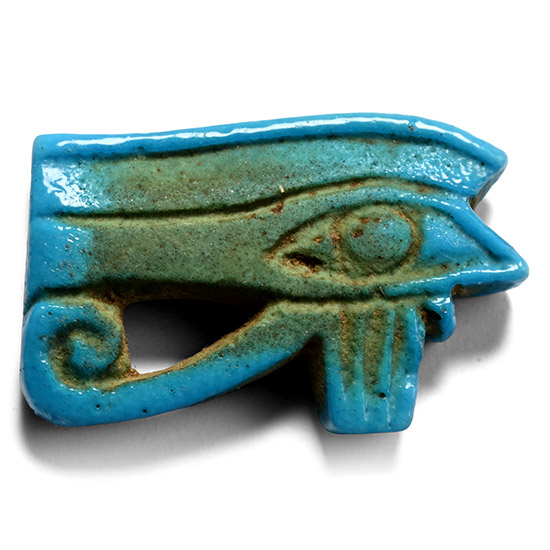
Egyptian Bright Blue Faience Eye of Horus Amulet
New Kingdom, 1504-1450 B.C.Estimate: £100 - 140 (+bp*)
Bids: 1 | Current Bid: £5
Turquoise-glazed wedjat-eye, carved on one face; pierced longitudinally. 0.77 grams, 18 mm
Excavated from Egypt in 1914. From the private collection of Mr David Sams and his wife Elizabeth Kate Sams, gentry and amateur archaeologists who travelled to Egypt in 1914 with their daughter Ethel. Mr Sams and his wife led digging expeditions from which these items come, from the family estate of Mr and Mrs Sams, by direct descent to their granddaughter.
The wedjat-eye amulet depicts Horus’s healed eye, blending human and falcon features. Its ancient Egyptian name means ‘the one that is sound’. Myth says Seth wounded or took the eye, and Thoth later restored it. Believed to offer protection, healing, and regeneration, the popular amulet was worn by the living and the dead.
