
Loading, please wait...
LOT 0409
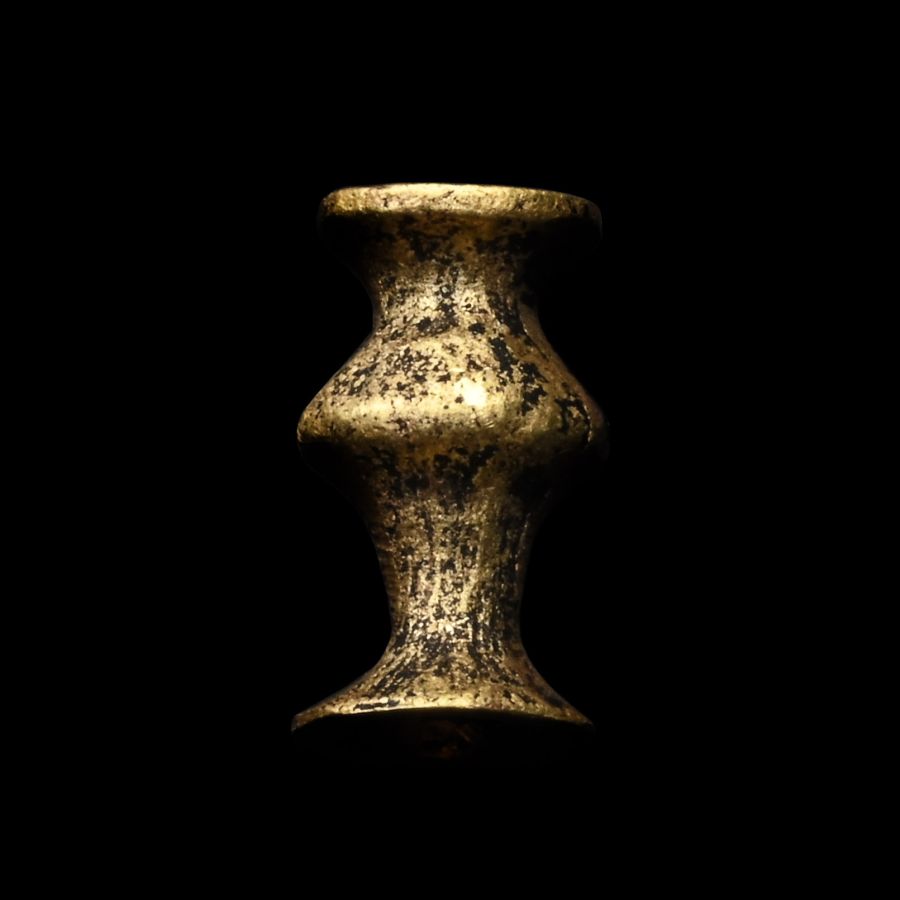
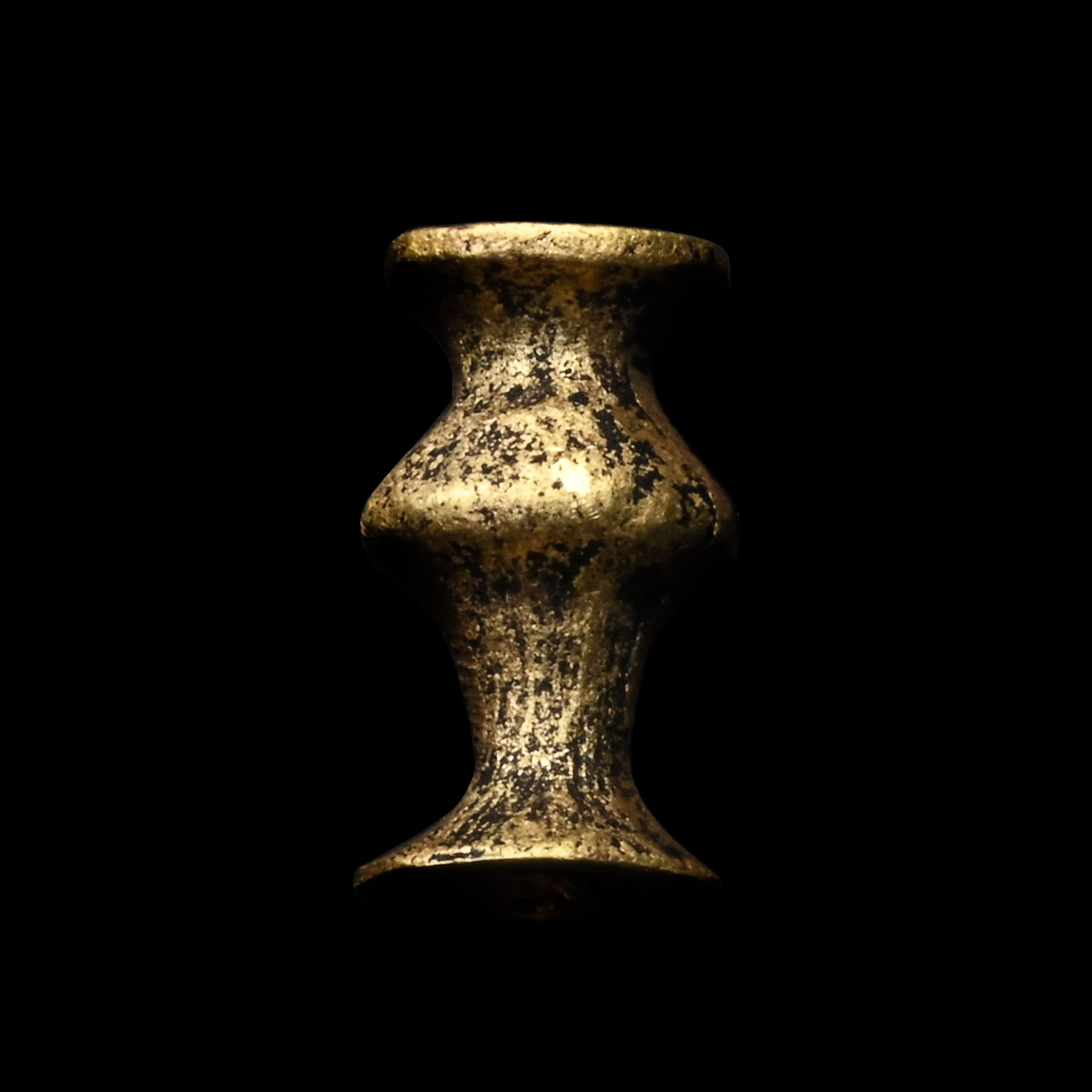
Egyptian Gold Bead Amulet
LATE NEW KINGDOM-THIRD INTERMEDIATE PERIOD, CIRCA 1069-900 B.C.
3/8 in. (0.91 grams, 9 mm).
Formed as a poppy seed with flaring terminals.
ProvenanceEx French art market, 1920s.
CONDITIONTimeLine Auctions follows a vetting process to ensure the authenticity and legality of all items, reinforcing our commitment to integrity and responsible trading. Each antiquity, antique, and coin lot undergoes thorough examination by a vetting committee of at least ten external specialists, professional trade association members, scientists, and archaeologists: Our Vetting Process
AUCTIONS:
TimeLine is a leading auction house specialising in antiquities, ancient art, collectables, natural history, coins, medals, and books. Our auctions offer museums, collectors, historians, and enthusiasts the opportunity to acquire unique and historically significant pieces.
-
.jpg)
Egyptian Alabaster and Glass Eye Pair
Late-Ptolemaic Period, 664-30 B.C.Sold for (Inc. bp): £2,860
The sclera white alabaster stone and the iris black glass. 15.33 grams, 31mm
From a North American gentleman's collection, 1990s.
Egyptian coffin eye inlays were both decorative and symbolic, intended to make the coffin appear lifelike and assist the deceased in the afterlife. Typically, they featured a white sclera (glass, travertine, alabaster or quartz), a dark iris (glass or often obsidian), and sometimes red paint at the inner corner. The eyes were often set in bronze or copper frames, occasionally with faience or bronze eyebrows. -
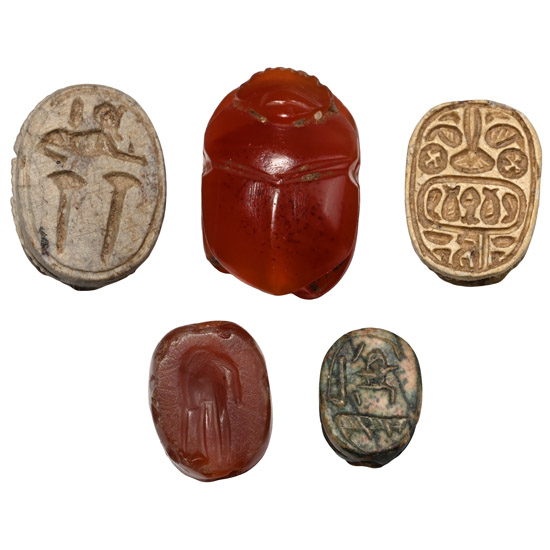
Egyptian Stone Scarab Group
Second Intermediate Period-Ptolemaic Period, circa 1600-30 B.C.Sold for (Inc. bp): £391
Comprising: carnelian type with plain underside; similar with incuse hand symbol; small greenstone type with scarab beetle and other signs; grey stone type with sphinx, indistinct hes- vase above, and two papyrus stalks below; another with a decorative cartouche panel and other signs; two supplied with a museum-quality impression. 7.12 grams total, 10-17 mm
From the private collection of a European gentleman (1942-2024), formed since the 1970s. -
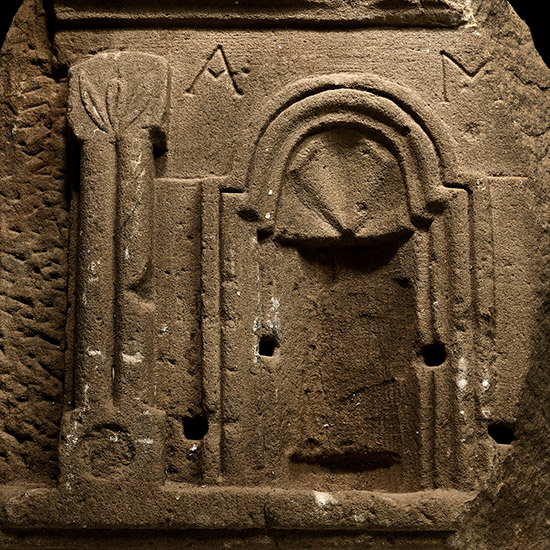
Romano-Egyptian Limestone Funerary Niche
Coptic, 5th-6th century A.D.Sold for (Inc. bp): £2,340
Carved architectural block fragment comprising: a shallow niche with arched top and parallel sides, with concentric mouldings to create a reveal and ledge below to accept offerings; horizontal tiered base; attachment sockets for two figurines (absent) flanking the niche; to left, a column modelled in the half-round with two parallel vertical stems, shallow roundel to the base and stylised foliage at the top; pediment above with scooped profile; above each figurine recess an incised initial, 'A' and 'M'; facing surface keyed for plaster finish. 57.55 kg, 49 cm
From the estate and private collection of Matthew Upham (1962-2025), an antiques trader from Budleigh Salterton, Devon, UK. Acquired at an estate sale at auction. Property of a Cambridgeshire, UK, gentleman. Accompanied by an academic report by Dr Raffaele D'Amato. This lot has been checked against the Interpol Database of stolen works of art and is accompanied by a search certificate number no. 13297-255939.
In the Christian Roman Empire, the stelae in the form of aedicula, which could be funerary monuments with crosses or the images of the deceased, or devotional niches with images of saints, appear to be independent sculptures. These stelae consisted of a rectangular body surmounted by a circular arch or trapezoidal structure. At the centre of the niche, the deceased was often depicted full-length, in a praying position (orans). Devotional stelae were also placed inside a church or shrine, with images of the Virgin and Child, or saints.
