Loading, please wait...

Egyptian Glass Offering Cup Fragment Group with Cartouche Egyptian Glass Offering Cup Fragment Group with Cartouche Egyptian Glass Offering Cup Fragment Group with Cartouche
Use mousewheel to zoom in and out, click to enlarge
Details

LOT 0460

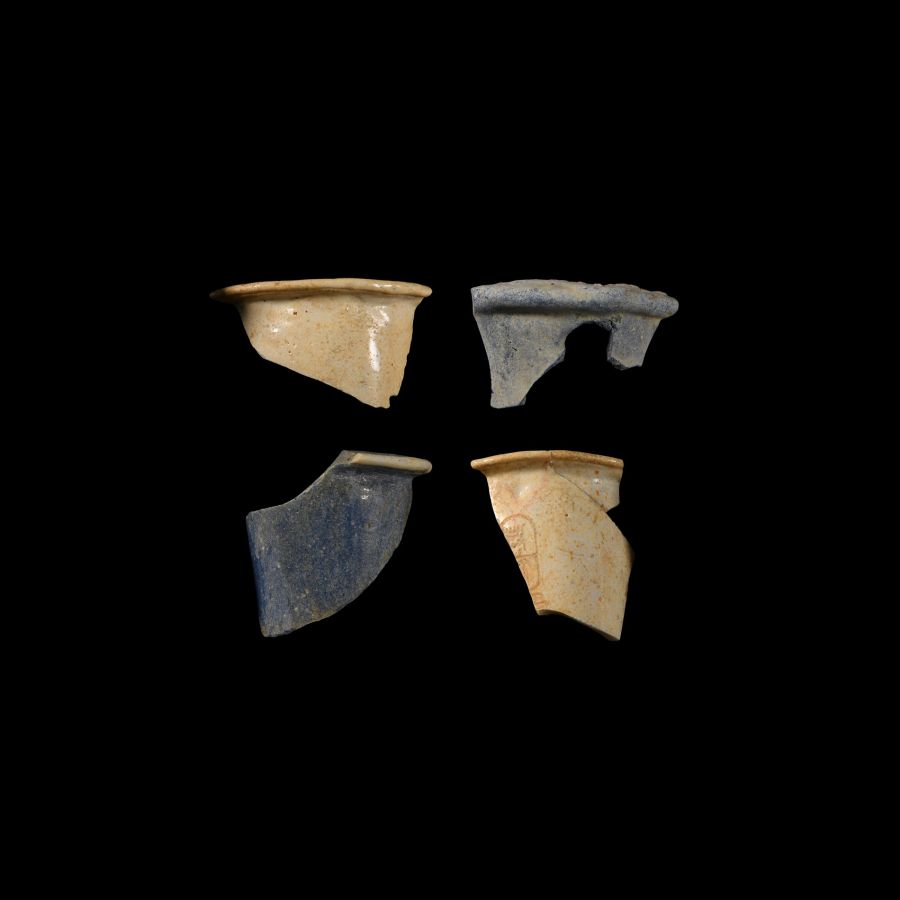
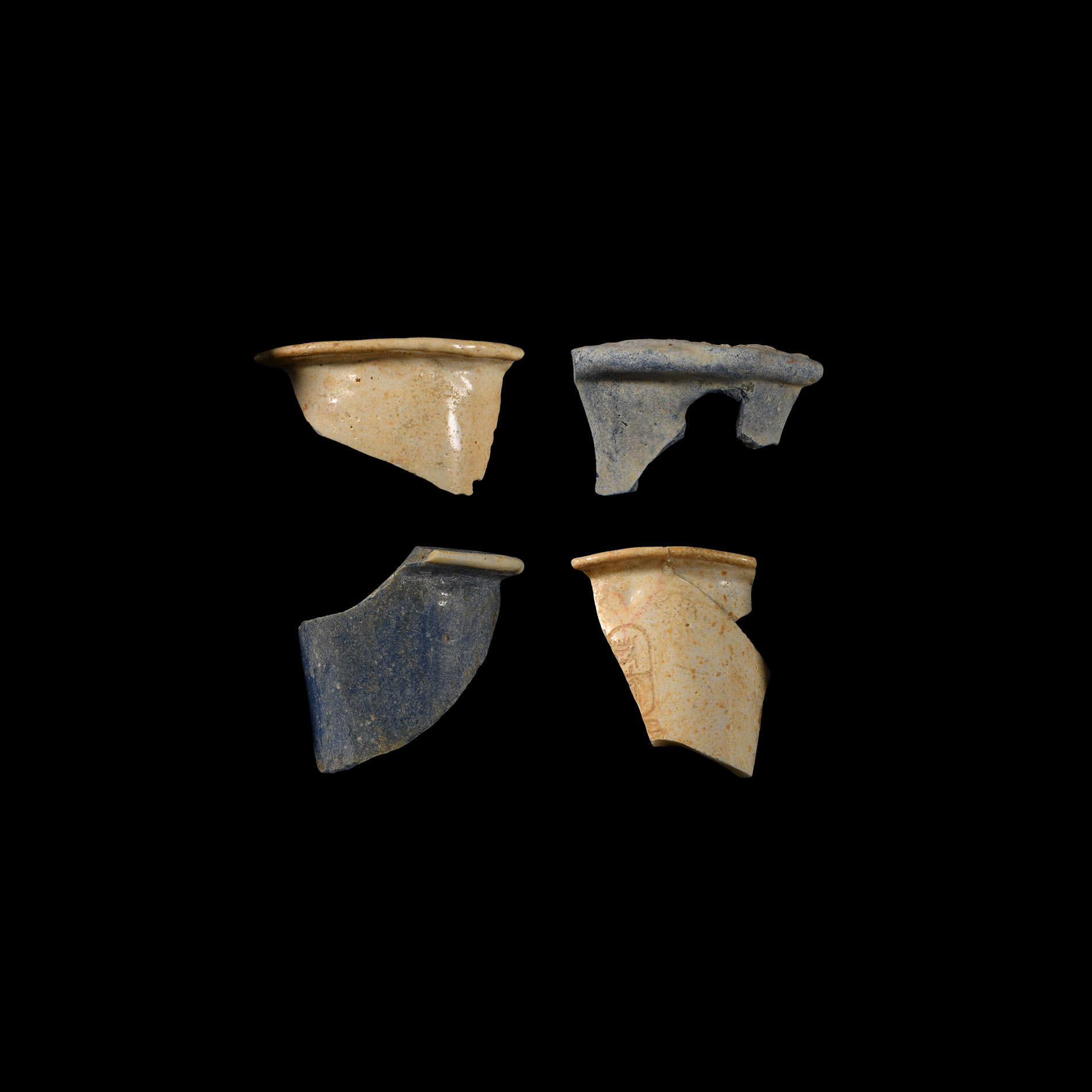
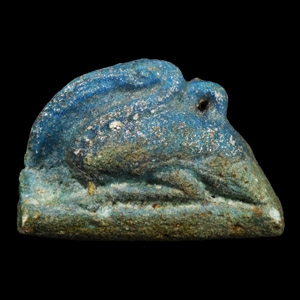
Egyptian Glass Offering Cup Fragment Group with Cartouche

NEW KINGDOM, 18TH DYNASTY, 1386-1349 B.C.

1 1/8 - 1 3/8 in. (14 grams total, 30-34 mm).

A group of fragments of blue and white glass offering cups; one with a partial cartouche of Amenhotep III. [4, No Reserve]

Provenance

From a UK private collection, 1975-1978.

CONDITION
VETTING:

TimeLine Auctions follows a vetting process to ensure the authenticity and legality of all items, reinforcing our commitment to integrity and responsible trading. Each antiquity, antique, and coin lot undergoes thorough examination by a vetting committee of at least ten external specialists, professional trade association members, scientists, and archaeologists: Our Vetting Process


AUCTIONS:

TimeLine is a leading auction house specialising in antiquities, ancient art, collectables, natural history, coins, medals, and books. Our auctions offer museums, collectors, historians, and enthusiasts the opportunity to acquire unique and historically significant pieces.

LOT 0460

Egyptian Glass Offering Cup Fragment Group with Cartouche

Sold for (Inc. bp): £78

Print page

RELATED LOTS
  • Egyptian Gilt Stucco Sphinx
    Egyptian Gilt Stucco Sphinx
    Ptolemaic-Roman Period, 334 B.C.-332 A.D.

    Sold for (Inc. bp): £191

    A gilt stucco sphinx from a funerary catafalque, lying couchant on a sub-rectangular base with stylised anatomical and facial detailing; accompanied by a custom-made wooden display base. 36 grams, 75 mm long (155 grams total, 10.8 cm including base)

    Fine condition.

    From a mid 20th century collection (based on the stand). With Richard Gill, Eternal Egypt, London SW19, 1990s. Acquired 31 August 1993. Property of a South Oxfordshire private collector. Accompanied by original invoice no.10575, dated 31 August 1993, and associated correspondence.

    Lot Details

  • Egyptian Amulet Collection
    Egyptian Amulet Collection
    New Kingdom-Late Period, 1550-332 B.C.

    Estimate: £2,000 - 3,000 (‡+bp*)

    Opening Bid: £1,000

    A mixed group of glazed composition amulets and beads comprising: white rectangular bead with Tilapia fish in high-relief and two cobras flanking a hem ideogram; turquoise frog on heater-shaped base with serpent to the underside; green scaraboid with wedjat to the carapace, Hathor sistrum with cow's horns to the underside; green ram-headed scaraboid with hieroglyphs to the underside; green cylinder with scarab motif; green wedjat with a cartouche of Thutmose III to the reverse; green rectangular bead with djed pillar flanked by ostrich feathers and incuse hieroglyphs to the reverse. 14.3 grams total, 14-27 mm


    Two amulets with Bonhams, London, Knightsbridge, UK, 3 October 2000, lot 385 [Part]. Private Swiss collection. This lot has been checked against the Interpol Database of stolen works of art and is accompanied by search certificate no.11593-198956. Accompanied by a copy of the relevant Bonhams catalogue pages.

    Lot Details

  • Egyptian Blue Faience Shabti
    Egyptian Blue Faience Shabti
    Early Ptolemaic Period, circa 3rd century B.C.

    Estimate: £1,000 - 1,400 (‡+bp*)

    Opening Bid: £500

    A mummiform shabti with a thick and lustrous turquoise glaze, sporting a tripartite wig highlighted in darker blue glaze, and a long beard; holding a pick, hoe and a cord for a seed bag hanging over the left shoulder; raised dorsal pillar and an integral plinth; repaired. 44 grams, 11.5 cm high


    Ex collection of Jacques René Fiechter, Switzerland (1920-1950). with Auction Martin, Egyptian Collection André Bircher, 1949. Accompanied by an academic report by Egyptologist Paul Whelan.

    The lack of inscription hinders positive identification, but the shabti’s proportions, elegant modelling, and lustrous glaze closely match others considered to have come from an area of the extensive necropolis at Abydos, labelled “Cemetery G” by its excavator Flinders Petrie, where hundreds of blue lustrous-glazed shabtis of varying qualities were recovered. This figure is closest in style to those belonging to Petosiris, son of Djed-hor. Both were buried with similarly blue lustrous-glazed shabtis that were mostly plain although a few were inscribed with an inscription.

    Lot Details

Stay up-to-date with the latest from TimeLine Auctions by joining our mailing list