
Loading, please wait...
_900x900.jpg "Egyptian Glass Inlay Collection")
_200x200.jpg "Egyptian Glass Inlay Collection")
.jpg "Egyptian Glass Inlay Collection")
LOT 0403
Egyptian Glass Inlay Collection
CIRCA 1ST CENTURY B.C.-2ND CENTURY A.D.
3/8 - 1 1/2 in. (12 grams total, 12-39 mm).
Comprising sixteen drawn inlays of various colour combinations. [16, No Reserve]
ProvenanceEx N.A. collection, 1970s.
Kept in the U.K. since 2007.
TimeLine Auctions follows a vetting process to ensure the authenticity and legality of all items, reinforcing our commitment to integrity and responsible trading. Each antiquity, antique, and coin lot undergoes thorough examination by a vetting committee of at least ten external specialists, professional trade association members, scientists, and archaeologists: Our Vetting Process
AUCTIONS:
TimeLine is a leading auction house specialising in antiquities, ancient art, collectables, natural history, coins, medals, and books. Our auctions offer museums, collectors, historians, and enthusiasts the opportunity to acquire unique and historically significant pieces.
-
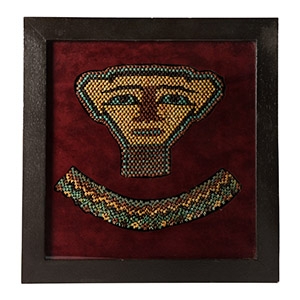
Egyptian Faience Bead Mummy Mask with Collar
Late Period, 664-332 B.C.Estimate: £1,000 - 1,400 (‡+bp*)
Opening Bid: £500
Comprising a restrung panel of small glazed composition beads in various colours representing a mummy face mask with false beard and collar; framed and glazed. 556 grams, 27.5 x 28.5 cm
Ex collection of Mr & Ms François & Marion Reber - Burki, Rue des Beaux-Arts 10, Neuchâtel, Switzerland. Collected in the first part of 20th century by Mr F. Burki, father of Ms Marion Reber. -
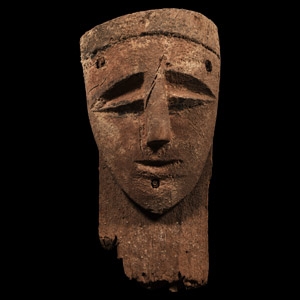
Egyptian Wooden Face Mask
Ptolemaic Period, 332-30 B.C.Sold for (Inc. bp): £455
With carved and painted facial details, fixed to a wooden board with pegs. 509 grams, 27.5 cm
Acquired 1970s-1996. Property of a North American collector. London collection, 2016. -
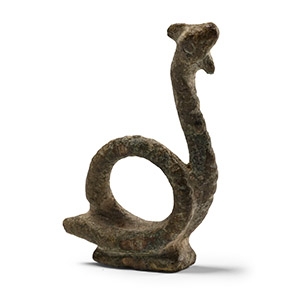
Romano-Egyptian Bronze Rearing Serpent
Roman Period, 30 B.C.-323 A.D.Sold for (Inc. bp): £169
Modelled in the round with naturalistic detailing, coiled with head facing upwards, on a rectangular base. 12.5 grams, 39 mm
‘The Ancient Menagerie Collection’ formerly the property of a Cambridgeshire lady, collected since the 1990s and acquired from auctions and dealers throughout Europe and the USA, now ex London collection.
