
Loading, please wait...
LOT 0660
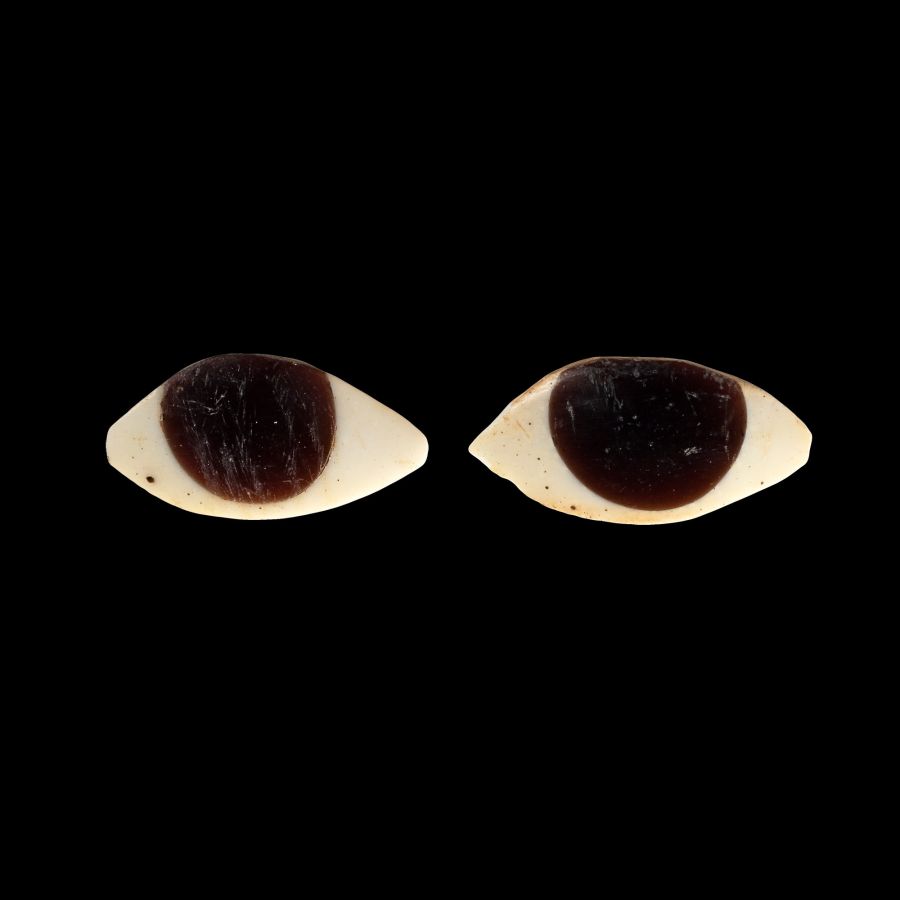
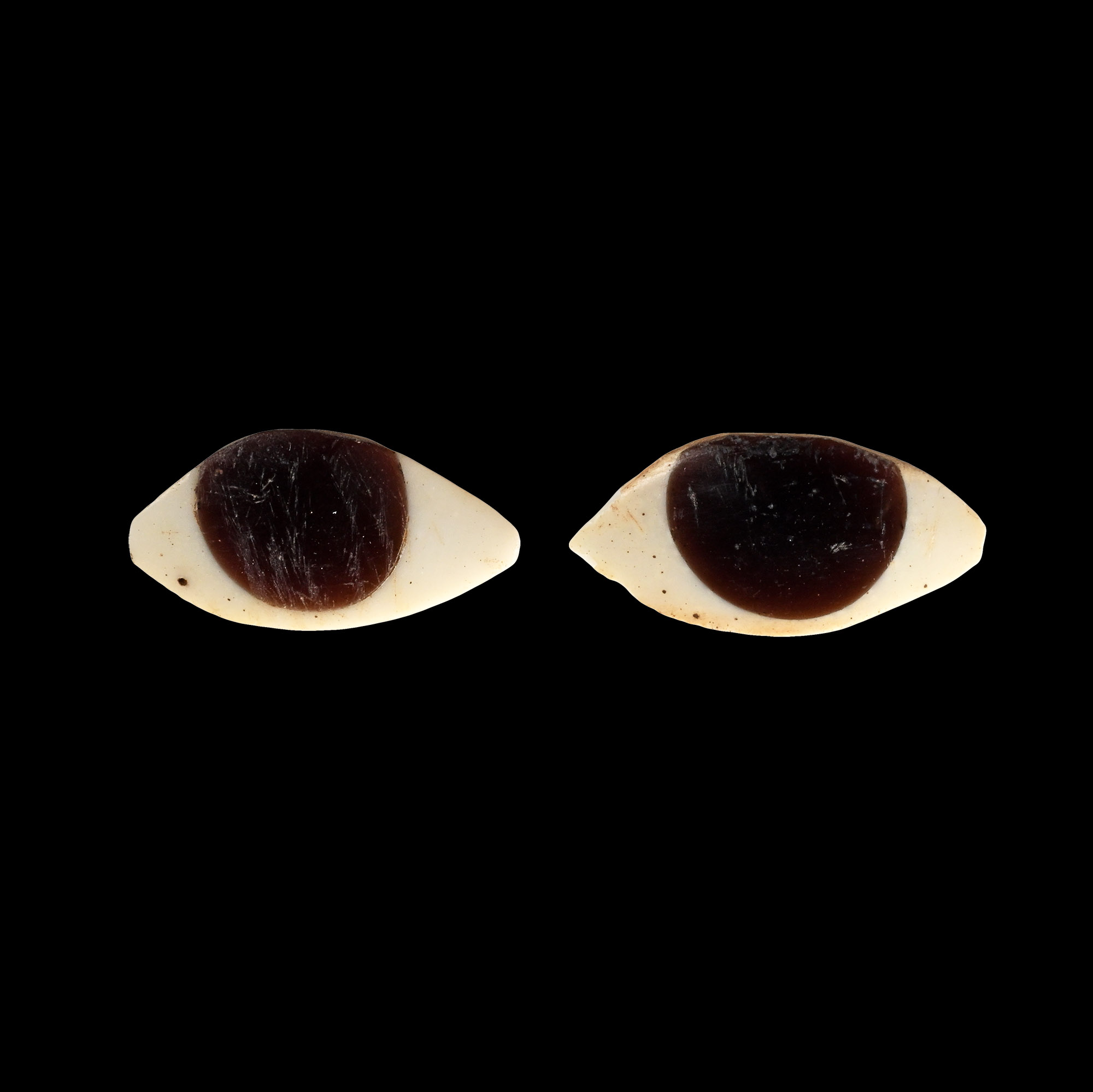
Egyptian Glass Eye Inlays
PTOLEMAIC PERIOD, 332-30 B.C.
1 - 1 1/8 in. (4.12 grams total, 27-29 mm).
Almond-shaped with large black irises and white sclerae. [2, No Reserve]
ProvenanceAcquired on the UK art market, 1977-1979.
Private collection, London.
Egyptian coffin eye inlays were both decorative and symbolic, designed to make the coffin appear more lifelike and to assist the deceased in the afterlife. Typically, they featured a white sclera (glass, travertine, alabaster, or quartz), a dark iris (glass or, more often, obsidian), and sometimes red paint at the inner corner. The eyes were often set in bronze or copper frames, occasionally with faience or bronze eyebrows.
CONDITIONTimeLine Auctions follows a vetting process to ensure the authenticity and legality of all items, reinforcing our commitment to integrity and responsible trading. Each antiquity, antique, and coin lot undergoes thorough examination by a vetting committee of at least ten external specialists, professional trade association members, scientists, and archaeologists: Our Vetting Process
AUCTIONS:
TimeLine is a leading auction house specialising in antiquities, ancient art, collectables, natural history, coins, medals, and books. Our auctions offer museums, collectors, historians, and enthusiasts the opportunity to acquire unique and historically significant pieces.
LOT 0660
Egyptian Glass Eye Inlays
Estimate £200 - 300€230 - 350 (for guidance only)$270 - 410 (for guidance only)
-
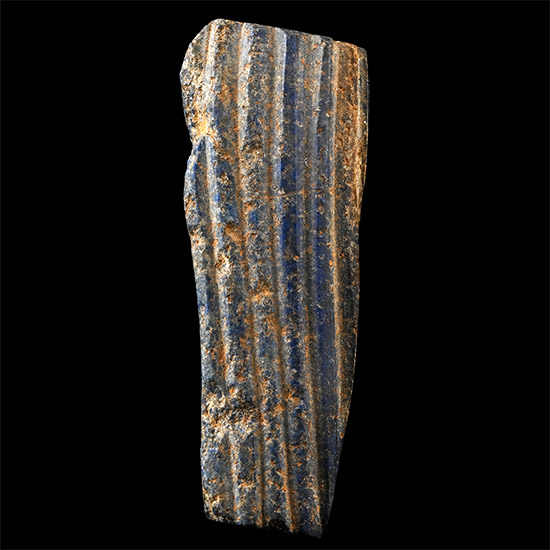
Egyptian Carved Lapis Lazuli Inlay
New Kingdom, 1550-1070 B.C.Estimate: £200 - 300 (+bp*)
Opening Bid: £5
Rectangular-section panel with tapering profile, fluting to the upper face. 23.6 grams, 48 mm
From the private collection of a European gentleman (1942-2024), formed since the 1970s.
This fragment most likely belongs to a striated skirt or wig. -
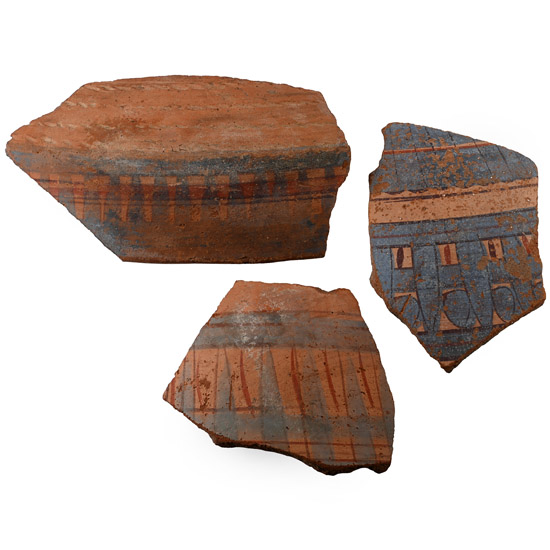
Large Egyptian Painted Bowl Fragments
New Kingdom, 18th Dynasty, Amarna Period, 1379-1362 B.C.Estimate: £80 - 100 (+bp*)
Bids: 1 | Current Bid: £5
Three fragments from three highly decorated blue-painted vessels. 545 grams total, 11.5-18 cm
Acquired in February 1978. From the private collection of Peter Clayton, FCILIP, Dip, Arch, FSA, FRNS, Hemel Hempstead, Hertfordshire, UK; formed since the late 1950s. Accompanied by an old handwritten information card by Peter Clayton, collection no.140.
The distinctive blue colour on these pottery fragments came from a cobalt-and-aluminium slip that reacted during firing. -
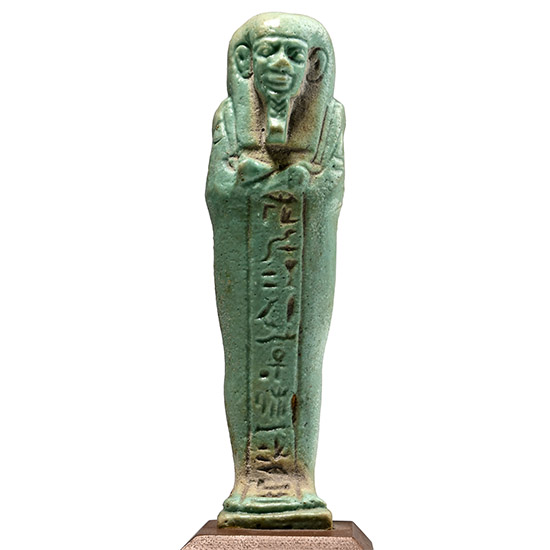
Egyptian Blue Glazed Faience Shabti of Djed-Bastet-Iuef-Ankh
Late Period, 664-332 B.C.Estimate: £400 - 600 (+bp*)
Bids: 13 | Current Bid: £130
Mummiform figure standing on a square plinth, wearing a long lappet wig, a false beard, and fine facial detailing, with crossed arms, the left hand holding a pick and the right a hoe, with the cord of a seed bag suspended from the bag; a plain dorsal pillar; the lower front bearing a vertical panel containing an impressed hieroglyphic text reading: 'The Osiris, Djed-Bastet-iuef-ankh, born to Iset-ir-dis'; mounted on a display stand. 99 grams total, 13.1 cm including stand
Acquired from Richardson, February 1965, for £2.00. From the private collection of Peter Clayton, FCILIP, Dip, Arch, FSA, FRNS, Hemel Hempstead, Hertfordshire, UK; formed since the late 1950s. Accompanied by an old handwritten information card by Peter Clayton, collection no.112.
