
Loading, please wait...
LOT 0424
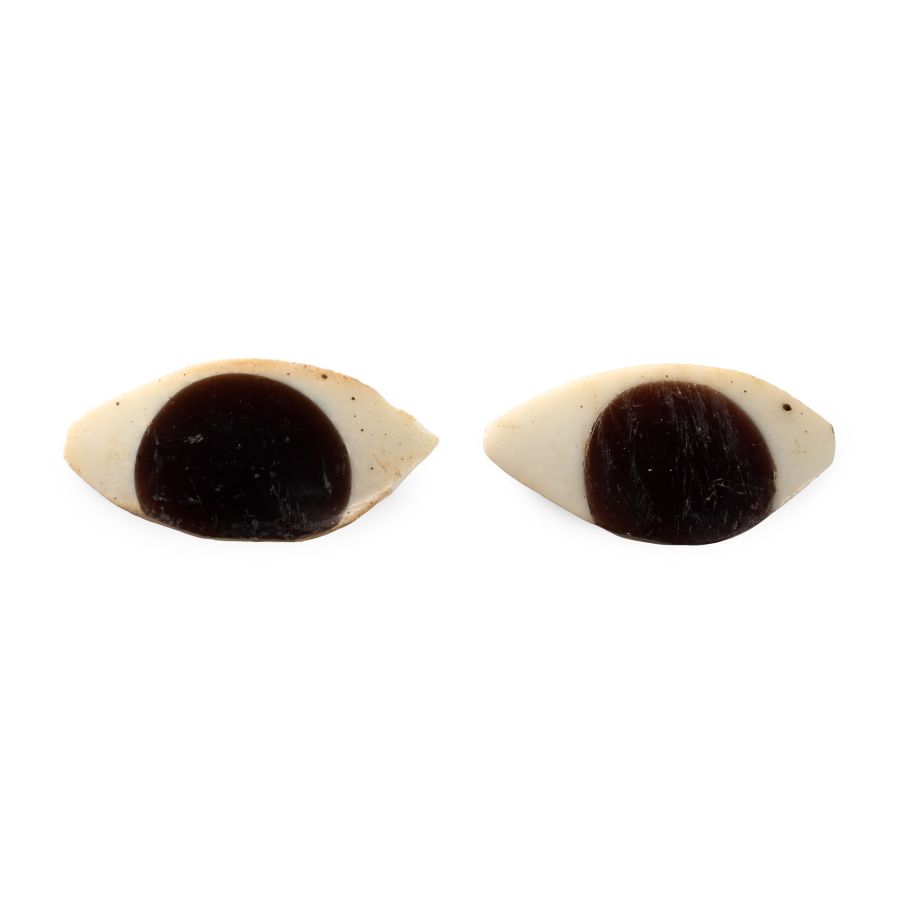
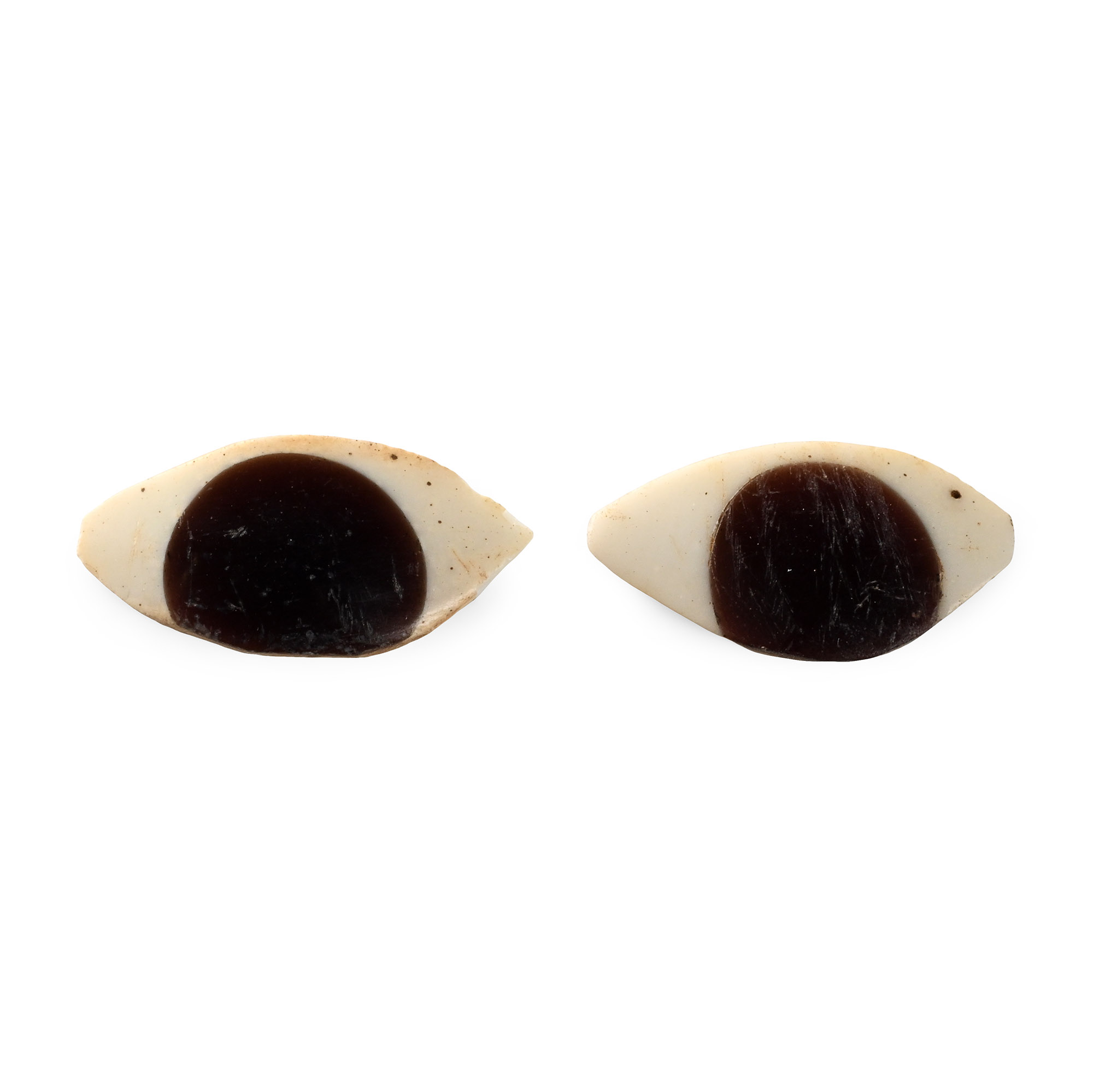
Egyptian Glass Eye Inlay Pair
PTOLEMAIC PERIOD, 332-30 B.C.
1 - 1 1/8 in. (4.12 grams total, 27-29 mm).
The sclera white and the iris black. [2, No Reserve]
ProvenanceAcquired on the UK art market, 1977-1979.
Private collection, London.
This lot is accompanied by an illustrated lot declaration signed by the Head of the Antiquities Department, Dr Raffaele D'Amato.
Egyptian coffin eye inlays were both decorative and symbolic, intended to make the coffin appear lifelike and assist the deceased in the afterlife. Typically, they featured a white sclera (glass, travertine, alabaster or quartz), a dark iris (glass or often obsidian), and sometimes red paint at the inner corner. The eyes were often set in bronze or copper frames, occasionally with faience or bronze eyebrows.
CONDITIONTimeLine Auctions follows a vetting process to ensure the authenticity and legality of all items, reinforcing our commitment to integrity and responsible trading. Each antiquity, antique, and coin lot undergoes thorough examination by a vetting committee of at least ten external specialists, professional trade association members, scientists, and archaeologists: Our Vetting Process
AUCTIONS:
TimeLine is a leading auction house specialising in antiquities, ancient art, collectables, natural history, coins, medals, and books. Our auctions offer museums, collectors, historians, and enthusiasts the opportunity to acquire unique and historically significant pieces.
-
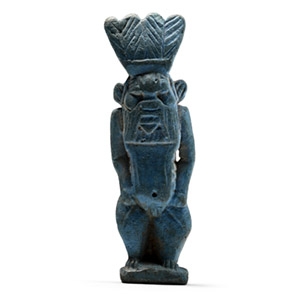
Egyptian Blue Amulet of Bes
Third Intermediate Period, circa 1069-735 B.C.Sold for (Inc. bp): £520
Modelled in the round, Bes standing nude with a lion's tail, wearing a feathered headdress. 4.13 grams, 44 mm
Archéologie; François de Ricqlès, Paris, 30 September-1 October 1996, no.322 (part). Private collection, London, UK, acquired from the above sale. Accompanied by a copy of a French cultural passport, dated 30 September 1996. Accompanied by a copy of the François de Ricqlès invoice. This lot has been checked against the Interpol Database of stolen works of art and is accompanied by a search certificate number no.12630-235074. This lot is accompanied by an illustrated lot declaration signed by the Head of the Antiquities Department, Dr Raffaele D'Amato.
From the New Kingdom onwards, Bes became one of ancient Egypt's most popular apotropaic deities. Despite his somewhat fearsome appearance, Bes served as the patron and protector of pregnant women and children, and was also believed to shield them from snakes. -
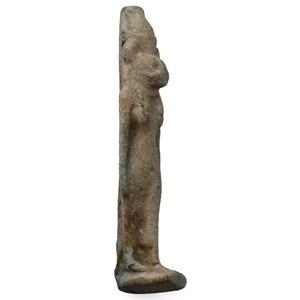
Egyptian Faience Standing Lioness Amulet
Ptolemaic Period, 332-30 B.C.Sold for (Inc. bp): £85
Standing figure of lioness-headed goddess in a striding pose with arms at the sides, sporting a black coloured tripartite wig surmounted by the double-crown; dorsal pillar. 3.96 grams, 56 mm
Acquired on the UK art market during the late 20th century. From the private collection of David King (1940-2024), Hoddesdon, Hertfordshire, UK. This lot is accompanied by an illustrated lot declaration signed by the Head of the Antiquities Department, Dr Raffaele D'Amato.
Throughout ancient Egyptian mythology, lion-headed goddesses played a significant role in the religious beliefs of the people. These goddesses, including Sekhmet, Wadjet, and Bastet, were revered as powerful and fierce protectors. Their presence was believed to ward off evil and safeguard the people from harm. -
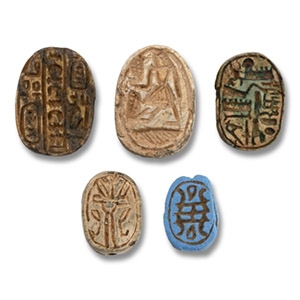
Egyptian Steatite Scarab Group
Mainly Second Intermediate Period–New Kingdom, circa 1660-1069 B.C.Sold for (Inc. bp): £286
Designs include: a tripartite design with ankh, water, nwb, and men signs, with indistinct cartouches possibly of Thutmose III, and signs spelling the phrase 'powerful is the justice of Re' (user-Maat-Re); a line border enclosing the stylised depiction of a striding figure grasping a crocodile, with a neb sign below; a line border enclosing a multitude of signs, including Thutmose III’s throne name (men-kheper-Re), and that of Amun; A line border enclosing central Hathoric sistrum; a line border enclosing a symmetrical motif in contrasting black glaze. 10.6 grams total, 13-19 mm
Acquired on the European art market in the early 2000s. with Galerie Rhéa, Zurich, Switzerland. This lot is accompanied by an illustrated lot declaration signed by the Head of the Antiquities Department, Dr Raffaele D'Amato.
