
Loading, please wait...
LOT 0001
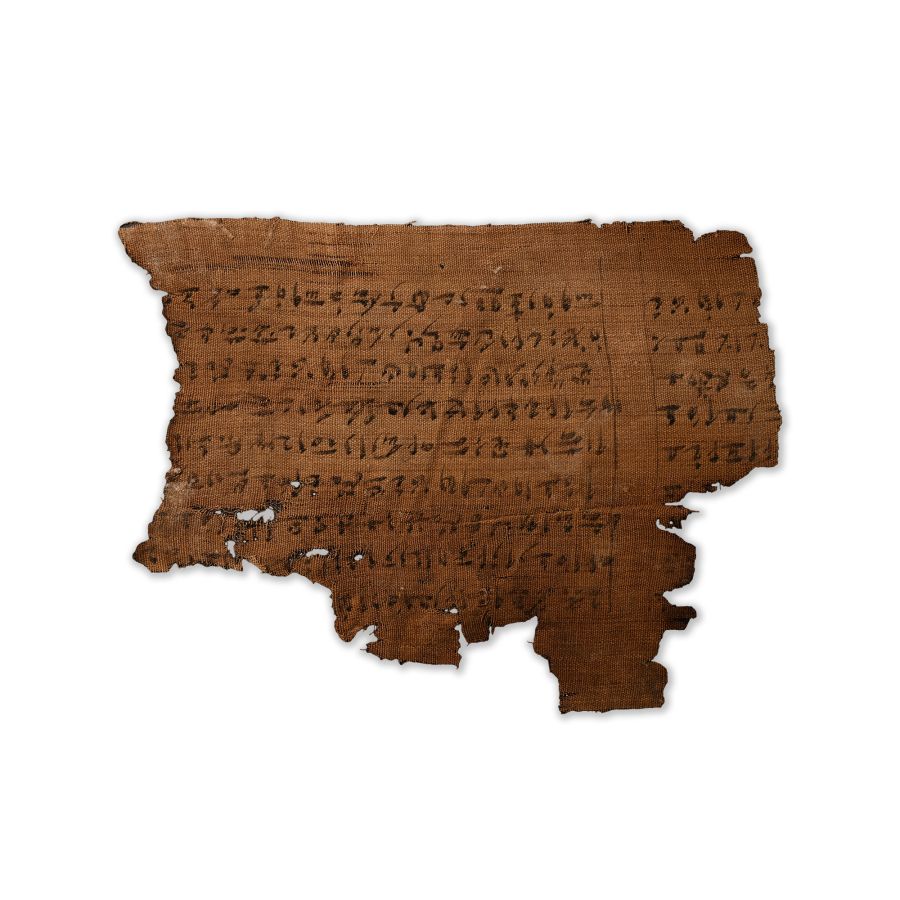
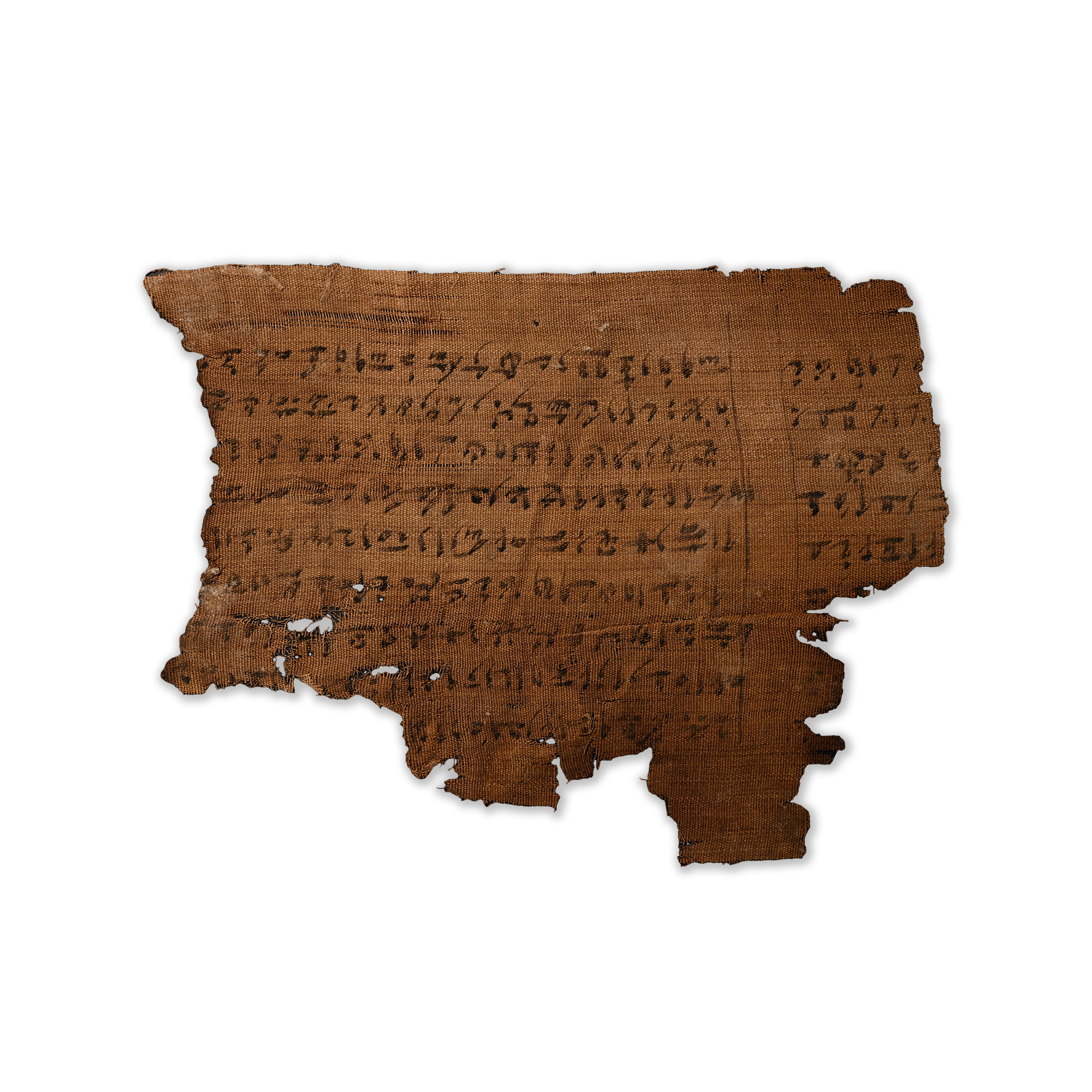
Egyptian Funerary Linen Fragment with Hieratic Text from the Book of the Dead for Ta-sherit-n-ta-ihet
GRAECO-ROMAN PERIOD, CIRCA 3RD CENTURY B.C.-2ND CENTURY A.D.
8 5/8 in. (5.08 grams, 22 cm wide).
Bearing a portion of Chapter 17, a spell written in late hieratic script executed in black ink on woven linen, consistent with funerary bandages of the Graeco-Roman period; the inscription identifies the owner as a woman named Ta-sherit-n-ta-ihet, with her mother named Iset-(m-)khebit; as is typical for funerary manuscripts of this period, the father’s name is not recorded. [No Reserve]
ProvenanceFound inside an 18th-century Bible and believed to be a souvenir acquired in the 19th century.
From the private collection of a North American lady.
An academically identified and unpublished fragment, offering potential for further scholarly study and publication.
Accompanied by a report in progress dated 28 April 2026 by Holly Lund.
Spell 17 is among the most important and widely transmitted compositions in the Book of the Dead, concerned with cosmology, divine knowledge, and the transformation of the deceased in the afterlife. Even in fragmentary form, such texts provide valuable insight into funerary belief and scribal practice during the later phases of ancient Egyptian religion. This description was prepared using information provided by Dr Ann-Katrin Gill, Academic Assistant at the Egyptological Institute, University of Leipzig, and a separate assessment by Steve Vinson, Professor and Director of Graduate Studies in the Department of Middle Eastern Languages and Cultures at Indiana University, Bloomington.
The linen fragment may derive from a nineteenth-century mummy unwrapping, a practise widely attested in this period.
TimeLine Auctions follows a vetting process to ensure the authenticity and legality of all items, reinforcing our commitment to integrity and responsible trading. Each antiquity, antique, and coin lot undergoes thorough examination by a vetting committee of at least ten external specialists, professional trade association members, scientists, and archaeologists: Our Vetting Process
AUCTIONS:
TimeLine is a leading auction house specialising in antiquities, ancient art, collectables, natural history, coins, medals, and books. Our auctions offer museums, collectors, historians, and enthusiasts the opportunity to acquire unique and historically significant pieces.
LOT 0001
Egyptian Funerary Linen Fragment with Hieratic Text from the Book of the Dead for Ta-sherit-n-ta-ihet
Sold for (Inc. bp): £1,690
-
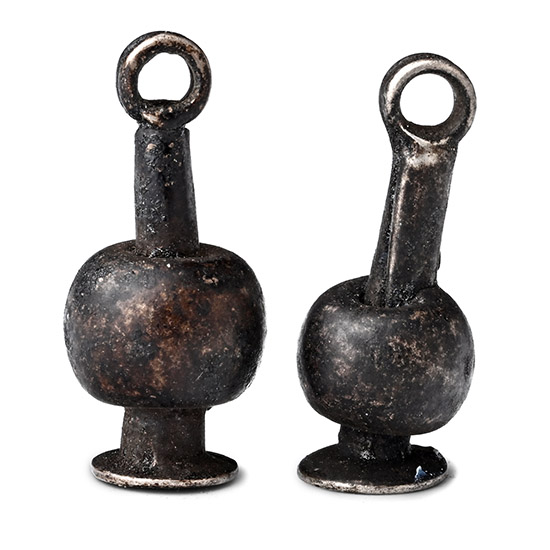
Egyptian Silver Poppy Amulets
New Kingdom-Late Period, 1550-332 B.C.Sold for (Inc. bp): £117
Matched pair of amulets with a long cylindrical neck and a spherical body, with a ribbed suspension loop above. 2.12 grams total, 15-16 mm
Ex London, UK, collection, 1920s-1940s. Accompanied by a previously illustrated catalogue card with provenance.
Amulets in the form of poppies were used to heal and alleviate pain. These types of amulets were also linked to Osiris, the Egyptian deity of agriculture, death, and the afterlife. -
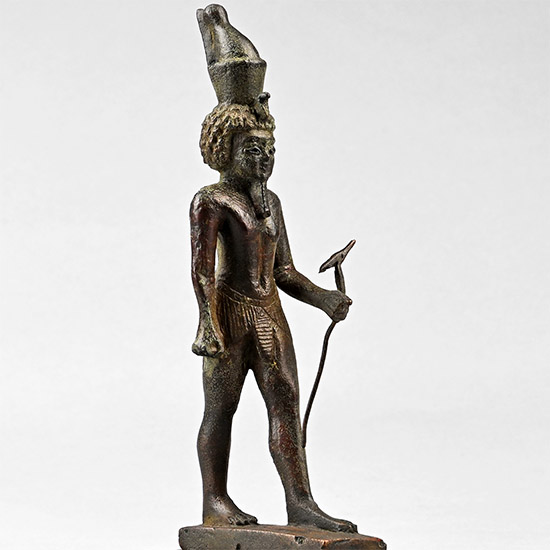
Egyptian Bronze Statuette of the God Neferhotep
Ptolemaic Period, 332-30 B.C.Estimate: £8,000 - 10,000 (+bp*)
Opening Bid: £4,000
Neferhotep depicted advancing on a rectangular base, holding in the left hand the was sceptre, topped with the stylised head of an animal linked to the god Seth, with the right arm held rigid by the side with a clenched fist; wearing a Pschent crown with uraeus above the brow, a short, pleated shendyt kilt, and a broad multi-strand collar; the head features a tightly curled wig, false beard, and lentoid wire rims around the eyes; mounted on a custom-made stand. 345 grams total, 17.3 cm high including stand
Private collection of Mrs Bogaert, formed in 1949, Ghent, near Brussels, Belgium. Ex private collection, London, UK. This lot has been checked against the Interpol Database of stolen works of art and is accompanied by search certificate number no.13310-258230.
Neferhotep was explicitly recognised as a deity with a cult only from the Late Period, although it may have been understood earlier and later as the incarnation of the youthful divine king, since pharaohs from the 18th Dynasty to the Ptolemaic Period are sometimes depicted wearing the same wig. Neferhotep, whose name translates as 'the perfect one is at peace,' was considered to be the son of Hathor and was venerated at Hu (Diospolis Parva), as well as at Karnak, Dendera, and Behbeit el-Hagar. Provenanced statues of the god originate from the Memphite region. -
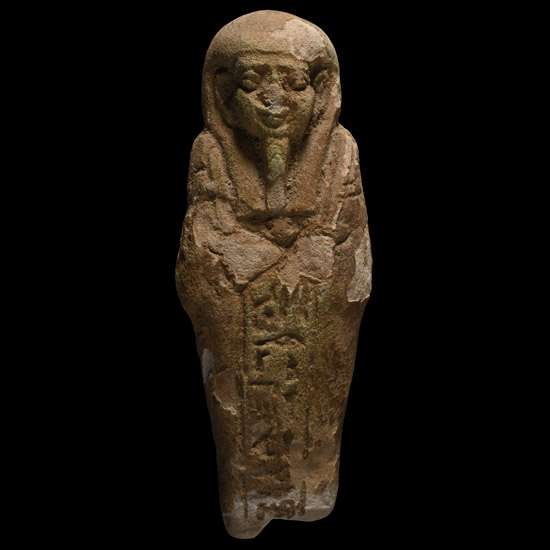
Egyptian Faience Hierogyphic Shabti
Late Period, 664-332 B.C.Sold for (Inc. bp): £221
With moulded facial features, tripartite wig, agricultural tools in the crossed hands and a seed-bag to the left shoulder; dorsal pillar; vertical panel to lower body with impressed hieroglyphic inscription: 'The illuminated one, the Osiris, the Controller of the Estates.... (sḥḏ wsı͗r ḫrp-ḥwwt....); lower legs absent. 56.3 grams, 95 mm
From the private collection of a Canadian gentleman living in Essex, UK, formed since the 1920s-circa 1990. Property of an Essex lady until the late 1990s; thence by descent. From the private collection of an Essex gentleman since the late 1990s.
