
Loading, please wait...

LOT 0477
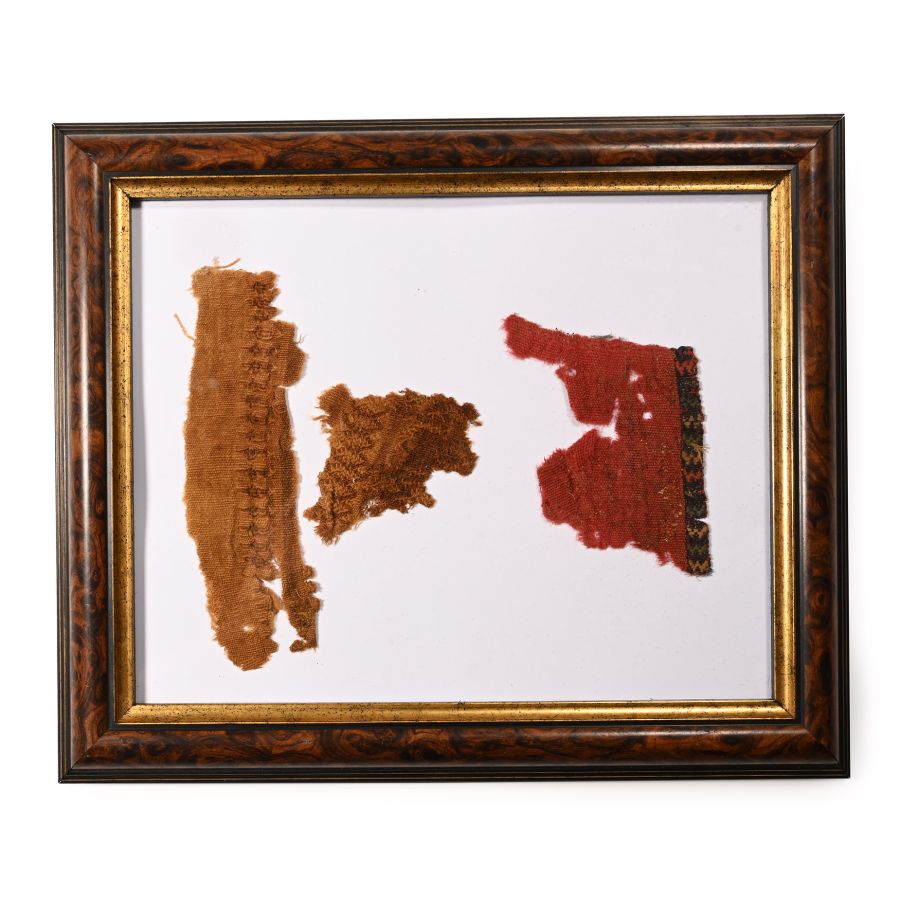
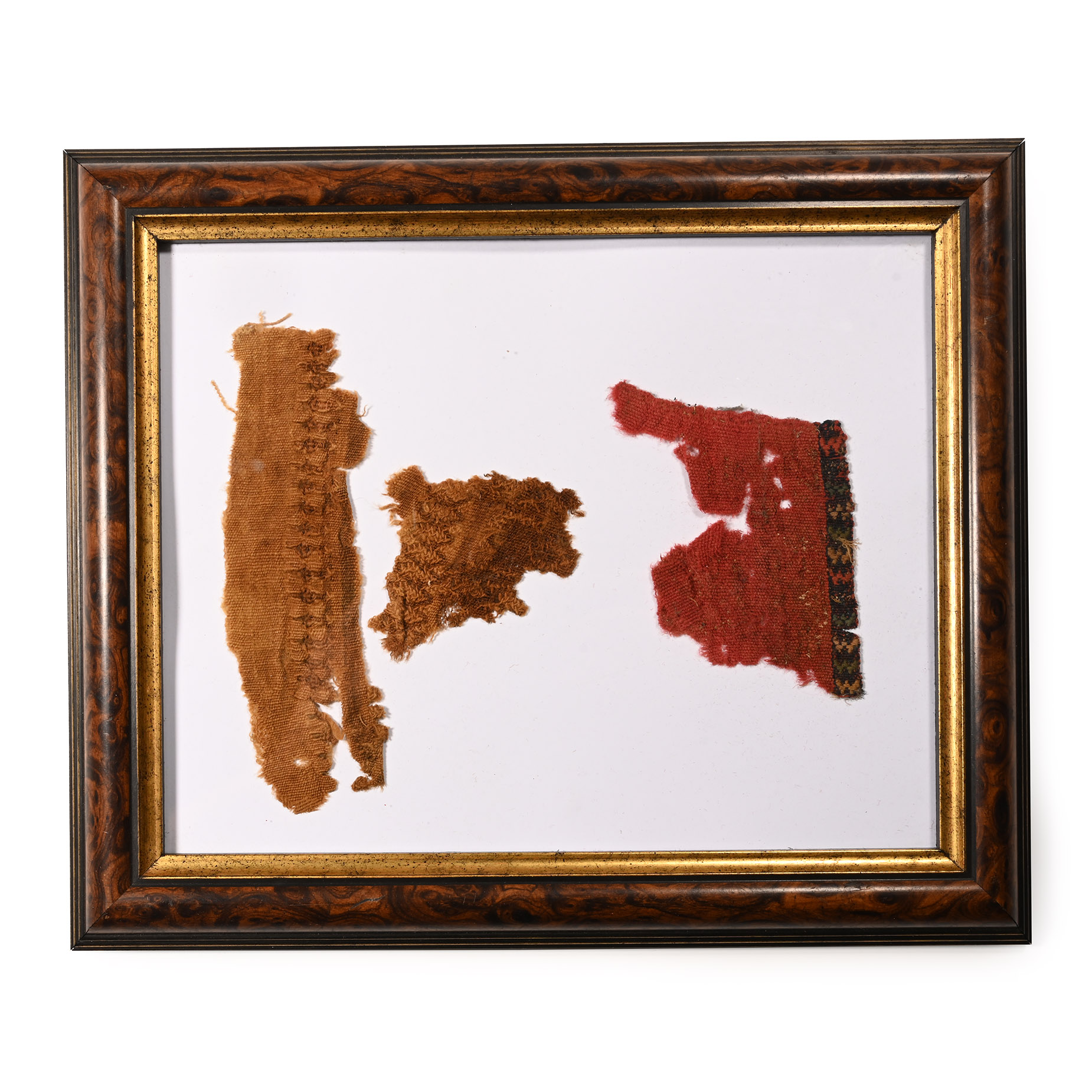
Egyptian Framed Coptic Fabric Collection
CIRCA 5TH-7TH CENTURY A.D.
2 1/2 - 6 1/8 in. (578 grams total, fragments: 6.5-15.5 cm (frame: 26 x 31 cm)).
Three fragments of tabby-weave linen fabric, two with embroidered ornament, one with a woven polychrome border; mounted in a glazed wooden frame with gilt inner border. [No Reserve]
ProvenanceFrom the private collection of H. Norry, 1980s-1990s.
CONDITIONTimeLine Auctions follows a vetting process to ensure the authenticity and legality of all items, reinforcing our commitment to integrity and responsible trading. Each antiquity, antique, and coin lot undergoes thorough examination by a vetting committee of at least ten external specialists, professional trade association members, scientists, and archaeologists: Our Vetting Process
AUCTIONS:
TimeLine is a leading auction house specialising in antiquities, ancient art, collectables, natural history, coins, medals, and books. Our auctions offer museums, collectors, historians, and enthusiasts the opportunity to acquire unique and historically significant pieces.
-
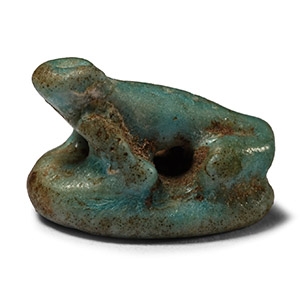
Egyptian Faience Frog Scarab
Ptolemaic Period, circa 300 B.C.Estimate: £400 - 600 (‡+bp*)
Opening Bid: £200
Discoid base with crouching frog pierced longitudinally for threading; underside with a solar disc and unidentified symbol. 0.56 grams, 13 mm
Ex R. Liechti (1934-2010) Geneva, Switzerland, formed between 1950-1990s. Accompanied by a copy of an old collection inventory note. -
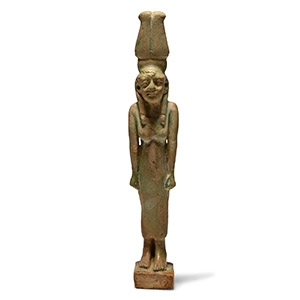
Large Egyptian Faience Amulet of the Goddess Isis
Late Period-Ptolemaic Period, 664-30 B.C.Sold for (Inc. bp): £1,170
The goddess dressed in a long tight-fitting tunic to her ankles, standing with her left leg forward, her straight arms descending to her thighs; vulture headgear surmounted two long feathers; dorsal pillar with hieroglyphic text; repaired. 50 grams, 14 cm
Private collection Mr E. Saad, Cairo, Egypt-Montreux, Switzerland, 1970s. Ex private collection of Mr S.A., acquired from Mr Saad in 1997.
In ancient Egyptian mythology, Isis was the sister-wife of Osiris and the mother of the sky god Horus. She is associated with aspects of fertility and motherhood. This amulet unusually depicts her with a two-plumed crown, which may associate her with the goddess Sothis. -
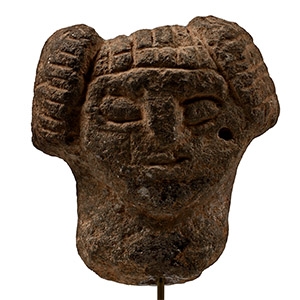
Phoenician-Iberian Stone Head of a Lady
Circa 600 B.C. or laterSold for (Inc. bp): £208
Carved in the round with hatched hair and low-relief facial features; mounted on a custom-made stand. 857 grams total, 17 cm high including stand
From a collection acquired on the UK art market from various auction houses and collections mostly before 2000. From an important Cambridgeshire estate; thence by descent.
