
Loading, please wait...
LOT 0071
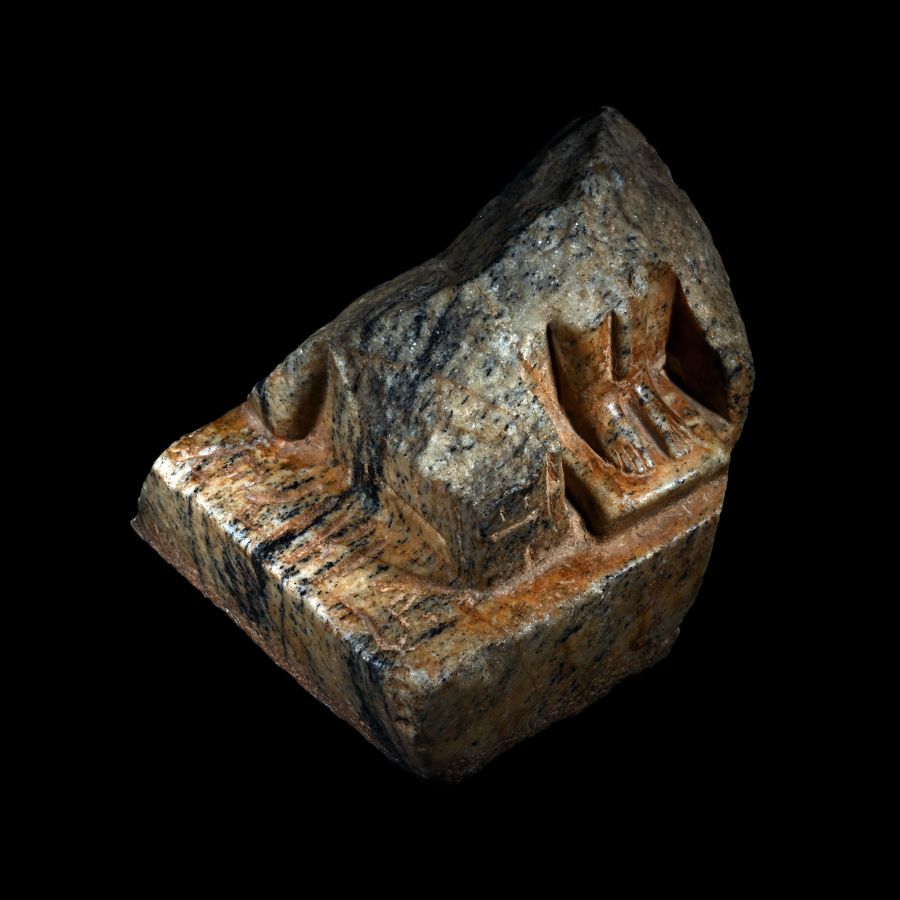
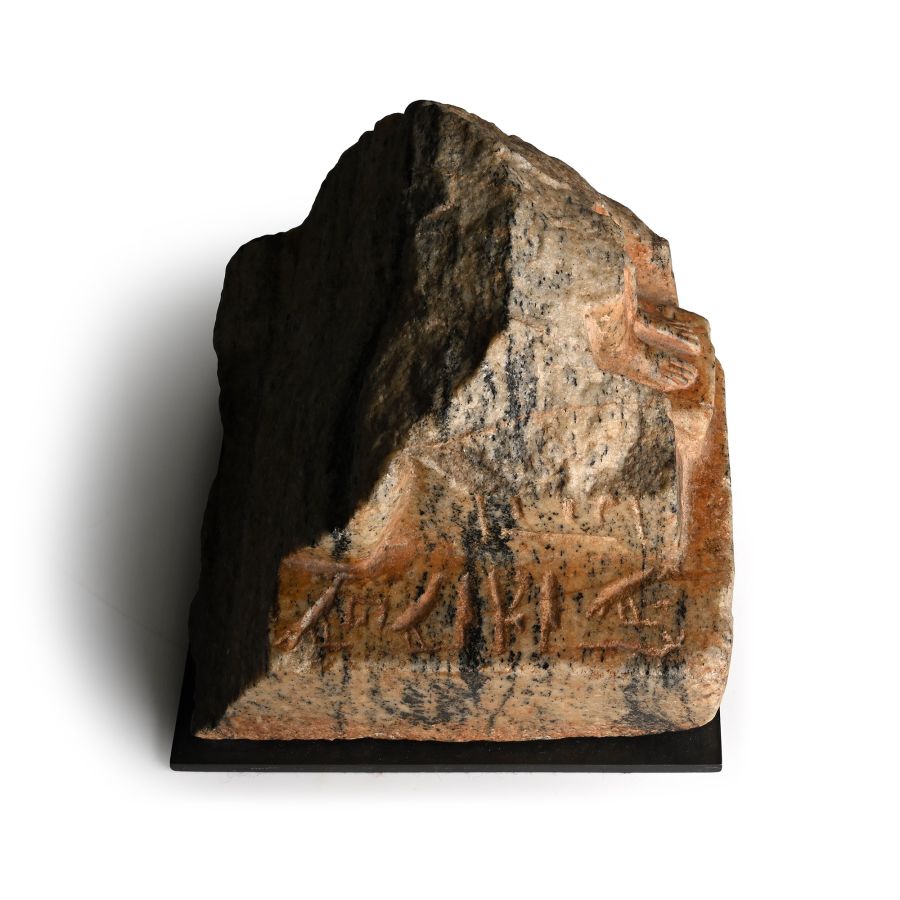
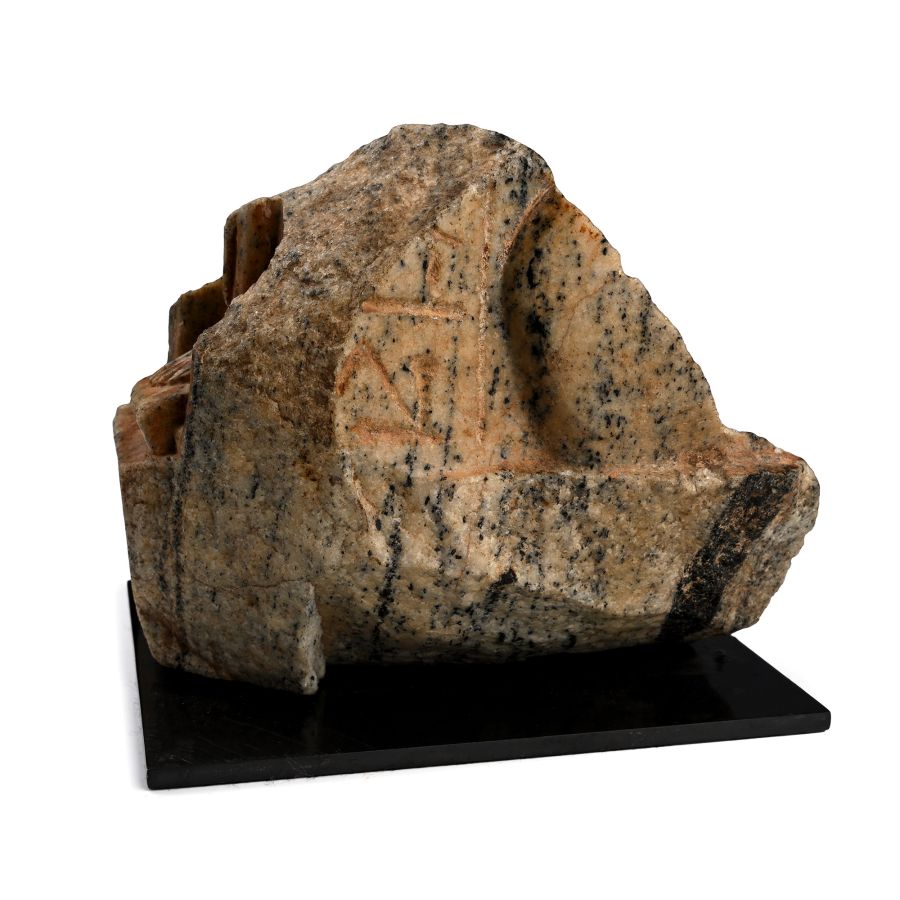
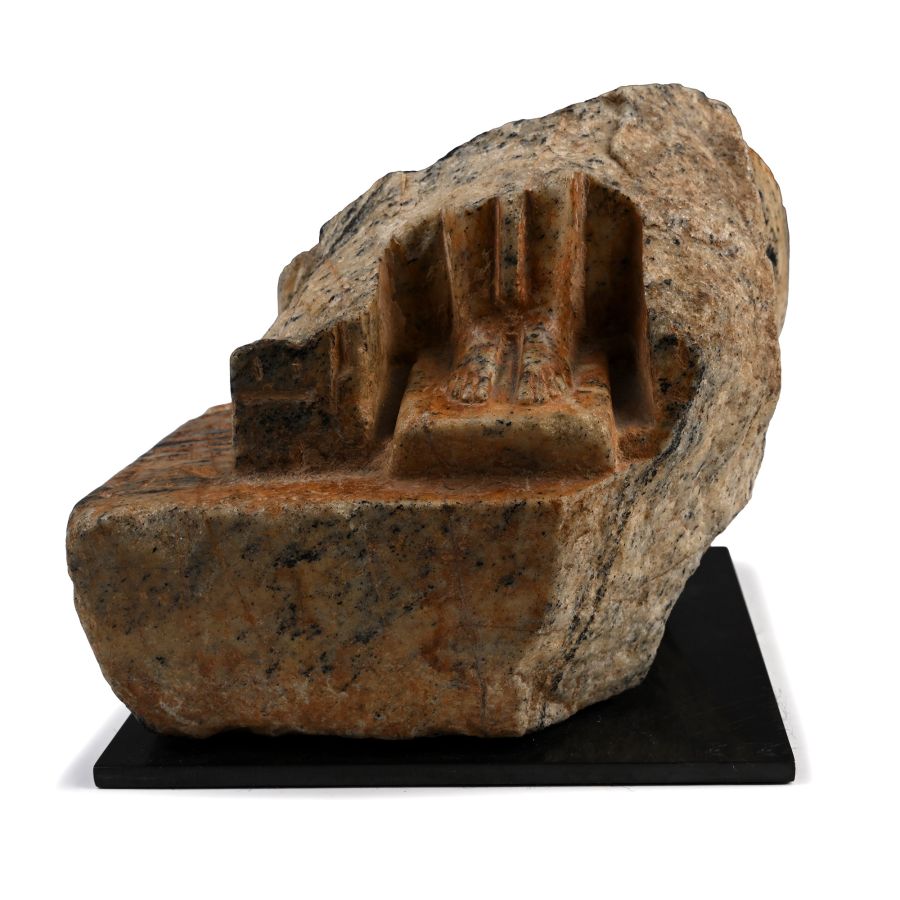
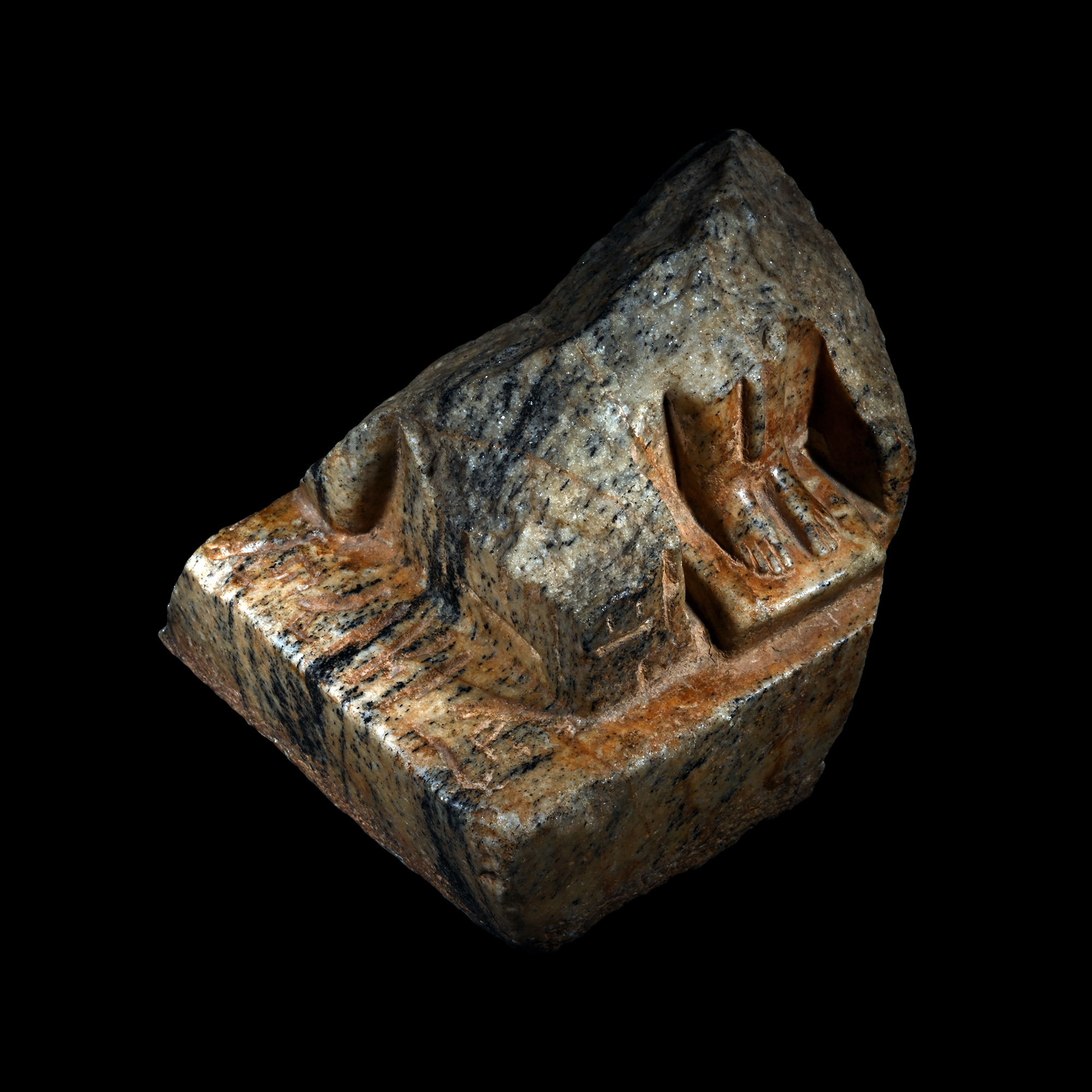
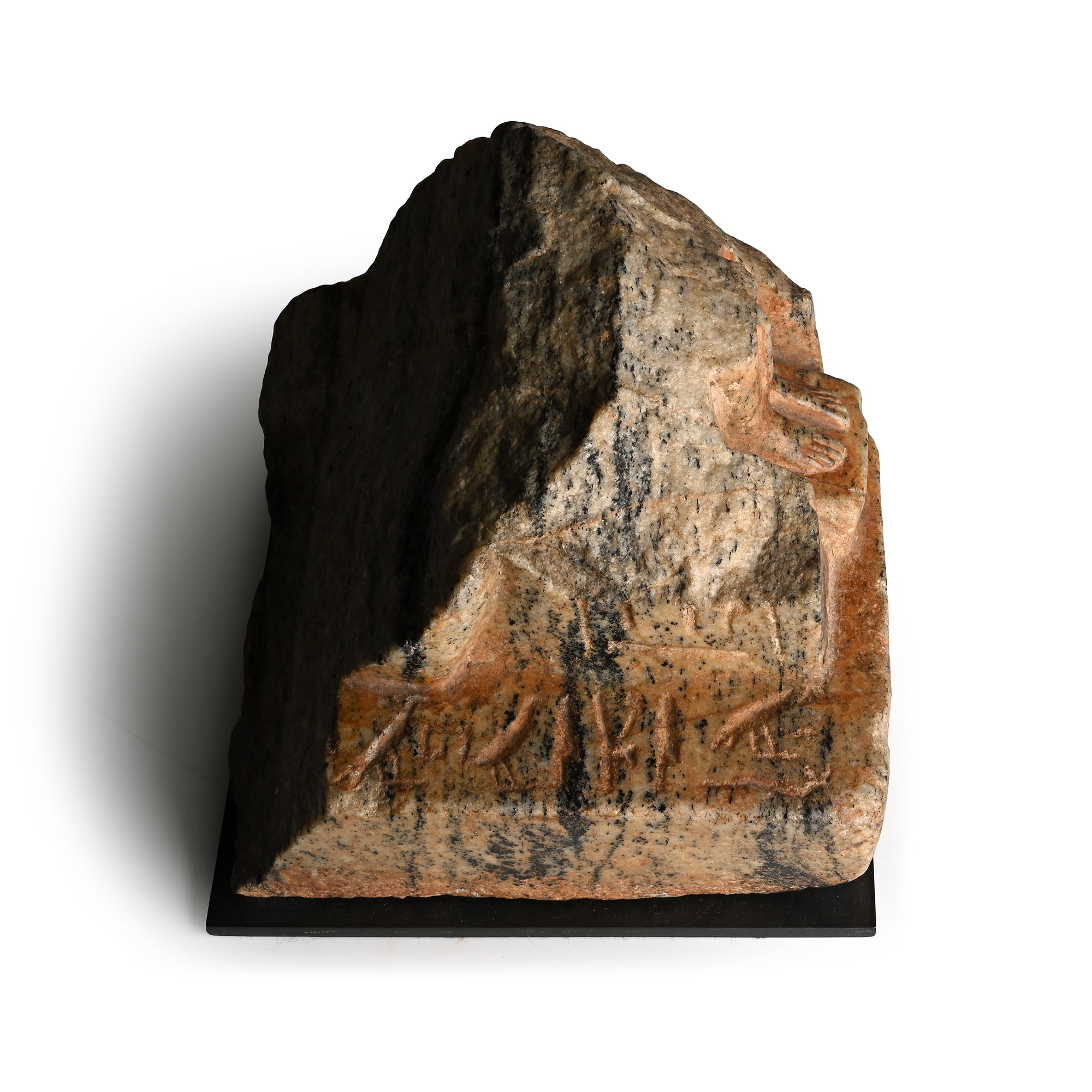
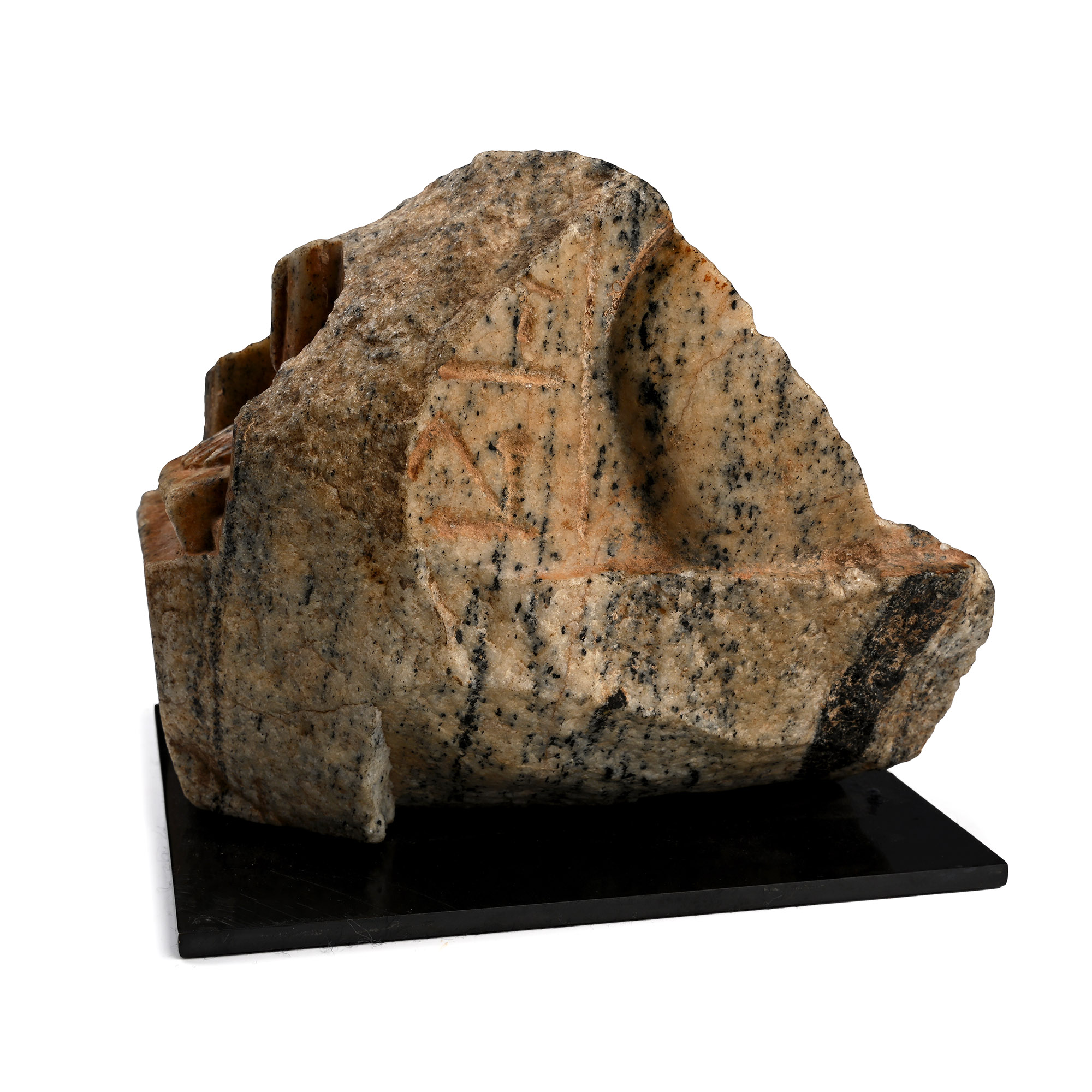
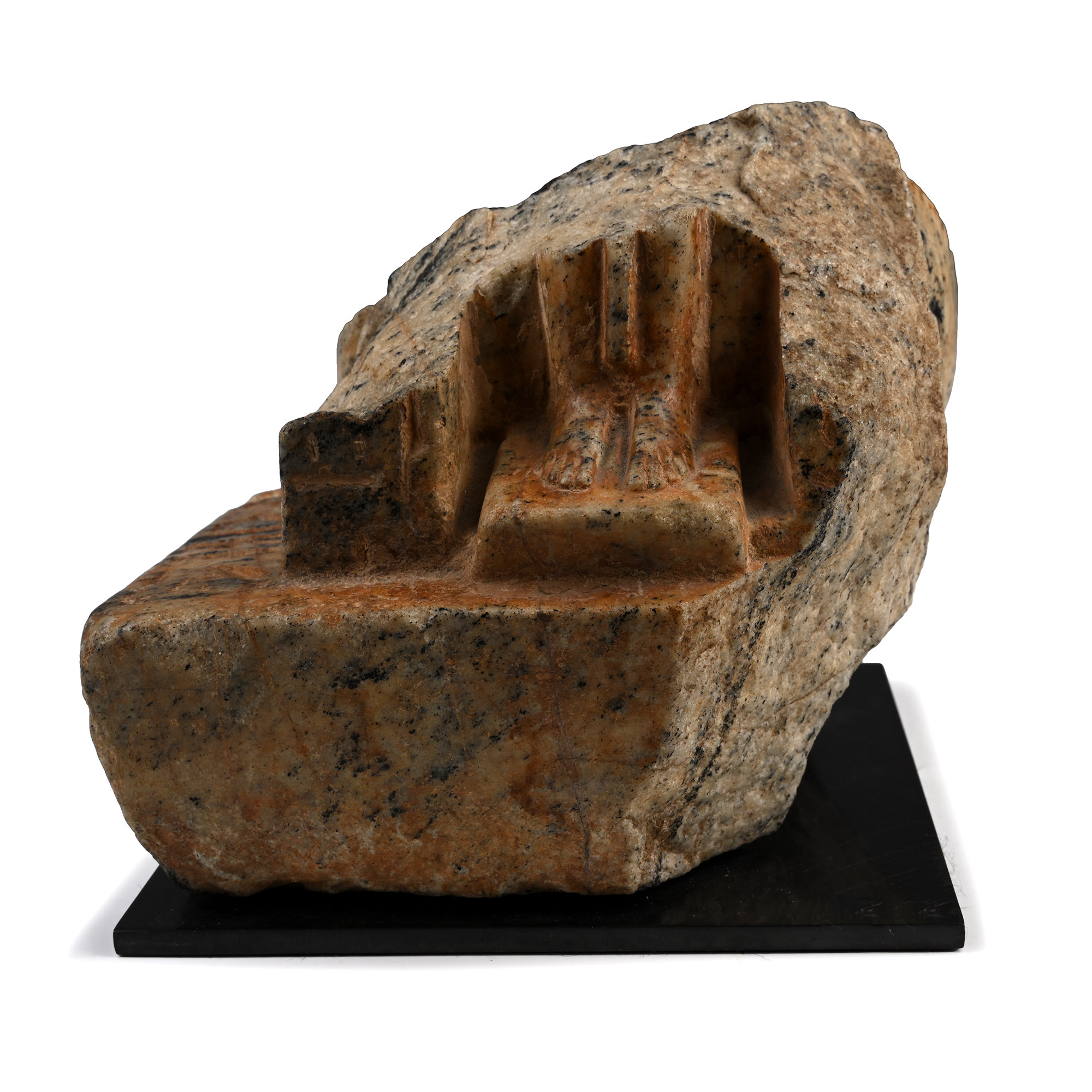
Egyptian Fragment of a Naophorus Statue
NEW KINGDOM, 18TH-20TH DYNASTY, 1540-1069 B.C.
6 1/2 in. (5.75 kg total including stand, 16.5 cm wide).
Fragment of a kneeling figure offering a naos (shrine) before him, on a substantial plinth; preserving both knees of the main figure, a lower portion of the naos containing the lower legs of a seated deity holding a staff or sceptre, with traces of hieroglyphic inscription on the naos front and sides, and on the preserved top edge of the plinth.
ProvenanceUK collection, acquired 1970s-1990s.
This lot has been checked against the Interpol Database of stolen works of art and is accompanied by search certificate no.13520-263439.
Cf. Bierbrier, M.L., Hieroglyphic texts from Egyptian stelae, etc., in the British Museum, Part 10, London, 1982, pl.36-39, for a fragmentary naophorous statue containing the seated figure of Ptah.
CONDITIONTimeLine Auctions follows a vetting process to ensure the authenticity and legality of all items, reinforcing our commitment to integrity and responsible trading. Each antiquity, antique, and coin lot undergoes thorough examination by a vetting committee of at least ten external specialists, professional trade association members, scientists, and archaeologists: Our Vetting Process
AUCTIONS:
TimeLine is a leading auction house specialising in antiquities, ancient art, collectables, natural history, coins, medals, and books. Our auctions offer museums, collectors, historians, and enthusiasts the opportunity to acquire unique and historically significant pieces.
LOT 0071
Egyptian Fragment of a Naophorus Statue
Estimate £1,800 - 2,400€2,090 - 2,780 (for guidance only)$2,430 - 3,240 (for guidance only)
Opening Bid
£900 (EUR 1,044; USD 1,215) +BP*
-
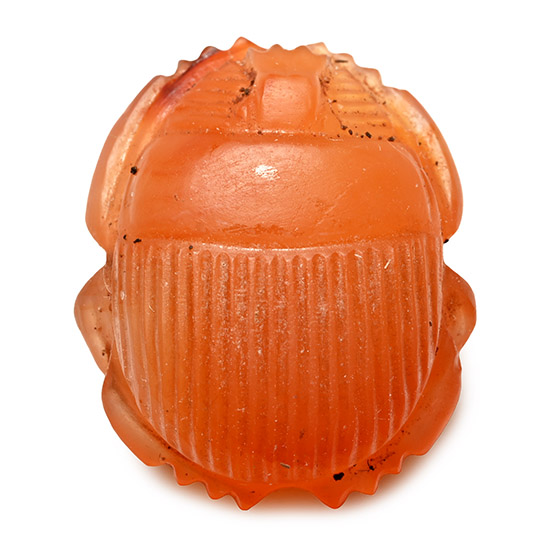
Egyptian Carnelian Heart Scarab
Late Period, 664-332 B.C.Estimate: £800 - 1,000 (+bp*)
Opening Bid: £400
With fine anatomical detailing on the body and striated wingcase, legs folded beneath the body and flanked by a ribbed suspension loop. 2.55 grams, 17 mm
From a mid 20th century collection.
The scarab amulet was one of ancient Egypt’s most widespread symbols, signifying rebirth, transformation, and protection. Modelled on the dung beetle associated with the sun god Khepri—believed to roll the sun across the sky—it embodied the cycle of life and renewal. Widely used from the early Middle Kingdom onwards, scarabs served as funerary amulets, personal charms, and seals, often inscribed with prayers or names. They reflect both spiritual beliefs and daily life in ancient Egypt. Naturalistic scarabs made of semi-precious stones, such as this example, are a characteristic feature of Late Period burials. -
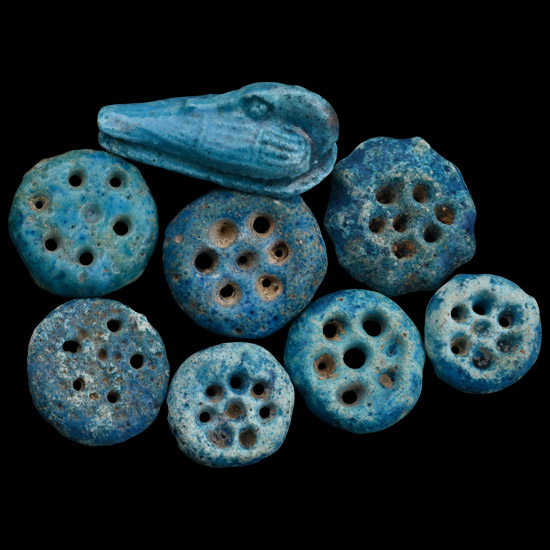
Egypto-Phoenician Faience Amulet Group
4th-2nd century B.C. and laterEstimate: £200 - 300 (+bp*)
Opening Bid: £100
Comprising flat discs with perforations and a modern trussed duck with its head laid along its spine. 18.74 grams total, 15-30 mm
From the collection of a gentleman, acquired on the London art market in the 1990s. -
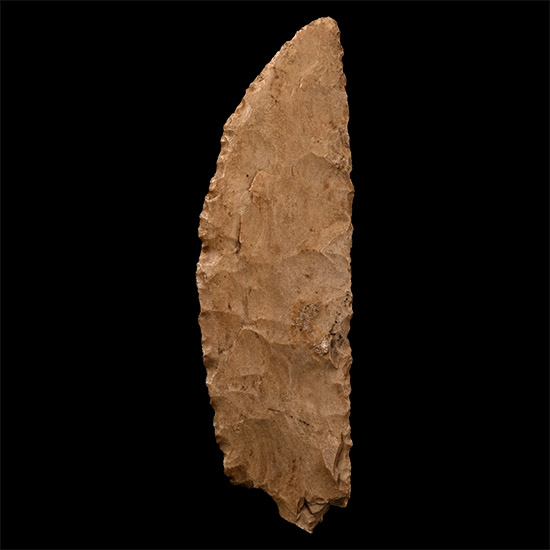
Egyptian Stone Age Knapped Honey-Coloured Flint Knife
Predynastic Period, circa 3500-3000 B.C.Estimate: £400 - 600 (+bp*)
Bids: 1 | Current Bid: £5
Knapped knife with curved edge; with old collector's record card detailing place of purchase and other details. 41.1 grams, 12.3 cm
Ex Puys-Aubert collection, Alexandria, March 1963, for 6 shillings. From the private collection of Peter Clayton, FCILIP, Dip, Arch, FSA, FRNS, Hemel Hempstead, Hertfordshire, UK; formed since the late 1950s. Accompanied by an old typed information card by Peter Clayton, collection no.106.
