
Loading, please wait...





LOT 0479
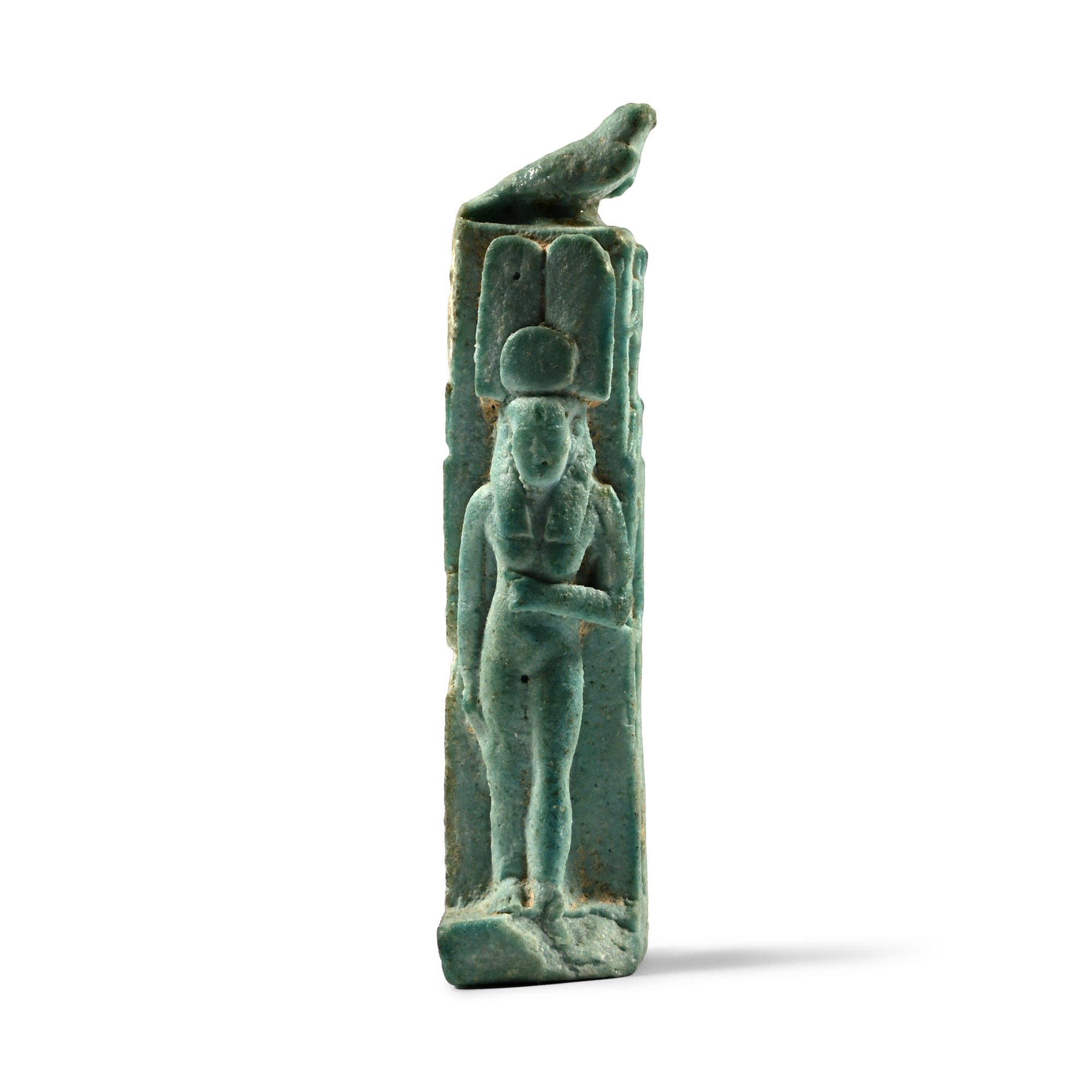
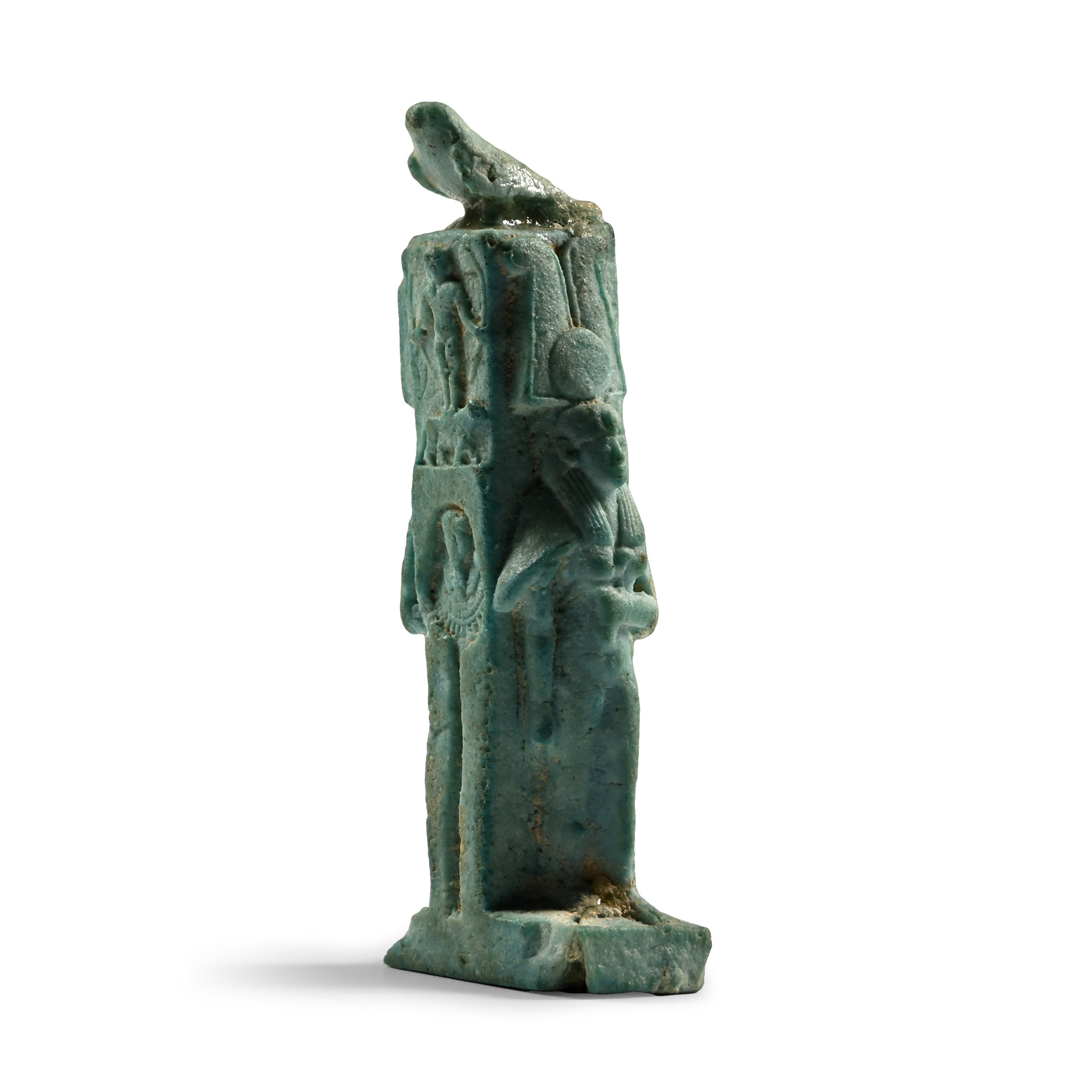
Egyptian Four-Sided Amulet
LATE PERIOD, 664-332 B.C.
2 3/8 in. (21 grams, 60 mm).
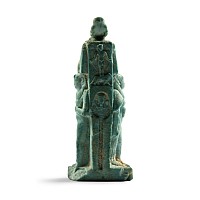
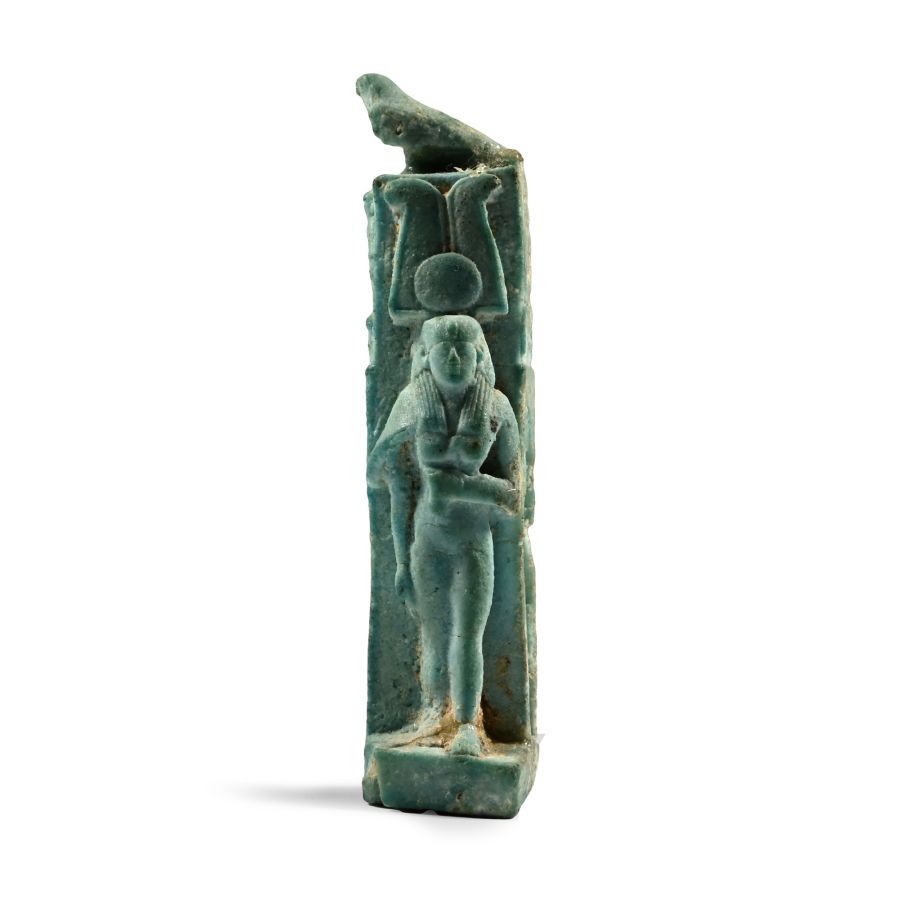
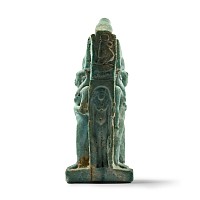
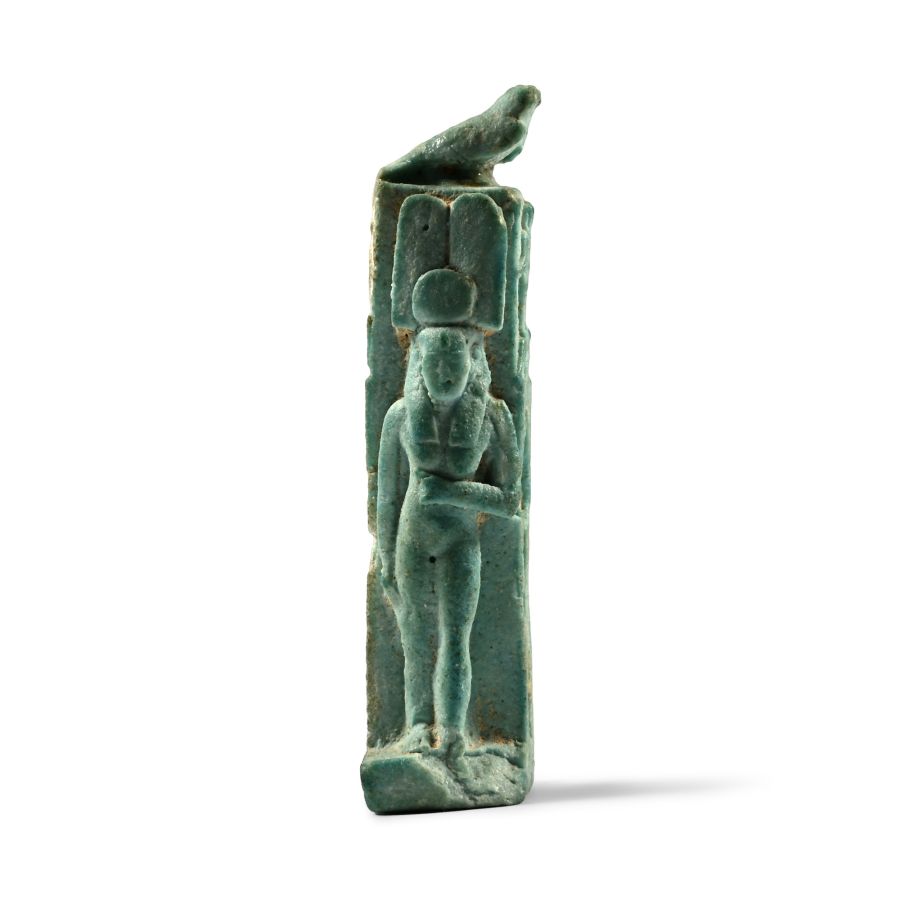
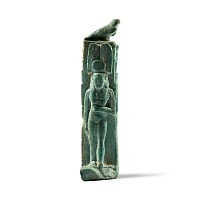
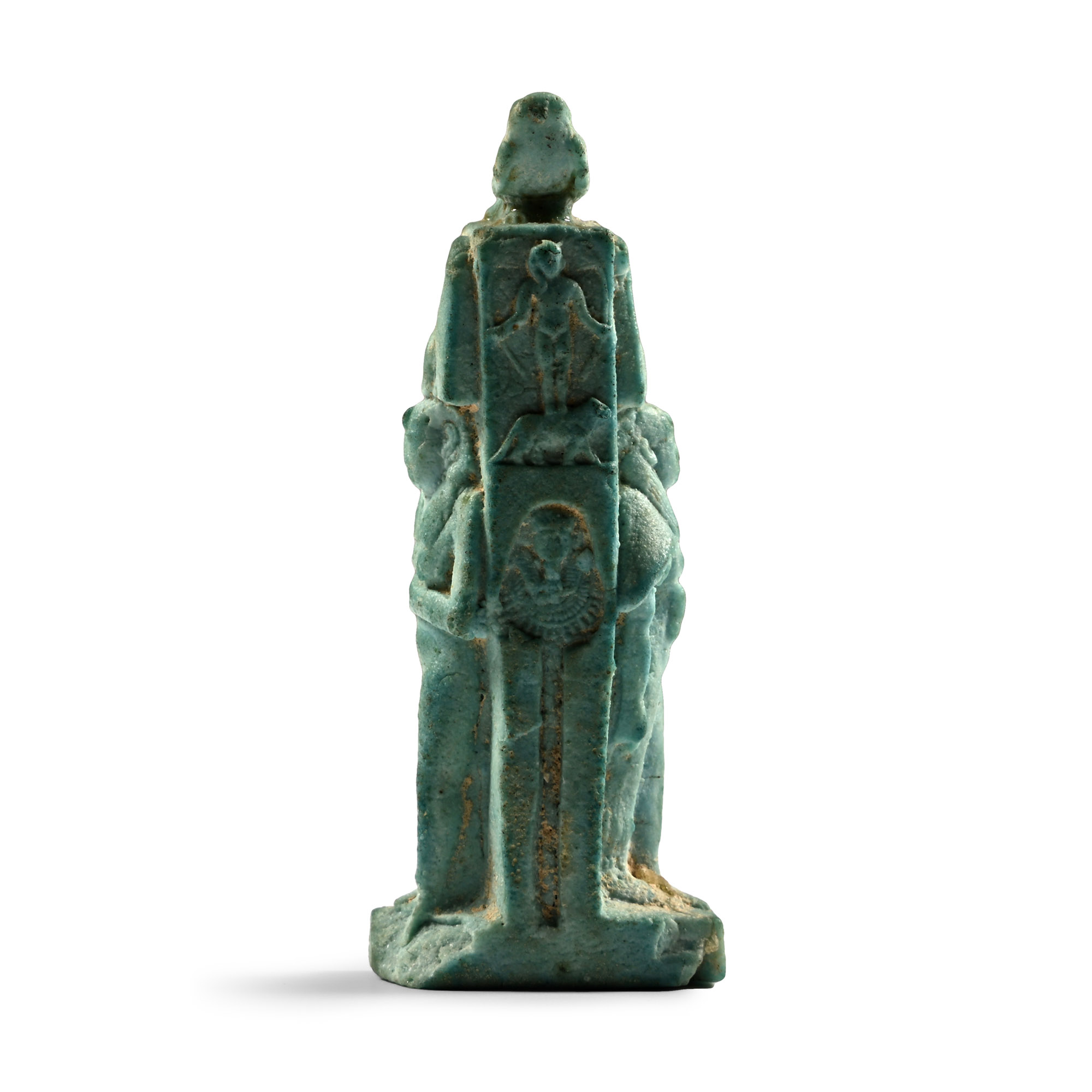
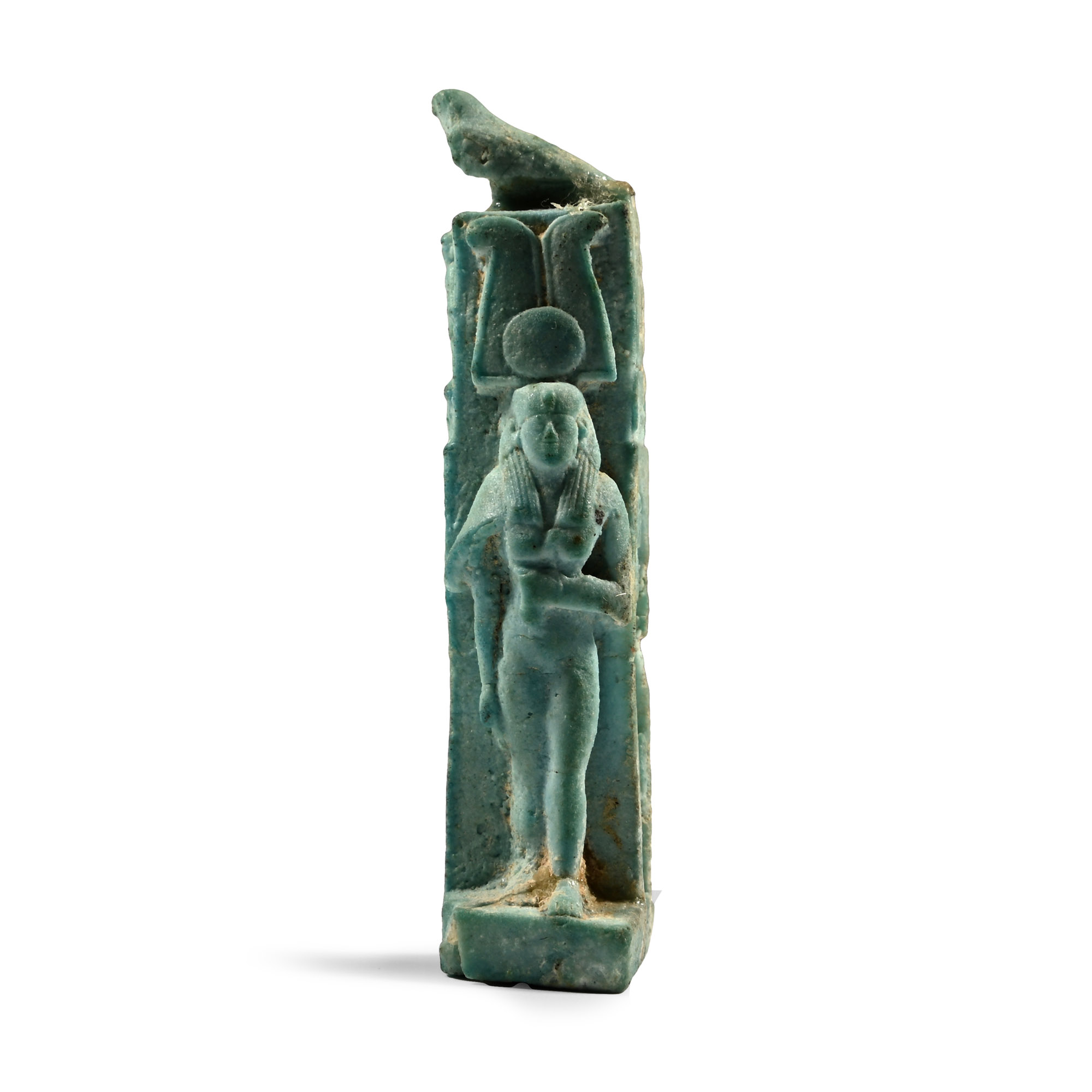
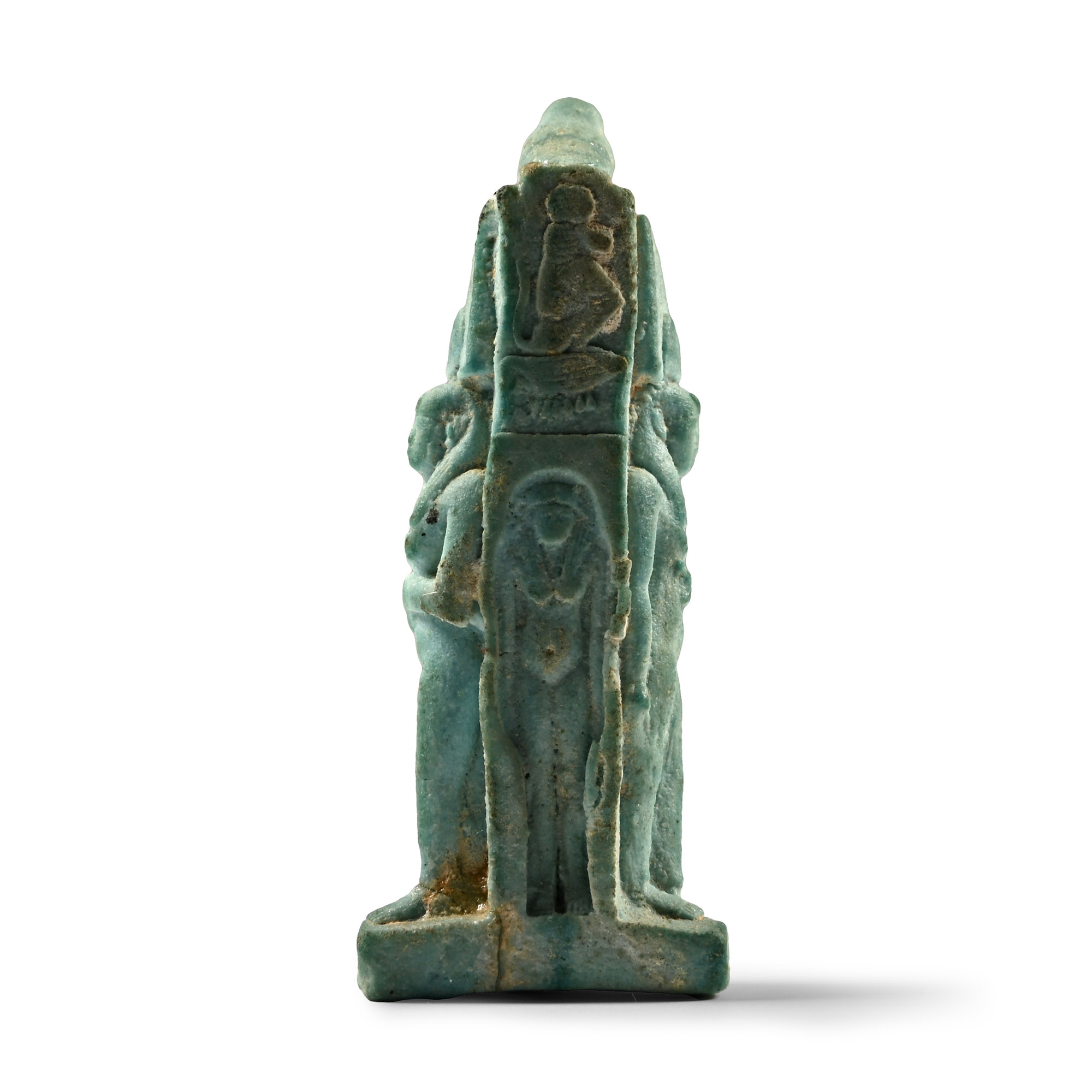
An elaborate amulet in bright blue faience, modelled on four sides: Side 1: a diminutive figure of Harpokrates holding a snake in each hand and standing on the back of a lion, below which is a stylised mummiform (?) figure with a nemes headdress and a broad ornamental collar; Side 2: a baboon seated upon a nebyt collar, below which is a standing naked female figure wearing a Hathoric wig; Side 3: a standing naked female figure with right arm hanging by her side and left arm bent at the elbow and forearm positioned beneath her breasts, wearing a composite wig with striated lappets and uraeus to the front, surmounted by two tall ostrich feathers fronted by a sun disc; Side 4: a standing naked female figure with right arm hanging by her side and left arm bent at the elbow and forearm positioned beneath her breasts, wearing a lappet wig and uraeus to the front, surmounted by a tall two-plumed headdress fronted by a sun disc; the figure of a falcon tops the composition, which stands on an integral plinth.
ProvenanceMr F.D. collection, acquired on the European art market, 1975 to present.
This lot is accompanied by an illustrated lot declaration signed by the Head of the Antiquities Department, Dr Raffaele D’Amato.
This highly unusual amulet contains elements associated with Horus cippi. On such objects, Horus is depicted as a naked child, usually holding snakes and standing on crocodiles, though other dangerous animals, such as lions, are also represented with him. The goddesses Isis and Nephthys are typically found on cippi, and two of the three female figures on this amulet may represent these goddesses. However, their headdresses are untypical of either deity, while the third female figure sports the Hathor wig.
CONDITIONTimeLine Auctions follows a vetting process to ensure the authenticity and legality of all items, reinforcing our commitment to integrity and responsible trading. Each antiquity, antique, and coin lot undergoes thorough examination by a vetting committee of at least ten external specialists, professional trade association members, scientists, and archaeologists: Our Vetting Process
AUCTIONS:
TimeLine is a leading auction house specialising in antiquities, ancient art, collectables, natural history, coins, medals, and books. Our auctions offer museums, collectors, historians, and enthusiasts the opportunity to acquire unique and historically significant pieces.
-
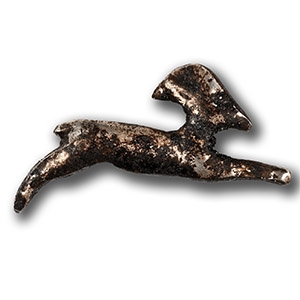
Egyptian Silver Gazelle Amulet
Late-Ptolemaic Period, 664-30 B.C. or earlierSold for (Inc. bp): £221
Figure of a leaping gazelle modelled in the half-round, two attachment loops to the reverse. 1 grams, 21 mm
From an early 20th century collection. This lot is accompanied by an illustrated lot declaration signed by the Head of the Antiquities Department, Dr Raffaele D’Amato.
The ‘flying gallop’ pose of animal figures, including the ibex, in ancient Egyptian jewellery elements is considered to be of Aegean influence. -
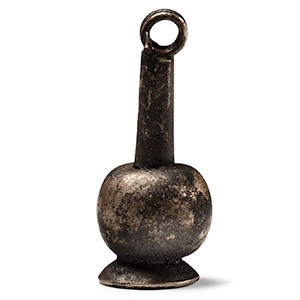
Egyptian Silver Poppy Amulet
Late-Ptolemaic Period, 664-30 B.C.Sold for (Inc. bp): £85
Silver poppy-head with loop at the apex. 1.46 grams, 19 mm
From an early 20th century collection. This lot is accompanied by an illustrated lot declaration signed by the Head of the Antiquities Department, Dr Raffaele D’Amato. -

Egyptian Faience Beads and Other Fragments
Late Period, 664-332 B.C.Sold for (Inc. bp): £65
Including seed and tubular beads, and other items. 38 grams total, 1-14 mm
From an old English collection. Acquired from Brigantia, York, 1990s. Ian Wilkinson collection, Nottinghamshire, UK, formed since 1985. This lot is accompanied by an illustrated lot declaration signed by the Head of the Antiquities Department, Dr Raffaele D’Amato.
