
Loading, please wait...
LOT 0466
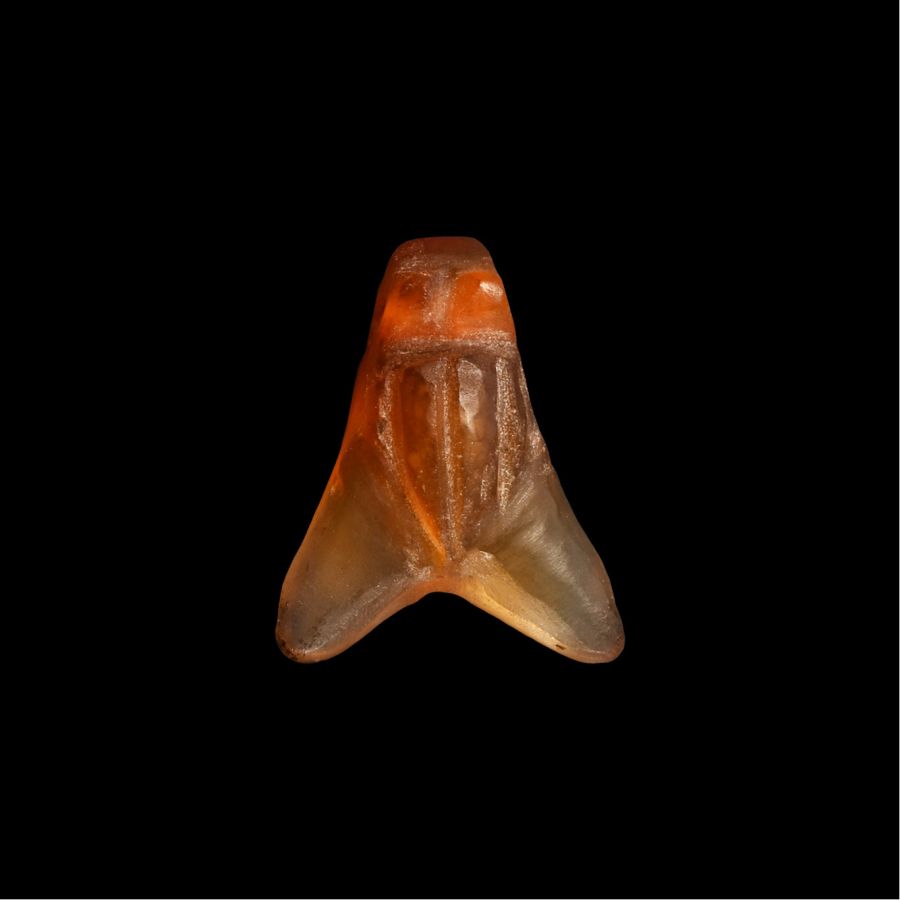
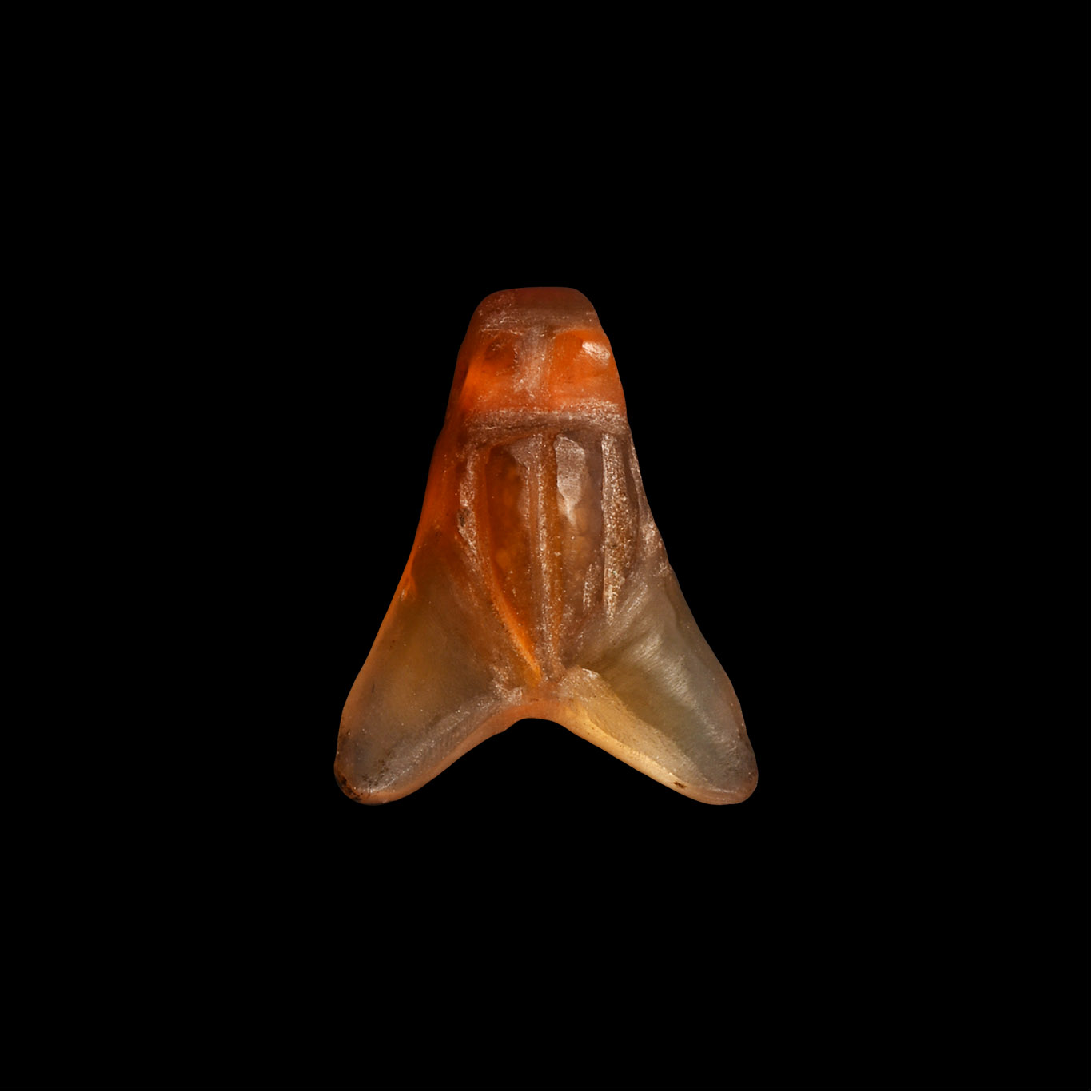
Egyptian Fly Amulet
LATE PERIOD, 664-525 B.C.
1/2 in. (0.43 grams, 12 mm).
A carnelian fly amulet with simple head and body detailing, the eyes doubling as the suspension loop.
ProvenanceFrom an early 20th century UK collection.
CONDITIONTimeLine Auctions follows a vetting process to ensure the authenticity and legality of all items, reinforcing our commitment to integrity and responsible trading. Each antiquity, antique, and coin lot undergoes thorough examination by a vetting committee of at least ten external specialists, professional trade association members, scientists, and archaeologists: Our Vetting Process
AUCTIONS:
TimeLine is a leading auction house specialising in antiquities, ancient art, collectables, natural history, coins, medals, and books. Our auctions offer museums, collectors, historians, and enthusiasts the opportunity to acquire unique and historically significant pieces.
-
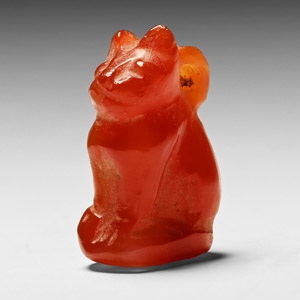
Egyptian Seated Cat Amulet
Ptolemaic Period, 332-30 B.C.Sold for (Inc. bp): £390
A carved carnelian amuletic pendant of the cat goddess Bastet, sitting on a rectangular base, suspension loop behind the shoulders. 1.82 grams, 16 mm
Acquired 1980s. Private collection of L.H., Staffordshire, UK. Property of a Sussex, UK, teacher. -
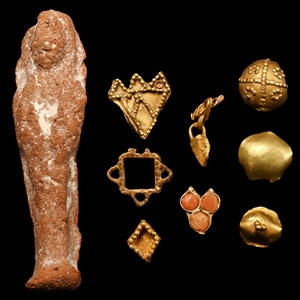
Egyptian and Other Artefact Collection
1st millennium B.C. and laterSold for (Inc. bp): £195
A mixed group comprising: a miniature glazed composition shabti; two gold domed discs, one with a granule cluster to the apex; a gold lozenge cell with granulation to the rim; a square gold cell with flanking loops and granulation; a gold triangular panel with granulated dividers, triangles to the upper edge; a gold domed disc with quartered design and rosettes, granulated; a gold leaf-shaped pendant and chain links; three gold cells with carnelian inlays. 5.35 grams total, 6-46 mm
Acquired 1990s. English private collection. Property of an Essex gentleman. -
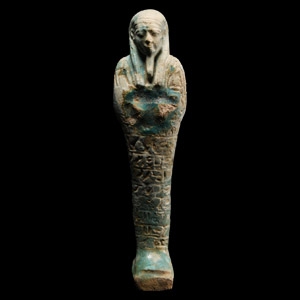
Egyptian Faience Shabti with Hieroglyphic Text
7th-1st century B.C.Sold for (Inc. bp): £910
A glazed composition shabti with square base and plain dorsal pillar, tripartite wig and false beard, arms folded across the chest holding agricultural tools and a seed bag to the left shoulder; nine horizontal bands of worn hieroglyphic text from Chapter Six of the Book of the Dead to the lower body. 212 grams, 19.5 cm high
Acquired early 1990s. Ex private American collection; thence by descent. Private Swiss collection since 1998.
