
Loading, please wait...

LOT 0012
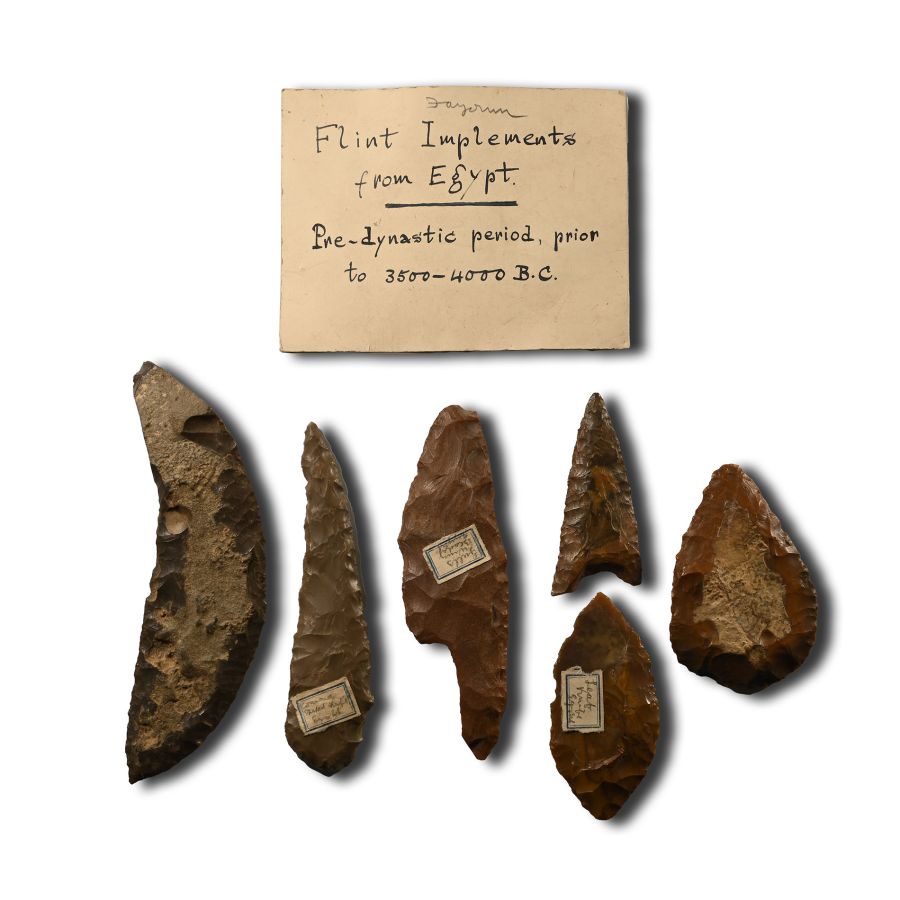
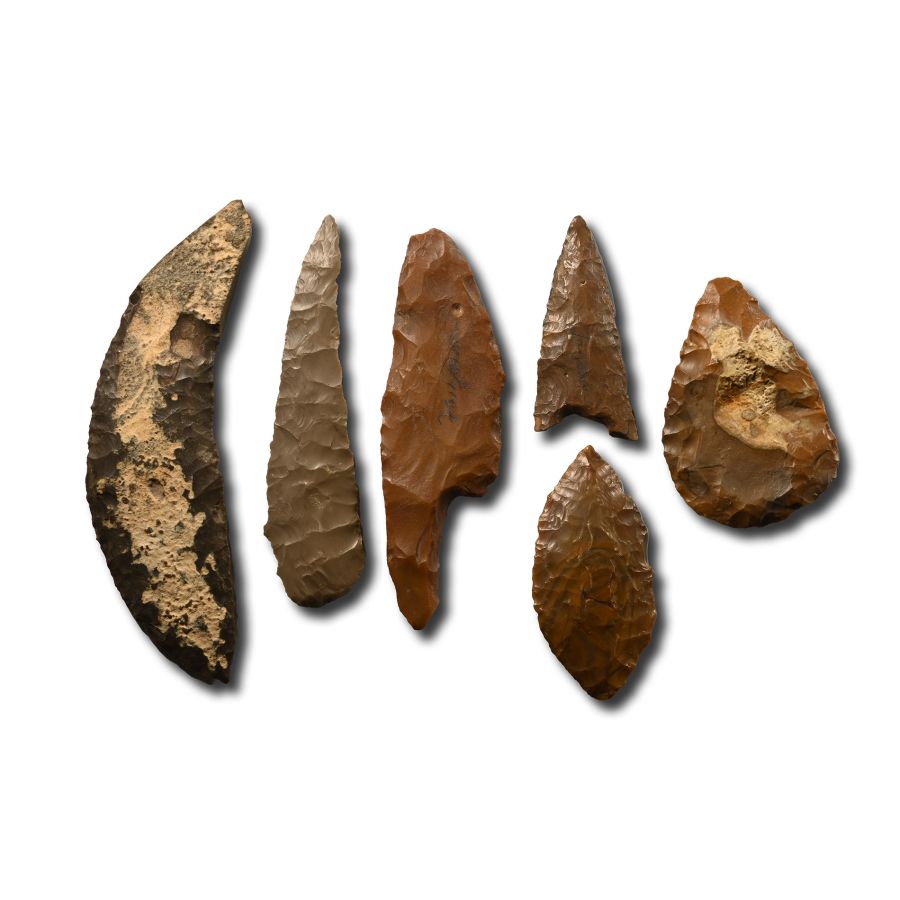
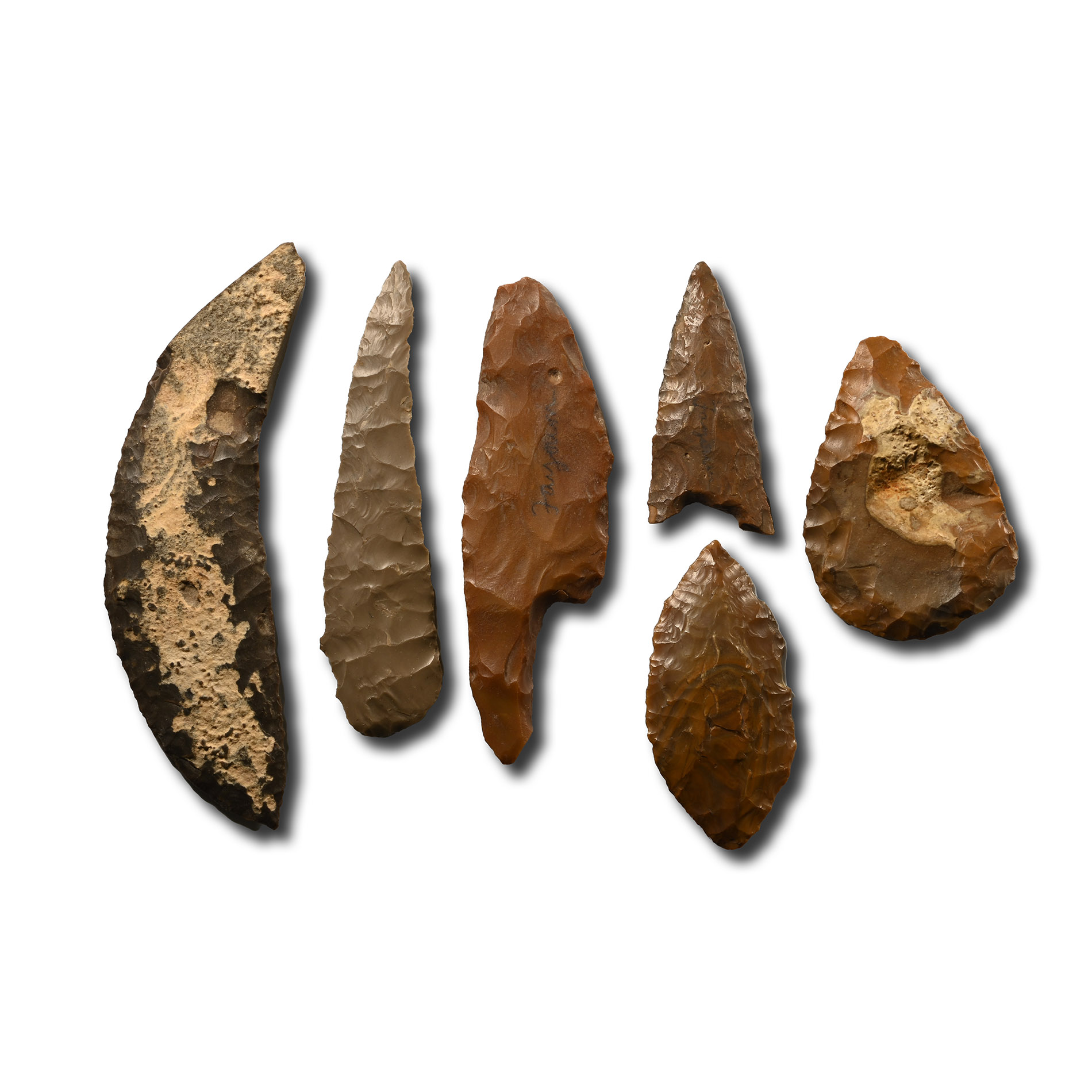
Egyptian Flint Tool Collection
PRE-DYNASTIC PERIOD, CIRCA 4TH MILLENNIUM B.C. OR LATER
2 3/8 - 5 1/4 in. (165 grams total, 6.2-13.5 mm).
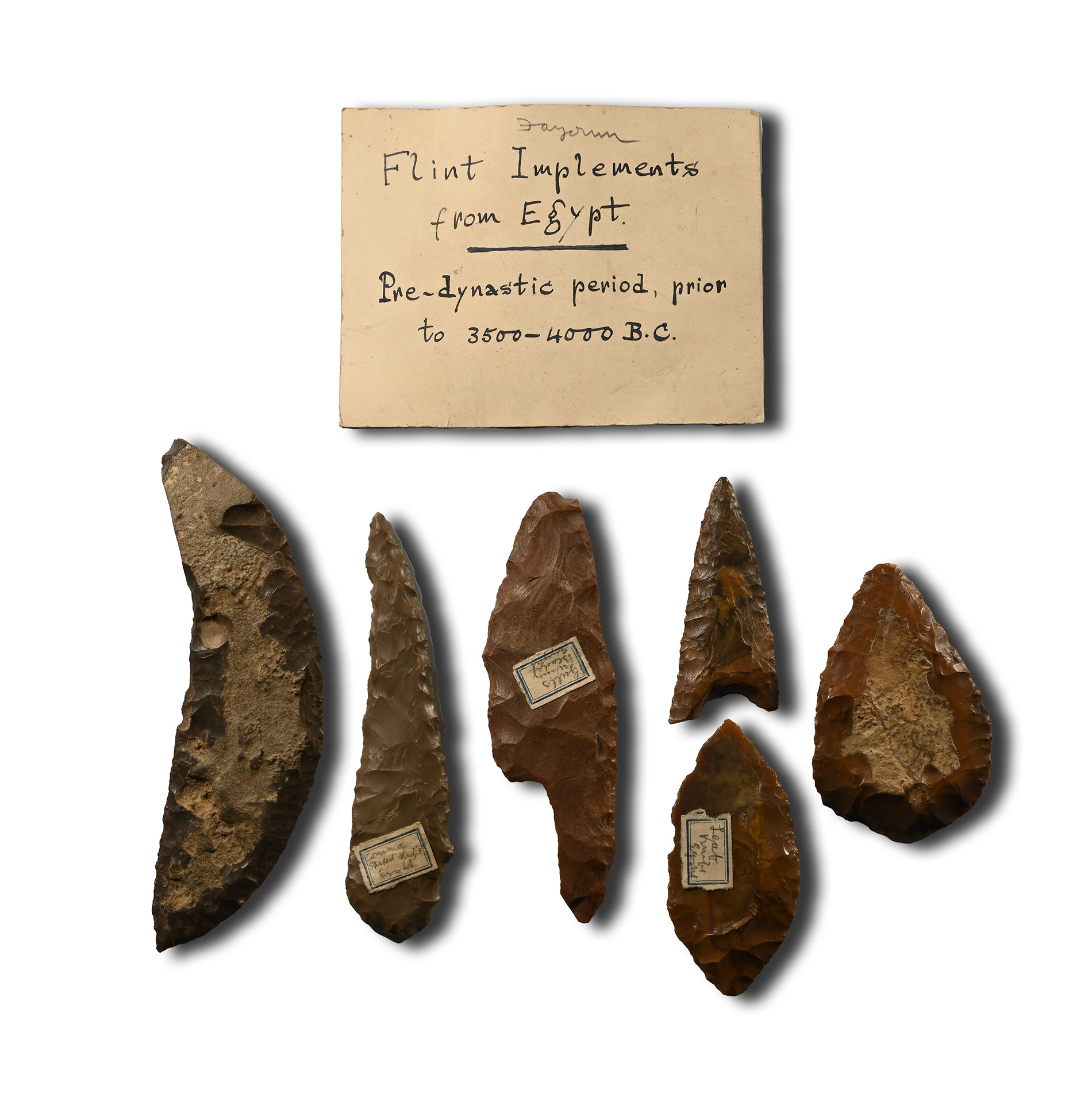
Including piriform scraper tool, single-edged knife with old label 'Gull's wing blade, Egypt', curved blade with old label 'Comma-shaped knife, Egypt', sickle blade and other items with accompanying collector's record card on reverse of a printed invitation to a garden party at Carisbrooke 4th July 1940. [6]
ProvenanceFrom the private collection of Sydney Horne, 1920s-1940s.
This lot is accompanied by an illustrated lot declaration signed by the Head of the Antiquities Department, Dr Raffaele D’Amato.
Cf. Aufrère, S., Collections des Musées départementaux de Seine-Maritime, Rouen, 1987, pp.188-190, for comparable examples.
CONDITIONTimeLine Auctions follows a vetting process to ensure the authenticity and legality of all items, reinforcing our commitment to integrity and responsible trading. Each antiquity, antique, and coin lot undergoes thorough examination by a vetting committee of at least ten external specialists, professional trade association members, scientists, and archaeologists: Our Vetting Process
AUCTIONS:
TimeLine is a leading auction house specialising in antiquities, ancient art, collectables, natural history, coins, medals, and books. Our auctions offer museums, collectors, historians, and enthusiasts the opportunity to acquire unique and historically significant pieces.
-
.jpg)
Egyptian Orange Carnelian Poppy Head Amulet
New Kingdom, 18th Dynasty, 1550-1292 B.C.Sold for (Inc. bp): £124
Polished and with integral pierced suspension loop; element from a broad collar. 0.20 grams, 11 mm
Ex UK gallery, early 2000s. This lot is accompanied by an illustrated lot declaration signed by the Head of the Antiquities Department, Dr Raffaele D’Amato.
Amulets in the form of poppies were used to heal and alleviate pain and to ward off death. These types of amulets were also linked to Osiris, the Egyptian deity of agriculture, death, and the afterlife. -
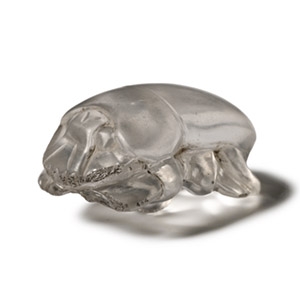
Egyptian Rock Crystal Heart Scarab
Late Period, 664-342 B.C.Sold for (Inc. bp): £975
Carved in the round with ribbed loop to the underside, carapace and leg detailing. 8.72 grams, 25 mm
From a London and Home Counties collection, 1920-1940. This lot is accompanied by an illustrated lot declaration signed by the Head of the Antiquities Department, Dr Raffaele D’Amato.
Naturalistic scarabs carved in the round are characteristic of the Late Period and were crafted from various stones, including lapis lazuli, feldspar, carnelian, and rock crystal, as exemplified here. These scarabs were attached to the wrappings of a mummy, positioned over areas of the body such as the chest, neck, and hands. -
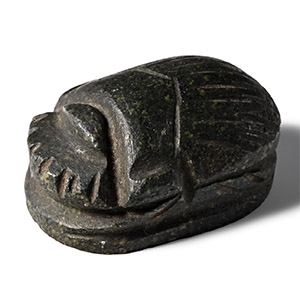
Egyptian Black Hardstone Scarab
Late Period, 664-332 B.C.Estimate: £400 - 600 (‡+bp*)
Opening Bid: £200
Dark green hardstone with paler speckles; with a boldly carved head, clypeus, prothorax and elytra, and legs indicated at the sides; plain underside. 17 grams, 29 mm
Ex Irene Newman, Birdham, Chichester, West Sussex, England. with Stride & Son Auctioneers, Chichester, West Sussex, England, 23 April 2015, no.1599 [Part]. Acquired by the present owner at the above sale. This lot is accompanied by an illustrated lot declaration signed by the Head of the Antiquities Department, Dr Raffaele D’Amato.
The scarab, which represented the dung beetle, was the most popular amulet in ancient Egypt for approximately two thousand years until the Ptolemaic Period when it gradually fell out of favour. The popularity of scarabs extended beyond the borders of Egypt, and they were also distributed and produced in other regions, such as Phoenicia and Israel. The beetle is named khepri, derived from the verb 'to come into existence', and was considered the embodiment of the creator god Khepri, who was self-engendered. The ancient Egyptians mistakenly believed that the young beetle emerging from the dung ball was the result of an act of self-creation.
