
Loading, please wait...

LOT 0454
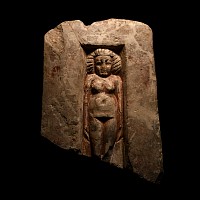
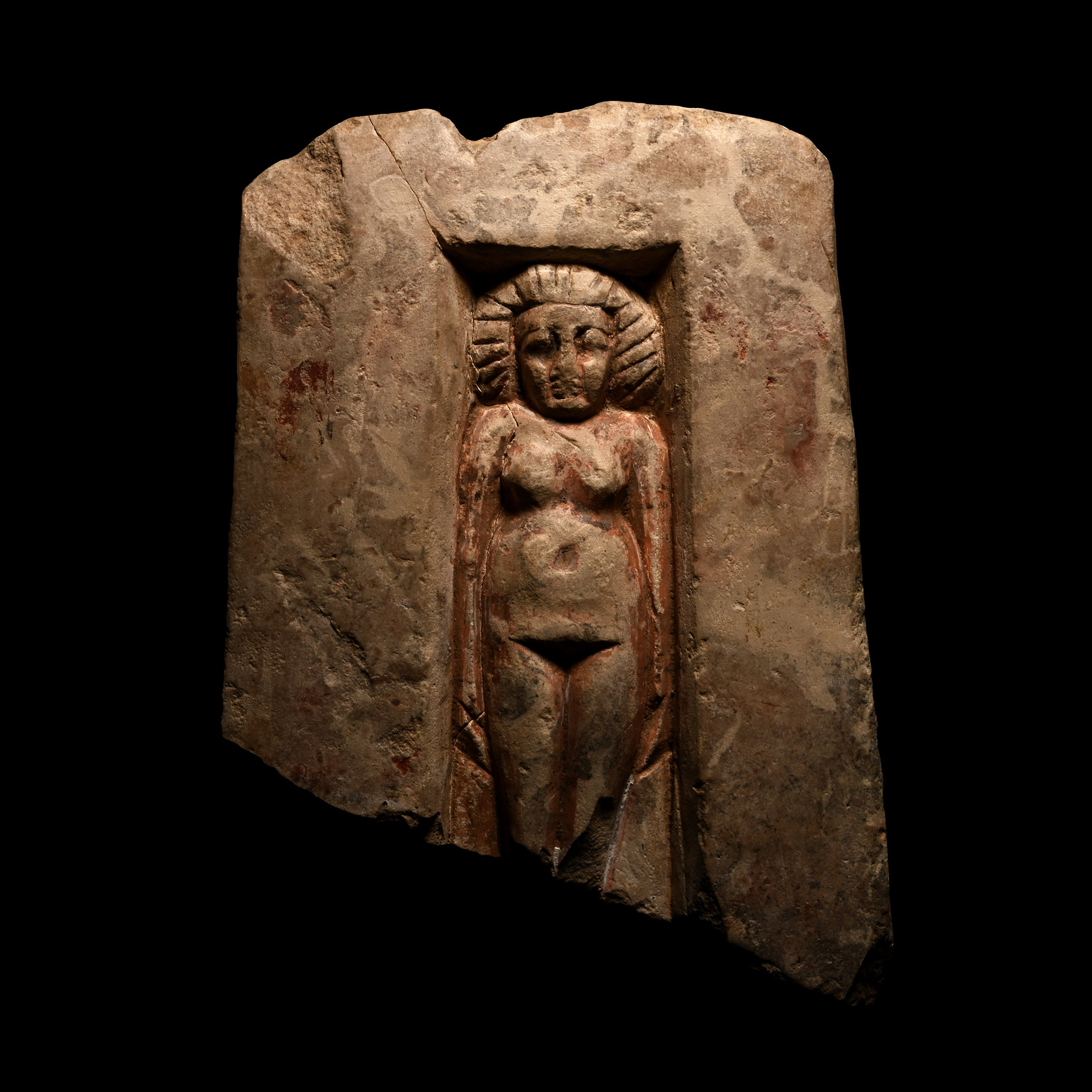
Egyptian Female Fertility Figurine Plaque
LATE PERIOD-PTOLEMAIC PERIOD, 664-31 B.C.
6 3/4 in. (502 grams total, 17.1 cm including stand).
Carved rectangular plaque with central recess, carved image of a nude female modelled in the half-round with a deeply striated bag wig, arms by her side; traces of red and black pigment on the body; mounted on a custom-made stand.
ProvenanceFrom a central London collection, formed 1980-2000.
From the private collection of Mr David Barker, London, UK; thence by descent.
Cf. Metropolitan Museum of Art inv. no. 23.6.78, for a similar figurine in a shrine niche.
FootnotesThe rectangular limestone plaque almost certainly represents a shrine. Such plaques first appeared in Lower Egypt and became widespread in the Late Period and Ptolemaic era. They may have developed from earlier female figurines depicted on beds and are usually associated with the female goddesses Isis and Hathor, both powerful protectors of women and childbirth and associated with fertility.
CONDITIONTimeLine Auctions follows a vetting process to ensure the authenticity and legality of all items, reinforcing our commitment to integrity and responsible trading. Each antiquity, antique, and coin lot undergoes thorough examination by a vetting committee of at least ten external specialists, professional trade association members, scientists, and archaeologists: Our Vetting Process
AUCTIONS:
TimeLine is a leading auction house specialising in antiquities, ancient art, collectables, natural history, coins, medals, and books. Our auctions offer museums, collectors, historians, and enthusiasts the opportunity to acquire unique and historically significant pieces.
LOT 0454
Egyptian Female Fertility Figurine Plaque
Estimate £1,000 - 1,400€1,160 - 1,620 (for guidance only)$1,350 - 1,890 (for guidance only)
-
.jpg)
Large Egyptian Bronze Figure of Osiris
Late Period-Ptolemaic Period, 664-30 B.C.Sold for (Inc. bp): £7,150
Bust of Osiris modelled in the round, wearing the white crown with uraeus to the brow, plaited false beard, tiered collar with counterweight to rear; the hands opposed at the chest, holding the nekhakha flail and the heka crook; the eyes with glass inserts; mounted on a custom-made stand. 850 grams total, 35 cm high including stand
Ex R. Liechti (1934-2010) collection, Geneva, Switzerland. Private collection, Europe. This lot has been checked against the Interpol Database of stolen works of art and is accompanied by search certificate number no.12365-226680.
Osiris is a deity who represents death and fertility and is commonly regarded as the quintessential god of rebirth. Though he was once a mortal ruler, as a deceased entity, his domain was the Underworld. Abydos was the primary centre of Osiris’ cult, where a renowned yearly celebration of the god was held. The proliferation of bronze statues of the god indicates his widespread popularity. R. Liechti was a distinguished collector of Egyptian antiquities, known for his discerning eye and passion for ancient artefacts. Active during the mid-20th century, Liechti's collection featured a wide range of objects that showcased the rich cultural heritage of ancient Egypt, from intricately carved statuettes to rare amulets and jewellery. His dedication to preserving and studying these relics earned him a respected reputation among scholars and collectors alike. Many pieces from his collection have since found their way into prominent museum collections and auction houses, further solidifying his legacy in the world of antiquities. -
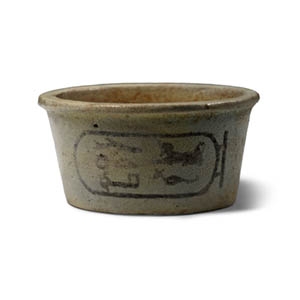
Egyptian Faience Offering Cup with Cartouche of Nectanebo I
30th Dynasty, 380-326 B.C.Estimate: £1,200 - 1,700 (+bp*)
Opening Bid: £600
A squat flared vessel with a rim, one side with a cartouche containing the hieroglyphs nakhtnebef, giving the birth name of the 30th Dynasty King Nectanebo I. 20.8 grams, 48 mm
Acquired on the German art market, 1989-1995. with The Museum Gallery, 19 Bury Place, London, WC1, UK, 1998-2003. Property of a London based academic, 2003-present. -
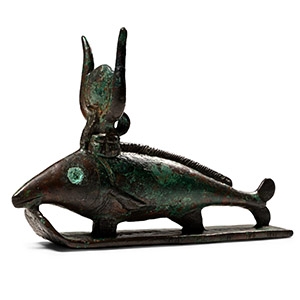
Large Egyptian Bronze Oxyrhynchus Fish of Per-Medjed
Late Period-Ptolemaic Period, 664-30 B.C.Estimate: £6,000 - 8,000 (‡+bp*)
Opening Bid: £3,000
Modelled in the round on a sledge attached by ventral and pectoral fins, forked tail, dorsal ridge, tapering nose; recessed circular eyes with enamel fill; horned sun disc headdress fronted by a uraeus and a suspension loop behind. 585 grams, 17 cm
Acquired from Gallery Reiner, Paris, 1981. Private collection, Europe. Accompanied by a copy of French passport no.150583 dated 29 November 2013. This lot has been checked against the Interpol Database of stolen works of art and is accompanied by a search certificate number no.12375-226676.
The Medjed, a type of elephant-snout fish (Mormyrus kannume), was revered in ancient Egyptian religion, particularly in Per-Medjed, better known by its Greek name, Oxyrhynchus Polis. This version of the name, meaning "city of the sharp-nosed," reflects the fish's distinctive appearance as depicted in Egyptian art. These fish were believed to have consumed the penis of Osiris, the god who was dismembered and scattered by his brother Seth. As sacred creatures, figurines of the Medjed were often adorned with a horned sun-disc headdress worn by the goddesses Hathor and Isis, suggesting a close association with both. Some figurines, like this example, featured suspension loops, allowing them to be worn as pendant amulets.
