
Loading, please wait...
LOT 0003
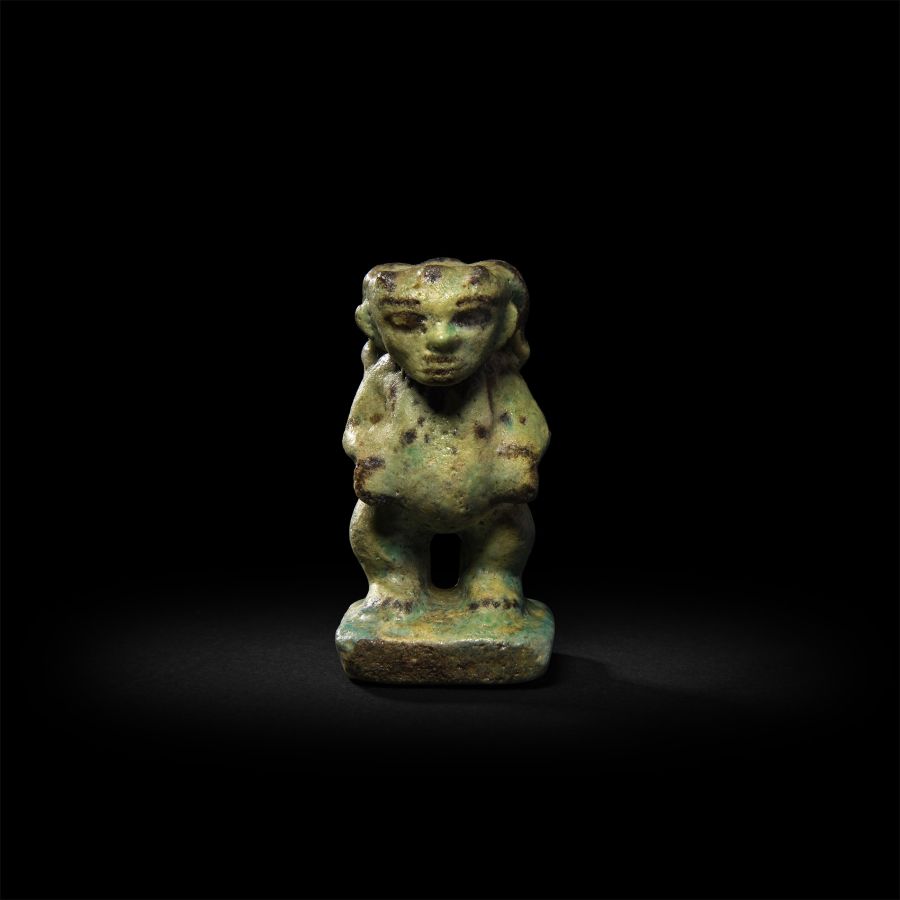
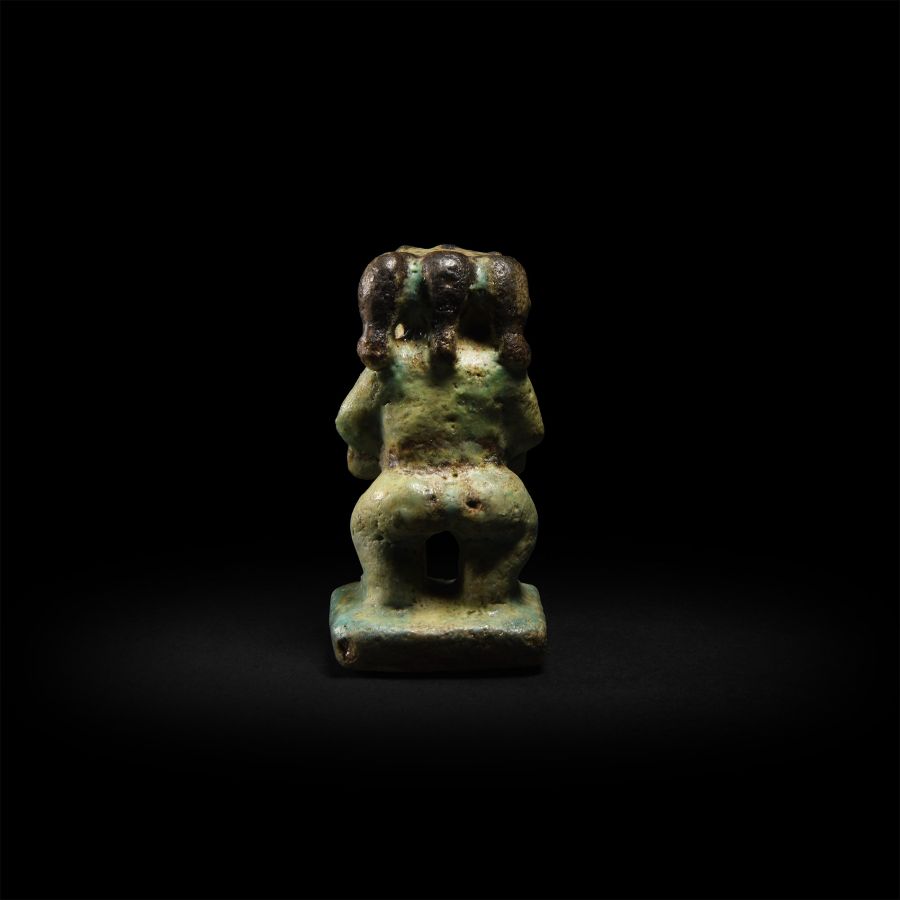
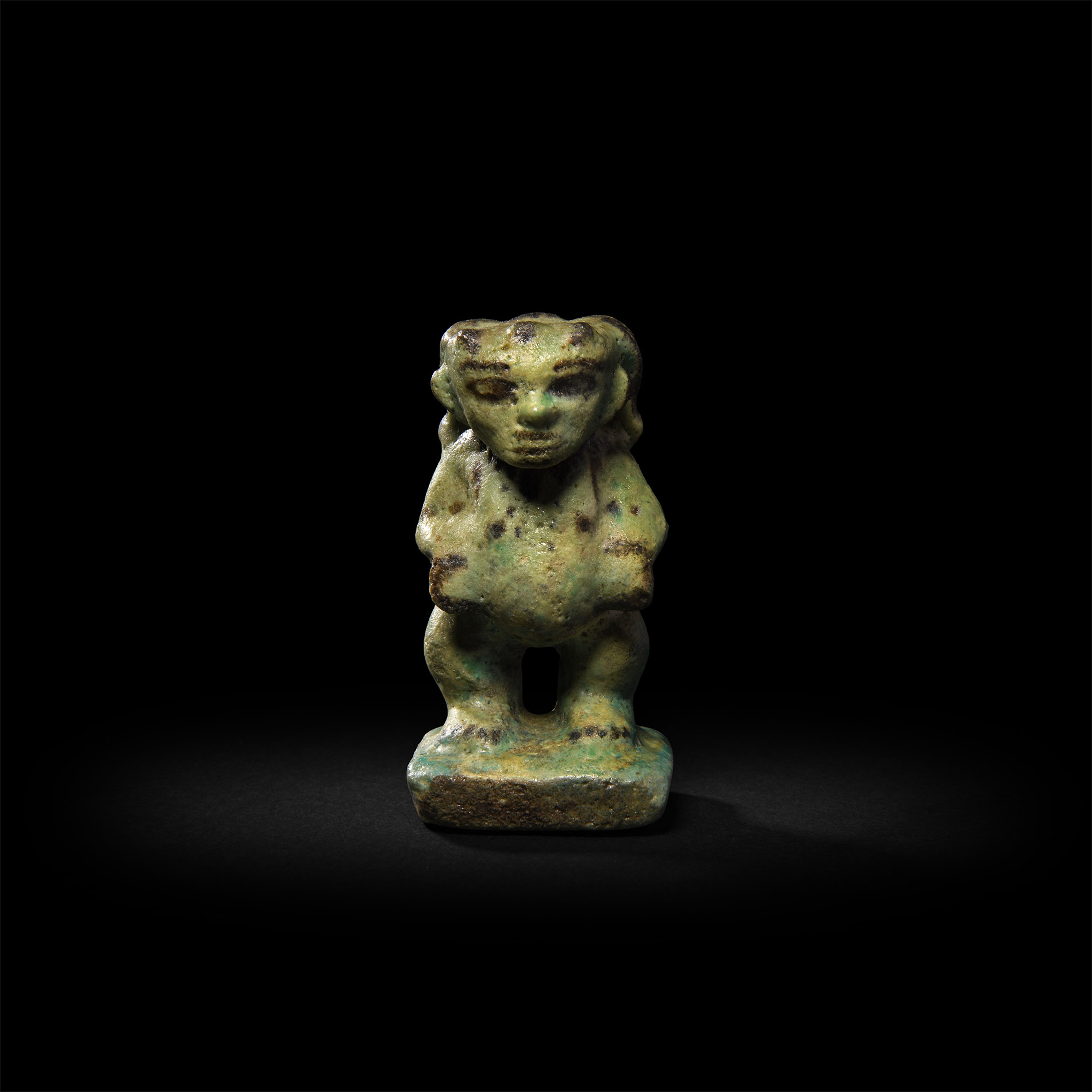
Egyptian Female Dwarf Statuette
MIDDLE KINGDOM, LATE 12TH-13TH DYNASTY, CIRCA 1878-1750 B.C.
2 5/8 in. (50 grams, 66 mm high).
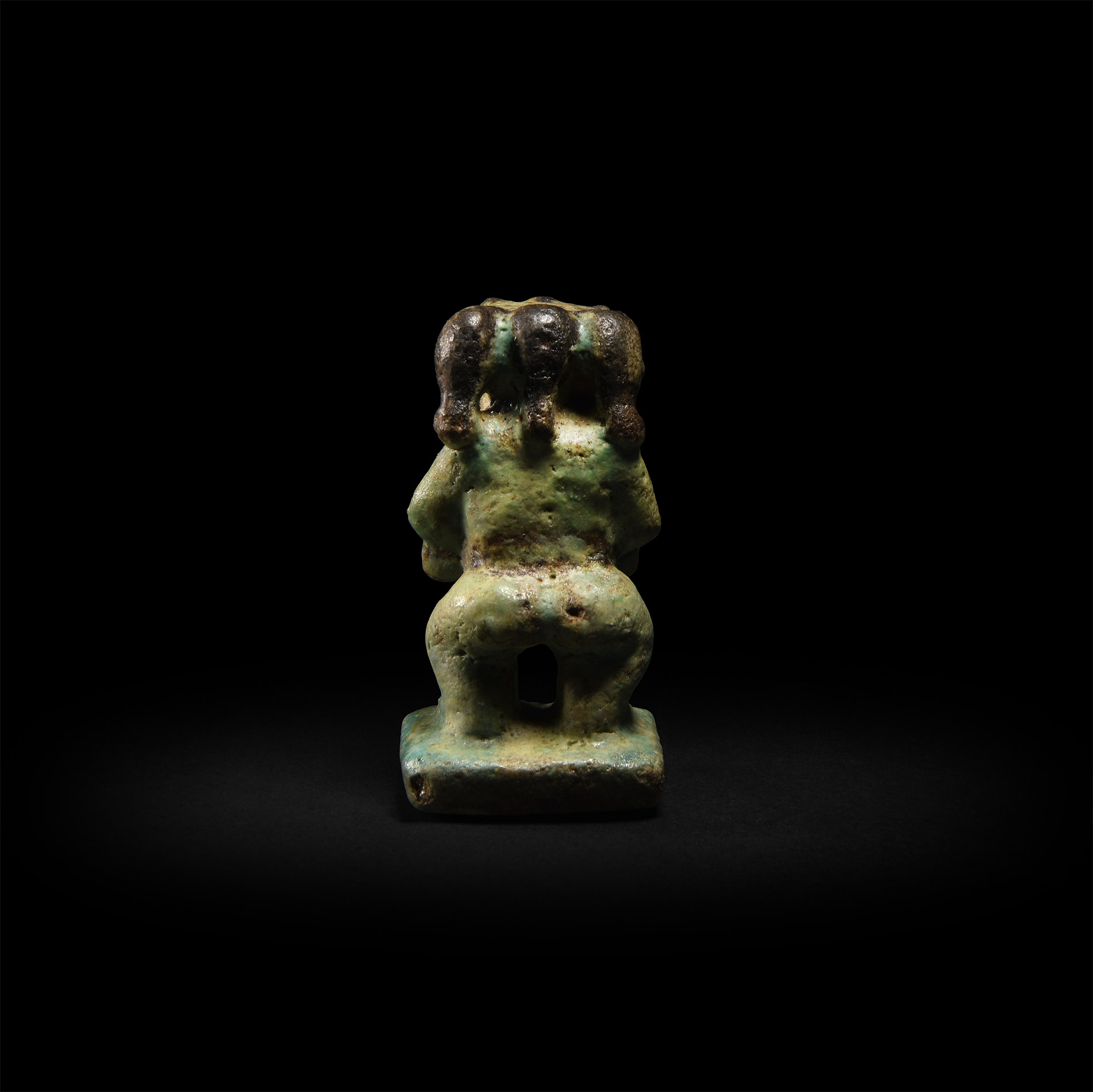
A figurine in blue-green faience depicting a human female displaying traits of achondroplasia, with a disproportionate body, protruding abdomen, prominent buttocks, and shortened limbs; the large and exaggeratedly flattened head sports a distinctive hairstyle consisting of three ‘bunches’ on the front and three long braids at the back; the shaven top of the head is indicated by stippling; the figure wearing a long, single-strand shell necklace, armlets, and a girdle, all indicated in black pigment, as are the facial details, hair colour, pubic triangle, fingernails, and toenails.
ProvenanceAcquired from Dr Jan Beekmans, circa 1985.
UK private collection.
Accompanied by an academic report by Egyptologist Paul Whelan.
This lot has been checked against the Interpol Database of stolen works of art and is accompanied by search certificate no.11594-198343.
Cf. The Metropolitan Museum, New York, accession number 1972.48, for a similar figure; cf. Bourriau, J., Pharaohs And Mortals, Egyptian art in the Middle Kingdom, CUP, 1988, pp.121-122, for discussion and female dwarf figures; for a detailed discussion of the three-braid hairstyle see Tooley, A.M.J., Notes on Type 1 Truncated Figurines. Part 2. Hairstyles and the Conceptual Development of Braided Forms, SAK 49, 2020, pp.243-274 and pl. 27.
FootnotesThis figurine belongs to a rare sub-type in a category of anthropomorphic figures produced during the late 12th-13th Dynasty. The category comprises around 200 figurines which include truncated-leg females, ‘grotesque’ human forms, and those displaying more distinct traits of achondroplasia, such as can be observed in this figurine. Very few examples of this particular sub-type are known, of which only one in the Metropolitan Museum of Art, New York provides a close parallel in terms of overall styling and form with this figurine.
The purpose of this figurine is not fully understood, but other types of female representations in the large corpus of Middle Kingdom faience figurines are now considered to have embodied generative and regenerative power for their owners. This figurine shares the same distinctive three-braid hairstyle and the necklace, armlets, and girdle body adornments found on some. Body adornments of this kind also occur on wooden
‘paddle doll’ female figurines which are considered to have some connection with khener-dancers, who performed in royal, temple and funerary spheres. Since, in funeral contexts, ritual dances were often performed by dwarfs, a further connection can possibly be made between the role of khener-dancers and this figurine. The performance of such dancers in royal or funerary contexts was considered to bring the power of regeneration and potency to the recipient.
TimeLine Auctions follows a vetting process to ensure the authenticity and legality of all items, reinforcing our commitment to integrity and responsible trading. Each antiquity, antique, and coin lot undergoes thorough examination by a vetting committee of at least ten external specialists, professional trade association members, scientists, and archaeologists: Our Vetting Process
AUCTIONS:
TimeLine is a leading auction house specialising in antiquities, ancient art, collectables, natural history, coins, medals, and books. Our auctions offer museums, collectors, historians, and enthusiasts the opportunity to acquire unique and historically significant pieces.
-
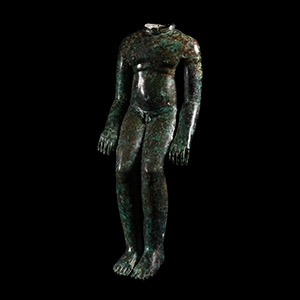
Large Egyptian Body of Horus-Harpocrates
Ptolemaic Period, 332-30 B.C.Estimate: £2,000 - 3,000 (+bp*)
Opening Bid: £1,000
An acephalic seated bronze nude statuette of Horus-Harpocrates, legs held together and arms by his side, semi-naturalistic anatomical detailing; cleaned. 993 grams, 22.5 cm high
Collection of Brugsch Pasha (1842-1930). with Hotel Drouot, Paris, 30 September 1997, lot 643. Ex property of Mr Naudy. Property of a French collector. This lot has been checked against the Interpol Database of stolen works of art and is accompanied by search certificate no.11601-198618. Accompanied by a scholarly note by Egyptologist Paul Whelan.
Horus, son of Isis and Osiris, was considered a solar deity who overcame darkness and defeated the chaotic forces of his evil uncle, the god Seth. Egyptian Pharaohs considered themselves to be reincarnations of Horus. In his youthful form, Horus the child embodies the new sun and all associated benefits. In Graeco-Roman Egypt he became Harpocrates, son of Serapis and Isis, the deity-symbol of rebirth and fertility, perhaps the most popular deity to be represented in Ptolemaic and Roman Egypt. -
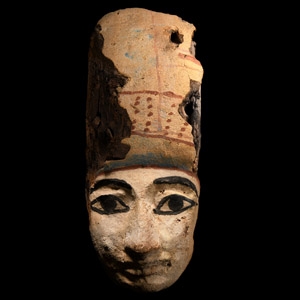
Egyptian Painted Wooden Mask
Late Period, 664-332 B.C.Estimate: £2,000 - 3,000 (‡+bp*)
Opening Bid: £1,000
A wooden mask with remains of polychrome painted detailing, depicting the large part of a face with eye detailing and remains of segmented headwear; old collection number 'E.352' and a later suspension loop to the reverse. 283 grams, 23.5 cm high
Ex Roger Liechti collection, Geneva, Switzerland. This lot has been checked against the Interpol Database of stolen works of art and is accompanied by search certificate no.11606-198998. -
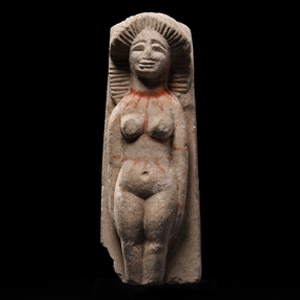
Egyptian Limestone Figure of Isis-Aphrodite
Ptolemaic-Roman Period, 332 B.C.-200 A.D.Sold for (Inc. bp): £483
A limestone figure modelled in the half-round, lying naked on a rectangular bed, executed with semi-naturalistic anatomical detailing, voluminous coiffed hair and painted necklace, armbands and distinctive ornamental girdle at the waist; accompanied by a custom-made display stand. 109 grams total, 11.5 cm including stand
Fine condition.
with Secret Eye Gallery, New York City, 1977. with Arte Primitivo, New York, USA, 8 October, 2003, lot 66. Private collection of Professor Kenneth Graham, London, UK. Accompanied by an original Arte Primitivo catalogue page. Accompanied by a scholarly note by Egyptologist Paul Whelan.
This syncretic figure combines the Egyptian goddess Isis and the Greek goddess Aphrodite, a deity popular from the 3rd century B.C. into the Roman Period, who embodied aspects of fertility, marriage, and childbirth.
