
Loading, please wait...
LOT 0523
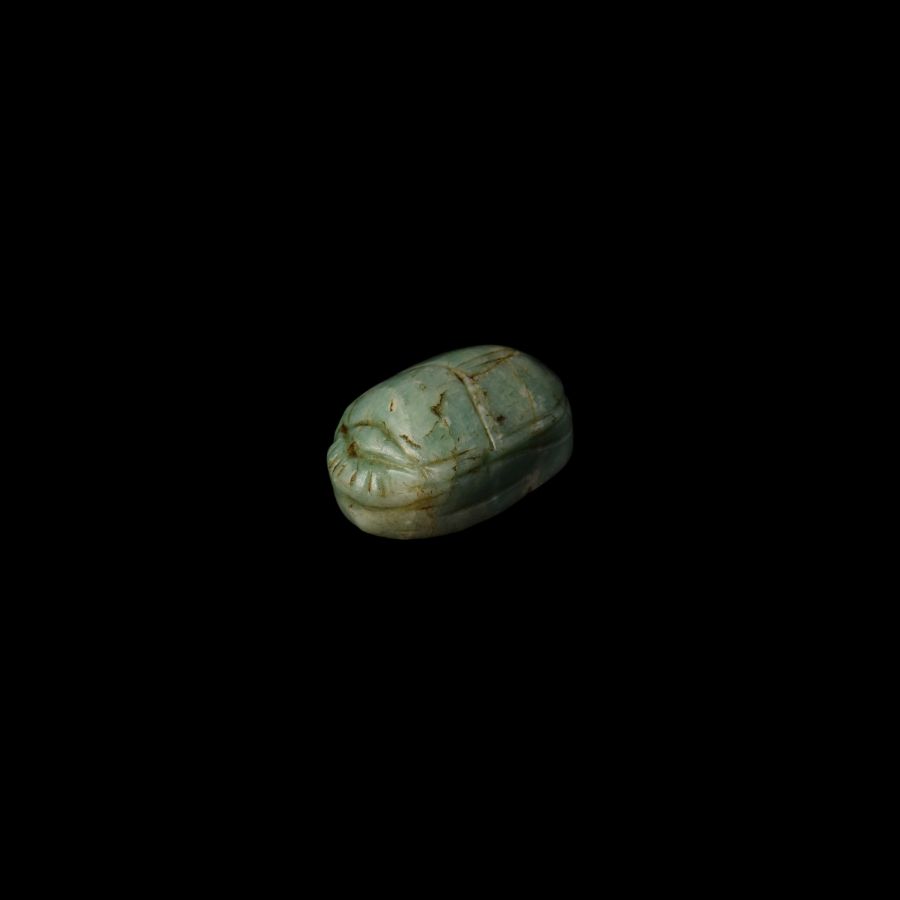
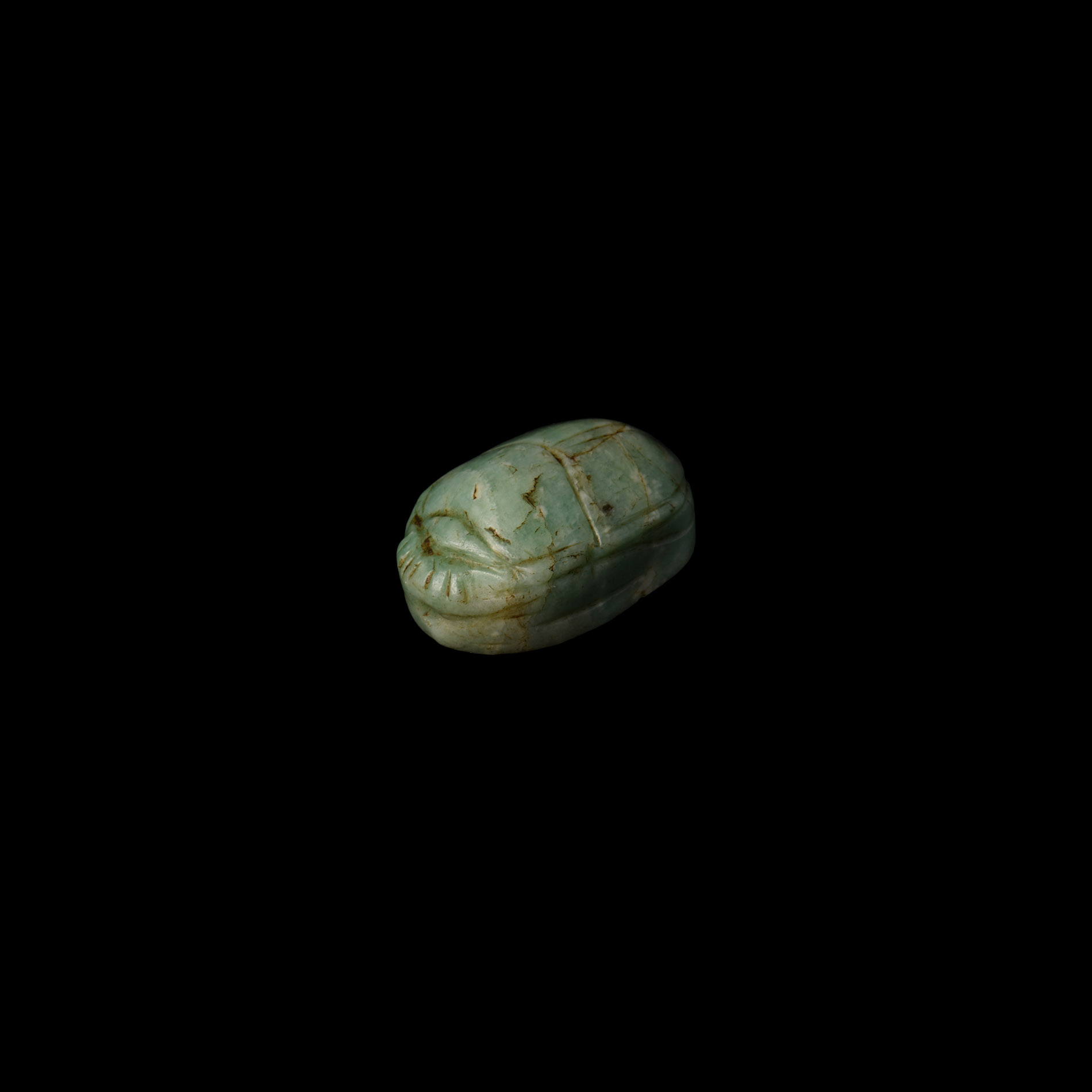
Egyptian Feldspar Scarab
NEW KINGDOM, 1550-1069 B.C.
7/8 in. (6.35 grams, 22 mm).
An amazonite feldspar scarab with simple detailing to the body and legs; drilled for suspension.
ProvenanceAcquired 1979-1999.
London collection of the late Mr S.M., thence by descent.
TimeLine Auctions follows a vetting process to ensure the authenticity and legality of all items, reinforcing our commitment to integrity and responsible trading. Each antiquity, antique, and coin lot undergoes thorough examination by a vetting committee of at least ten external specialists, professional trade association members, scientists, and archaeologists: Our Vetting Process
AUCTIONS:
TimeLine is a leading auction house specialising in antiquities, ancient art, collectables, natural history, coins, medals, and books. Our auctions offer museums, collectors, historians, and enthusiasts the opportunity to acquire unique and historically significant pieces.
-
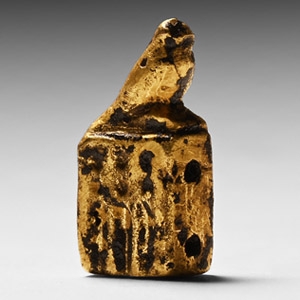
Egyptian Gold Horus Amulet
Late Dynastic Period, 664-343 B.C. or earlierEstimate: £350 - 450 (+bp*)
Opening Bid: £194
A gold amulet depicting the god Horus represented here as a falcon, surmounting the rectangular serekh, in turn considered to represent the façade of a royal palace; a pair of piercings through the base for suspension; remains of bitumen. 1.13 grams, 9 mm
Fine condition.
Early 20th century French collection. -
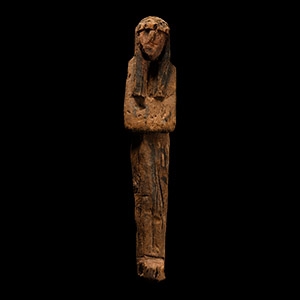
Egyptian Wooden Shabti
New Kingdom, 19th-20th Dynasty, circa 1315-1081 B.C.Sold for (Inc. bp): £286
A carved wood shabti figure modelled mummiform with arms folded across the chest and wearing a tripartite wig, painted detailing to the front and rear of the body; remains of polychrome pigmentation. 46 grams, 19 cm high
Acquired early 1990s. Ex private American collection; thence by descent. Private Swiss collection since 1998.
Many crude wooden shabtis of this type were found at Gurob and Sedment; they range from having minimal decoration and no inscription to being entirely painted and inscribed. -
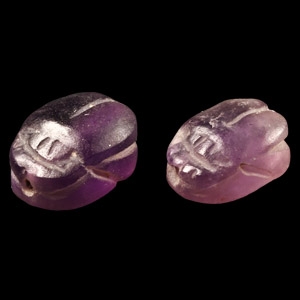
Egyptian Amethyst Scarab Group
Graeco-Roman Period, 332 B.C.-323 A.D.Sold for (Inc. bp): £338
A group of two amethyst scarabs pierced for suspension, each with simple detailing to the wings, head and legs. 1.12 grams total, 8-9 mm
Acquired 1980s. Private collection of L.H., Staffordshire, UK. Property of a Sussex, UK, teacher.
