
Loading, please wait...
LOT 0715
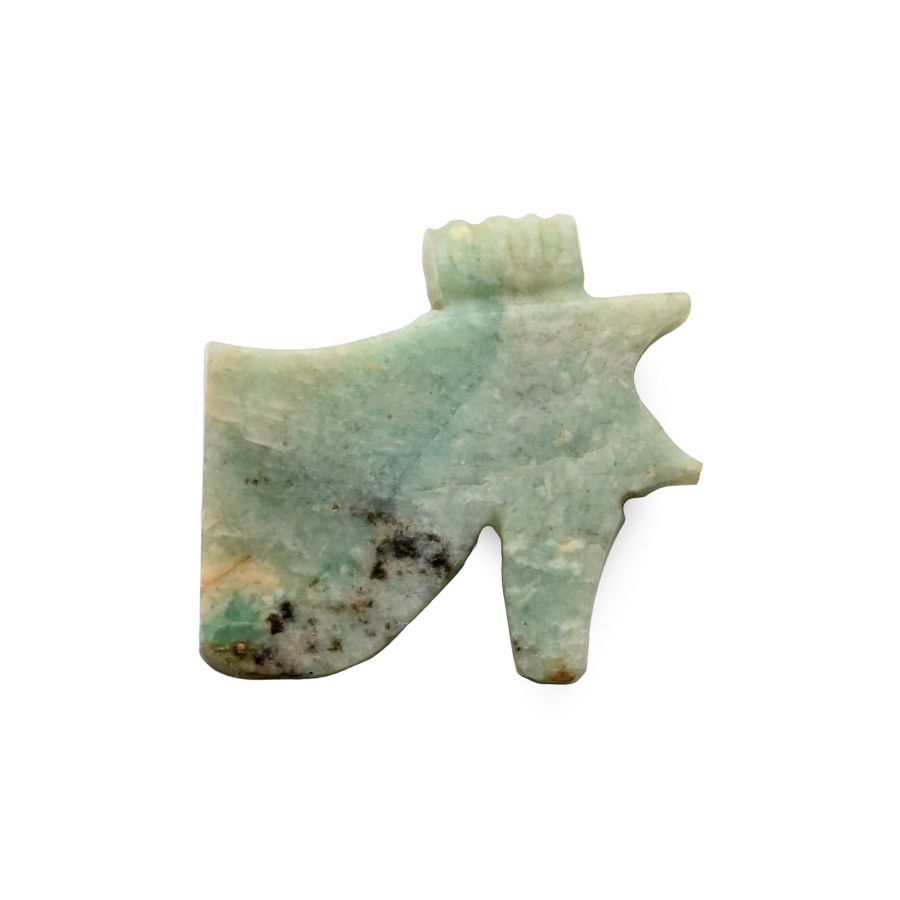
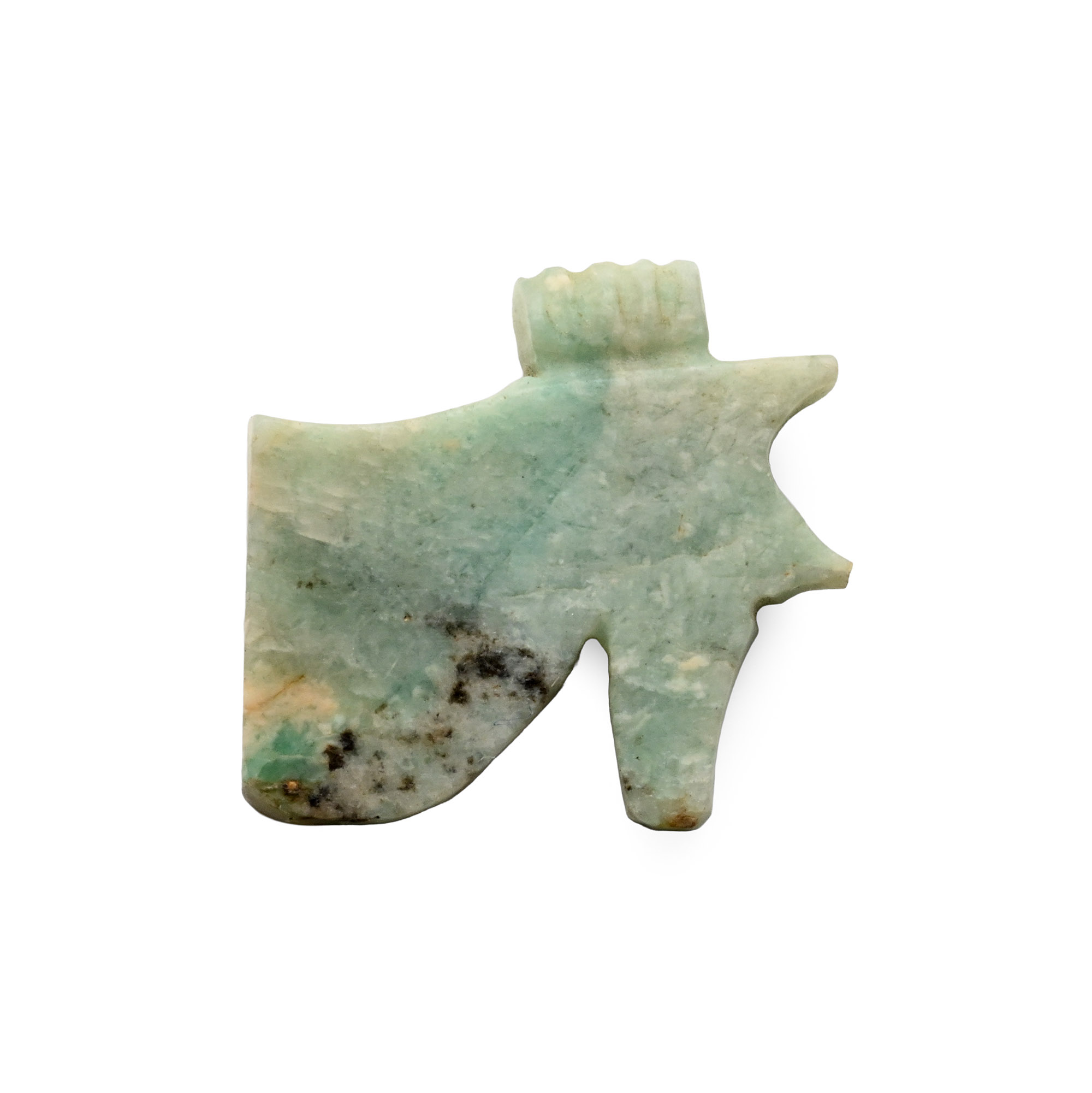
Egyptian Feldspar Eye of Horus Amulet
LATE PERIOD, 664-332 B.C.
5/8 in. (1.78 grams, 17 mm).
Carved from light-green feldspar, with a ribbed suspension loop above. [No Reserve]
ProvenanceLondon, UK, art market, 1980s.
Private collection, London, UK.
Cf. Tinius, I., Altägypten in Braunschweig. Die Sammlungen des Herzog Anton Ulrich-Museums und des Städtischen Museums, Wiesbaden, 2011, p.164, no. 316, for a similar plain green stone example.
CONDITIONTimeLine Auctions follows a vetting process to ensure the authenticity and legality of all items, reinforcing our commitment to integrity and responsible trading. Each antiquity, antique, and coin lot undergoes thorough examination by a vetting committee of at least ten external specialists, professional trade association members, scientists, and archaeologists: Our Vetting Process
AUCTIONS:
TimeLine is a leading auction house specialising in antiquities, ancient art, collectables, natural history, coins, medals, and books. Our auctions offer museums, collectors, historians, and enthusiasts the opportunity to acquire unique and historically significant pieces.
LOT 0715
Egyptian Feldspar Eye of Horus Amulet
Estimate £100 - 140€120 - 160 (for guidance only)$140 - 190 (for guidance only)
-
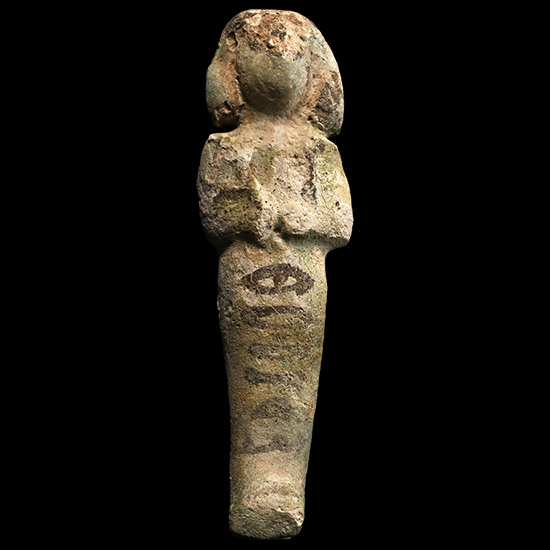
Egyptian Pale Blue Glazed Shabti
Third Intermediate Period, 22nd Dynasty, circa 945-715 B.C.Estimate: £120 - 170 (+bp*)
Bids: 1 | Current Bid: £5
Mummiform figure with a high-relief bag wig, a top sash band, facial details, tools, a seed bag, and hieroglyphs on the lower body, all rendered in black pigment. 40 grams, 10.8 cm
with a privately curated collection, 1980s-early 2000s. From the private collection and estate of Christine Simons (1943-2025), West Midlands, UK. -
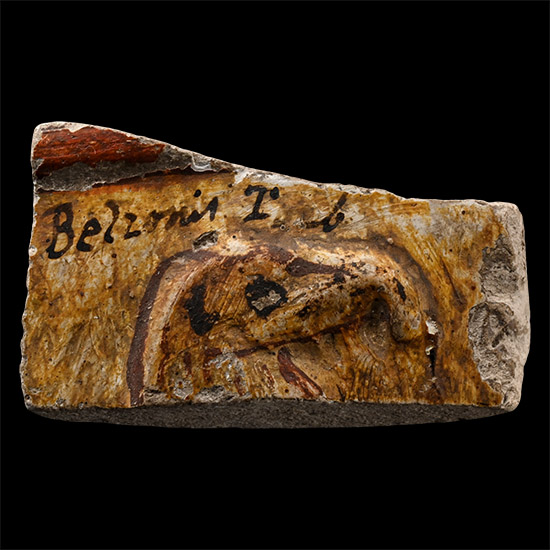
Egyptian Painted Limestone Fragment from the Tomb of Pharaoh Seti I
New Kingdom, 19th Dynasty, 1290-1279 B.C.Estimate: £100 - 140 (+bp*)
Bids: 2 | Current Bid: £20
Colourful, almost rectangular section of a wall fragment, with a slightly dished face, low-relief moulding with pigment, and 'Belzonis T[om]b' written at the top; accompanied by an old collector's label suggesting the likely findspot and other details. 15.3 grams, 44 mm
With a late 19th-early 20th century handwritten ticket attached. From the private collection of Peter Clayton, FCILIP, Dip, Arch, FSA, FRNS, Hemel Hempstead, Hertfordshire, UK; formed since the late 1950s.
The Italian explorer and antiquarian Giovanni Battista Belzoni uncovered the tomb of Seti I (KV 17) on October 16, 1817. This monumental tomb, with beautifully decorated walls, extended almost 140 metres underground through a series of descending corridors and chambers. In 1821, Belzoni opened a groundbreaking exhibition at the Egyptian Hall in Piccadilly, London, presenting a full-scale replica of the tomb. The paid public exhibition sparked massive 19th-century "Egyptomania" and introduced European audiences to ancient Egyptian art. Such was the renown of his discovery that it was often referred to as 'Belzoni's Tomb'. -
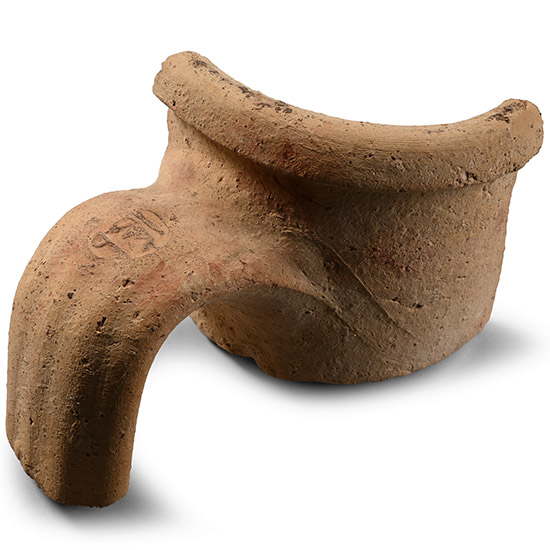
Romano-Egyptian Terracotta Amphora Handle with Stamp of Hermeros
Roman Period, 1st century A.D.Estimate: £50 - 70 (+bp*)
Bids: 1 | Current Bid: £5
Cream-coloured ceramic vessel fragment with rolled rim and ribbed strap handle; stamped at the apex with 'I EP' monogram, reading 'I EP[ΜΕΡΟΣ] = Hermeros. 272 grams, 14.2 cm
From the private collection of Peter Clayton, FCILIP, Dip, Arch, FSA, FRNS, Hemel Hempstead, Hertfordshire, UK; formed since the late 1950s.
The commercial stamp could report the name of an important Romano-Egyptian businessman, Hermeros, son of Athenion, attested at Koptos in A.D. 57. He describes himself as a merchant (εμπορος), originating from Adana (Arabia) and selling wine.
