
Loading, please wait...
LOT 0048
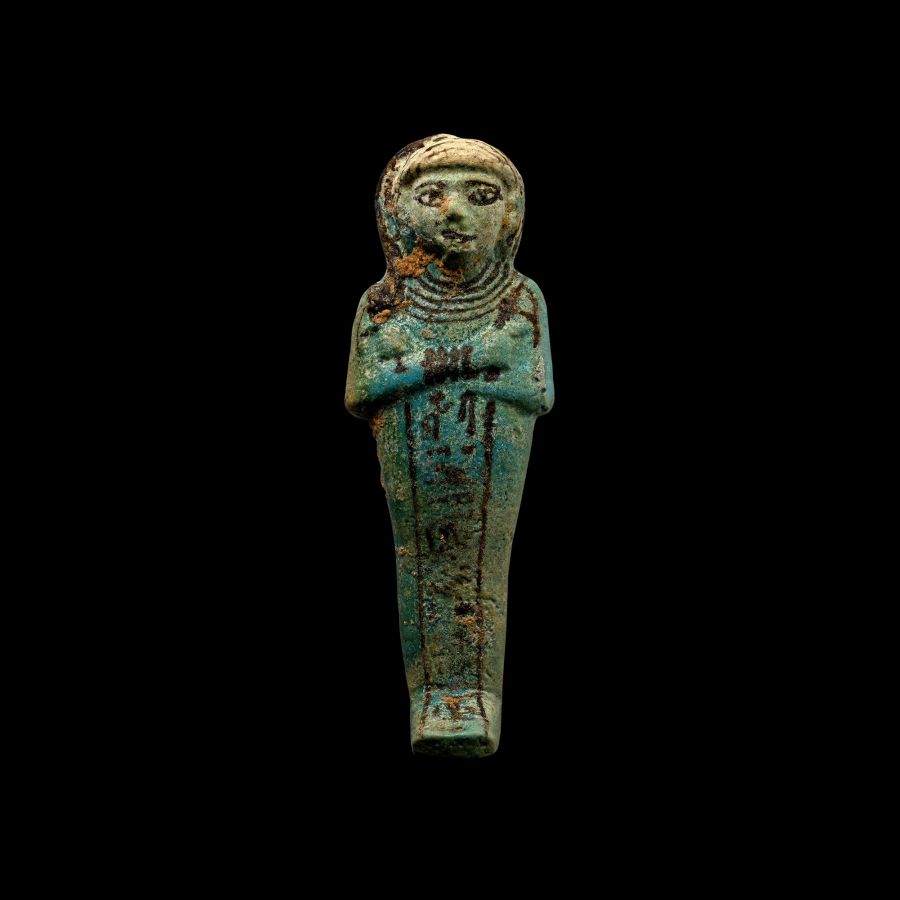
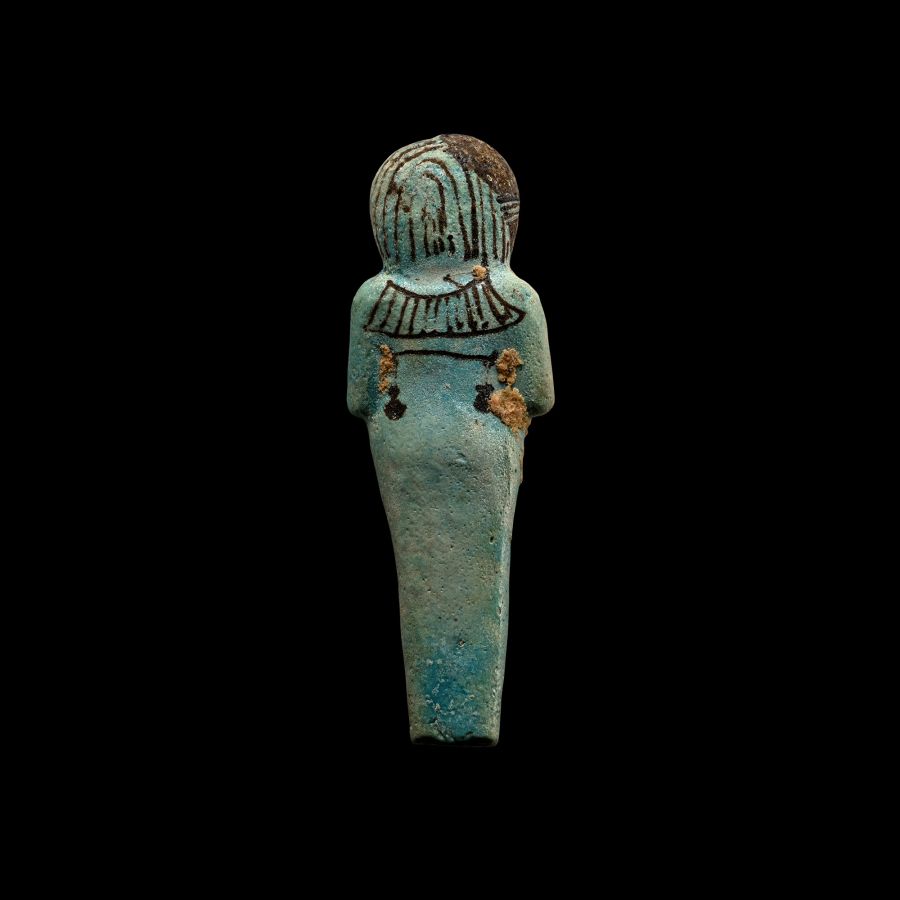
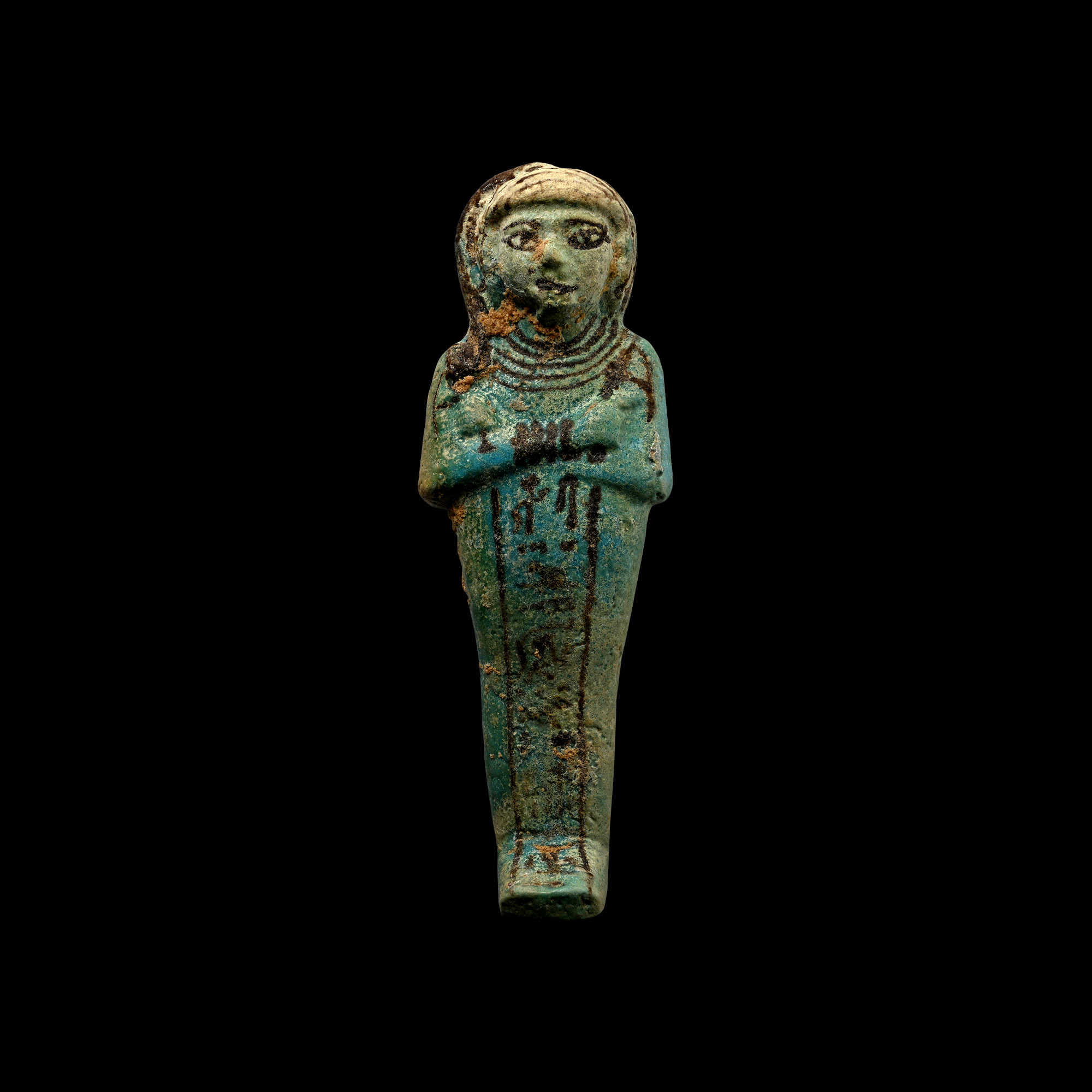
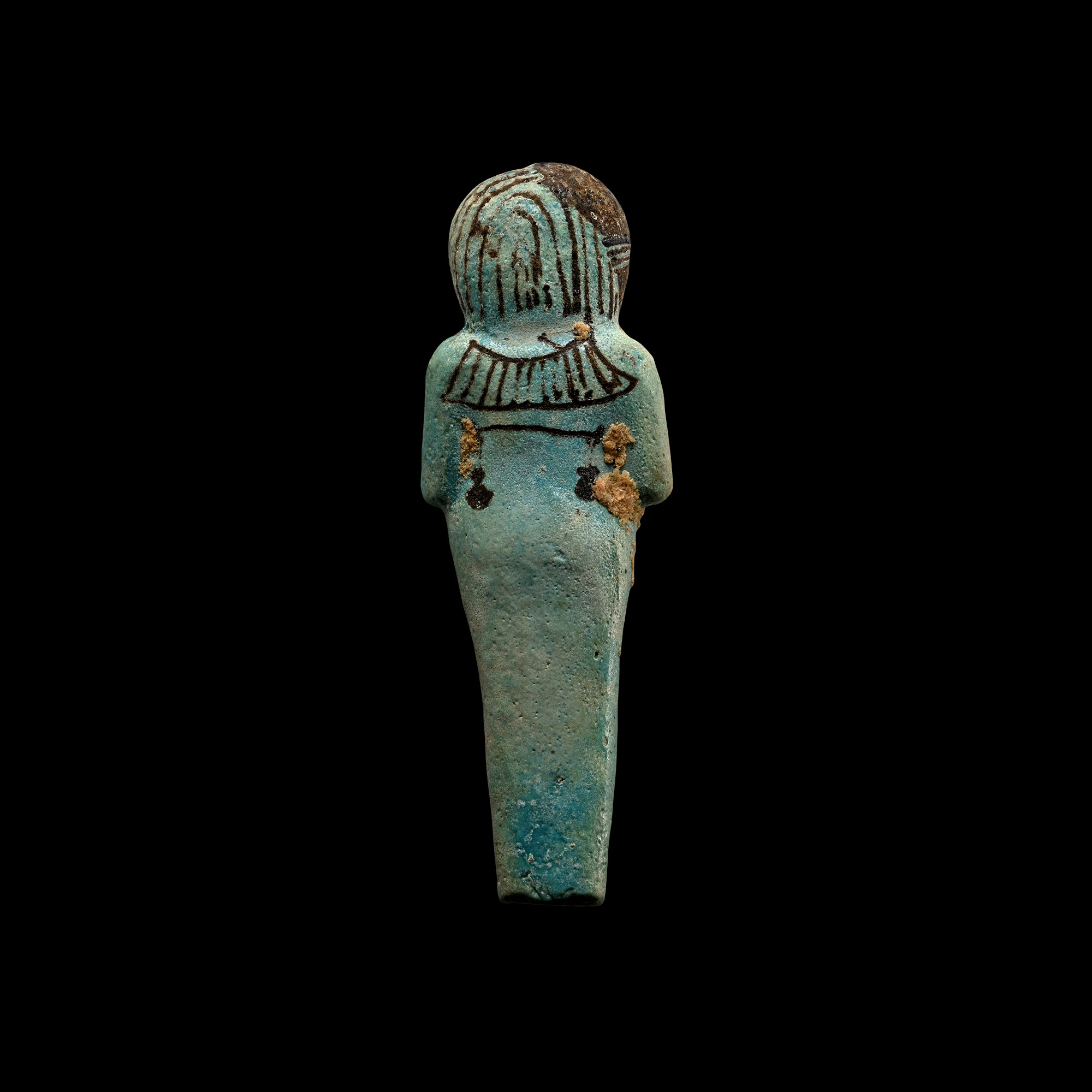
Egyptian Faience Ushabti
2ND MILLENNIUM B.C.
5 7/8 in. (134 grams, 15 cm).
Mummiform figure with black-pigment facial detailing, sidelock, tripartite wig, dorsal seed-net, tiered collar, and vertical panel of hieroglyphic text.
ProvenanceAcquired in the mid 1980s.
Private collection, Switzerland, thence by descent.
Private collection, since the late 1990s.
This lot has been checked against the Interpol Database of stolen works of art and is accompanied by a search certificate number no.12848-241648.
Cf. The Michael C. Carlos Museum, 2015.050.002-.005, for four shabtis of Hori, similar to the example here.
FootnotesA shabti (also known as ushabti or shawabti) is a small funerary figurine found in ancient Egyptian tombs, from around 2000 BCE to 30 BCE. Its main purpose was to act as a servant for the deceased in the afterlife, carrying out manual tasks like farming or irrigation as directed by the gods. Shabtis were frequently inscribed with a magical formula from the Book of the Dead to ensure they would animate when summoned.
CONDITIONTimeLine Auctions follows a vetting process to ensure the authenticity and legality of all items, reinforcing our commitment to integrity and responsible trading. Each antiquity, antique, and coin lot undergoes thorough examination by a vetting committee of at least ten external specialists, professional trade association members, scientists, and archaeologists: Our Vetting Process
AUCTIONS:
TimeLine is a leading auction house specialising in antiquities, ancient art, collectables, natural history, coins, medals, and books. Our auctions offer museums, collectors, historians, and enthusiasts the opportunity to acquire unique and historically significant pieces.
-
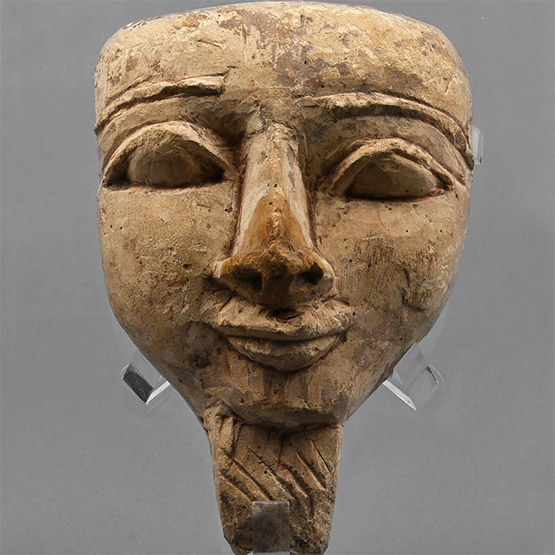
Phoenician Limestone Funerary Mask
Circa 4th-3rd century B.C.Sold for (Inc. bp): £1,950
Carved in the half-round with tall nose and chin with false beard dua wer, full lips and wide cheeks, stylised eyes and asymmetrical eyebrows; mounted on a custom-made stand. 1.3 kg total, 19.7 cm including stand
Private collection, Europe. Acquired on the French art market. -
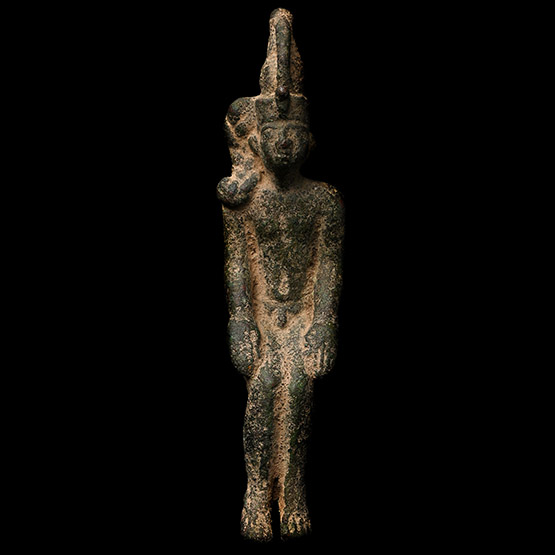
Egyptian Bronze Seated Harpocrates
Late Period, 664-332 B.C.Estimate: £900 - 1,200 (+bp*)
Opening Bid: £475
Substantial cast figurine modelled in the round of Harpocrates sitting with hands on his thighs, double crown and sidelock. 389 grams, 16.2 cm
From the collection of a gentleman, acquired on the London art market in the 1990s.
Harpocrates is the Greek rendering of the Egyptian Hor-pa-khered, which means ‘Horus the Child’. This name refers to Horus as the divine infant of Isis and Osiris. Wearing an amulet of Harpocrates was believed to give the wearer the same protection that Isis offered to her beloved son. Larger bronze statuettes probably served as votive offerings to Harpocrates to secure his favour and protection. -
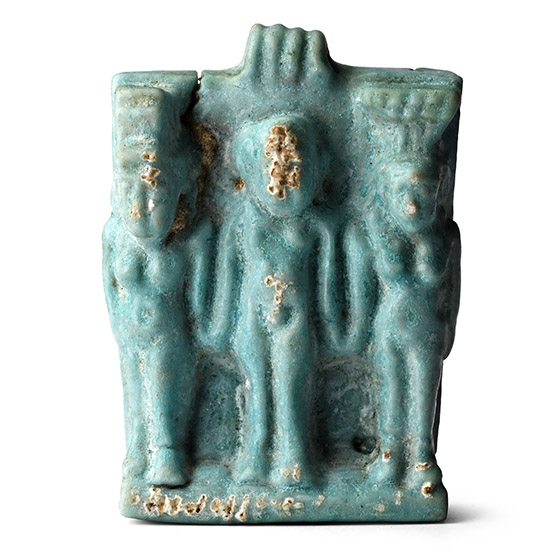
Egyptian Faience Triad Amulet
Late Period, 664-332 B.C.Estimate: £400 - 600 (+bp*)
Opening Bid: £222
Depicting in high relief the Osirian triad (Isis, Horus, Nephthys) standing side by side on an integral plinth against a dorsal pillar; Nephthys (right) and Isis (left) are shown frontally, wearing headdresses with their specific attributes, each holding the hands of the central Horus figure, shown naked and with the side-lock of youth; a ribbed loop at the top for suspension. 8.56 grams, 33 mm
From the collection of a Swedish noble family, 1920s.
Isis and Nephthys operate as complementary sister deities who guard both Osiris and the deceased through mourning, magical protection, and ritual lamentation, while Horus, the child of Isis, signifies renewal and legitimate kingship. On amulets, the triad translates into a compact visual statement of protection: the deceased is imagined as being held within the sisters’ magical and ritual care, while Horus embodies the successful outcome of that protection in the form of rebirth and continuity.
