
Loading, please wait...
LOT 0012
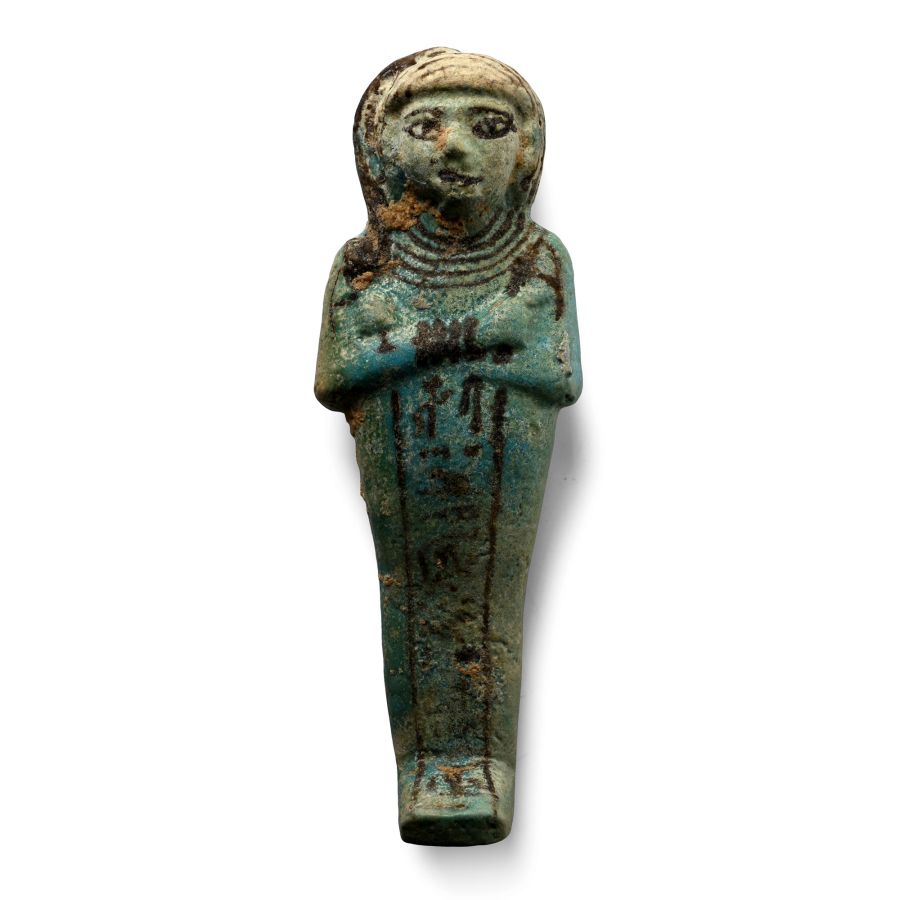
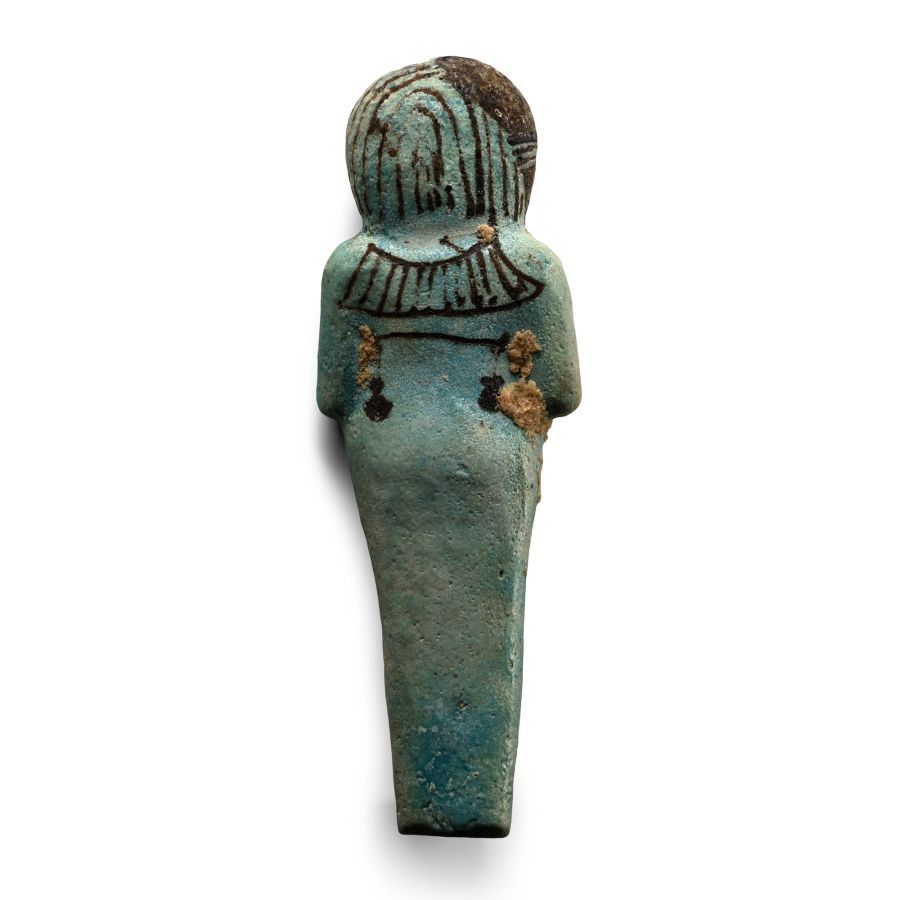
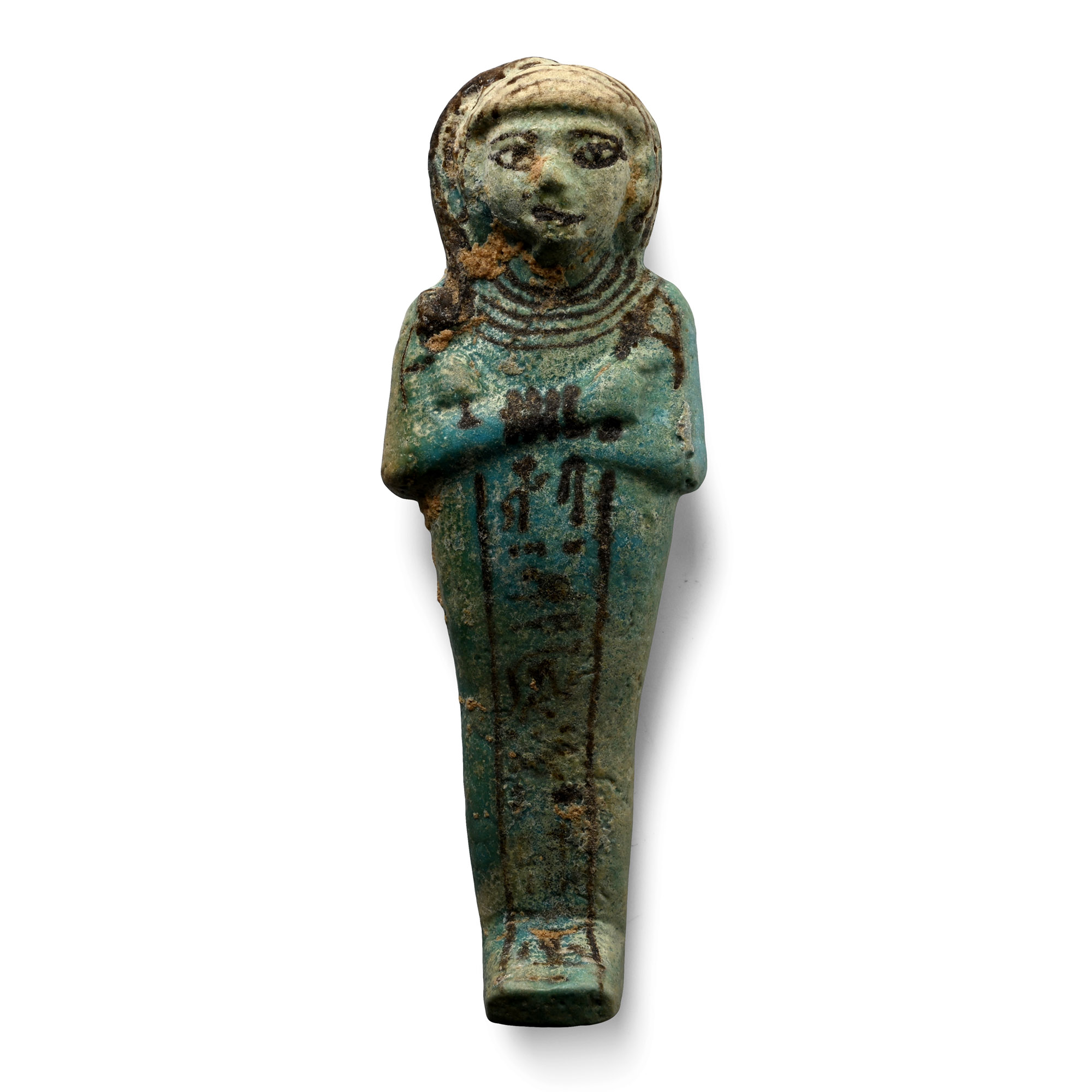
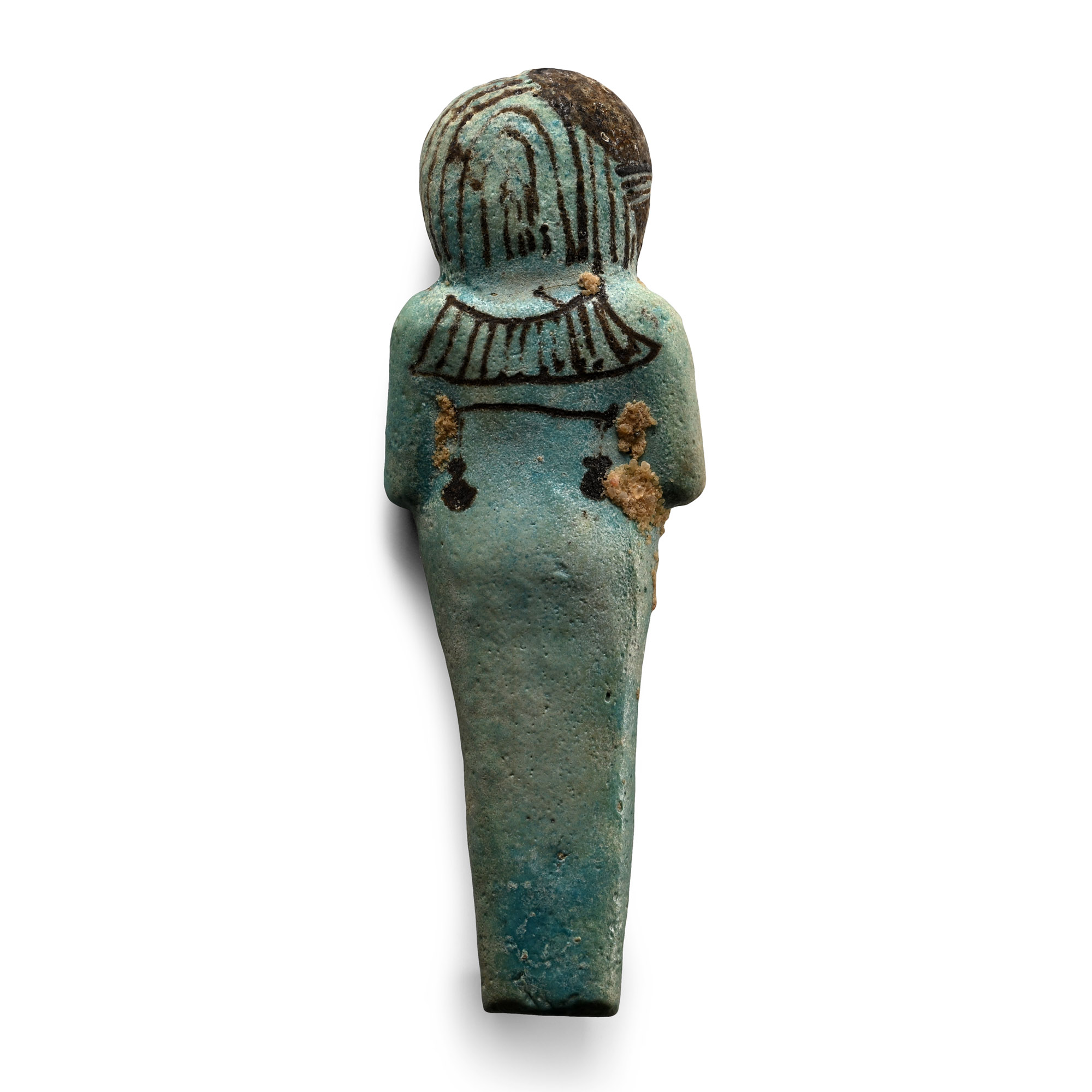
Egyptian Faience Ushabti
2ND MILLENNIUM B.C.
5 7/8 in. (134 grams, 15 cm).
Mummiform figure with black-pigment facial detailing, sidelock, tripartite wig, dorsal seed-net, tiered collar and vertical panel of hieroglyphic text.
ProvenanceAcquired in the mid 1980s.
Private collection, Switzerland, thence by descent.
Private collection, since the late 1990s
This lot has been checked against the Interpol Database of stolen works of art and is accompanied by a search certificate number no.12848-241648.
This lot has been cleared against the Art Loss Register database, and is accompanied by an illustrated lot declaration signed by the Head of the Antiquities Department, Dr Raffaele D'Amato.
Cf. The Michael C. Carlos Museum, 2015.050.002-.005, for four shabtis of Hori, similar to the example here.
CONDITIONTimeLine Auctions follows a vetting process to ensure the authenticity and legality of all items, reinforcing our commitment to integrity and responsible trading. Each antiquity, antique, and coin lot undergoes thorough examination by a vetting committee of at least ten external specialists, professional trade association members, scientists, and archaeologists: Our Vetting Process
AUCTIONS:
TimeLine is a leading auction house specialising in antiquities, ancient art, collectables, natural history, coins, medals, and books. Our auctions offer museums, collectors, historians, and enthusiasts the opportunity to acquire unique and historically significant pieces.
LOT 0012
Egyptian Faience Ushabti
Estimate £2,000 - 3,000€2,320 - 3,480 (for guidance only)$2,700 - 4,050 (for guidance only)
-
Egyptian Heart Scarab Group
Late Period, 664-332 B.C.Estimate: £150 - 200 (+bp*)
Opening Bid: £75
Comprising two scarabs with striated wing cases and ribbed underside. 7.5 grams total, 18-20 mm
From the collection of a gentleman, acquired on the London art market in the 1990s. This lot is accompanied by an illustrated lot declaration signed by the Head of the Antiquities Department, Dr Raffaele D'Amato.
The scarab amulet was a powerful symbol of rebirth, transformation, and protection in ancient Egypt. Modelled after the beetle linked to the sun god Khepri, it represented the cycle of life and regeneration. Used from the Middle Kingdom (c. 2050 BCE) onwards, scarabs served as funerary amulets, personal charms, and seals—often inscribed with prayers or names—reflecting both spiritual beliefs and daily life. -
Historic Collection of 969 Slides of Archaeological Sites in Egypt
1960s-1980s A.D.Sold for (Inc. bp): £845
Housed in five linen-covered boxes, covering Dendereh, Karnak, Valley of the Kings, Seti I, Medinewt Habu, Luxor, Saqqara etc. 4.52 kg total, 26.5 x 16.5 x 6.5 cm each box
Property of archaeologist Stephanie Gee, N.W. London, UK, 1960s-1980s. This lot is accompanied by an illustrated lot declaration signed by the Head of the Antiquities Department, Dr Raffaele D'Amato.
Stephanie Gee was a prominent archaeologist who took part in several expeditions in Egypt. She was a trusted assistant to the British-Australian archaeologist Veronica Seton-Williams, who excavated in Egypt, Britain, and the Near East. Stephanie also took part in the Tell El-Farâ'în expeditions of 1965-1968, and assisted Seton-Williams with preparing the 1966 expedition report. Their collaboration continued and Stephanie helped with the manuscript of Seton-Williams’ book ‘The Road to El-Aguzein’, a narrative account of her life that was first published in 1988. -
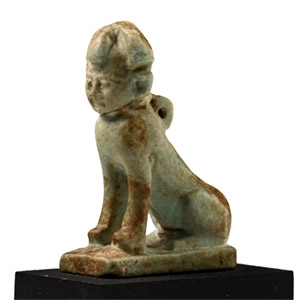
Egyptian Green Glazed Faience Amulet of a Seated Sphinx
Kushite Kingdom, 25th Dynasty, circa 747-656 B.C.Sold for (Inc. bp): £910
Figure of a sphinx in seated pose on a tongue-shaped base, with loop between the shoulders and Nubian hairstyle. 17.48 grams total, 51 mm including stand
with Charles Ede Ltd, London, UK. Private collection, London, UK, acquired from the above on 28 April 1994. Accompanied by a copy of the Charles Ede invoice. This lot is accompanied by an illustrated lot declaration signed by the Head of the Antiquities Department, Dr Raffaele D'Amato.
The 'Nubian' hairstyle was worn by young women in connection with birth, nursing babies and applying cosmetics.
