
Loading, please wait...
LOT 0452
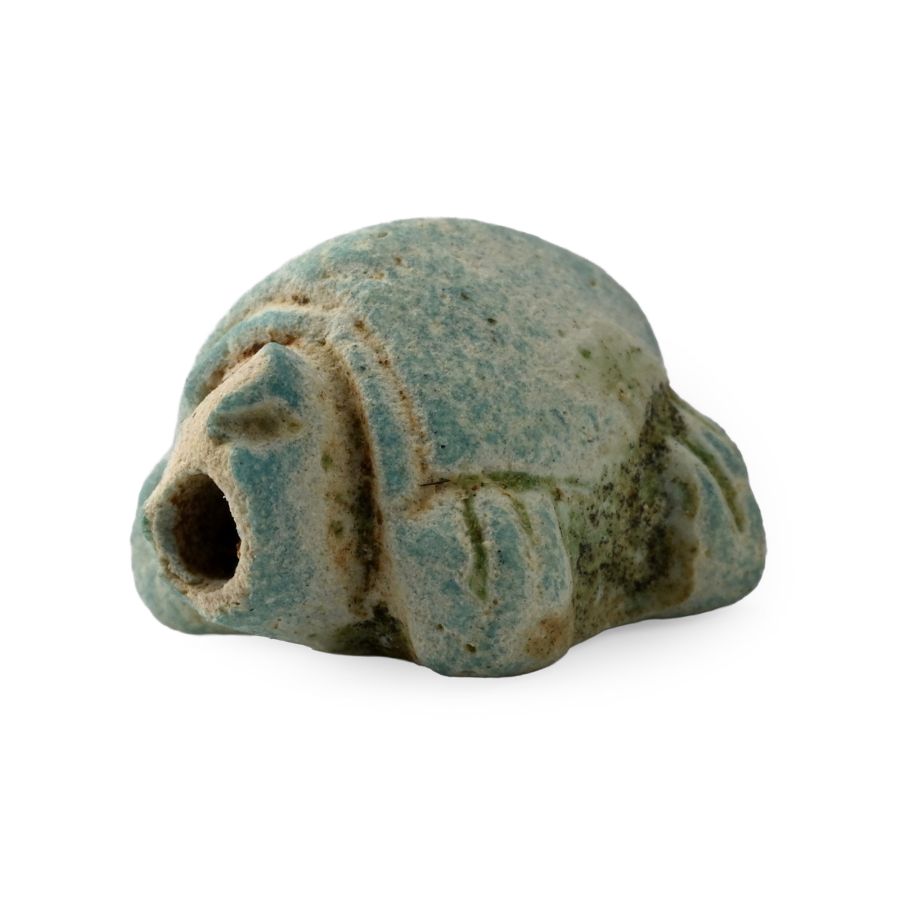
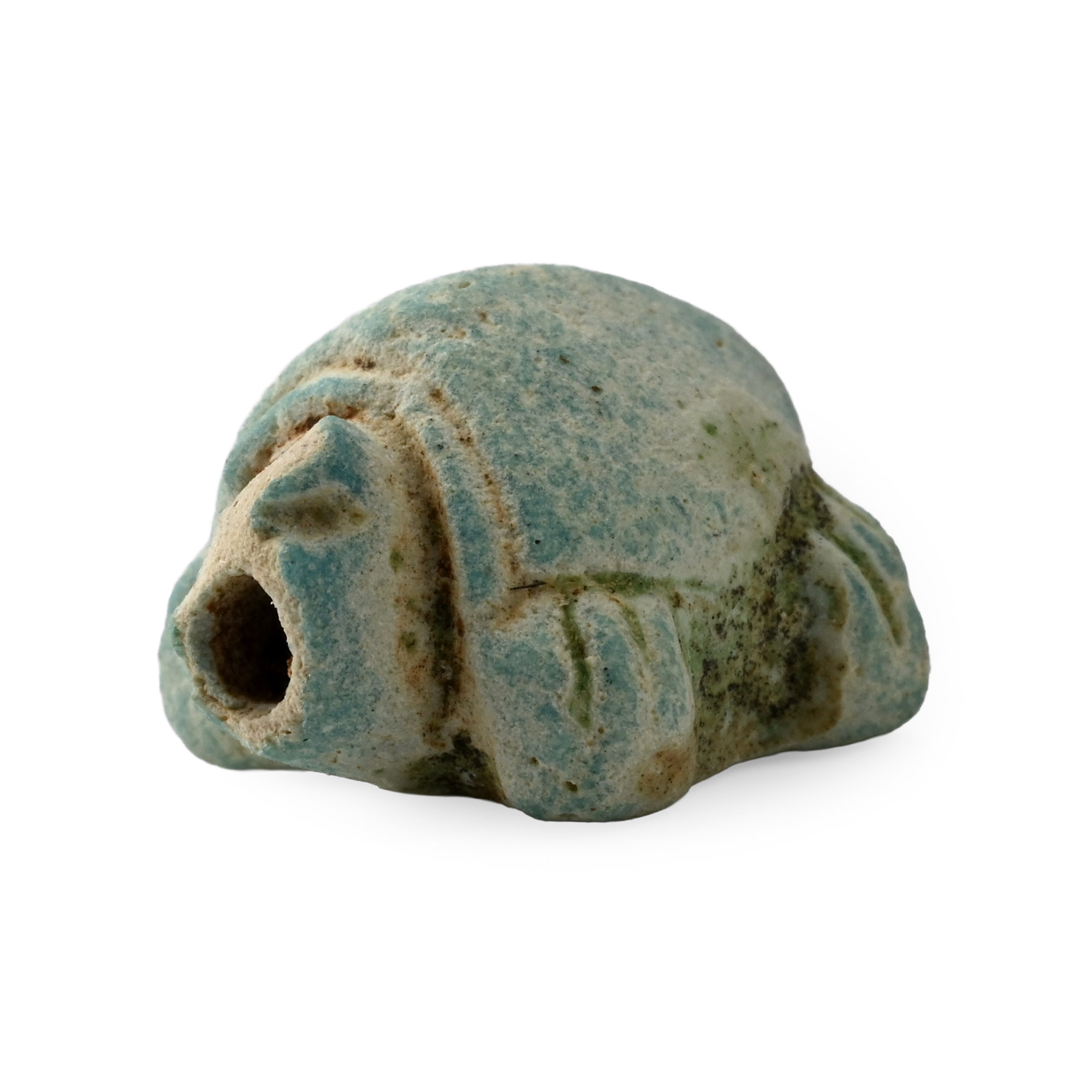
Egyptian Faience Turtle Amulet
LATE PERIOD, 664-332 B.C.
1/2 in. (0.76 grams, 11 mm).
Blue glazed turtle amulet or bead with flat base and incised lines to each leg, pierced for suspension.
ProvenanceFrom an early 20th century collection.
This lot is accompanied by an illustrated lot declaration signed by the Head of the Antiquities Department, Dr Raffaele D'Amato.
Turtle amulets have a rich history in ancient Egypt. The turtle was considered to possess a dual character. On one hand, it lived in the dark depths, embodying cosmic danger and was ritually annihilated. On the other hand, its power could be harnessed to ward off evil and work to the advantage of people, making turtle amulets a potent symbol of protection.
CONDITIONTimeLine Auctions follows a vetting process to ensure the authenticity and legality of all items, reinforcing our commitment to integrity and responsible trading. Each antiquity, antique, and coin lot undergoes thorough examination by a vetting committee of at least ten external specialists, professional trade association members, scientists, and archaeologists: Our Vetting Process
AUCTIONS:
TimeLine is a leading auction house specialising in antiquities, ancient art, collectables, natural history, coins, medals, and books. Our auctions offer museums, collectors, historians, and enthusiasts the opportunity to acquire unique and historically significant pieces.
-
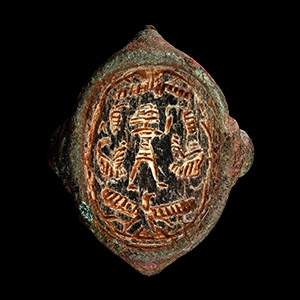
Phoenician Scarab in Bronze Pendant
6th-4th century B.C.Sold for (Inc. bp): £351
With integral loop and flanking uraei, underside features reserved depictions of a winged sun disc, with central human or divine figure below flanked by uraei and quadrupeds, and a vulture with outspread wings beneath; accompanied by a museum-quality impression. 9.06 grams, 22 mm
Ex London, UK, gentleman 1980-2000s. This lot is accompanied by an illustrated lot declaration signed by the Head of the Antiquities Department, Dr Raffaele D'Amato. -
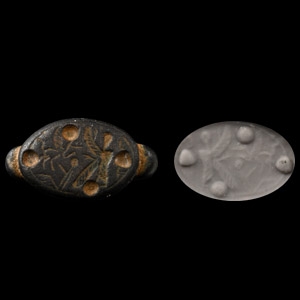
Phoenician Bronze Scarab Pendant
6th-4th century B.C.Estimate: £250 - 350 (+bp*)
Opening Bid: £125
With suspension loop and frame, intaglio figural scene including stylised birds and winged scarabs, with recesses; with museum-quality impression. 13.5 grams, 23 mm
Ex London, UK, gentleman 1980-2000s. This lot is accompanied by an illustrated lot declaration signed by the Head of the Antiquities Department, Dr Raffaele D'Amato. -
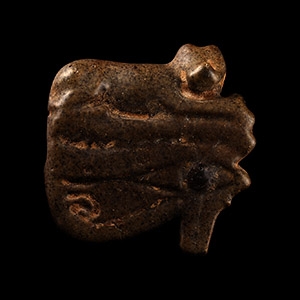
Egyptian Hardstone Eye of Horus with Recumbent Lion
Late Period, 664-332 B.C.Estimate: £300 - 400 (+bp*)
Opening Bid: £150
Wedjat-eye amulet with reclining lioness to the top, pierced for suspension. 6.79 grams, 29 mm
From an early 20th century collection. Ex London, UK, gallery. This lot is accompanied by an illustrated lot declaration signed by the Head of the Antiquities Department, Dr Raffaele D'Amato.
The wedjat-eye and lioness are potent, often intertwined symbols in ancient Egyptian mythology. The wedjat, representing Horus’s healed eye, signifies protection and healing, while the lioness—linked to the goddesses Sekhmet, Bastet, and Wadjet—embodies power and fierce defence as the “Eye of Ra”. Together in amulets, as in Egyptian art, they convey healing, protection, and strength. Sometimes the name of a specific goddess was inscribed on the back of the amulet, though here the recumbent lioness serves as the divine symbol.
