
Loading, please wait...

LOT 0436
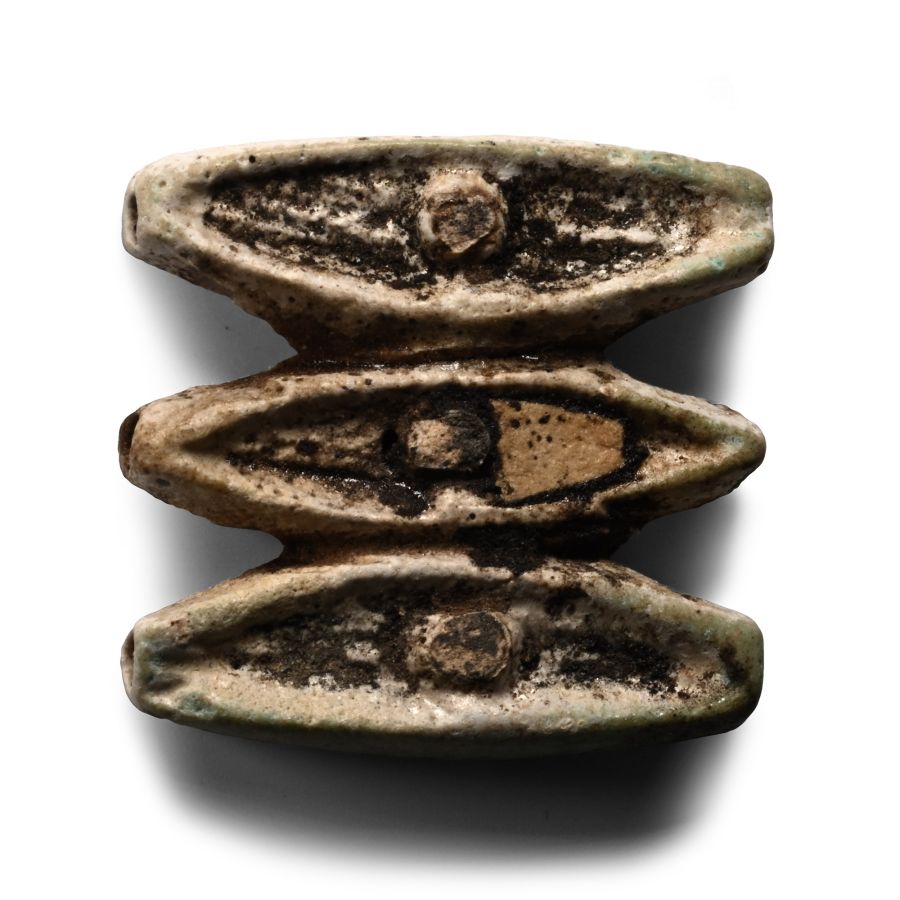
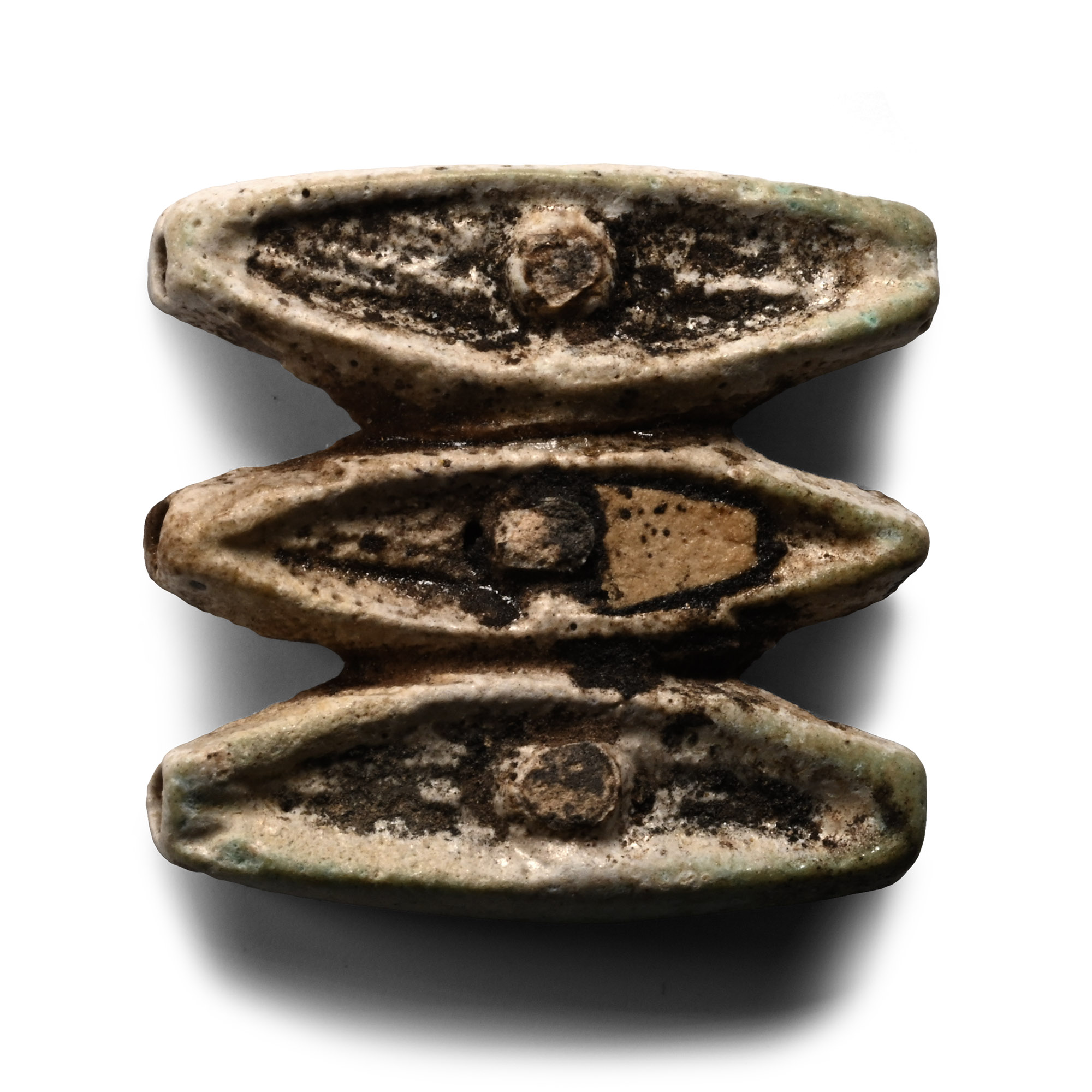
Egyptian Faience Triple Eye of Horus Amulet
THIRD INTERMEDIATE PERIOD, 1070-713 B.C.
1 1/8 in. (4.27 grams, 28 mm).
Amulet of a triple Eye of Horus, originally inlaid, pierced longitudinally for suspension. [No Reserve]
ProvenanceFrom an English deceased estate.
Previously with Den of Antiquity, Cambridgeshire, UK, with stock code L838-3.
Property of a Bristol, UK, gentleman.
Ex TimesAncient, Bristol, UK.
Accompanied by a copy of a previous catalogue entry, and a previous dealer's sales ticket.
This lot is accompanied by an illustrated lot declaration signed by the Head of the Antiquities Department, Dr Raffaele D’Amato.
Cf. Flinders Petrie, W.M., Amulets illustrated by the Egyptian Collection in University College, London, reprinted London, 1994, plate I.
FootnotesThe Eye of Horus was a powerful symbol of protection in Ancient Egypt, also known as the Wedjet (or Ujat, meaning 'Whole One') and the 'all seeing eye'. It was believed to have healing and protective power and was used as an amulet.
CONDITIONTimeLine Auctions follows a vetting process to ensure the authenticity and legality of all items, reinforcing our commitment to integrity and responsible trading. Each antiquity, antique, and coin lot undergoes thorough examination by a vetting committee of at least ten external specialists, professional trade association members, scientists, and archaeologists: Our Vetting Process
AUCTIONS:
TimeLine is a leading auction house specialising in antiquities, ancient art, collectables, natural history, coins, medals, and books. Our auctions offer museums, collectors, historians, and enthusiasts the opportunity to acquire unique and historically significant pieces.
-

Egyptian Faience Beads and Other Fragments
Late Period, 664-332 B.C.Sold for (Inc. bp): £91
Including seed and tubular beads, and other items. 35 grams total, 1-14 mm
From an old English collection. Acquired from Brigantia, York, 1990s. Ian Wilkinson collection, Nottinghamshire, UK, formed since 1985. This lot is accompanied by an illustrated lot declaration signed by the Head of the Antiquities Department, Dr Raffaele D’Amato. -
Egyptian Blue Glass Bead Bracelet
New Kingdom, circa 1400 B.C. or laterSold for (Inc. bp): £221
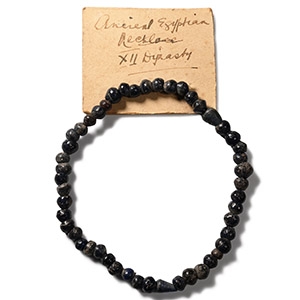
Mainly blue glass biconvex and spherical beads; with old collector's card erroneously dated 'Ancient Egyptian Necklace. XII Dynasty'. 18 grams, 24 cm long
From a 19th century English collection. Ex Helios Gallery, Worcestershire, UK, 2011. Ian Wilkinson collection, Nottinghamshire, UK, formed since 1985. Accompanied by an old handwritten identification card. This lot is accompanied by an illustrated lot declaration signed by the Head of the Antiquities Department, Dr Raffaele D’Amato. -
Faience Juglet
Parthian, 1st-2nd century A.D.Sold for (Inc. bp): £85
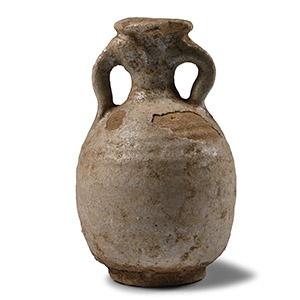
With barrel-shaped body. trumpet-shaped neck flanked by strap handles to the shoulder, horizontal ribbing. 106 grams, 10 cm
Acquired 1980-2015. Ex Abelita family collection. This lot is accompanied by an illustrated lot declaration signed by the Head of the Antiquities Department, Dr Raffaele D’Amato.
