
Loading, please wait...
LOT 0402
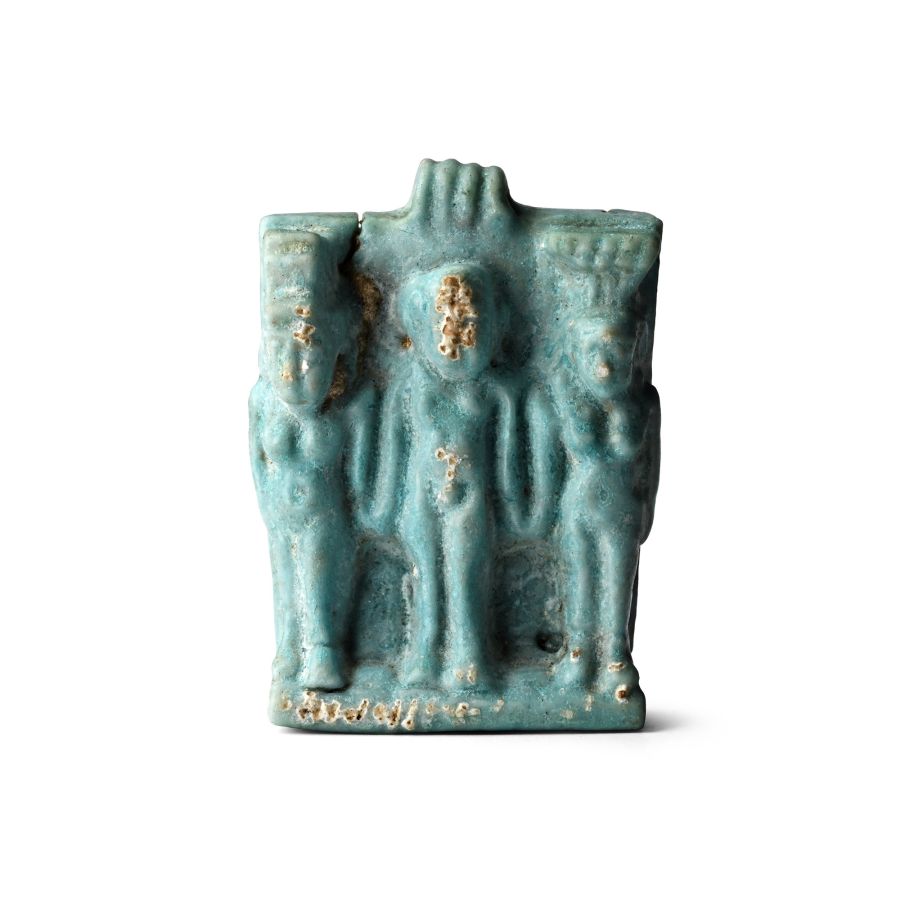
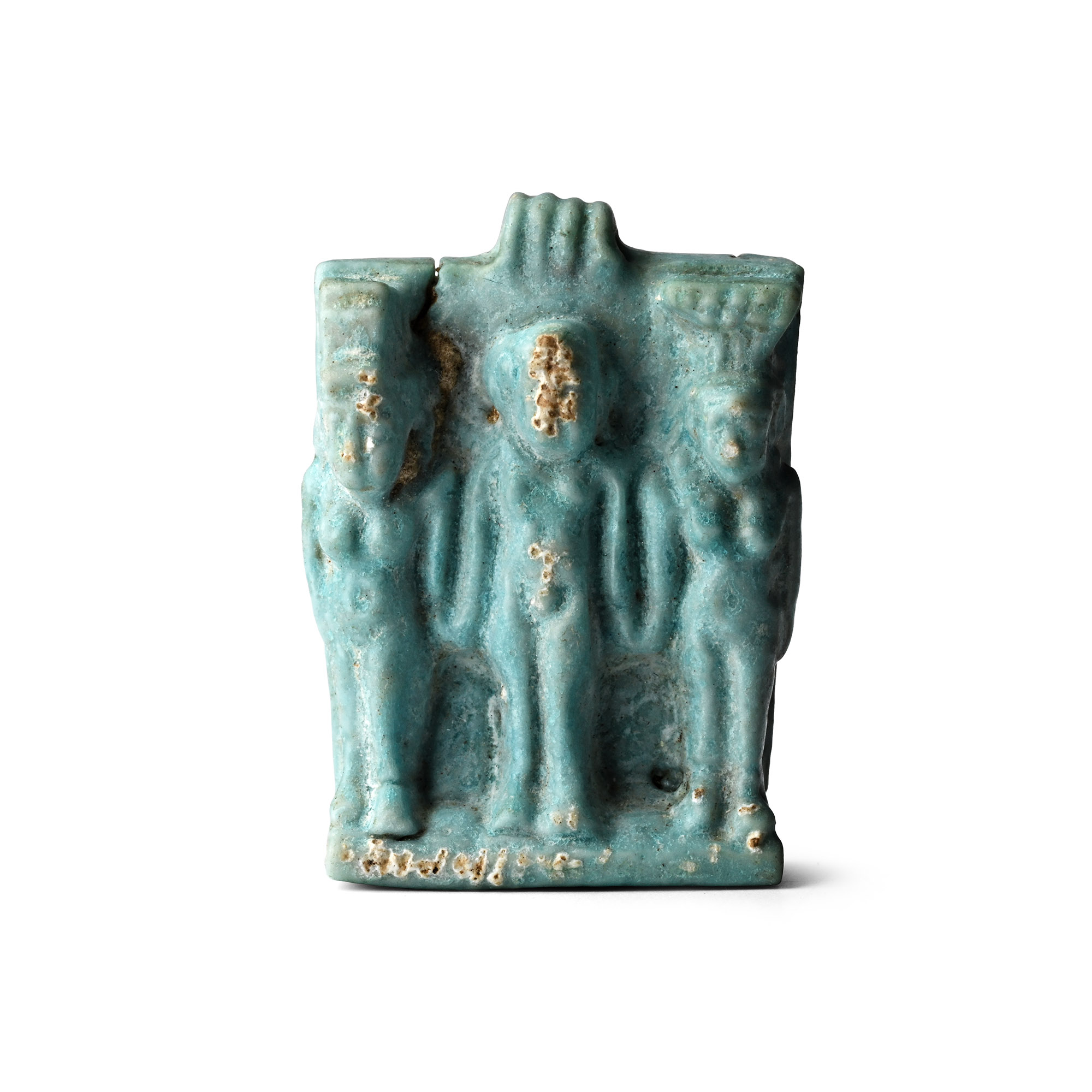
Egyptian Faience Triad Amulet
LATE PERIOD, 664-332 B.C.
1 1/4 in. (8.56 grams, 33 mm).
Depicting in high-relief the Osirian triad (Isis, Horus, Nephthys) standing side by side on an integral plinth against a dorsal pillar; Nephthys (right) and Isis (left) are shown frontally, wearing headdresses with their specific attributes, each holding the hands of the central Horus figure, shown naked and with the side-lock of youth; a ribbed loop at the top for suspension.
ProvenanceFrom the collection of a Swedish noble family, 1920s.
LiteratureCf. Camino, L., Papier-Lecostey, C., Collections égyptiennes du musée Antoine Vivenel de Compiègne, Compiègne, 2007, p. 172, nos. 190-191, for two comparable faience triads.
FootnotesIsis and Nephthys operate as complementary sister deities who guard both Osiris and the deceased through mourning, magical protection, and ritual lamentation, while Horus, the child of Isis, signifies renewal and legitimate kingship. On amulets, the triad translates into a compact visual statement of protection: the deceased is imagined as being held within the sisters’ magical and ritual care, while Horus embodies the successful outcome of that protection in the form of rebirth and continuity.
CONDITIONTimeLine Auctions follows a vetting process to ensure the authenticity and legality of all items, reinforcing our commitment to integrity and responsible trading. Each antiquity, antique, and coin lot undergoes thorough examination by a vetting committee of at least ten external specialists, professional trade association members, scientists, and archaeologists: Our Vetting Process
AUCTIONS:
TimeLine is a leading auction house specialising in antiquities, ancient art, collectables, natural history, coins, medals, and books. Our auctions offer museums, collectors, historians, and enthusiasts the opportunity to acquire unique and historically significant pieces.
LOT 0402
Egyptian Faience Triad Amulet
Estimate £400 - 600€460 - 700 (for guidance only)$540 - 810 (for guidance only)
-
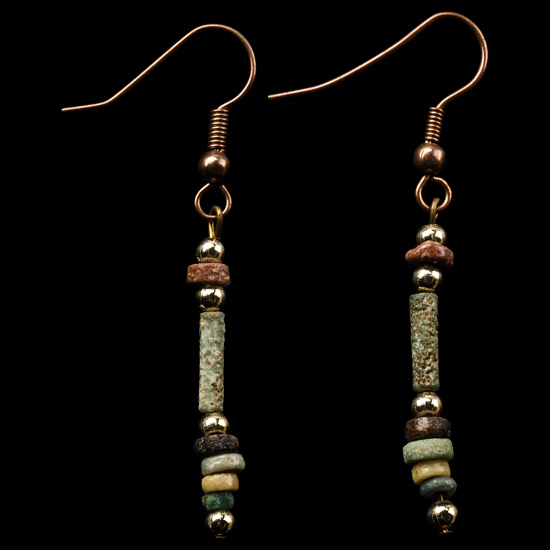
Egyptian Mummy Bead Earring Pair
Late Period, 664-332 B.C.Sold for (Inc. bp): £85
A matched pair formed of annular and cylindrical faience beads; modern hook and bar with gold-coloured beads. 1.27 grams total, 50-51 mm
Acquired Town Hall Antiques, Market Place, Woburn, Bedfordshire, UK, on 2nd March 2001. Property of a West Northamptonshire, UK, gentleman. Accompanied by a copy of the original Town Hall Antiques invoice. -
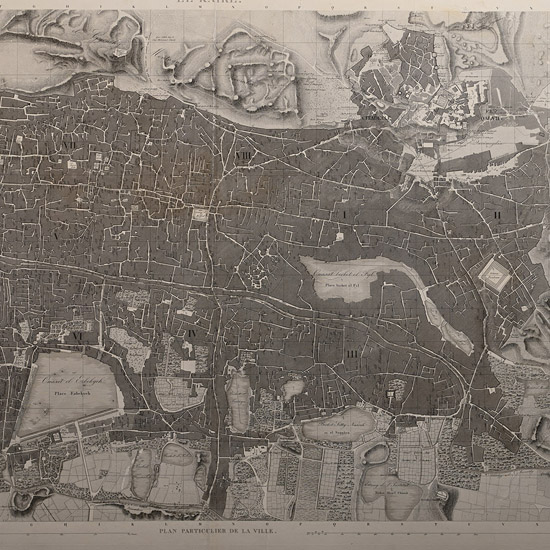
Very Large Egyptian Expedition Lithograph of the Plan of Cairo
Early 19th century A.D.Sold for (Inc. bp): £130
Proof etching on laid paper of plate 50 from Vol I of Description de l'Égypte : ou, Recueil des observations et des recherches qui ont été faites en Égypte pendant l'expédition de l'armée française, titled Le Kaire. Plan particulier de la ville. 231 grams, 106 x 69.5 cm
From the collection of a North American priest. Acquired between 1981-1996. Property of a North American collector.
Produced between February 1802 and 1830 on the orders of Napoleon Bonaparte; published between 1809 and 1828. Just 1,000 copies were distributed to various institutions, printed on laid paper with an 'Égypte ancienne et moderne' watermark. The book is subtitled Recueil des observations et des recherches qui ont été faites en Égypte pendant l’expédition de l’Armée française, publié par les ordres de Sa Majesté l’Empereur Napoléon le Grand (Gathering of observations and discoveries which were made in Egypt during the expedition of the French army, published on the orders of His Majesty the Emperor Napoleon the Great). It was the world's first encyclopedia devoted exclusively to the remains of ancient Egypt. The plates of this book are the first to present the archaeological sites of Thebes (Luxor). The papyrus manuscript was recovered from the underground chambers (hypogea). -
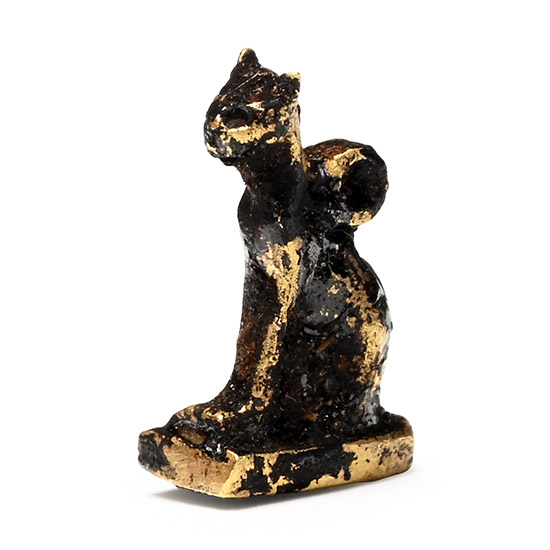
Egyptian Gold Bastet Seated Cat Amulet
Late New Kingdom-Third Intermediate Period, circa 1069-900 B.C.Sold for (Inc. bp): £468
Modelled seated on a tongue-shaped base, with simple facial detailing and suspension loop to the back. 0.51 grams, 8 mm
Ex French collection, early 20th century.
The goddess Bastet was believed to be the daughter of the sun god and was shown with the features of a lion up until about 1000 B.C. when she was first portrayed as a cat or human with a cat head. As the daughter of Ra she was associated with the rage inherent in the sun god's eye, which was considered to be his instrument of vengeance. Her development into a cat goddess occurred during the New Kingdom but did not fully develop until the Late Period. She was still associated with the destructive power of the sun and was shown on the prow of the solar boat, decapitating the evil serpent Apophis in the Book of the Dead. The maternal, protective and hunting characteristics of the cat are obvious in Bastet, and she was seen as a protector of pregnant women and young children. In the Pyramid Texts, she is invoked by the deceased king to act as his protector and to help him reach the sky to join the sun god; the king proclaims that Bastet is his mother and nurse. Like her counterpart, Sekhmet, Bastet has an aggressive side and, in a text from Karnak, Amenhotep II described his enemies being slaughtered like the victims of Bastet. The goddess had a shrine at Karnak, where she is known as the 'Lady of Asheru', which aligns her closely with the goddess Mut, the consort of Amun-Ra. Her most famous shrine was in the north-east Delta region, at Bubastis, and was known as Per-Bastet or 'the House of Bastet.' Herodotus describes the festival of Bastet as one of the most elaborate in all of Egypt and identifies her with the Greek Artemis. Cemeteries of cats have been excavated at Bubastis, and at Saqqara and Memphis.
