
Loading, please wait...
LOT 0465
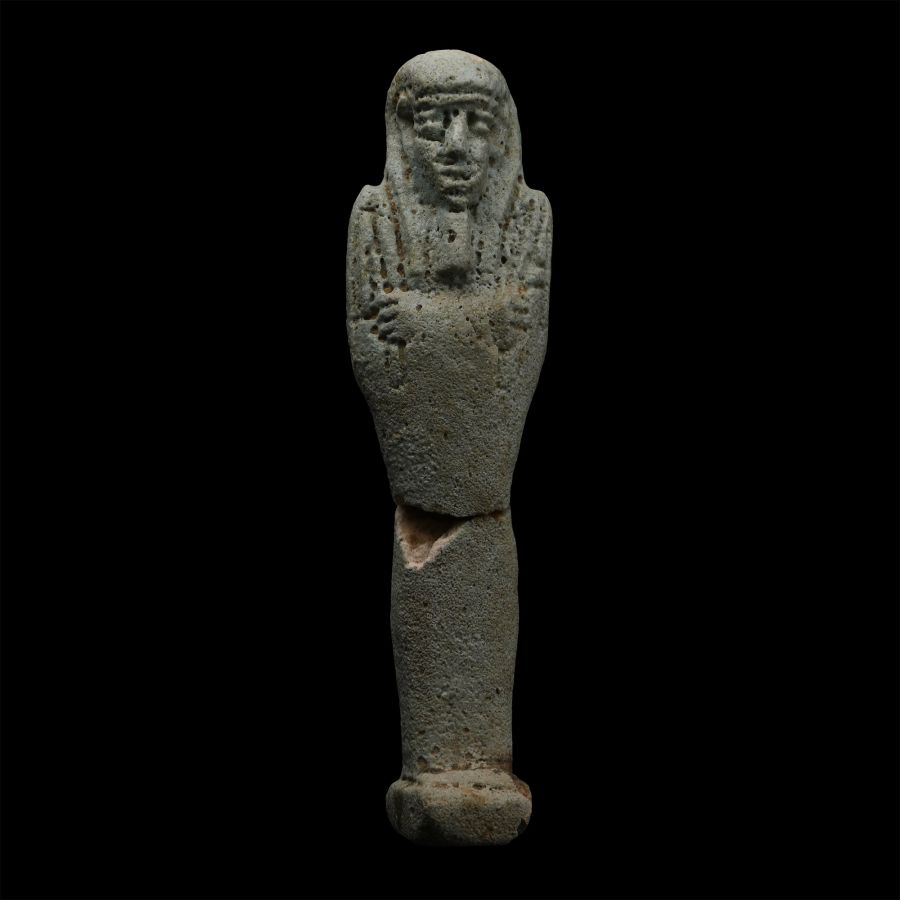
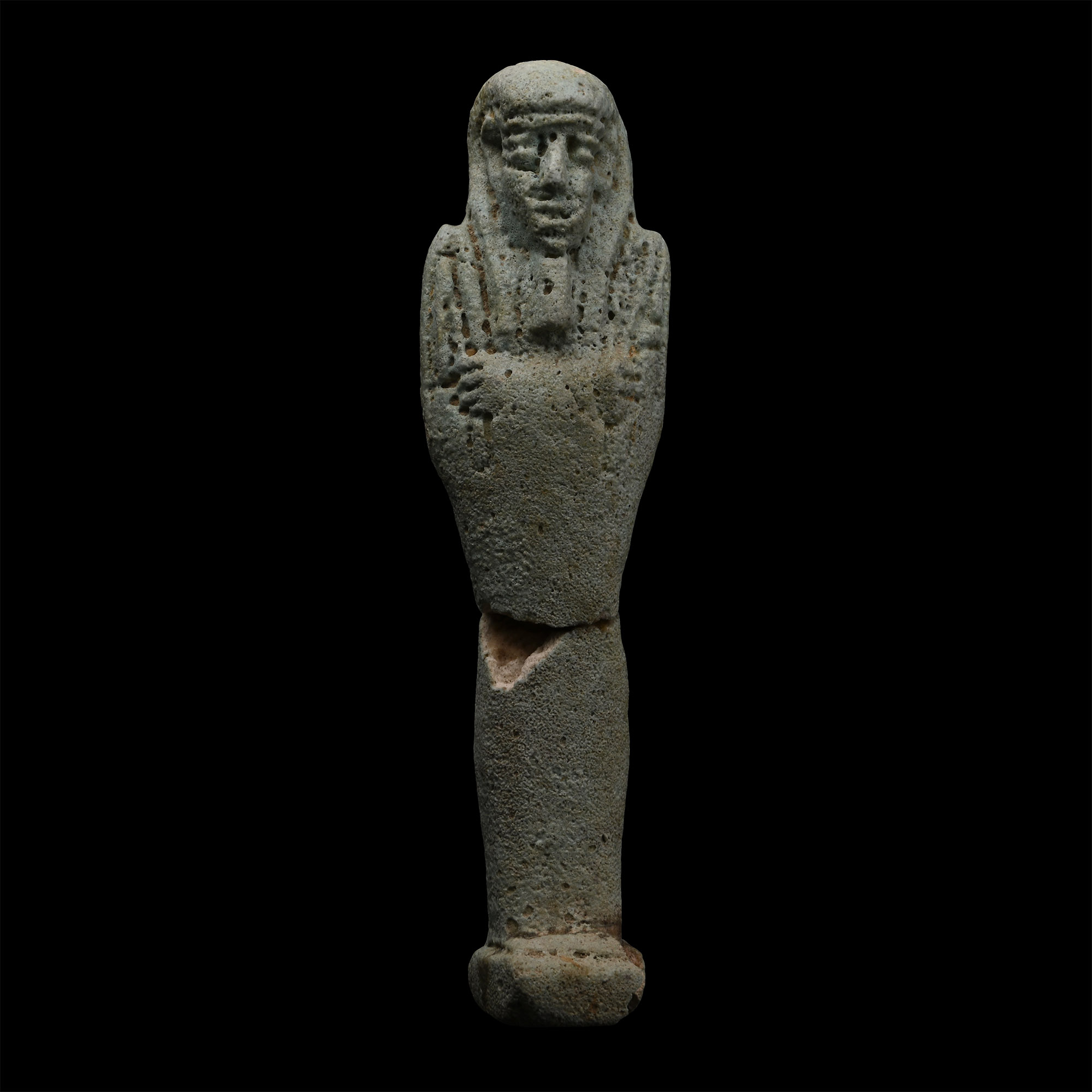
Egyptian Faience Shabti
LATE PERIOD, 664-332 B.C.
4 1/8 in. (41.6 grams, 10.5 cm).
Mummiform figure with plain dorsal pillar, standing with arms crossed and holding agricultural implements, seedbag suspended over the left shoulder; wearing a tripartite wig and a false beard; repaired. [No Reserve]
ProvenanceEx H Norri collection, Milton Keynes, Bedfordshire, UK, 1980s-1990s.
LiteratureCf. Janes, G., The Shabti Collections 6: A Selection from the World Museum, Liverpool, Lymm, 2016, p. 499 no. 262 (3.2.87.1b), for a similar shabti in the World Museum, Liverpool.
CONDITIONTimeLine Auctions follows a vetting process to ensure the authenticity and legality of all items, reinforcing our commitment to integrity and responsible trading. Each antiquity, antique, and coin lot undergoes thorough examination by a vetting committee of at least ten external specialists, professional trade association members, scientists, and archaeologists: Our Vetting Process
AUCTIONS:
TimeLine is a leading auction house specialising in antiquities, ancient art, collectables, natural history, coins, medals, and books. Our auctions offer museums, collectors, historians, and enthusiasts the opportunity to acquire unique and historically significant pieces.
-
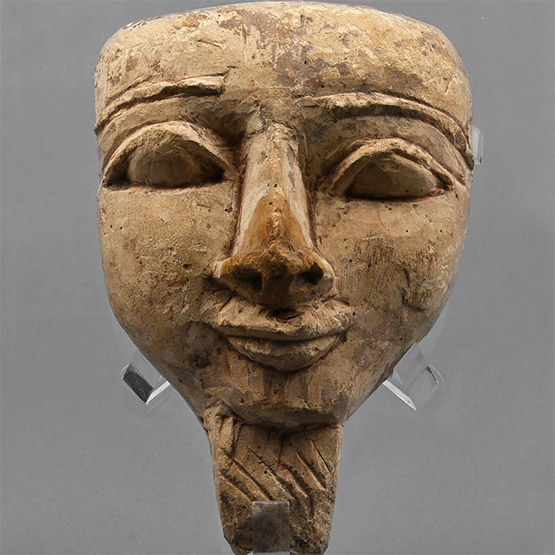
Phoenician Limestone Funerary Mask
Circa 4th-3rd century B.C.Sold for (Inc. bp): £1,950
Carved in the half-round with tall nose and chin with false beard dua wer, full lips and wide cheeks, stylised eyes and asymmetrical eyebrows; mounted on a custom-made stand. 1.3 kg total, 19.7 cm including stand
Private collection, Europe. Acquired on the French art market. -
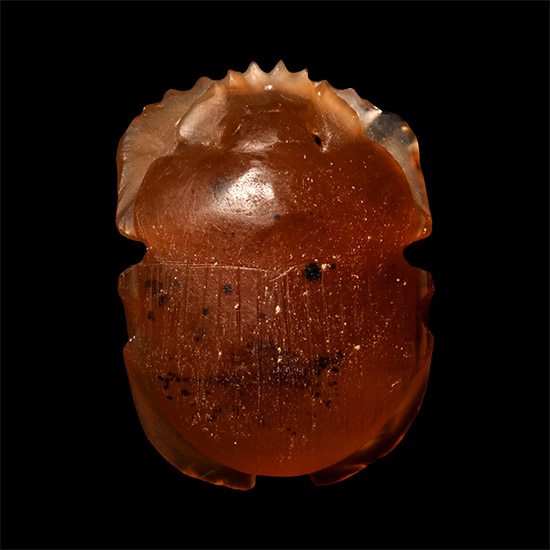
Large Egyptian Carnelian Scarab
Late Period, 664-332 B.C.Sold for (Inc. bp): £2,925
Naturalistically modelled, featuring detailed head and elytra, with suspension loop on the underside. 3.98 grams, 22 mm
Collection of a lady, circa 1940. Ex Mayfair gallery, London, UK. Ex an important Wiltshire, UK, collection. This lot has been checked against the Interpol Database of stolen works of art and is accompanied by search certificate number no.13158-249420.
The scarab amulet was arguably the most ubiquitous symbol in ancient Egypt, representing rebirth, transformation, and protection. Modelled after the scarab beetle, which was associated with the sun god Khepri - believed to roll the sun across the sky - the amulet illustrated the cycle of life and regeneration. Scarabs were commonly placed with the deceased as funerary amulets to ensure safe passage into the afterlife. They also served as seals and personal charms, often inscribed with prayers, names, or protective formulas. Widely used from the early Middle Kingdom (c. 2050 BCE) onwards, scarab amulets reflect both spiritual beliefs and everyday practices in ancient Egyptian life. -
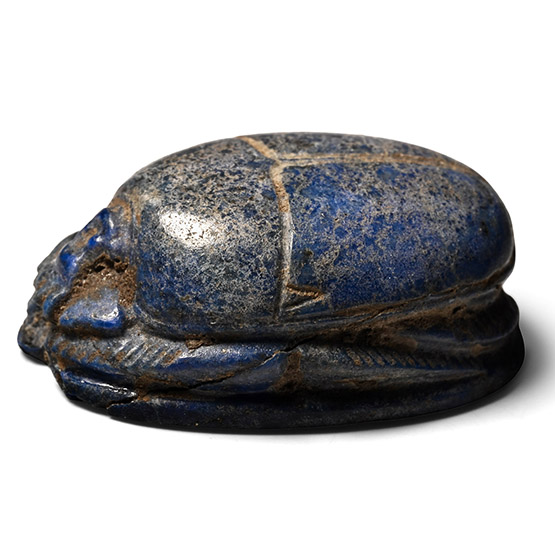
Egyptian Lapis Lazuli Scarab
Late Period, 664-332 B.C.Sold for (Inc. bp): £715
Carved in the round with longitudinal piercing, ellipsoid base. 12.8 grams, 30 mm
Ex early 20th century collection.
