
Loading, please wait...
LOT 0035
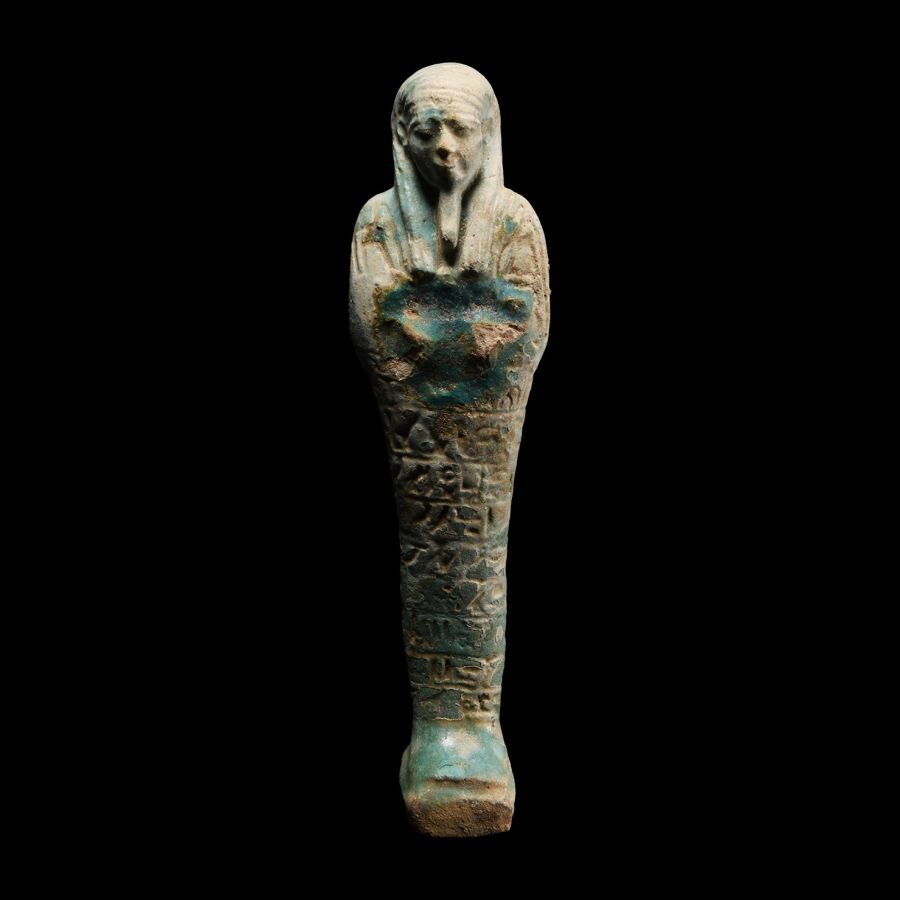
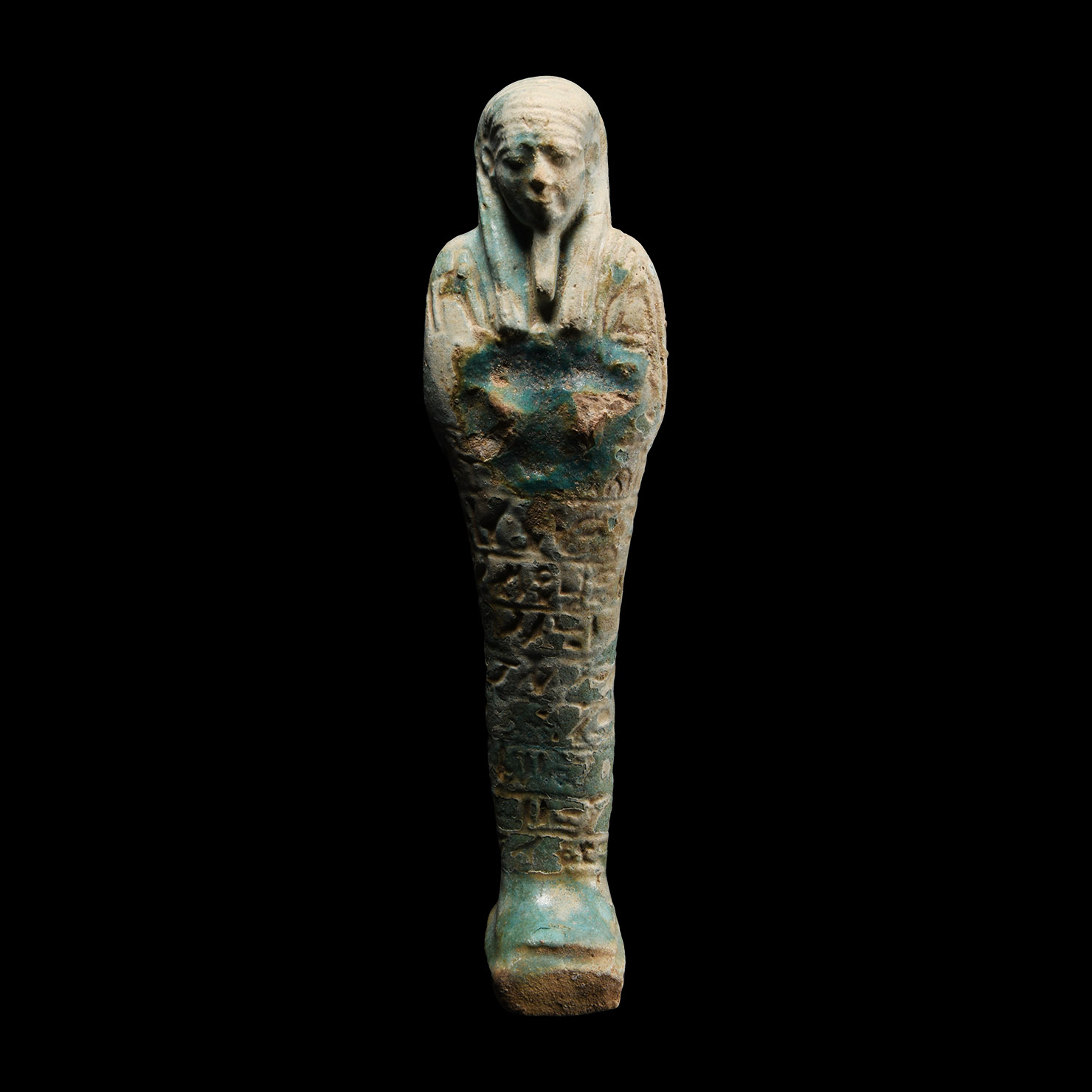
Egyptian Faience Shabti with Hieroglyphic Text
7TH-1ST CENTURY B.C.
7 3/4 in. (212 grams, 19.5 cm high).
A glazed composition shabti with square base and plain dorsal pillar, tripartite wig and false beard, arms folded across the chest holding agricultural tools and a seed bag to the left shoulder; nine horizontal bands of worn hieroglyphic text from Chapter Six of the Book of the Dead to the lower body.
ProvenanceAcquired early 1990s.
Ex private American collection; thence by descent.
Private Swiss collection since 1998.
TimeLine Auctions follows a vetting process to ensure the authenticity and legality of all items, reinforcing our commitment to integrity and responsible trading. Each antiquity, antique, and coin lot undergoes thorough examination by a vetting committee of at least ten external specialists, professional trade association members, scientists, and archaeologists: Our Vetting Process
AUCTIONS:
TimeLine is a leading auction house specialising in antiquities, ancient art, collectables, natural history, coins, medals, and books. Our auctions offer museums, collectors, historians, and enthusiasts the opportunity to acquire unique and historically significant pieces.
-
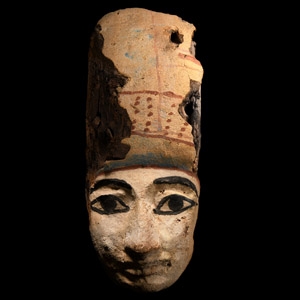
Egyptian Painted Wooden Mask
Late Period, 664-332 B.C.Estimate: £2,000 - 3,000 (‡+bp*)
Opening Bid: £1,000
A wooden mask with remains of polychrome painted detailing, depicting the large part of a face with eye detailing and remains of segmented headwear; old collection number 'E.352' and a later suspension loop to the reverse. 283 grams, 23.5 cm high
Ex Roger Liechti collection, Geneva, Switzerland. This lot has been checked against the Interpol Database of stolen works of art and is accompanied by search certificate no.11606-198998. -
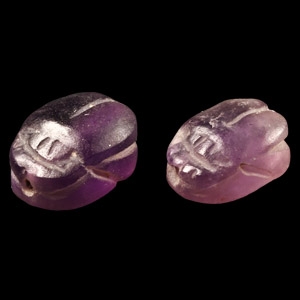
Egyptian Amethyst Scarab Group
Graeco-Roman Period, 332 B.C.-323 A.D.Sold for (Inc. bp): £338
A group of two amethyst scarabs pierced for suspension, each with simple detailing to the wings, head and legs. 1.12 grams total, 8-9 mm
Acquired 1980s. Private collection of L.H., Staffordshire, UK. Property of a Sussex, UK, teacher. -
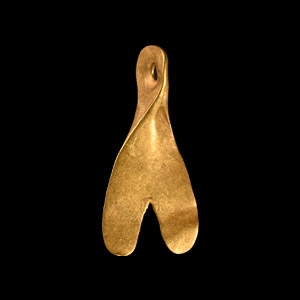
Egyptian Gold Fly Amulet
Late New Kingdom, 1550-1070 B.C.Sold for (Inc. bp): £312
A sheet-gold fly amulet with heart-shaped wings, head formed as suspension loop. 0.72 grams, 18 mm
Acquired 1970-2010. Collection of a late Japanese gentleman.
