
Loading, please wait...
LOT 0523
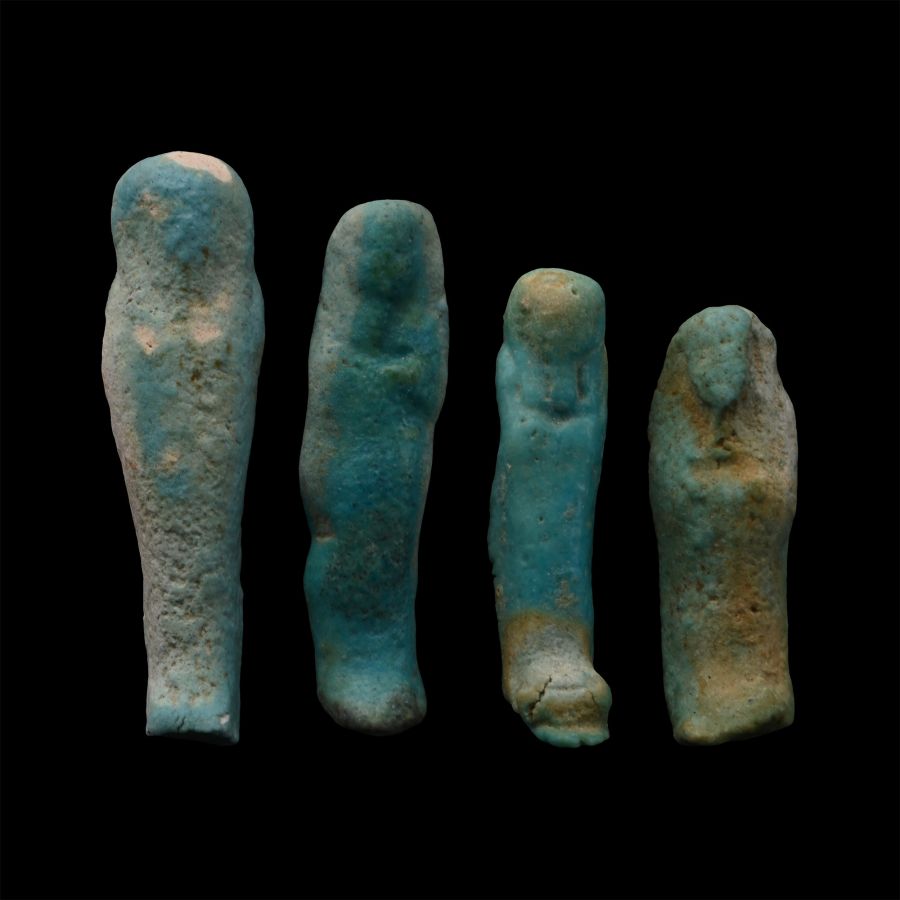
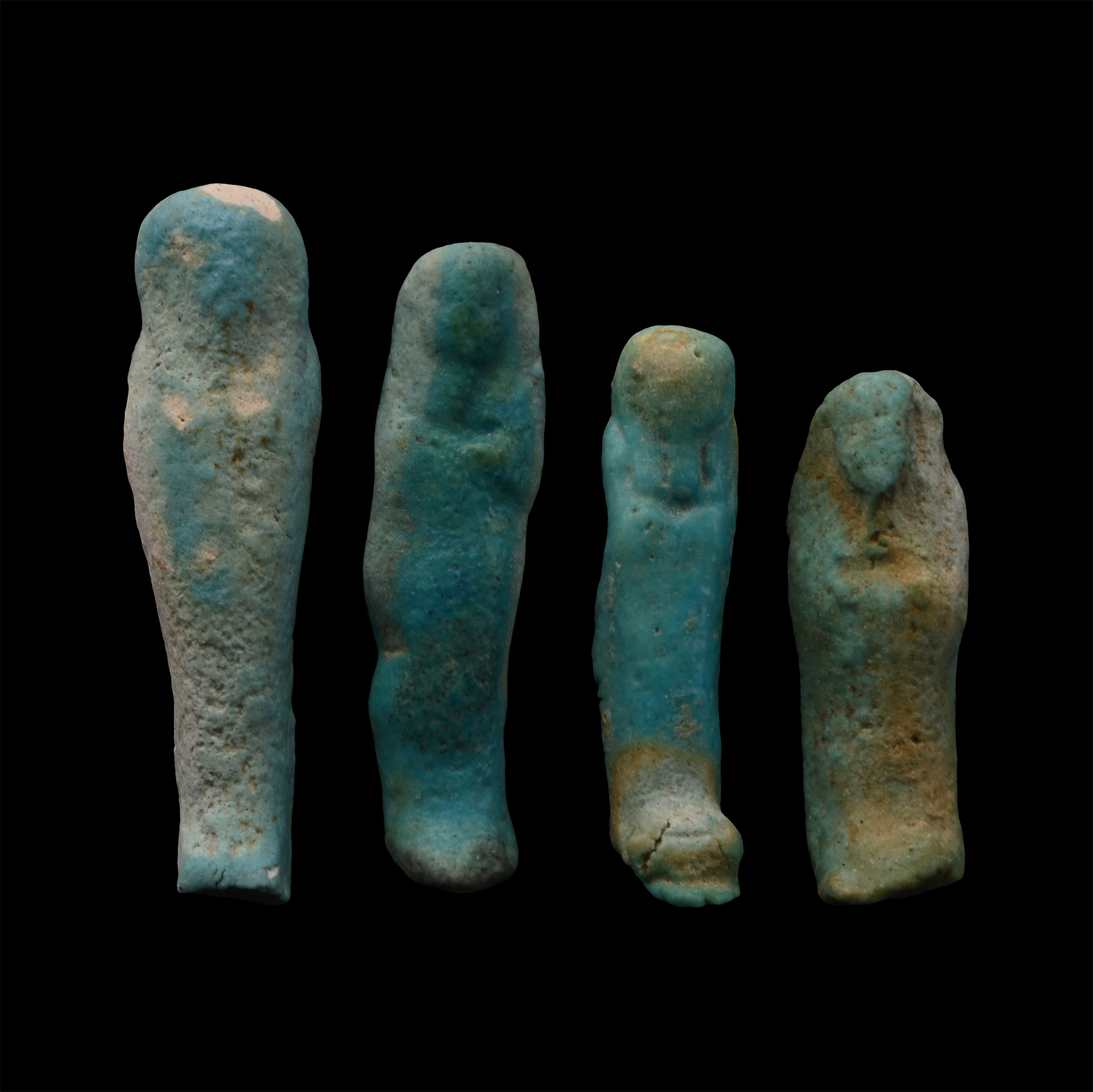
Egyptian Faience Shabti Collection
PTOLEMAIC PERIOD, 332-30 B.C.
1 3/4 - 2 3/8 in. (22.7 grams total, 44-60 mm).
Comprising four mummiform figures with tripartite wigs and divine beards. [4, No Reserve]
ProvenanceEx H Norri collection, Milton Keynes, Bedfordshire, UK, 1980s-1990s.
LiteratureCf. Janes, G., The Shabti Collections 6: A Selection from the World Museum, Liverpool, Lymm, 2016, p. 519, no. 273, for fifteen similar examples from Abydos.
CONDITIONTimeLine Auctions follows a vetting process to ensure the authenticity and legality of all items, reinforcing our commitment to integrity and responsible trading. Each antiquity, antique, and coin lot undergoes thorough examination by a vetting committee of at least ten external specialists, professional trade association members, scientists, and archaeologists: Our Vetting Process
AUCTIONS:
TimeLine is a leading auction house specialising in antiquities, ancient art, collectables, natural history, coins, medals, and books. Our auctions offer museums, collectors, historians, and enthusiasts the opportunity to acquire unique and historically significant pieces.
-
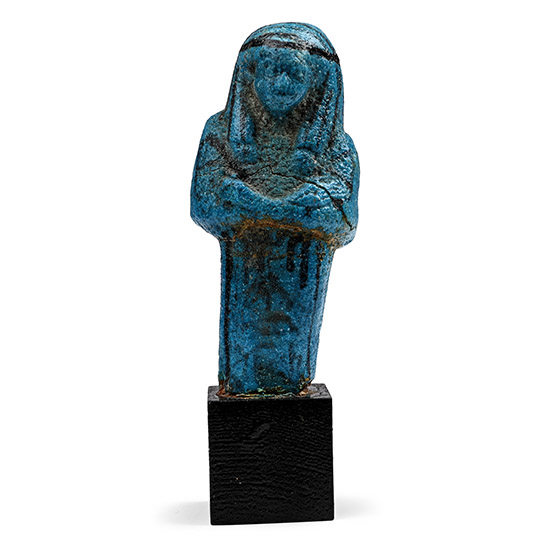
Egyptian Deep Blue Faience Shabti with Hieroglyphic Inscription
Third Intermediate Period, 1069-735 B.C.Sold for (Inc. bp): £468
Comprising the upper part of the mummiform figure with the arms crossed at the chest and holding agricultural implements in each hand, wearing a tripartite wig with a headband with ties hanging down at the back; a seed bag suspended below the wig; the outline of the hoes, striations on the wig and the seed bag painted black; a central column of hieroglyphs on the front; mounted on a display stand. 125 grams total, 13 cm including stand
Ex Shropshire, UK, collection. From a Cambridgeshire, UK, collection. -
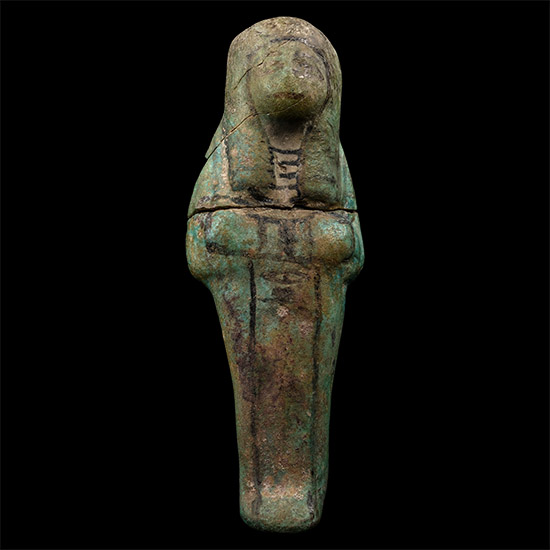
Egyptian Turquoise Blue Faience Shabti with Hieroglyphic Inscription
New Kingdom, 19th-20th Dynasty, 1292-1069 B.C.Sold for (Inc. bp): £338
Mummiform shabti wearing a tripartite wig, with arms crossed and holding a hoe in each hand, and cords for a water pot hanging from the back on each shoulder; a seed bag suspended below the wig; the outline of the eyes, eyebrows, mouth, hoes, water pots, and seed bag painted black; a central column of hieroglyphs on the front, with the opening preserved reading "The Osiris..."; repaired. 98 grams, 13.2 cm
From a UK private collection formed in the 1970s. Ex Ancient Relics. Ex D.S. collection, West Sussex, 1990s-2000s. Accompanied by an illustrated catalogue sheet and a previous catalogue information slip. -
.jpg)
Egyptian Steatite Fish Amulet with Horse
New Kingdom, 1550-1070 B.C.Sold for (Inc. bp): £130
A bifacial rectangular amulet with incised fish in profile to the obverse, a standing horse to the reverse; drilled for suspension. 3.04 grams, 20 mm
Ex Constable collection, 1990s. Ex P. Morris collection. Accompanied by an old photograph dated 'London 1997'.
This amulet depicts a ‘Tilapia nilotica’ or ‘bolti’, a prevalent fish species found in the Nile. Not only was it esteemed for its delicious taste, but it was also regarded as a symbol of rebirth and resurrection due to its unique ability to carry its eggs in its mouth, symbolising self-creation.
