
Loading, please wait...
LOT 0053
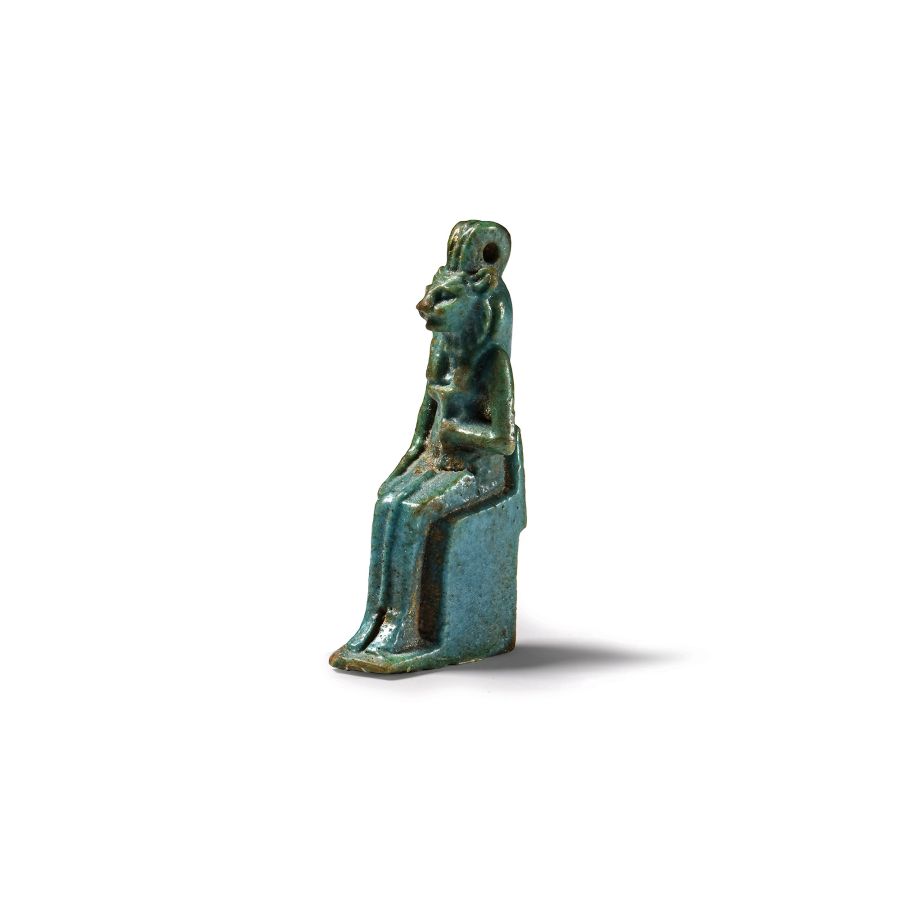
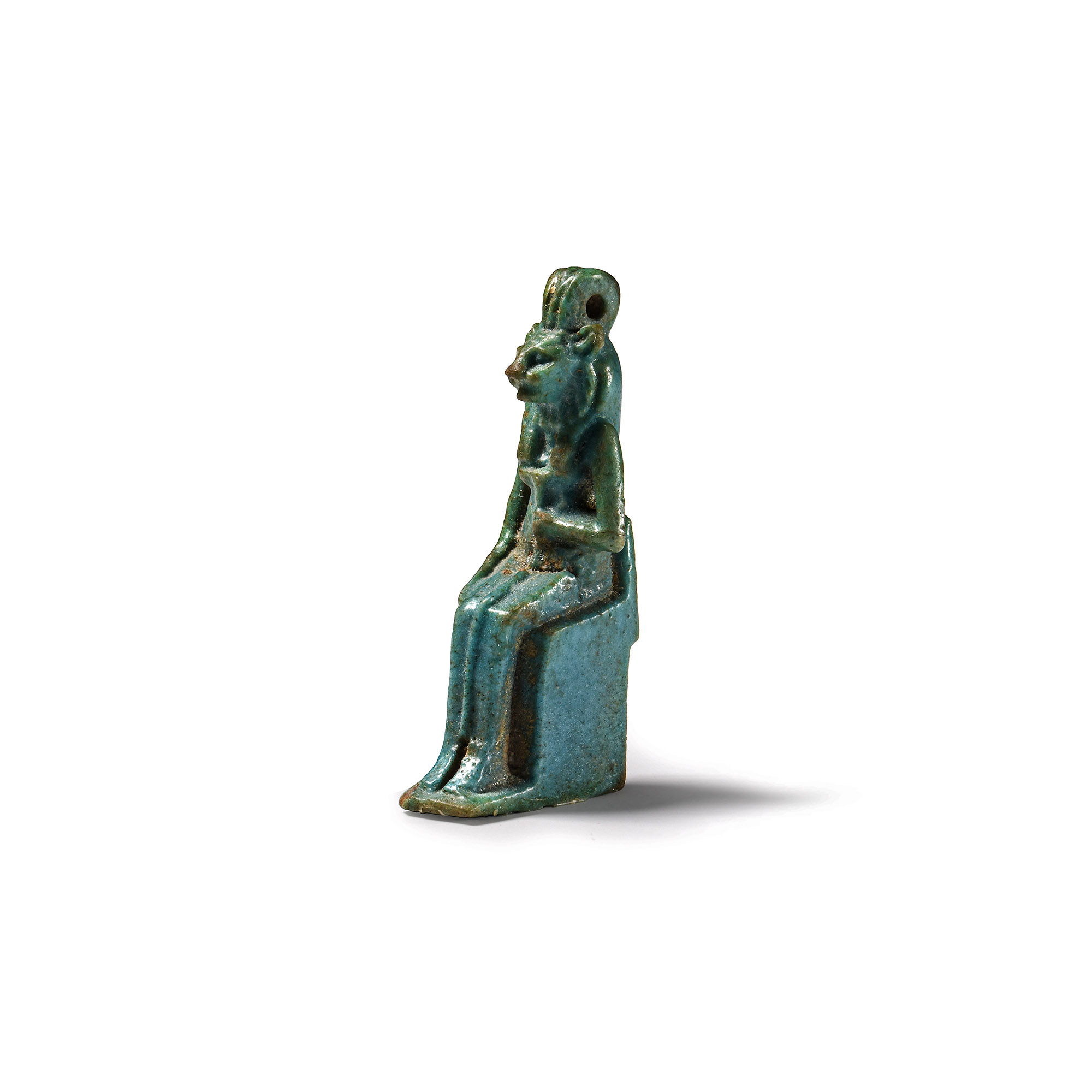
Egyptian Faience Sekhmet Amulet
LATE PERIOD, 664-332 B.C.
1 1/2 in. (4.75 grams, 39 mm).
Glazed composition amuletic pendant of lioness-headed goddess Sekhmet seated on a throne with sceptre held to her chest.
ProvenanceFrom the collection of Mr A.M.
Ex Artemission, London SW5, UK.
Private collection of Mr T.H., Norfolk, UK.
Accompanied by a previous dealer's certificate of authenticity and invoice.
Cf. statue in the collection of the British Museum under accession no.EA71 showing Sekhmet with sceptre.
CONDITIONTimeLine Auctions follows a vetting process to ensure the authenticity and legality of all items, reinforcing our commitment to integrity and responsible trading. Each antiquity, antique, and coin lot undergoes thorough examination by a vetting committee of at least ten external specialists, professional trade association members, scientists, and archaeologists: Our Vetting Process
AUCTIONS:
TimeLine is a leading auction house specialising in antiquities, ancient art, collectables, natural history, coins, medals, and books. Our auctions offer museums, collectors, historians, and enthusiasts the opportunity to acquire unique and historically significant pieces.
-
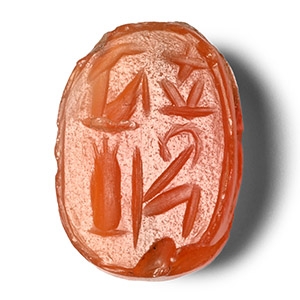
Egyptian Carnelian Scarab
New Kingdom, 1550-1070 B.C.Sold for (Inc. bp): £520
With incised carapace and leg detailing, hieroglyphs to the underside. 2.23 grams, 16 mm
Ex North London, UK, gentleman, 1990s. -
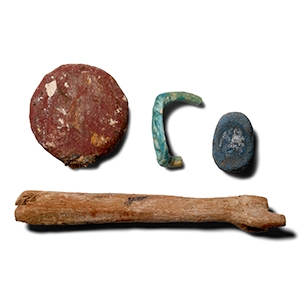
Egyptian Artefact Collection
Late Period, 664-332 B.C.Sold for (Inc. bp): £117
Comprising: a wooden arm from a diorama; a wooden sun disc with red pigment; a dark blue composition scaraboid; and a blue-glazed ring fragment with Wedjat eye to the bezel. 6.5 grams total, 18-83 mm
UK private collection. Acquired from Ancient & Oriental, Nottingham, UK, 1980. Property of a Nottinghamshire gentleman. -
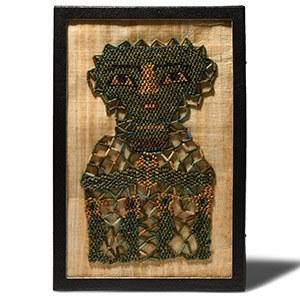
Egyptian Faience Beaded Mummy Mask with Sons of Horus
Ptolemaic Period, 332-30 B.C.Estimate: £400 - 600 (+bp*)
Opening Bid: £222
Restrung netted beadwork panel of annular and tubular glazed composition beads in blues, greens, black, cream and red-brown colours, depicting a mummy face mask with false beard, a scarab with extended wings below, the 'Four Sons of Horus’ beneath the scarab, joined together with areas of open netting of tubular beads; mounted in a glazed frame with papyrus backing. 563 grams total, 31.2 x 21 cm
Ex Paris gallery. Acquired 1980-2015. Ex Abelita family collection.
