
Loading, please wait...

LOT 0665
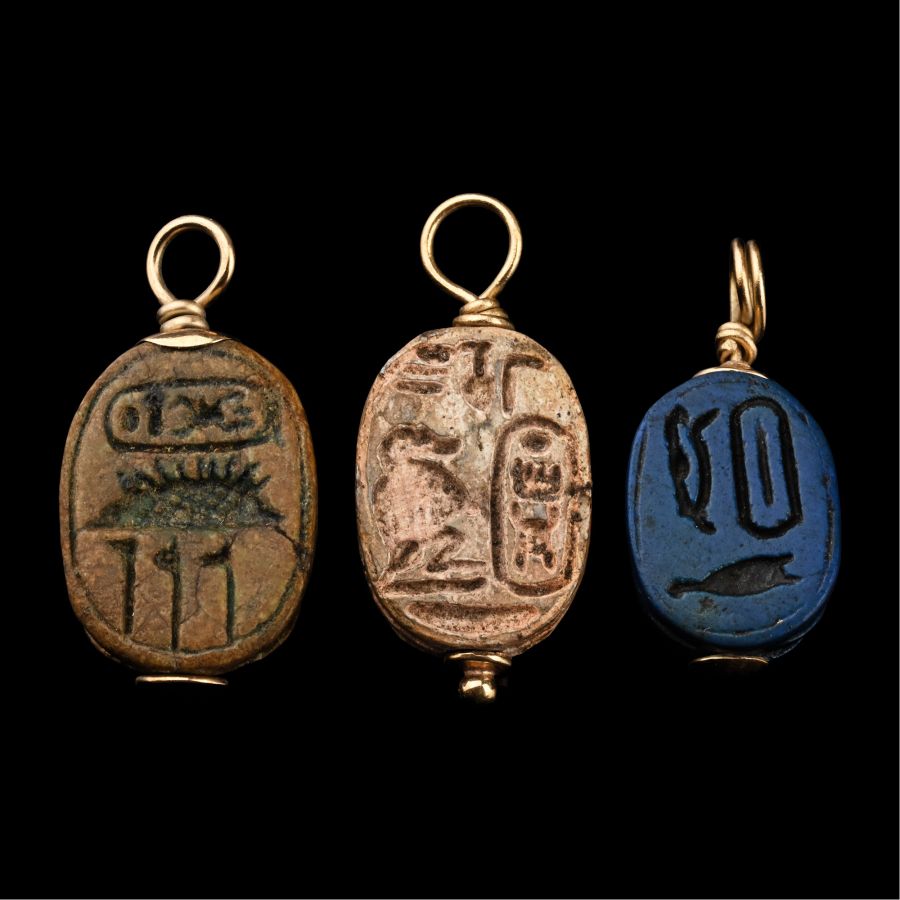
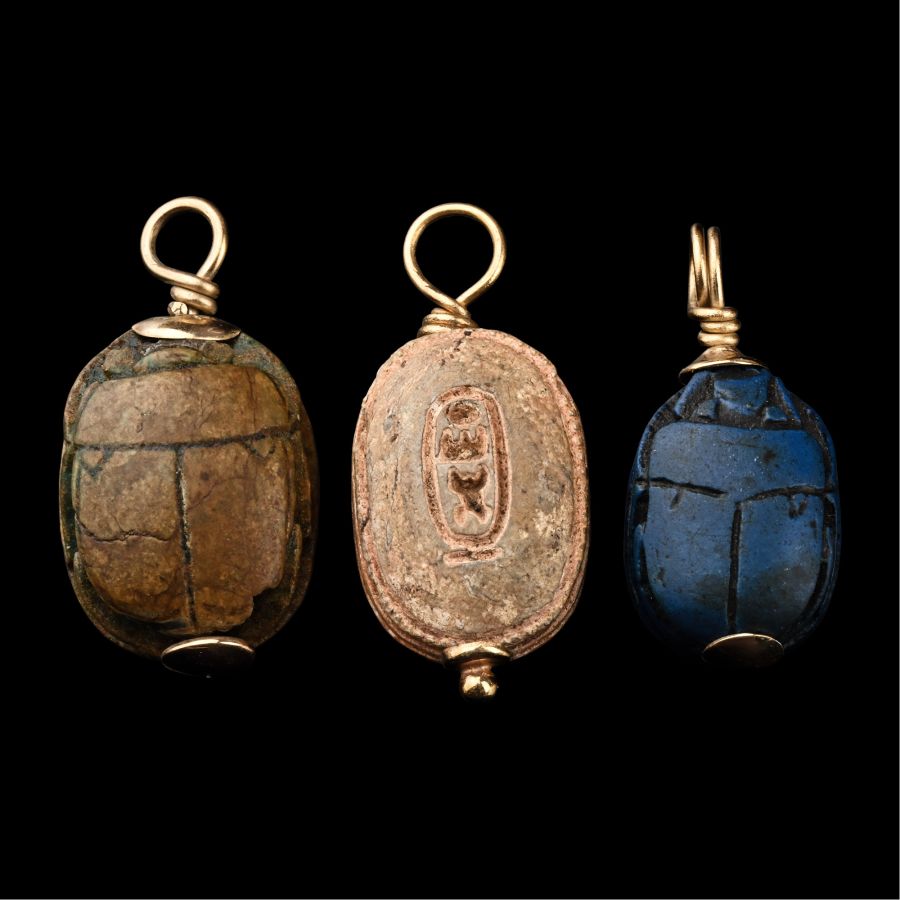
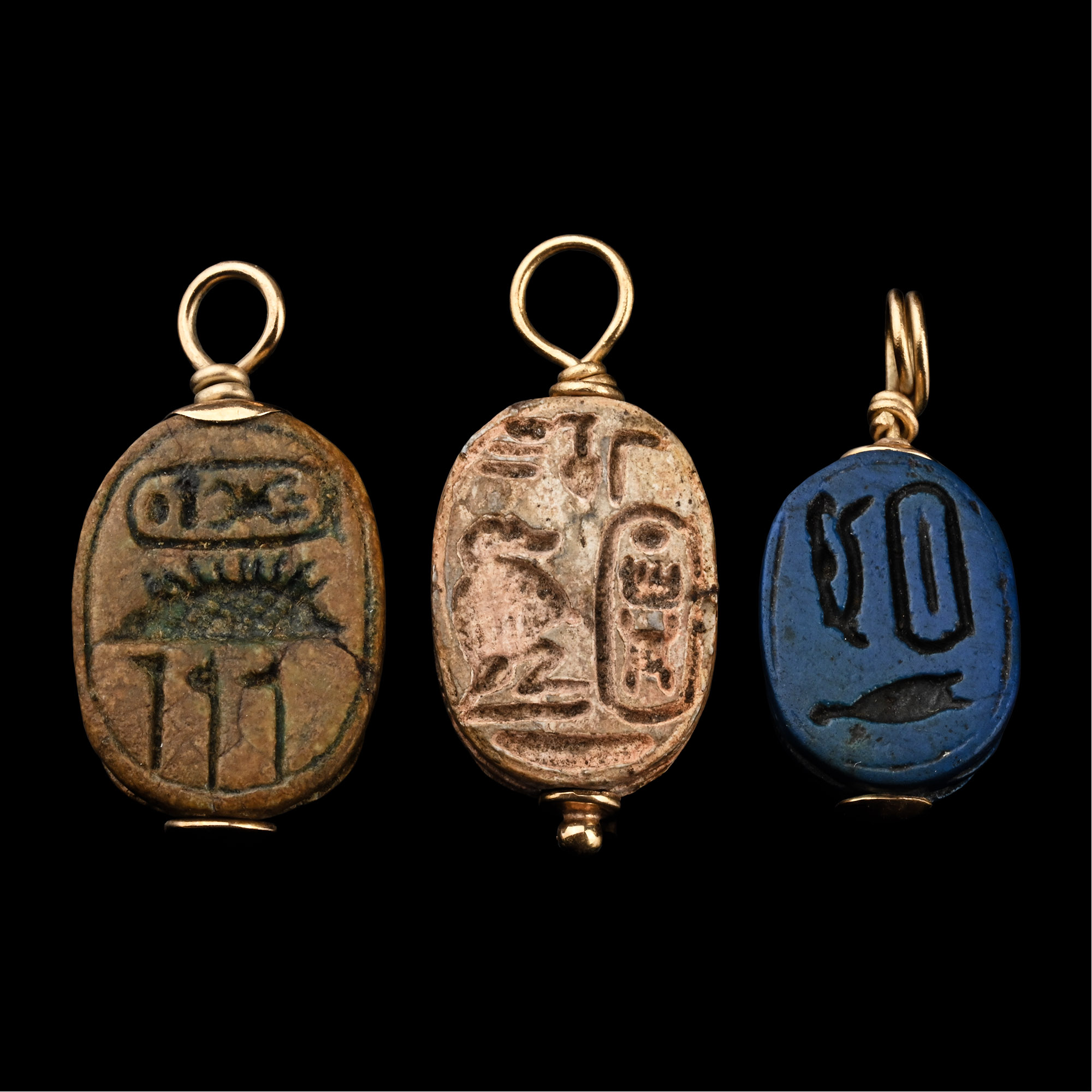
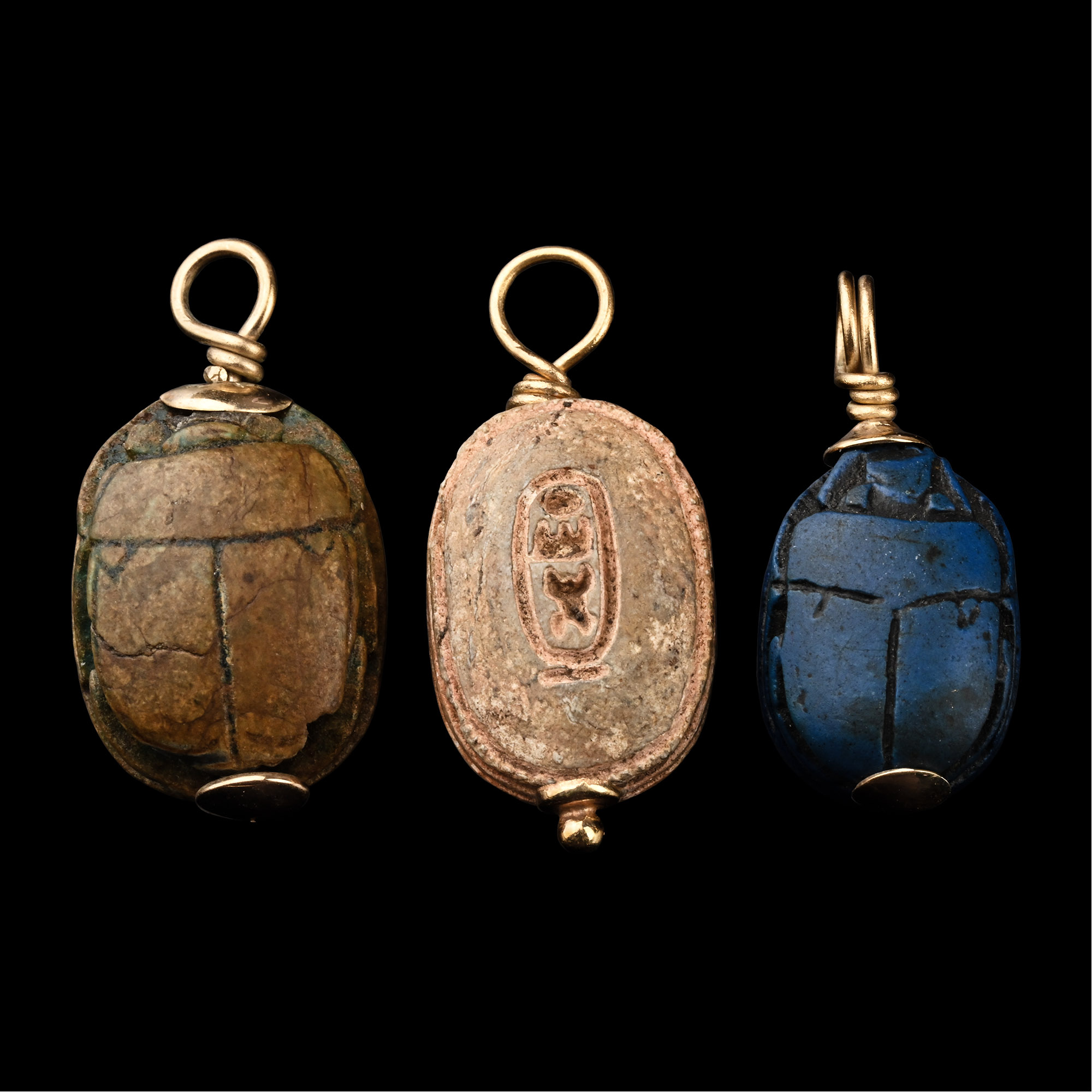
Egyptian Faience Scarabs with Gold Mounts
LATE PERIOD, 664-332 B.C. AND LATER
7/8 - 1 in. (6.05 grams total, 22-25 mm).
Comprising: a chestnut-coloured steatite scarab with a Thutmosis III cartouche and hieroglyphs on the underside; a tan-coloured faience scaraboid with a Thutmosis III cartouche on the convex obverse and the same cartouche with hieroglyphs, faced by a seated baboon, on the underside; offered with a modern blue scarab in a gold mount. [3]
ProvenancePrivate collection of Kal Noselson, New York, acquired between 1976 and the late 1990s; thence by descent.
Accompanied by the collector's original inked images.
TimeLine Auctions follows a vetting process to ensure the authenticity and legality of all items, reinforcing our commitment to integrity and responsible trading. Each antiquity, antique, and coin lot undergoes thorough examination by a vetting committee of at least ten external specialists, professional trade association members, scientists, and archaeologists: Our Vetting Process
AUCTIONS:
TimeLine is a leading auction house specialising in antiquities, ancient art, collectables, natural history, coins, medals, and books. Our auctions offer museums, collectors, historians, and enthusiasts the opportunity to acquire unique and historically significant pieces.
LOT 0665
Egyptian Faience Scarabs with Gold Mounts
Estimate £400 - 600€460 - 700 (for guidance only)$540 - 810 (for guidance only)
Opening Bid
£200 (EUR 232; USD 270) ‡+BP*
-
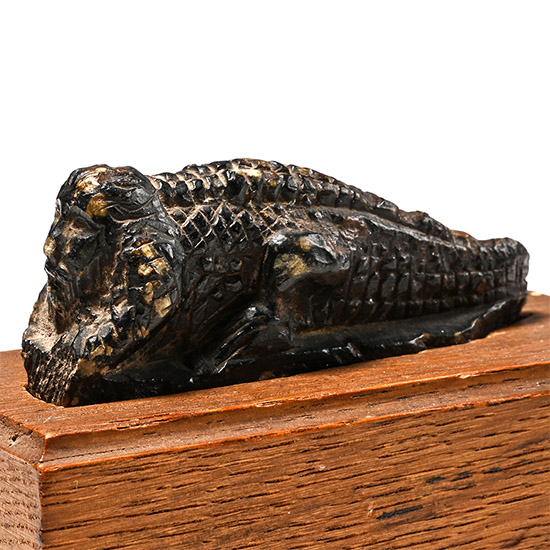
Romano-Egyptian Stone Crocodile Figure
Late Period, 664-332 B.C.Estimate: £400 - 600 (+bp*)
Opening Bid: £200
Carved in high relief with a flat underside, reptilian body with finely rendered scales, and a small human head, mounted on a custom-made wooden stand. 40.79 grams, 68 mm wide (116 grams total, 93 mmm wide including stand)
Private collection. with Mallams, Oxford, Library Sale, 2025. Acquired by the current owner from the above.
The earliest representation of a human-headed crocodile appears in a vignette from Spell 88 of the Book of the Dead dating to the reign of Ramesses II (13th century B.C.), and identifies the deceased as Sobek. Stylistically, this example appears to be from the Late Period, when amulets representing Sobek-Osiris or Sobek-Re are known. -
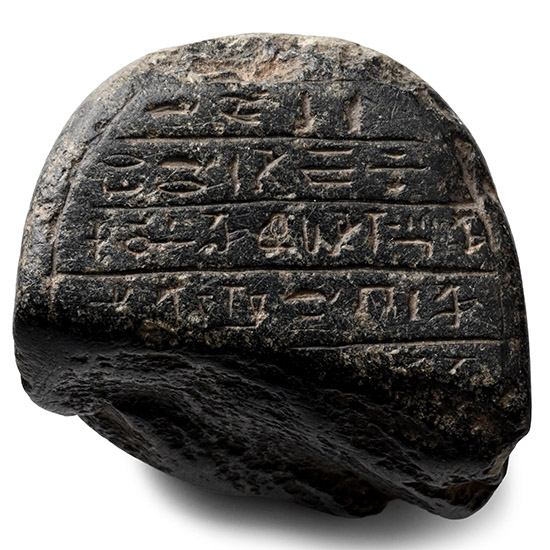
Large Egyptian Black Stone Heart Scarab Fragment
New Kingdom, 1580-1077 B.C.Estimate: £300 - 400 (+bp*)
Opening Bid: £5
Upper half modelled as a scarab beetle with midlegs and hindlegs, and plain elytra separated from the prothorax by double border lines; the underside bearing five lines of hieroglyphic inscription. 70 grams, 45 mm
From the private collection of Peter Clayton, FCILIP, Dip, Arch, FSA, FRNS, Hemel Hempstead, Hertfordshire, UK; formed since the late 1950s.
The hieroglyphic text presents the final part of Chapter 30b of the Book of the Dead, a spell designed to prevent the deceased's heart from betraying them during the Weighing of the Heart judgment before Osiris. -
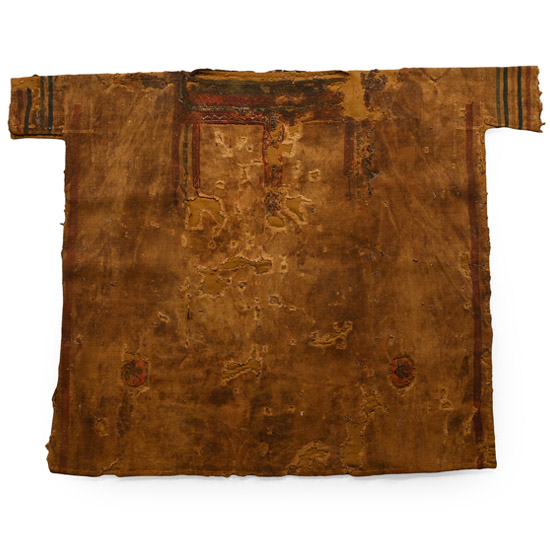
Large Egyptian Coptic Male Textile Tunic Embroided with Segmenta, Clavi, and Orbiculi with Human Figures
Circa 7th-9th century A.D.Estimate: £1,200 - 1,700 (+bp*)
Bids: 1 | Current Bid: £5
Complete tunic patterned with a large tapestry-woven neck panel in red and green wool, with three descending clavi divided into three pendant terminals, the inside ornamented with geometric patterns; the red wool used as twining to outline the edge of the neck and the clavi; two small orbiculi visible on the shoulders in dark blue wool, two other orbiculi applied on the thighs, on both sides of the tunic, two of them decorated with a warrior dwarf holding a shield in green, red and yellow wool; the short sleeves ornamented with four stripes (loroi) in dark red, dark blue, blue-purple and green wool; lateral red clavi running along the sides; the sides and the sleeves finished with short fringes of twisted loops. 1.03 kg total including paper folder, 102 x 76 cm
Acquired 1970s-1996. Property of a North American collector. London collection, 2016. Accompanied by an academic report by Dr Raffaele D'Amato.
